membership background

Rice & Poha articles from COWBERRY

Featured

What Is Brown Sugar? Types, How It Is Made, Nutrition and Uses

What Is Brown Sugar? Types, How It Is Made, Nutrition and Uses

What is brown sugar: sugar with part of the cane's molasses kept in — 380 kcal and 98.1 g of carbohydrate per 100 g. Types (demerara, muscovado, light and dark), names, how it is made, nutrition, uses, storage and buying.
05 Aug 2026by COWBERRY
11 minute read

Fresh Blogs

Coriander water benefits: what dhania water actually does

Coriander water benefits: what dhania water actually does

Coriander water benefits, answered honestly: the research reviewed here has no human trial showing coriander water does anything specific. Here is what is known about coriander, what one teaspoon of seeds holds, and how to make and drink the water.
05 Oct 2026by COWBERRY
7 minute read
Red rice vs brown rice: the fibre, GI and honest verdict
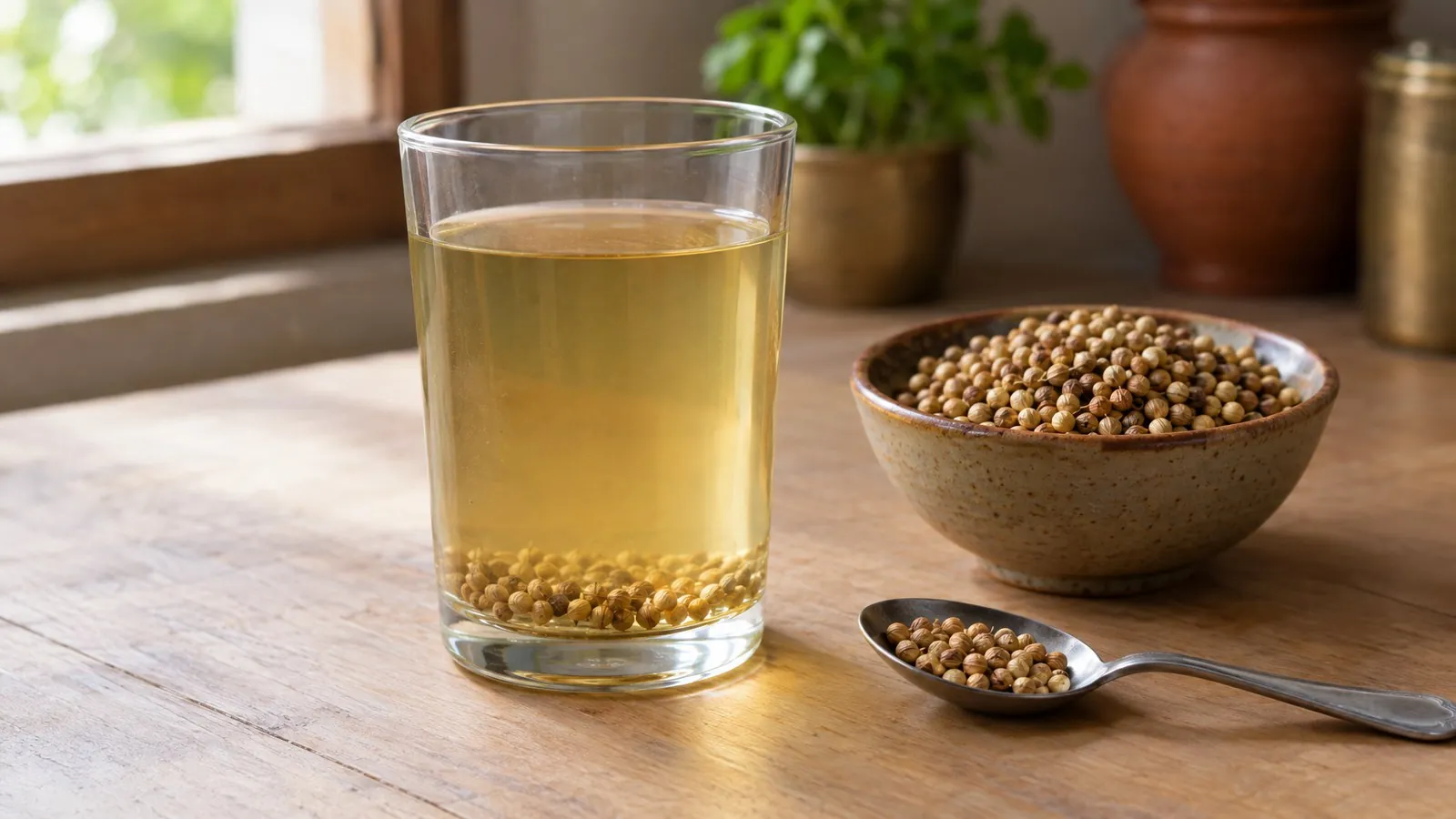
Red rice vs brown rice: the fibre, GI and honest verdict
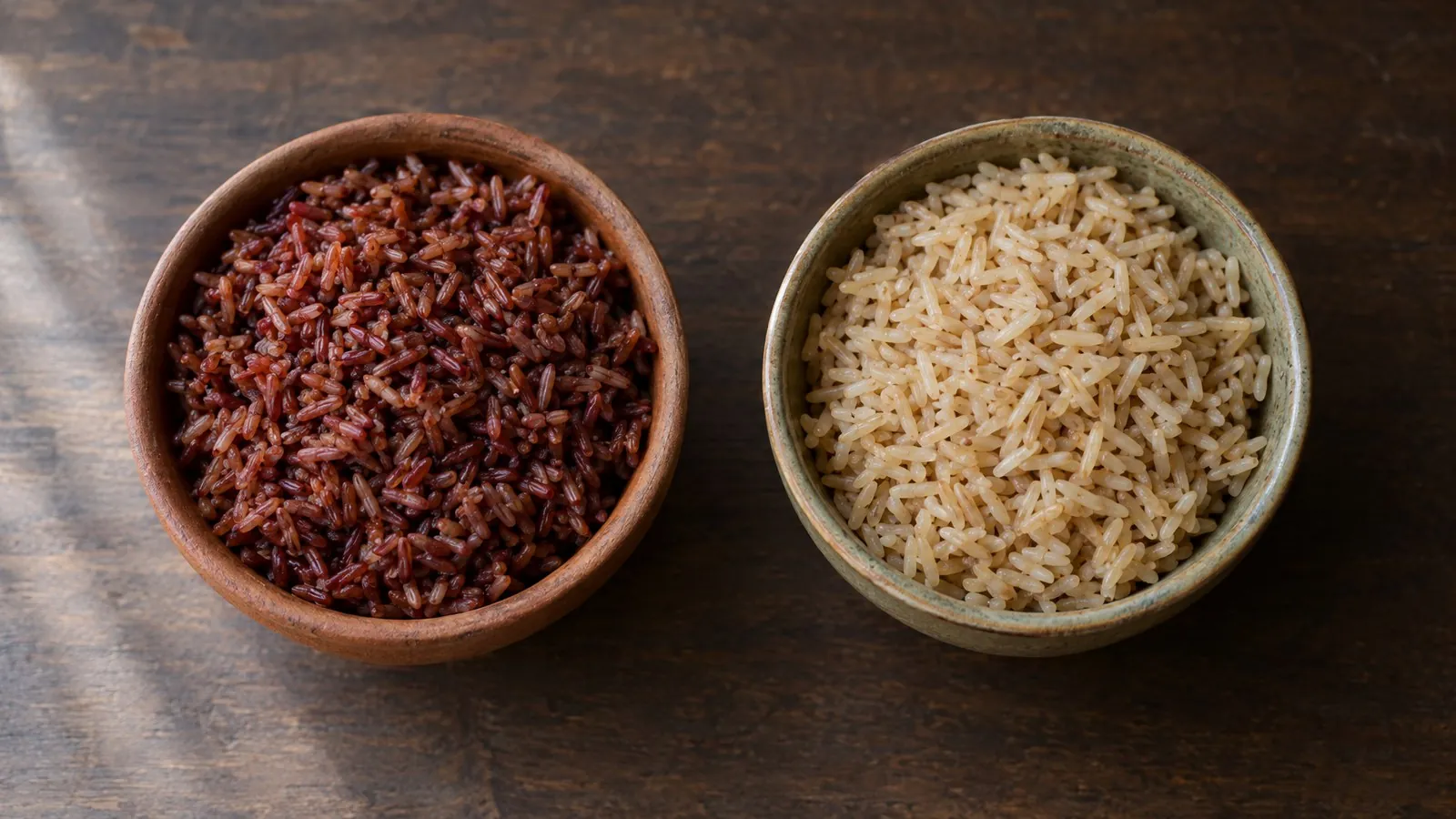
Red rice vs brown rice: brown rice lists more fibre and protein and an India-tested GI of 58, while red rice's seven foreign tests average 62. Side-by-side nutrition per 100 g, GI, cooking, cost and which to choose.
05 Oct 2026by COWBERRY
6 minute read

More Articles

10 benefits of basmati rice (and its side effects)
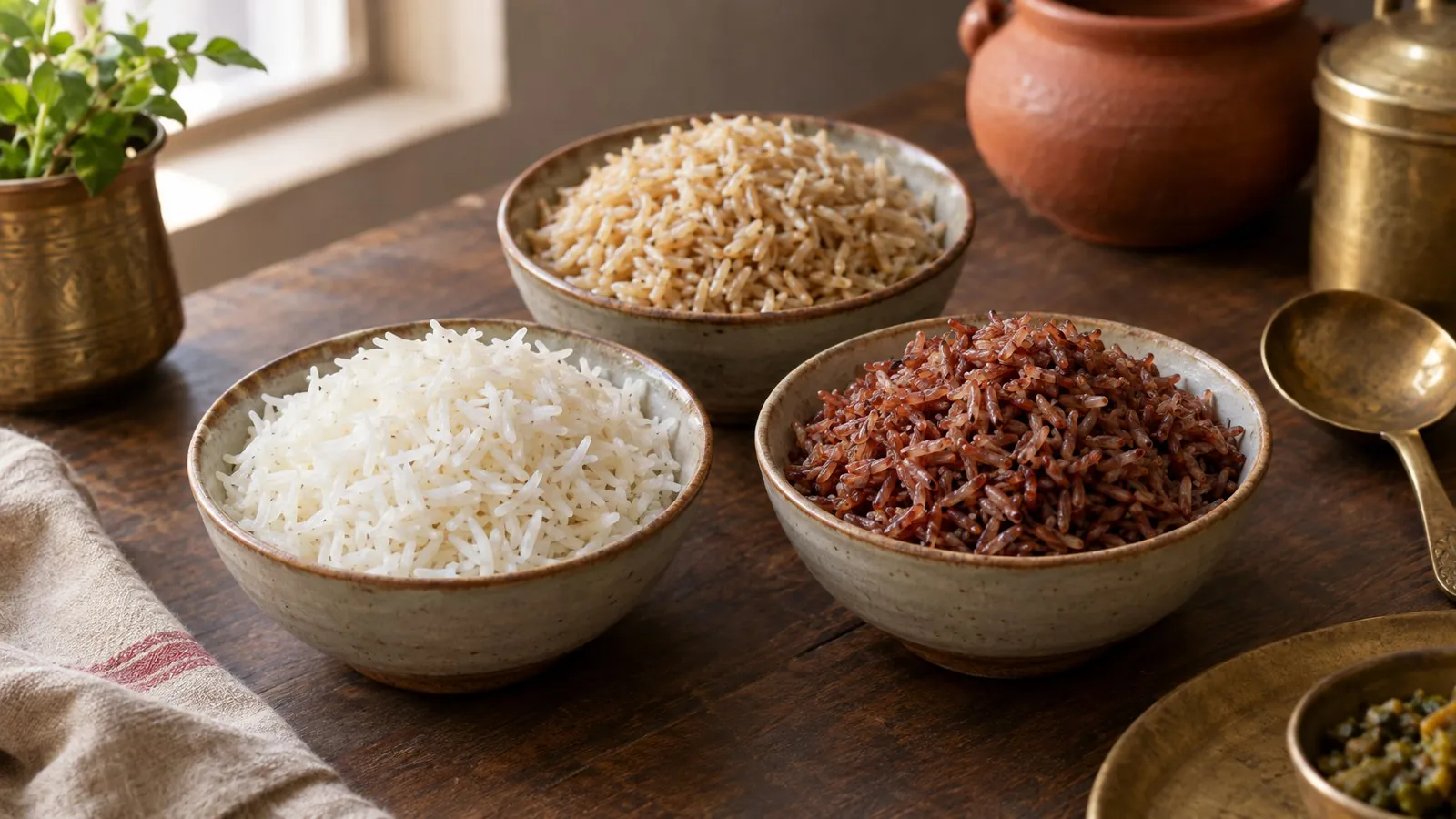
10 benefits of basmati rice (and its side effects)

Basmati rice benefits, number by number: GI 50 in the low band, 357 kcal and 78.24 g of carbohydrate per 100 g, fat and sodium inside the FSSAI low lines, no gluten. Then the side effects, the daily amount and how to cook it.
11 Aug 2026by COWBERRY
9 minute read
Low GI rice in India: which rice has the lowest glycemic index
Low GI rice in India: which rice has the lowest glycemic index

Which rice has the lowest glycemic index in India? Basmati, at GI 50; brown rice follows at 58. This guide gives the GI of basmati, brown, red and black rice with the country and form behind each number, plus portion and pairing rules.
10 Aug 2026by COWBERRY
8 minute read
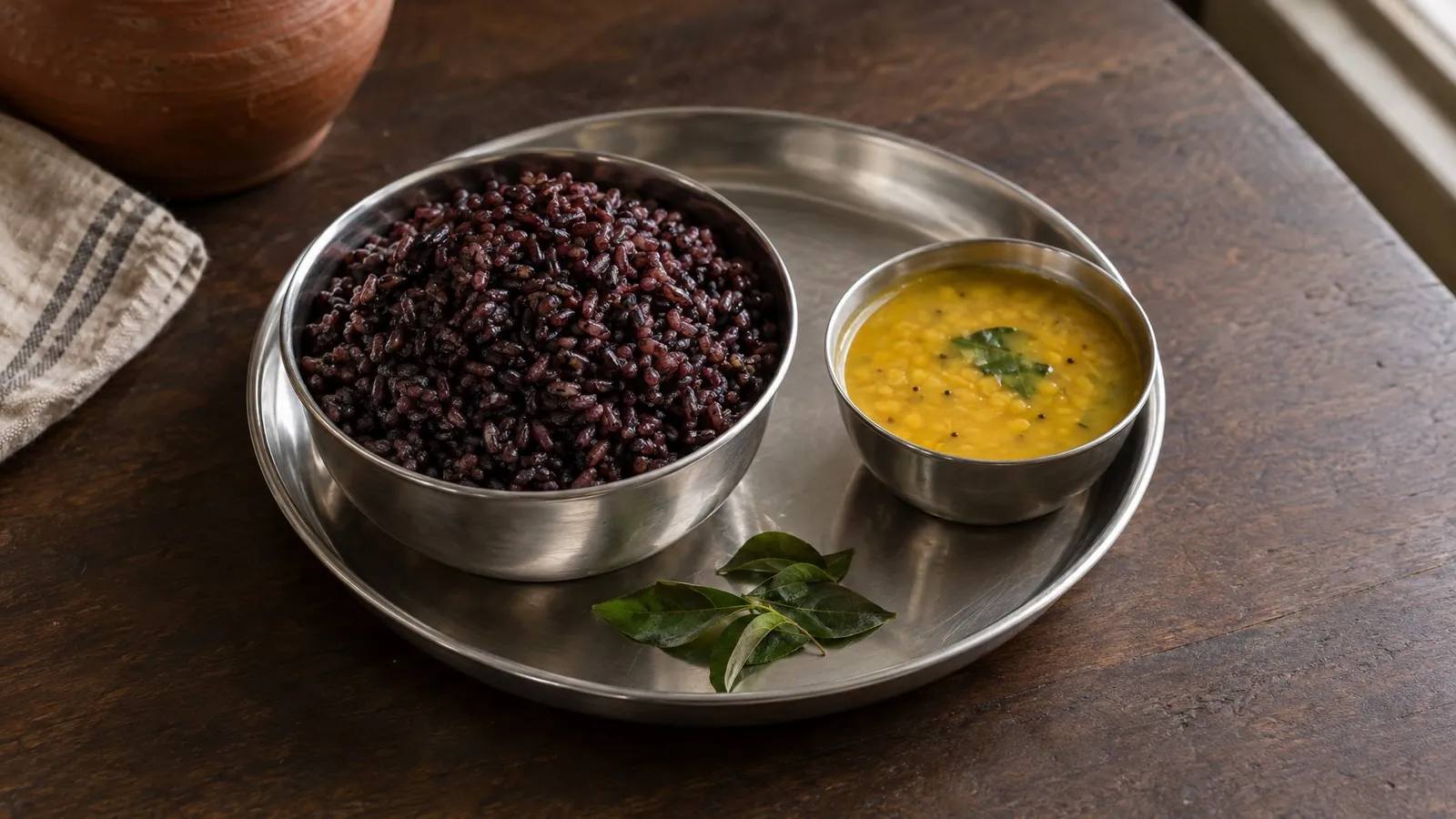
Kala chawal khane ke fayde aur nuksan (black rice)
Kala chawal khane ke fayde aur nuksan (black rice)

Kala chawal khane ke fayde aur nuksan, numbers ke saath: 100 g mein 4.2 g fibre, 7.57 g protein, 113 mg magnesium aur 1.12 mg iron, dark bran mein anthocyanins, aur tested GI 91. Seventeen pigmented-rice trials kya kehti hain, nuksan, ek din mein kitna aur kaise khayein.
08 Aug 2026by COWBERRY
8 minute read
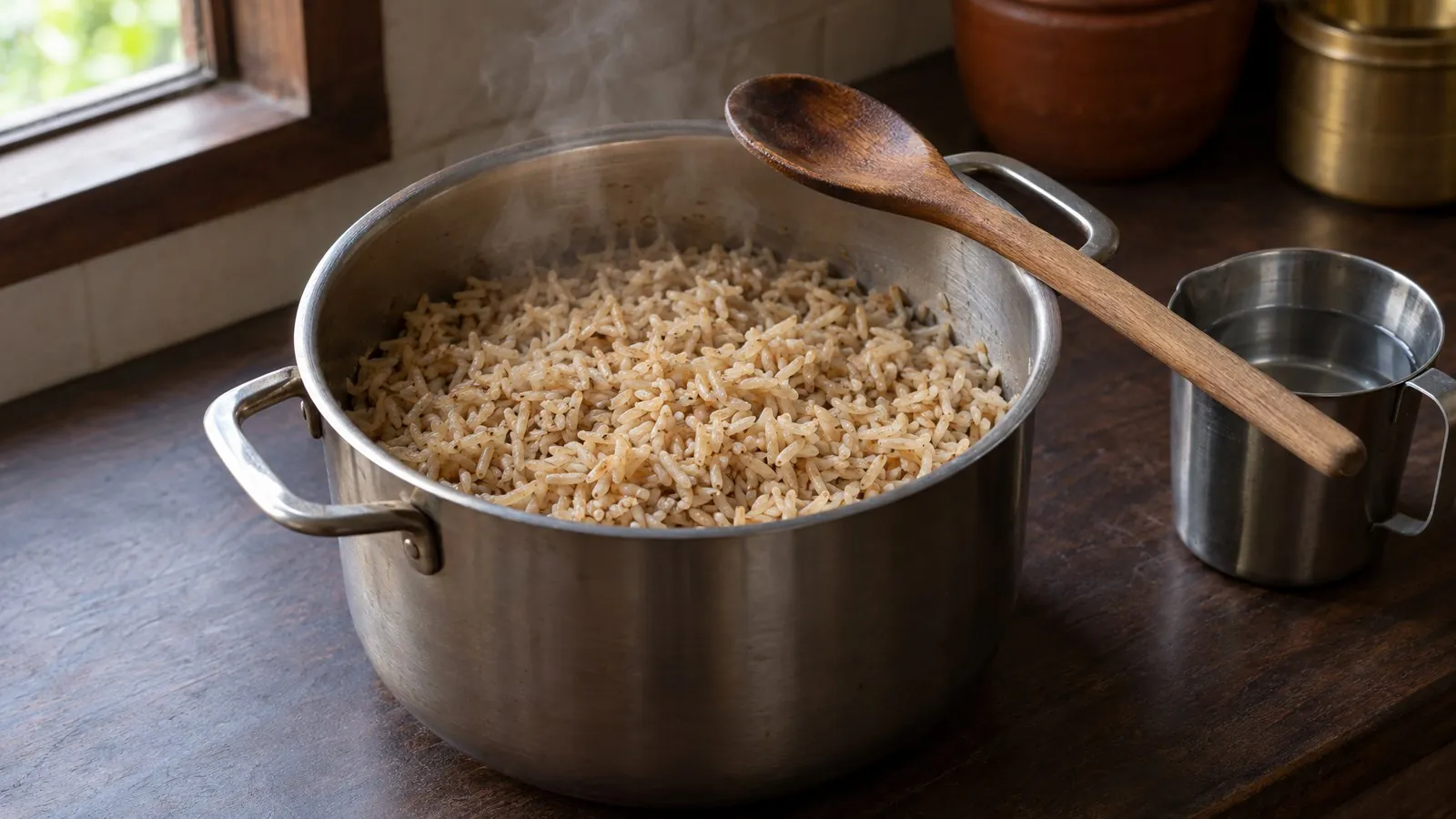
Brown rice water ratio: how to cook brown rice perfectly
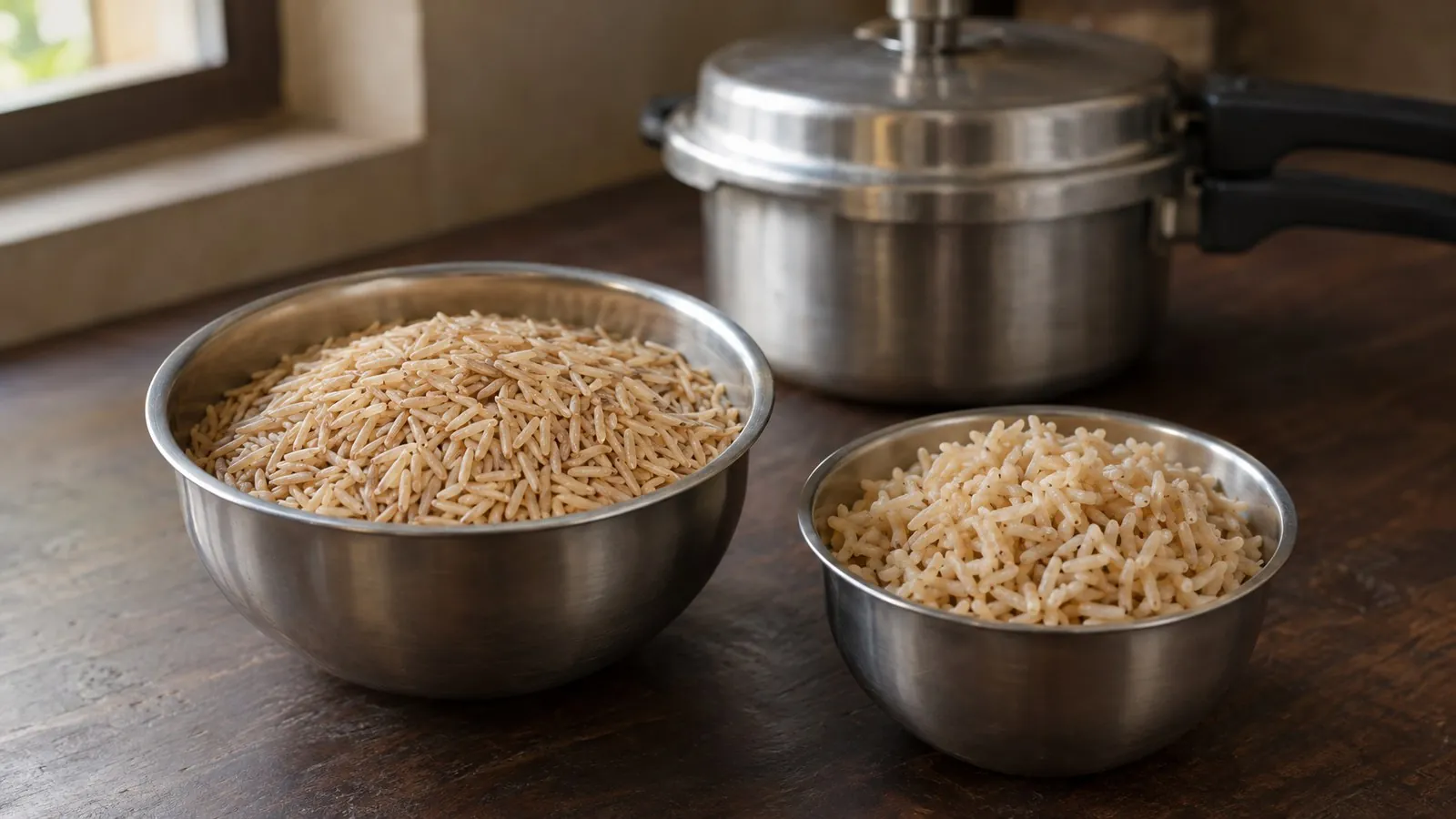
Brown rice water ratio: how to cook brown rice perfectly

The brown rice water ratio is 1:2 — one part rice to two parts water. Steps for the stove and pressure cooker, the 30 to 40 minute cook time, common mistakes, a time and quantity table, and the soaking question.
05 Aug 2026by COWBERRY
6 minute read
Brown rice: names, nutrition, benefits and how to cook it
Brown rice: names, nutrition, benefits and how to cook it

Brown rice is whole-grain rice: the husk comes off, the bran stays on. What it is, its names across India, IFCT 2017 nutrition per 100 g, benefits, side effects, cooking in 30 to 40 minutes, storage, recipes and what to check when buying.
04 Aug 2026by COWBERRY
11 minute read
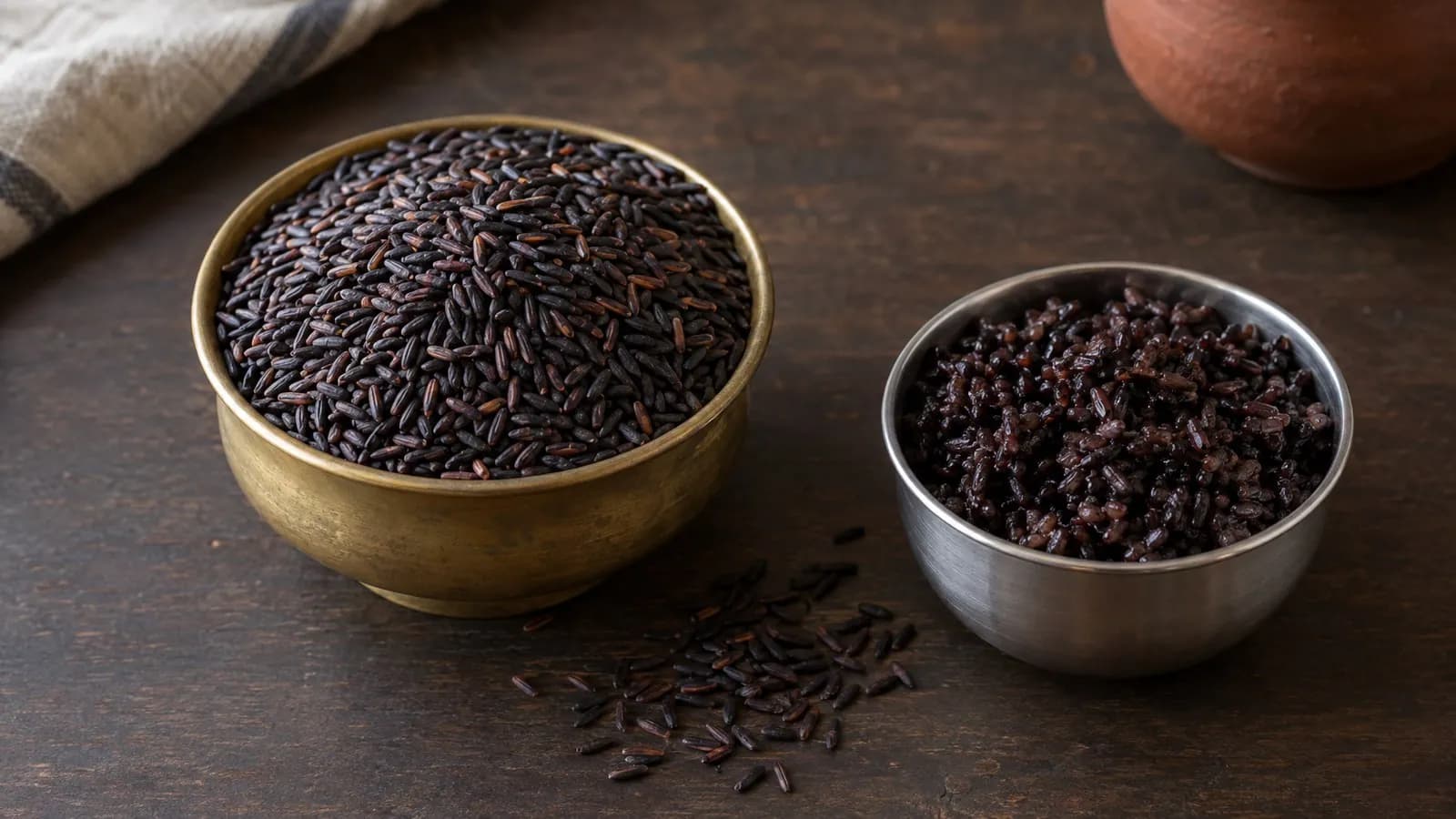
Black rice (kala chawal): what it is, nutrition, benefits and cooking
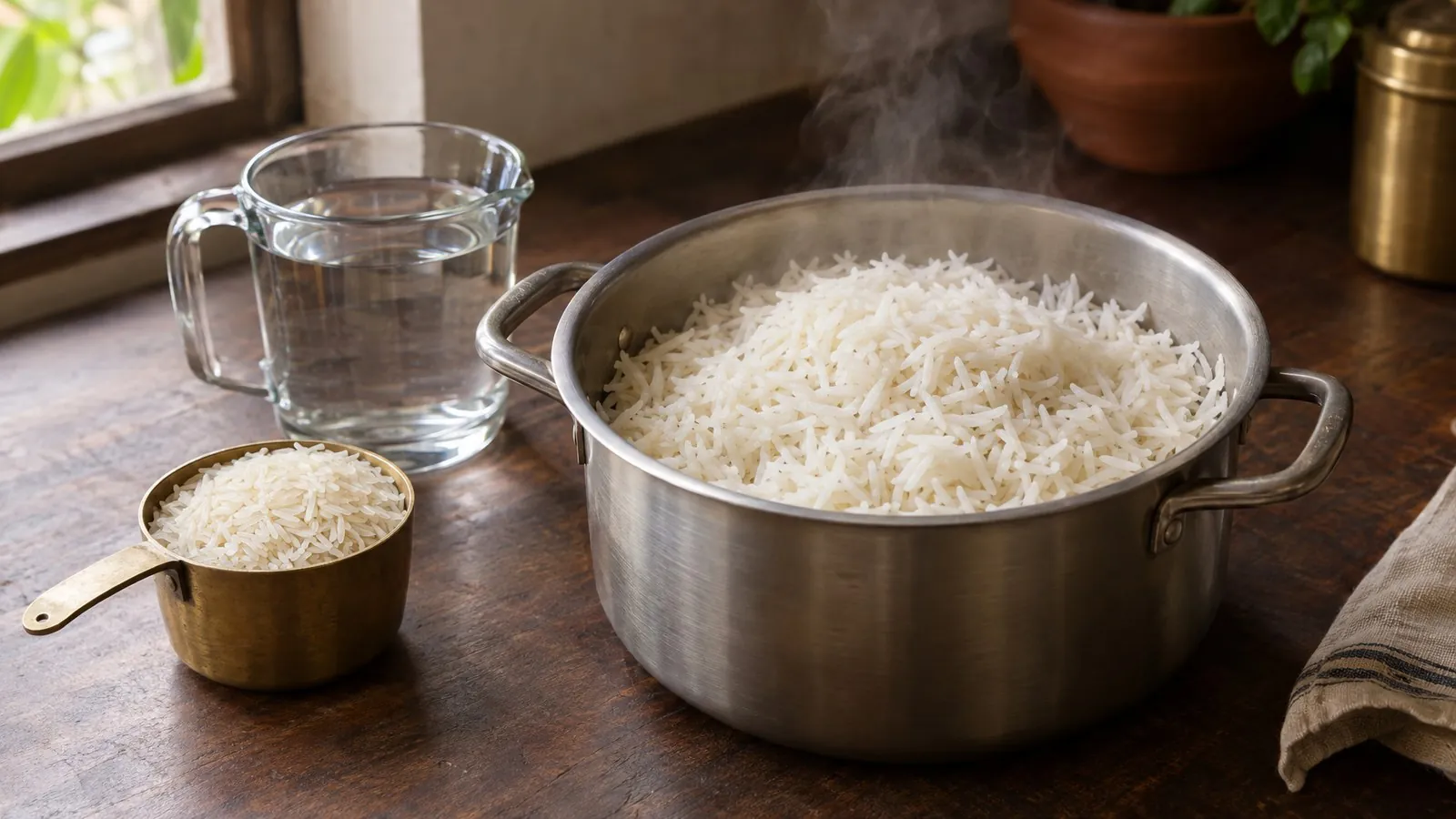
Black rice (kala chawal): what it is, nutrition, benefits and cooking

Black rice (kala chawal): the dark whole rice from Manipur and the Northeast. What makes it black, the forbidden-rice story, USDA nutrition per 100 g (370 kcal, 4.2 g fibre, 113 mg magnesium), the GI range 64-109, benefits, side effects, cooking, storage and how to buy it.
03 Aug 2026by COWBERRY
11 minute read
Basmati rice water ratio: how to cook perfect basmati rice
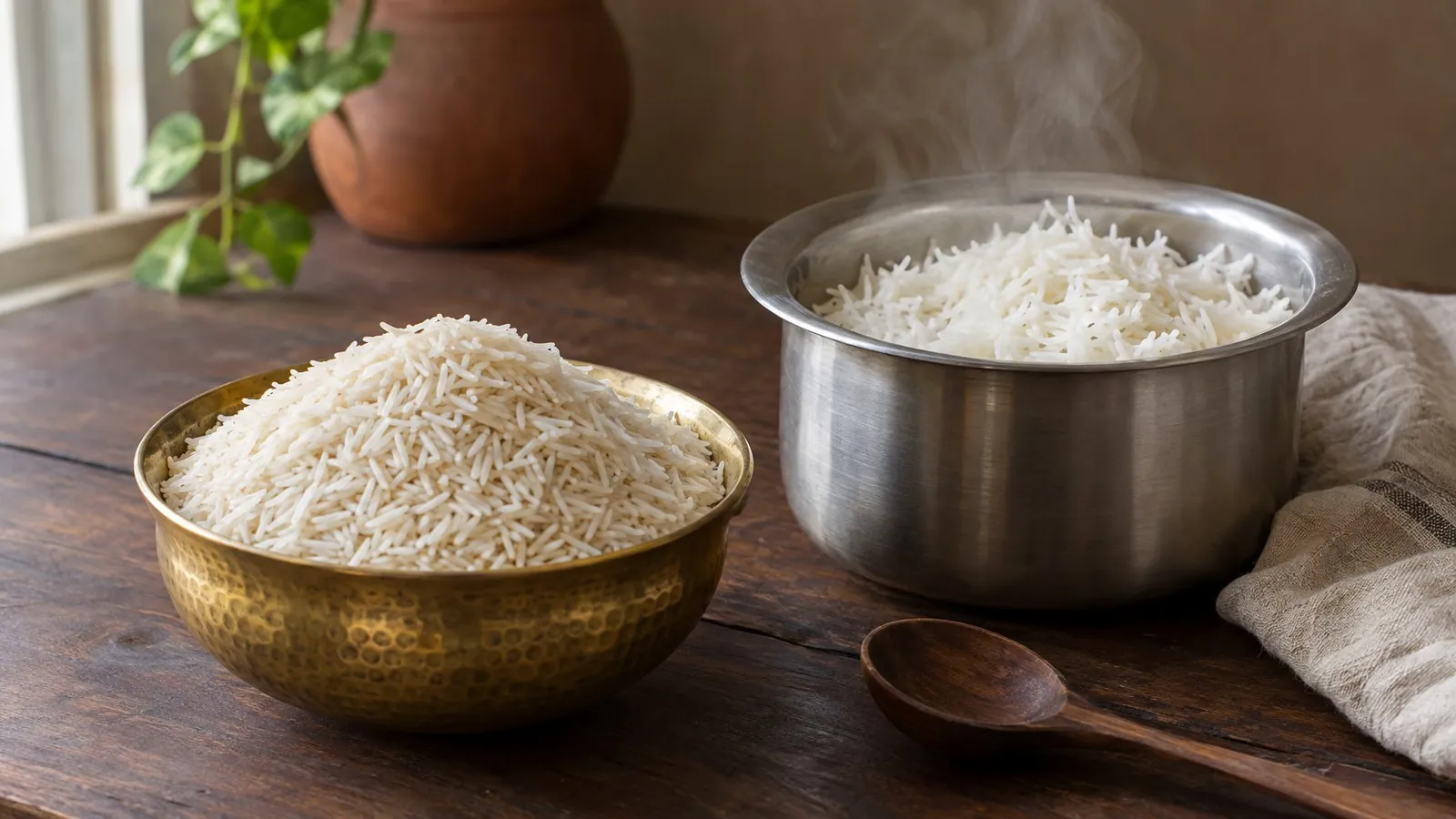
Basmati rice water ratio: how to cook perfect basmati rice

The basmati rice water ratio is around 1:1.5: one cup of rice (200 g) to roughly 300 ml of water, simmered for 12 to 15 minutes. Steps, a plain-cooker-biryani-pulao table, common mistakes and storage.
02 Aug 2026by COWBERRY
6 minute read
Basmati rice: names, nutrition, benefits and how to cook it
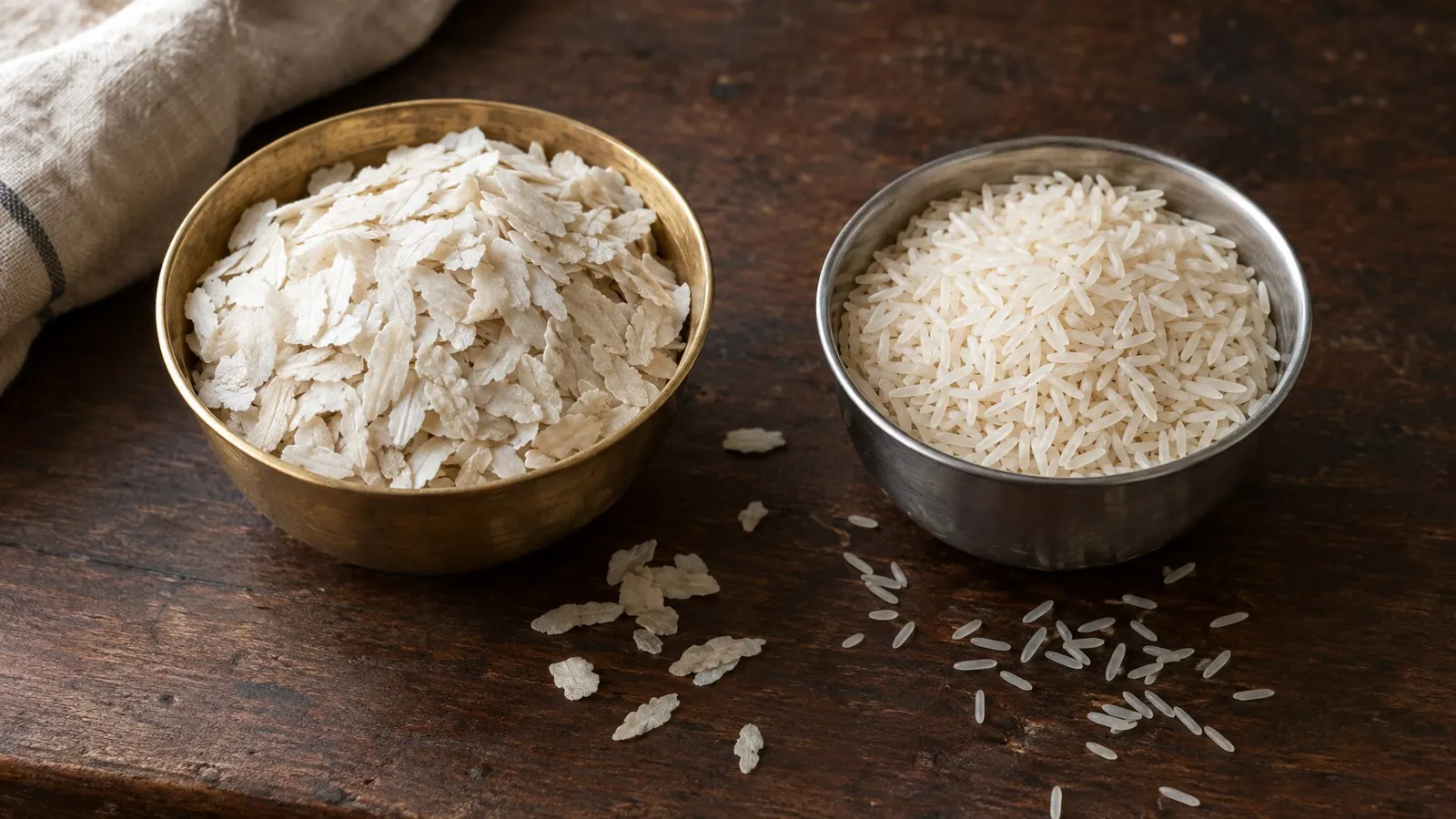
Basmati rice: names, nutrition, benefits and how to cook it

Basmati rice in one place: what it is, its names across India, nutrition per 100 g, the glycemic index of 50, benefits and limits, and how to cook, store and buy it.
01 Aug 2026by COWBERRY
10 minute read
Poha vs rice: nutrition, GI and which is the better everyday choice
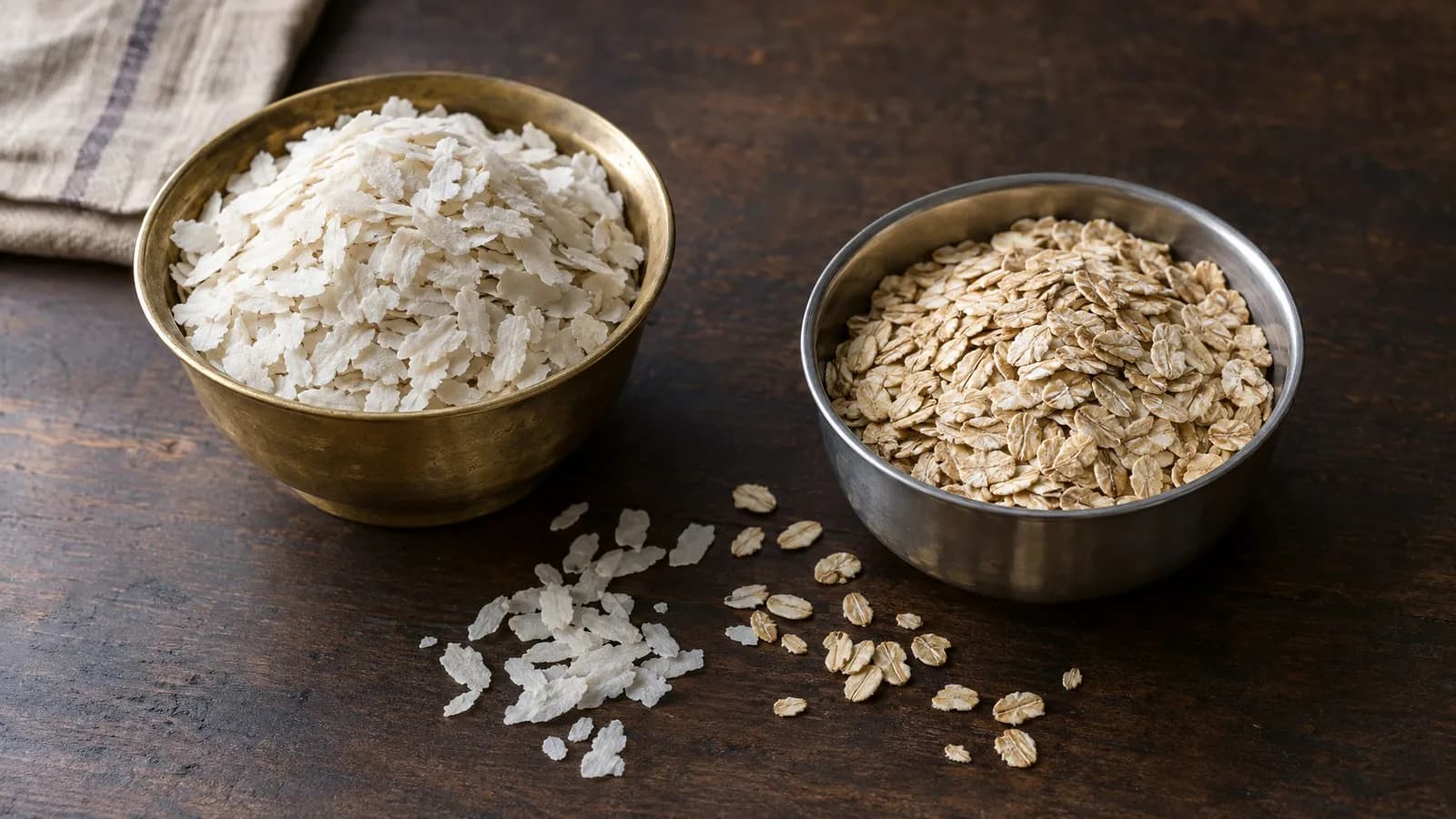
Poha vs rice: nutrition, GI and which is the better everyday choice

Poha vs rice: poha is rice, flattened, so the two sit close on calories and carbs; poha's edges are iron (4.46 mg against 0.65 mg per 100 g), magnesium and fibre, rice's is lower fat. GI 59 against 50, per 100 g and per serving.
27 Jul 2026by COWBERRY
6 minute read
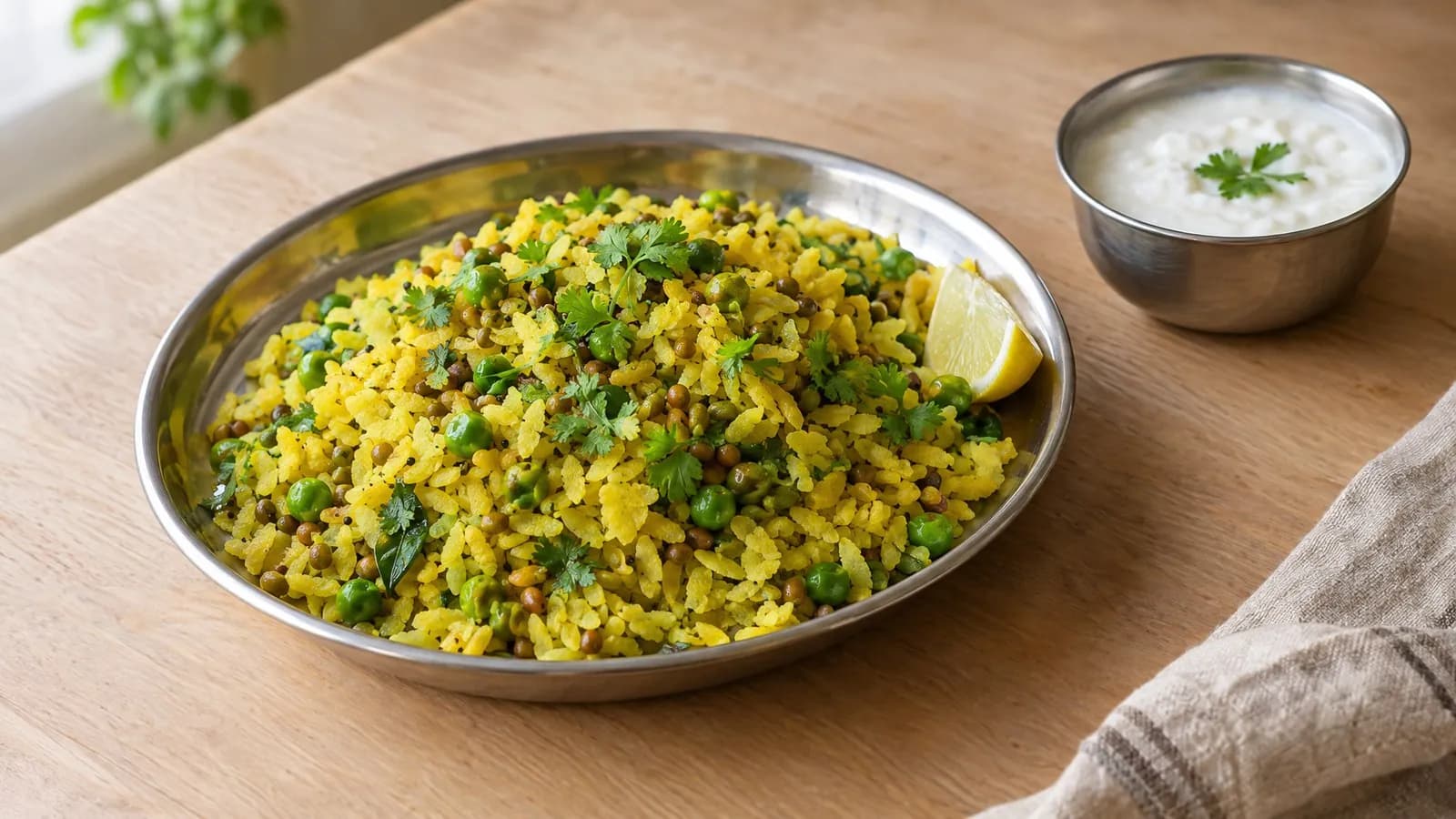
Poha vs oats: nutrition per 100 g and per serving, side by side
Poha vs oats: nutrition per 100 g and per serving, side by side

Poha vs oats: oats win protein (16.9 g) and fibre (10.6 g) per 100 g, poha wins on fat (1.14 g) and needs no boiling; the glycemic index ties at 59 to 60. Per 100 g and per 50 g, with who should choose which.
26 Jul 2026by COWBERRY
6 minute read
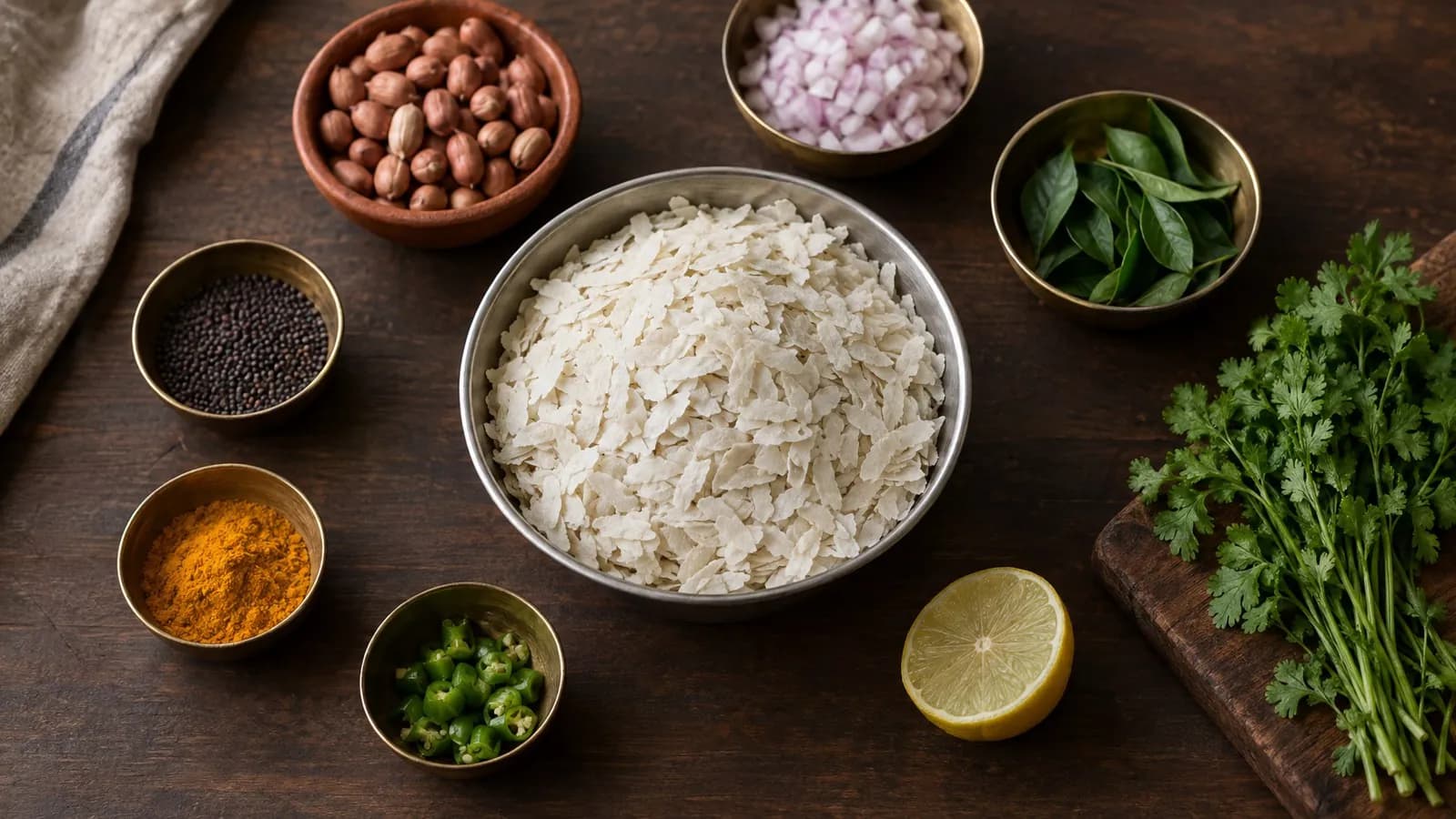
Poha ingredients: the full list and quantity for 1, 2 or 3 people
Poha ingredients: the full list and quantity for 1, 2 or 3 people

Poha ingredients list with quantities for 1, 2 or 3 people: thick poha, groundnut oil, peanuts, mustard seeds, curry leaves, onion, turmeric, lemon and the rest, plus what each one does and what to swap.
24 Jul 2026by COWBERRY
5 minute read
Poha in pregnancy: portion, safe prep and what to pair it with

Poha in pregnancy: portion, safe prep and what to pair it with

Poha in pregnancy: a safe, quick rice meal when cooked fresh and paired with protein and vegetables. Portion, iron and folate figures, and what to avoid.
23 Jul 2026by COWBERRY
7 minute read