by COWBERRY

5 minute read
Poha ingredients: the full list and quantity for 1, 2 or 3 people

The poha ingredients for a kanda poha are a short list, and the poha quantity for one person is easy to fix: 50 g of dry thick flakes make one plate. Around them sit a tempering, a seasoning and a garnish, almost all pantry staples. The full list, quantities for 1, 2 or 3 people, and what each item does follow; the poha hub has the background.
The poha ingredients list: from flakes to garnish
One plate of kanda poha pulls from five shelves of the kitchen, and nothing on the list is hard to find.
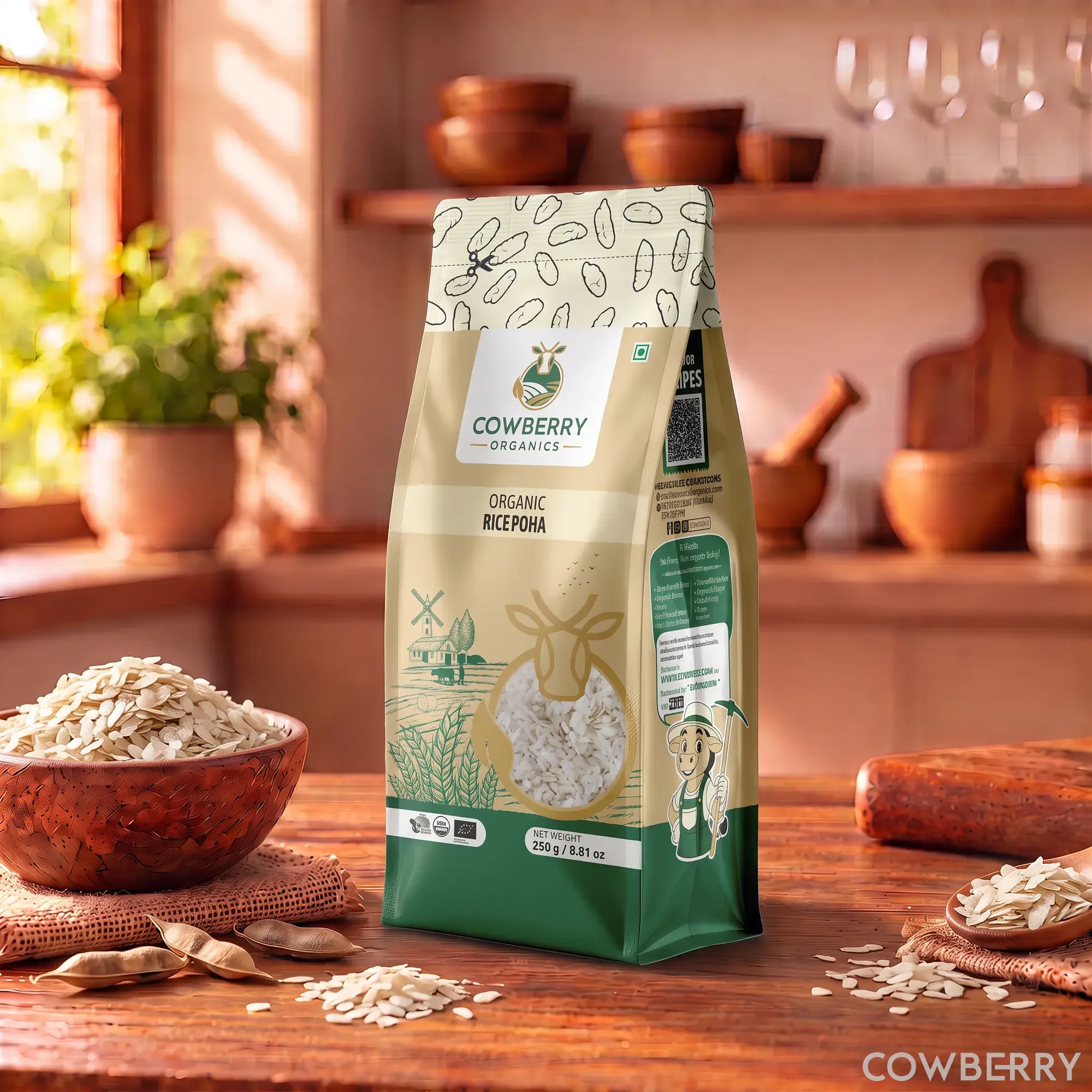
- The flakes: thick poha, 50 g dry for one plate — the only ingredient whose weight really matters, because it is the dish itself. COWBERRY sells organic rice poha.
- The fat and the crunch: groundnut oil to fry in, and raw peanuts for the bite.
- The tempering: mustard seeds, curry leaves, green chilli and a pinch of hing, with finely chopped onion — the kanda of the dish's name — softened in the same oil.
- The seasonings: salt, turmeric and, in many homes, a small spoon of sugar.
- The finish: lemon juice squeezed on only after the pan leaves the flame, fresh coriander over the top, and grated coconut for those who like it.
That is the whole poha ingredients list, and it changes little from plate to plate: batata poha adds potato, dadpe pohe swaps the cooked pan for raw thin flakes and coconut. The water half of the recipe — how long to rinse, when to soak — is on the how to soak poha page.
Poha quantity for one person, and for 2 or 3
The poha quantity for one person is the anchor: a 50 g plate of dry poha, half a cup of thick flakes. The kanda poha recipe these numbers come from cooks four plates from 2 cups (200 g) of poha; the table scales it down for one, two and three.
| Ingredient | For 1 plate | For 2 plates | For 3 plates |
|---|---|---|---|
| Thick poha | 50 g (half a cup) | 100 g (1 cup) | 150 g (1.5 cups) |
| Groundnut oil | half a tbsp (7.5 g) | 1 tbsp (15 g) | 1.5 tbsp (22.5 g) |
| Raw peanuts | 1 tbsp | 2 tbsp | 3 tbsp |
| Mustard seeds | 1/4 tsp | 1/2 tsp | 3/4 tsp |
| Curry leaves | 2 to 3 | 5 | 7 to 8 |
| Green chilli | 1/2 | 1 | 1 to 2 |
| Hing | a pinch | a pinch | a pinch |
| Onion | 1/4 large | 1/2 large | 3/4 large |
| Turmeric | a pinch | 1/4 tsp | 1/4 tsp |
| Salt | 1/4 tsp | 1/2 tsp | 3/4 tsp |
| Sugar, optional | 1/4 tsp | 1/2 tsp | 3/4 tsp |
| Lemon juice | 3/4 tsp | 1.5 tsp | 2 tsp |
| Coriander, chopped | 1/2 tbsp | 1 tbsp | 1.5 tbsp |
Water to sprinkle is a pan measure, not a plate measure: the recipe uses a tablespoon across the whole four-plate pan, so for one plate a splash is enough. The peanuts round to a quarter cup per four plates, and a tablespoon of groundnut oil is 15 g, the number the recipe's own weighing uses.
What each poha ingredient does, and what to swap it for
- Thick poha is the body of the dish; nothing else can stand in for it, and thin poha turns to paste in this recipe.
- Groundnut oil carries the tempering and its heat; another cooking oil or ghee can take its place.
- Raw peanuts bring the crunch and roast in the oil before the tempering starts; a nut-free plate swaps them for roasted chana dal or leaves them out.
- Mustard seeds crackle in the hot oil and pop, the signal it is ready for the curry leaves.
- Curry leaves add aroma; the plate still works without them.
- Green chilli and hing set the heat and the depth; both adjust to the table's taste, and the hing is optional.
- Onion is the kanda the dish is named for — softened, cut fine; potato joins it in batata poha.
- Turmeric gives the yellow; it fries with the onion and colours the flakes as they join.
- Salt and sugar balance each other; the sugar is optional.
- Lemon juice lifts the whole plate at the end — and only off the heat, since lemon boiled in the pan turns bitter.
- Coriander and coconut are the garnish; use either or both, or none at all.
From the list to the pan
This is also the poha recipe ingredients list in the order the pan meets them. Oil first, with the peanuts roasted in it and lifted out; then the mustard seeds until they pop, then the curry leaves, green chilli and hing. The onion softens, the turmeric follows on a low flame, and the rinsed, rested flakes join with the peanuts, the salt and the splash of water. The lid steams everything for two to three minutes, and lemon with coriander close the pan. The full method, weighed and timed, is the poha recipe; the Indori poha uses nearly the same list under a pile of sev, and the poha recipes roundup shows where else the same basket goes.
One plate of poha: the calories, counted
A plate of dry poha alone is 177 kcal: IFCT 2017 lists rice flakes at 354 kcal per 100 g, and a plate is half of that. The dressed kanda poha plate comes to 294 kcal, since the recipe totals 1174.9 kcal and is written for four plates. The 117 kcal in between is the tempering's work — oil brings most of it, peanuts the rest. The poha hub has the rest of the story on the flakes themselves.
FAQs
How to make poha?
Rinse 50 g of thick poha and rest it five minutes. In oil, roast the peanuts and lift them out; pop the mustard seeds with curry leaves, green chilli and hing, soften the onion, add the turmeric, then fold in the flakes with the peanuts and salt. Steam under a lid, then add lemon and coriander. The full poha recipe measures every step.
What is poha made of?
Rice, flattened into flakes. IFCT 2017 lists it as 'Rice, flakes', the same grain in a different form. For a cooked plate the flakes need only a rinse and a short rest before the pan.
How many calories in one plate poha?
177 kcal for the 50 g of dry flakes alone, and 294 kcal for the full kanda poha plate with oil, peanuts and sugar counted. On this site a plate of poha is always a 50 g plate of dry flakes, so the first number never moves; the second moves with the tempering.
What is poha?
Poha is flattened rice, which softens with a quick rinse. In English it is rice flakes, in Tamil aval, and a 50 g plate of the dry flakes carries 177 kcal. Its names in eleven Indian languages are on the poha in English page.
References
Shop this article
Keep reading
Red rice vs brown rice: the fibre, GI and honest verdict
Red rice vs black rice: nutrition, glycemic index and which to choose
Red rice nutrition per 100g: calories, protein, fibre and GI