by COWBERRY

7 minute read
Poha in pregnancy: portion, safe prep and what to pair it with

Poha in pregnancy is a safe, quick rice meal when cooked fresh, and one of the varied foods WHO describes for a healthy pregnancy diet. A plate from 50 g of dry poha gives 177 kcal, 3.7 g of protein and 2.2 mg of iron, useful but modest against the extra 350 kcal the second and third trimesters ask for, so pairing matters. The poha guide covers the grain itself.
Short answer: can you eat poha during pregnancy?
Yes. Poha is rice in flake form, and ICMR-NIN's daily food list for a normal pregnancy includes a variety of cereals and millets. WHO's antenatal care guidance recommends counselling about healthy eating and physical activity during pregnancy, with a diet that supplies enough energy, protein, vitamins and minerals across a variety of foods, including vegetables, beans, nuts, whole grains and fruit; poha is not a special pregnancy food, just one cereal choice within that variety. The precautions are the same ones that follow every pregnancy meal: cook it fresh, serve it hot, wash the vegetables that go into it, and skip raw sprouts on top, since the US FDA lists pregnant women among the people more vulnerable to foodborne illness and tells them to avoid raw or lightly cooked sprouts of any kind.
What a plate of poha gives you in pregnancy
Per 100 g of dry poha, IFCT 2017 lists 354 kcal, 7.4 g of protein, 1.1 g of fat, 76.8 g of carbohydrate, 3.5 g of fibre, 4.5 mg of iron and 8.5 mcg of folate. A 50 g dry plate is 177 kcal, 3.7 g of protein and 2.2 mg of iron. Set those against what pregnancy adds: in ICMR-NIN's guidelines a pregnant woman of normal weight needs 350 kcal extra each day from the second trimester, with protein up 8 g during the second trimester and 18 g during the third. Poha contributes a useful slice of that energy, but a plain plate is not a full meal. One honest note on the iron: a 2007 laboratory study linked the phytin phosphorus and dietary fibre of rice flakes to binding of iron and calcium, and ICMR-NIN advises foods rich in vitamin C such as guava or oranges along with meals to improve iron absorption. Poha is also not a substitute for the iron and folic acid supplements every pregnant woman is told to take; that decision belongs to the doctor.
| Nutrient | Rice flakes (poha) |
|---|---|
| Energy (kcal) | 354 |
| Protein (g) | 7.4 |
| Fat (g) | 1.1 |
| Carbohydrates (g) | 77 |
| Dietary fibre (g) | 3.5 |
| Iron (mg) | 4.5 |
| Calcium (mg) | 9.2 |
| Magnesium (mg) | 78 |
| Potassium (mg) | 148 |
| Sodium (mg) | 2.6 |
| Zinc (mg) | 1.5 |
| Folate (mcg) | 8.5 |
| Glycemic index (GI) | 59 |
Per 100 g raw, edible portion. Composition: IFCT 2017 (ICMR-NIN). GI: University of Sydney GI database. — means not reported. These are average values for the food; the label on a pack gives the values for that product.
Safe preparation: what matters in pregnancy
Poha itself is low-risk: the dish is cooked fresh before serving; the poha guide covers the flake types and how to store poha. The risk in a pregnancy kitchen sits in the toppings and the leftovers. Wash the vegetables and coriander well before they go into the pan, and use cooked moong instead of raw sprouts, which the US FDA tells pregnant women to avoid. Eat the poha hot and fresh; if any is left, cool it, get it chilled within an hour or two, and finish it within two days — the UK Food Standards Agency's rule for cooked food. Street-side poha that has been sitting out, however tempting, is the one to pass.
What to pair poha with in pregnancy
WHO's pregnancy diet list names green and orange vegetables, beans, nuts, whole grains and fruit alongside meat and fish; ICMR-NIN adds that grains such as cereals are the major sources of energy for a pregnant woman. Pair the poha plate the same way: cooked moong or chana dal, curd, and vegetables through the flakes, with a few groundnuts if they suit you. Milk is the source of calcium the guidelines point to, and calcium with vitamin D is essential during pregnancy for the formation of the baby's bones and teeth. The vegetables and dal bring fibre and protein to a plate whose own fibre is only 1.7 g. The poha recipe is the basic plate to build on, and flattened rice in pregnancy works best with that plate kept light on oil and modest on salt.
First, second and third trimester: does the advice change?
No guidance changes poha by trimester. The trimester difference is in needs, not in the food: ICMR-NIN adds the extra 350 kcal and the added protein from the second trimester, and weight gain through pregnancy is expected, with at least 10 to 12 kg the aim for a woman of normal BMI. The same fresh, soft, well-cooked poha suits any stage. In the first trimester, if smells and nausea shrink the appetite, a small plain plate is an easy rice meal; in the third, the same plate with dal and vegetables helps carry the higher energy and protein needs. If morning sickness is severe, or you have gestational diabetes, the doctor's advice overrides the plate.
What to watch and what to avoid
- Raw sprouts stay off the plate: the FDA's guidance tells pregnant women to avoid raw or lightly cooked sprouts of any kind; cooked moong and cooked dal are the safer fillings.
- Leftovers go in the fridge, not on the counter: cooked poha is chilled inside an hour or two and finished within two days.
- Salt stays modest and sugar occasional: ICMR-NIN's pregnancy guidance says foods high in fat, sugar and salt should be avoided, and asks overweight pregnant women to reduce sugar, refined cereal and oil.
- Supplements are not swapped for food: the iron and folic acid pills advised in pregnancy still stand, and poha does not take their place; that decision is the doctor's.
- Gestational diabetes changes the plate: the carbohydrate and GI numbers sit on the poha glycemic index page, and the plan your doctor sets comes first.
Talk to your doctor or dietitian
Every pregnancy is its own. If you have anaemia, gestational diabetes, high blood pressure or any pregnancy complication, the plate above is a starting point, not a plan: your doctor or dietitian sets your energy, iron and carbohydrate targets, and they know your trimester, your weight gain and your medication. Show them the numbers above and agree on how often poha fits your meals. For any change to your diet while you are pregnant, talk to your doctor or dietitian first; their word outranks this page.
FAQs
Is poha healthy?
As part of a varied pregnancy diet, yes: a plate from 50 g of dry poha gives 177 kcal, 3.7 g of protein, 2.2 mg of iron and 4.2 mcg of folate, cooked fresh with vegetables and dal. On its own it is mostly carbohydrate, so pair it.
How many calories in one plate poha?
One plate of 50 g dry poha, before oil and toppings, holds 177 kcal; kanda poha as the recipe makes it, with oil, peanuts and sugar, holds 294 kcal a plate. Against the extra 350 kcal a day pregnancy adds from the second trimester, either fits a normal day.
Does flattened rice have fiber?
Yes, 3.5 g per 100 g of dry poha, and 1.7 g in a 50 g plate. That is a small amount, so the vegetables, dal and fruit on the side do most of the fibre work in a pregnancy meal.
Can diabetics eat poha?
With gestational diabetes, poha can still fit, as a measured plate worked into the carbohydrate plan your doctor or dietitian sets; the GI is 59, in the medium band. Do not adjust the plan on your own; read the poha and diabetes page and bring it to your next visit.
How to make poha?
Wash thick poha in a sieve, drain and set it aside; soften onion with mustard seeds and curry leaves in a little oil, stir in turmeric and the poha, salt lightly, and finish with lemon and coriander. Serve it hot, freshly made.
What is poha made of?
Rice, rolled flat into flakes. Poha needs no boiling: rinse, rest a little, then cook the dish for a few minutes. In pregnancy, cook it fresh each time; any extra is chilled fast and finished within two days.
References
- Indian Food Composition Tables (IFCT) 2017, ICMR-National Institute of Nutrition
- Dietary Guidelines for Indians, ICMR-National Institute of Nutrition
- WHO recommendations on antenatal care for a positive pregnancy experience (2016)
- US FDA: Selecting and Serving Produce Safely
- UK Food Standards Agency: How to chill, freeze and defrost food safely
- Suma RC, Sheetal G, Jyothi LA et al. Influence of phytin phosphorous and dietary fibre on in vitro iron and calcium bioavailability from rice flakes. Int J Food Sci Nutr, 2007
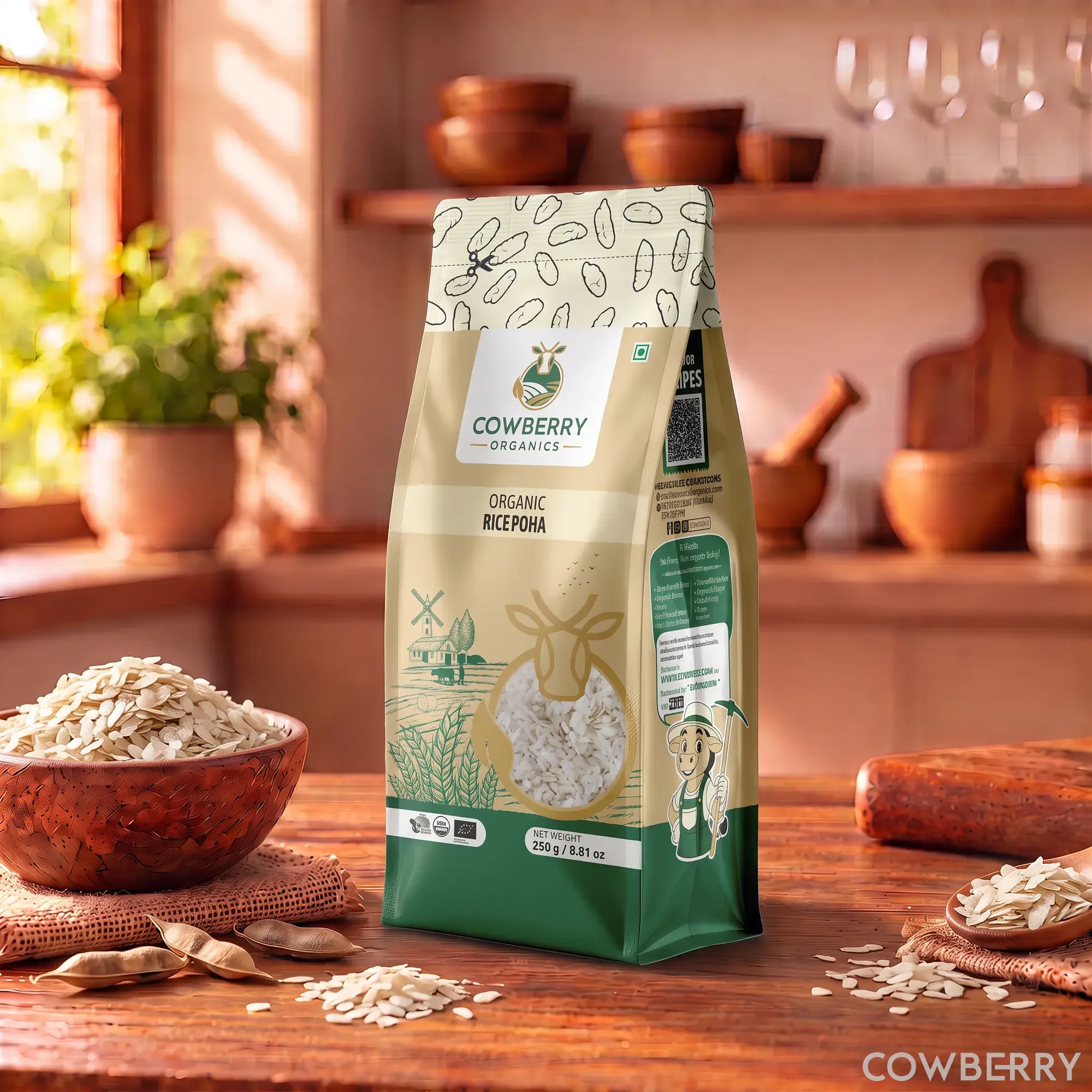
Shop this article
Keep reading
Red rice vs brown rice: the fibre, GI and honest verdict
Red rice vs black rice: nutrition, glycemic index and which to choose
Red rice nutrition per 100g: calories, protein, fibre and GI