by COWBERRY

11 minute read
Chai patti (tea): names, nutrition, benefits and how to make it

Chai patti is the loose tea leaf brewed into everyday chai, bought as CTC granules for the milky pot or as rolled orthodox leaves for a plain cup. This hub gathers the whole tea shelf: names, nutrition per 100 g, benefits and side effects, brewing, storage, recipes, a buying guide, and links to every tea page on the site.
What is chai patti?
Chai patti is simply the tea leaf itself: dried leaf bought loose in packets, not shut inside tea bags. Indian tea shops stock it in two grades. CTC is the everyday grade — tight little pellets of black tea that brew quickly into a strong cup and hold their own against milk, which is why the daily pot starts from them; the full story is on what is CTC tea. Orthodox is the whole-leaf grade — hand-picked leaves rolled the traditional way, which steep into a smoother, gentler cup usually drunk plain; what is orthodox tea covers it. The two grades sit beside each other on CTC tea vs orthodox tea, and the finer, powder-like dust grade is compared on CTC tea vs dust tea. Whatever the grade, it is one plant behind them all — the differences lie in processing and packing, not in the leaf itself.
Chai patti in English, Hindi and other Indian languages
The leaf answers to many names. In English it is tea, the one word used for both the leaf and the drink; in Hindi it is chai, and chai patti means tea leaves — chai being tea and patti the leaf. Loose leaf tea follows from the same word: leaf sold loose, weighed out of a tin. Hindi and Urdu both write it chai, and the one recorded South Indian word is chaaya in Malayalam; for several other Indian languages no printed source records a name, and the page says so rather than guessing. The botanical name, Camellia sinensis, and the full list of words recorded for it across India's languages — each with its own printed source — sit on tea in English, Hindi and Indian languages.
| Language | Name (romanised) |
|---|---|
| English | Tea |
| Hindi | Chai |
| Marathi | — |
| Gujarati | — |
| Punjabi | — |
| Bengali | — |
| Odia | — |
| Assamese | — |
| Kannada | — |
| Telugu | — |
| Tamil | — |
| Malayalam | Chaaya |
| Urdu | Chai |
| Sanskrit | — |
| Botanical name | Camellia sinensis |
Source: no source found. — means no name recorded in the source.
English ‘Tea’: Wikipedia: Tea. Hindi ‘Chai’: Wikipedia: Masala chai. Malayalam ‘Chaaya’: Wikipedia: Etymology of tea. Urdu ‘Chai’: Wikipedia: Etymology of tea. Botanical name ‘Camellia sinensis’: Wikipedia: Tea.
Chai patti nutrition per 100 g: the honest answer
The honest position on chai patti nutrition per 100 g is that nothing is printed for the leaf: the Indian Food Composition Tables (IFCT 2017) carry no tea-leaf entry at all, and the USDA FoodData Central database records only brewed and ready-to-drink tea, never the dry leaf, so no invented figures are quoted for it here. A plain cup adds almost nothing to the day's energy — the brew is mostly water — and every calorie a chai drinker counts arrives with the spoonfuls, not the leaves. The printed numbers belong instead to the sweeteners that build a milky cup. The food tables put white sugar at 387 kcal per 100 g (USDA) and jaggery (cane) at 354 kcal per 100 g with 84.87 g of carbohydrate (IFCT 2017). Scaled to the site's own recipes, the sugar in each cup of chai works out to about 29 kcal and 7.5 g of carbohydrate, and the sweeter measure in a cup of masala chai to about 39 kcal and 10.0 g; milk adds more on top, with no printed figure to count it by. Nor does any glycemic index list print a number for a plain cup of tea. The full arithmetic, tables included, is on chai patti nutrition.
Chai patti benefits, each tied to its source
Chai patti benefits are real but modest, and each one traces back to a printed source. The dietary guidelines name what the leaf carries: flavonoids and other polyphenols that act as antioxidants, linked in print with a lower risk for coronary heart disease and stomach cancer, plus theobromine and theophylline, which relax the arteries — and the same guidelines add that the benefits sit best in a plain cup, drunk in moderation. The larger research is observational: a 2024 meta-analysis merging 38 cohort data sets with 1,956,549 participants found the heaviest tea drinkers showed lower mortality overall (pooled estimate 0.90) and lower cardiovascular mortality (0.86), with cancer mortality at 0.90 but its confidence interval crossing 1.0 — association, not proof. The same analysis placed the strongest associations at around 2.0 cups a day for all-cause mortality and 1.5 cups a day for cancer mortality, with little gained beyond those points. No source prints a per-cup amount for any of these compounds, so the list stays qualitative; none of the research divides CTC from orthodox, and no page here turns an association into a promise. One small measured effect does exist: ten randomised trials pooled in 2015 put black tea's LDL cholesterol drop at 4.64 mg/dL. The ten-item list sits on chai patti benefits, and the same points in Hinglish on chai patti ke fayde aur nuksan.
Chai patti side effects and who should limit it
Two cautions come with the cup, both printed in the dietary guidelines. The first is caffeine: a 150 ml cup of tea holds 30 to 65 mg, the same guidelines set the tolerable limit at 300 mg of caffeine a day, and they advise moderation so the day's total stays under it, adding that excessive tea is to be avoided on account of its caffeine; the cup-by-cup rundown of every drink is on how much caffeine is in tea. The second is iron: tannin in tea interferes with iron absorption, so the printed rule puts tea and coffee aside before, during or soon after a meal. A 2017 controlled trial in twelve healthy UK women put a number on it: 5.7% of the meal's iron was absorbed when the meal came with water, 3.6% when tea joined it, and 5.7% when the tea was held back a full hour, the inhibitory effect easing from 37.2% to 18.1%. Pairing the meal with vitamin C foods such as guava, pineapple and citrus helps, and in pregnancy caffeine is to be kept to a minimum, with the printed limit on chai patti in pregnancy. Anyone with anaemia, a heart condition or trouble sleeping, or on medicines, should settle their tea habit with a doctor or dietitian. A couple of plain cups a day sits comfortably inside both rules, and only the hour around meals needs watching every day.
How to cook or use chai patti: the two methods
In the kitchen, chai patti turns into chai by boiling: the water is brought to a hard boil, two teaspoons of CTC leaves simmer in it for two minutes, the milk joins for one gentle rise, and each cup is sweetened before straining — the step-by-step is the chai recipe, and the spiced pot with ginger and cardamom is masala chai. Before the leaf reaches the pot, it travels the factory route from fresh leaf to the dry granules you buy, walked stage by stage on how chai patti is made. The orthodox whole leaf takes a gentler kitchen method: a teaspoon steeped in water heated to 90-95 °C for 3 to 5 minutes, then strained and drunk plain, as how to drink orthodox tea shows. The same leaf serves both styles — the milky boil wants CTC, and the no-milk cup the guidelines point at is the orthodox steep. The chai pot needs nothing beyond water, milk, tea leaves and sugar, and the plain steep can be topped up with fresh hot water for a second, lighter cup. Which leaf suits which cup is sorted out on which loose leaf tea is best.
How to store chai patti
Tea keeps by what you keep away from it: air, light, heat and damp all slowly draw the aroma out of the leaf, and the leaf soaks up strong smells from its surroundings, so the pack wants an airtight tin in a dark, cool, dry cupboard, well away from the stove and the spice shelf. Well-stored like that, dry tea leaf stays good for about a year, while an open pack used for the daily pot keeps its freshest cups for a month or two; either way the leaf goes flat rather than bad, since it loses aroma and strength, not safety. The full storage rules are on does chai patti expire. Air, light, heat and moisture matter more than the date on the pack, because the change is gradual: a flat pot brews weaker and duller but stays safe to drink.
Loose leaf tea recipes
The recipe roundup on loose leaf tea recipes sorts the site's tea pots by the hour of the day: chai and masala chai for the morning, plain orthodox cups and sweet twists such as jaggery tea or brown sugar tea for the afternoon, and lighter pours — a caffeine-free turmeric cup and iced tea — for the evening. Every pot on that page builds on the same two leaves, CTC for the milky boils and orthodox for the plain steeps. The everyday chai pot takes about 10 minutes and the spiced masala chai about 15, with sugar and milk the only additions beyond the leaf. The roundup's evening list also holds a no-leaf cup — turmeric tea skips the leaf altogether and brings no caffeine with it.
Buying guide: choosing chai patti
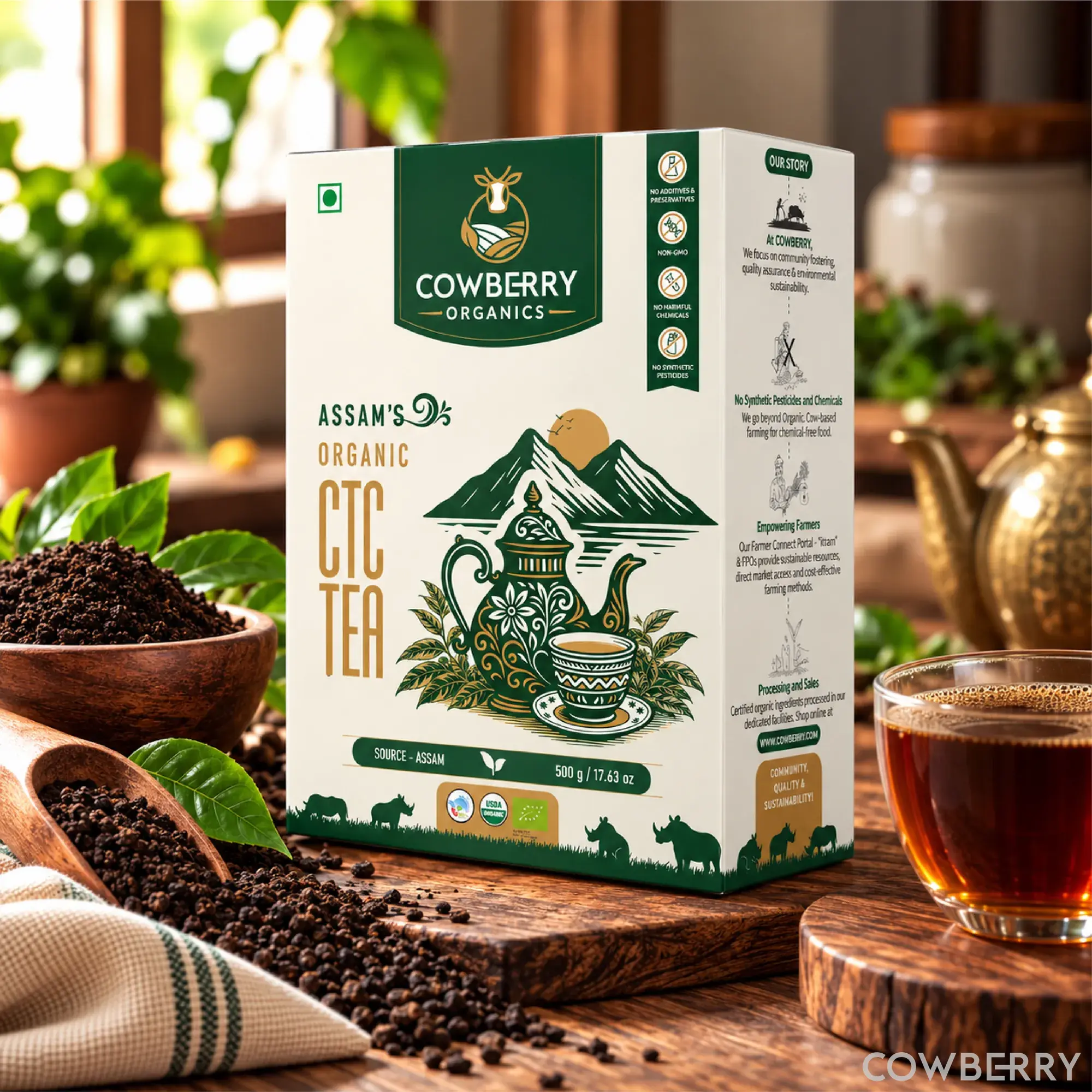
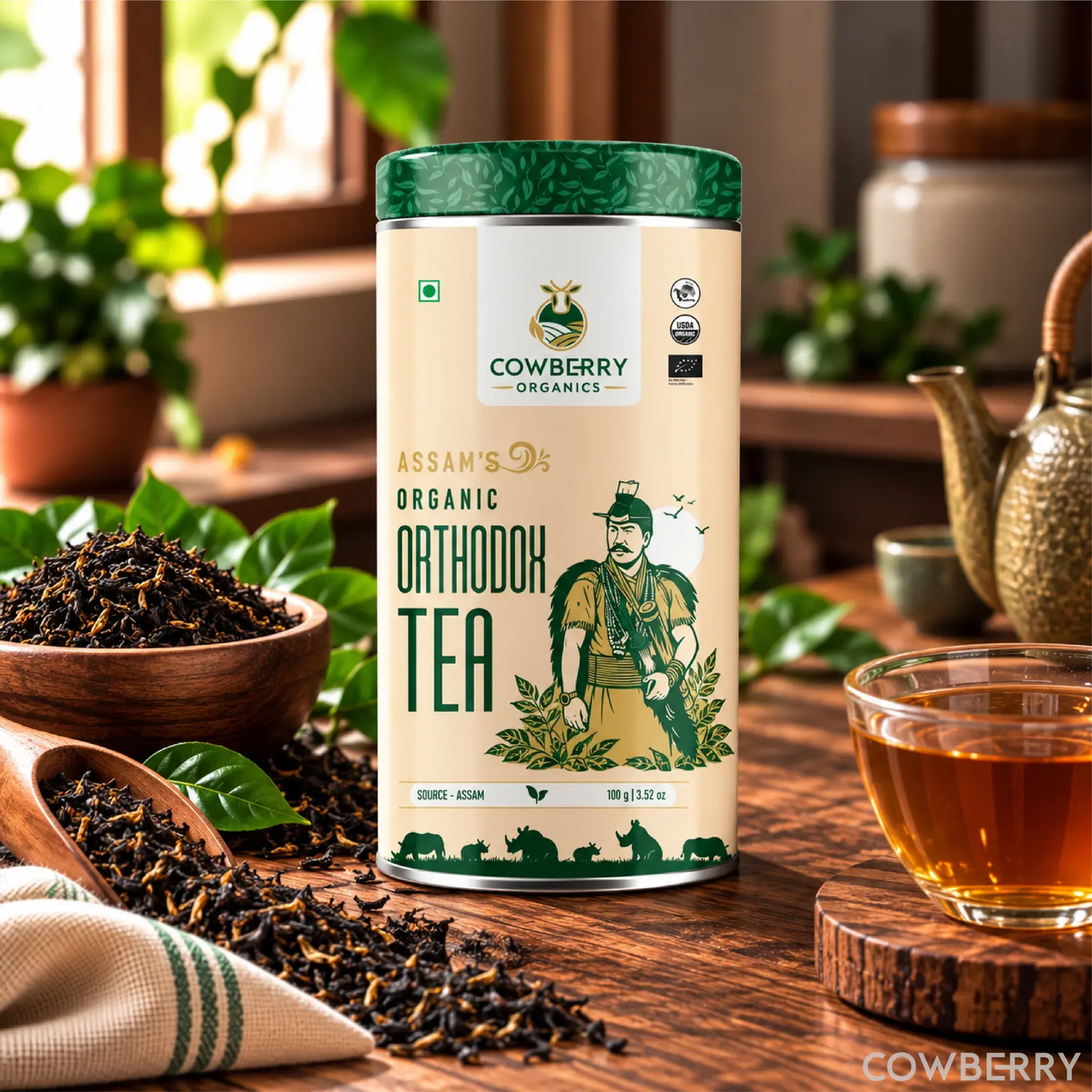
Buying chai patti comes down to four checks: the origin, the processing, the pack size and the certification on the label. COWBERRY's teas come from organic Assam gardens, grown without synthetic pesticides. Its Organic CTC Black Tea is crushed, torn and curled into small pellets, sealed air-tight straight after processing, in 500 g and 1 kg packs sized for a kitchen that brews daily; its Organic Orthodox Tea is whole hand-picked leaves rolled the traditional way, no artificial flavours or colours, in a 100 g pack for the slower plain cups. Both carry the India Organic, USDA & EU certified mark. If the same leaf in tea-bag form tempts you, loose leaf tea vs tea bags lines up the packings; green tea drinkers will find the difference from orthodox on orthodox tea vs green tea. Once the pack is open, storage takes over — airtight, dark, cool and dry, as above. Size the pack to your kitchen's pace — the big ones for a household that boils two pots a day, the small one for the occasional plain cup — and read the label for the origin, grade and certification before buying.
FAQs
What is chai patti?
Chai patti is the loose tea leaf that becomes chai: black tea bought as CTC pellets for the milky pot, or as whole rolled orthodox leaves for a plain cup, never shut inside tea bags. The two grades, the names, the honest nutrition picture and every use of the leaf run through this hub page. The word is Hindi — chai means tea, patti means leaves — so the name describes exactly what is in the pack.
Does chai patti have caffeine?
Yes. Chai patti is black tea, and the dietary guidelines print 30 to 65 mg of caffeine in a 150 ml cup, with the tolerable limit set at 300 mg of caffeine a day and moderation as the rule. The cup-by-cup list of every drink, tea included, sits on how much caffeine is in tea.
How to make chai patti?
Two ways: in the kitchen, chai patti becomes chai when water boils hard, two teaspoons of leaves simmer for two minutes, milk joins for one rise and each cup is sweetened before straining, exactly as the chai recipe shows; in the factory, the leaf is made into the grades you buy, walked through on how chai patti is made.
What is CTC tea?
CTC tea is black tea made the crush-tear-curl way: the leaf is crushed, torn and curled into compact little pellets that give a strong, full-bodied cup fast, which is why it is the leaf behind milk chai. The pellet-making route, and how it differs from the rolled leaf, is on what is CTC tea.
Which loose leaf tea is best?
The best loose leaf tea is whichever matches the cup you actually make: CTC granules for the strong milky chai brewed every day, and rolled whole orthodox leaves for the smoother plain cup, with no printed numbers separating the two. Which loose leaf tea is best walks the whole shelf, grade by grade.
Does loose leaf tea go bad?
Loose leaf tea goes flat rather than bad: over time, air, light and damp steal the aroma, and the leaf picks up strong smells from its surroundings, so an airtight tin in a dark, cool, dry cupboard keeps it good for about a year. The complete storage rules are on does chai patti expire.
References
- Indian Food Composition Tables (IFCT) 2017, ICMR-National Institute of Nutrition
- Dietary Guidelines for Indians, ICMR-National Institute of Nutrition
- USDA FoodData Central
- Kim Y, Je Y. Tea consumption and risk of all-cause, cardiovascular disease, and cancer mortality: a meta-analysis of thirty-eight prospective cohort data sets. Epidemiol Health, 2024
- Zhao Y, Asimi S, Wu K et al. Black tea consumption and serum cholesterol concentration: Systematic review and meta-analysis of randomized controlled trials. Clin Nutr, 2015
- Ahmad Fuzi SF, Koller D, Bruggraber S et al. A 1-h time interval between a meal containing iron and consumption of tea attenuates the inhibitory effects on iron absorption. Am J Clin Nutr, 2017
Shop this article
Keep reading
Coffee vs tea: caffeine, benefits and which is better
Coffee calories per 100g: powder, beans and filter coffee
Coffee in pregnancy: how much caffeine is safe