by COWBERRY

7 minute read
CTC tea vs orthodox tea: process, taste and which to choose

CTC tea vs orthodox tea in one line: both start as black tea leaf from the same gardens, and the process after picking decides everything. CTC crushes, tears and curls the leaf into small uniform granules that brew strong and bold, made for milk chai; orthodox rolls whole leaves the traditional way into a smooth, layered plain cup. The chai patti guide covers tea; this page compares both processes.
CTC tea vs orthodox tea: the verdict in three lines
Same leaf, two roads after picking. The CTC method crushes, tears and curls the leaf into small uniform granules; the orthodox method rolls whole leaves carefully, the traditional way, and the process decides everything that follows.
CTC brews the milk-chai cup; orthodox the plain one. The granules give a strong, bold, malty brew that stands up to milk and sugar; the whole rolled leaves steep into a smooth, balanced, layered cup with a delicate aroma.
Choose by the cup you pour. CTC for the everyday chai pot, orthodox for the plain black cup. Nutrition numbers stay out of this comparison for one honest reason: the food tables carry no entry for dry tea leaf.
Side by side: difference between CTC tea and orthodox tea
The difference between CTC tea and orthodox tea, one row at a time; caffeine and nutrition come next, in their own section.
| Point | CTC tea | Orthodox tea |
|---|---|---|
| What it is | Crushed, torn and curled into small, even pellets | Whole leaves carefully rolled the traditional orthodox way |
| Leaf form | Small dark pellets | Whole or large rolled leaves |
| Process | Crush, Tear and Curl | Traditional rolling that keeps the leaf whole |
| Brewing | Fast, one boil with milk | One teaspoon in hot water at 90-95°C, steeped 3-5 minutes |
| Taste | Strong, bold and malty | Smooth, balanced and layered, with subtle malty notes |
| With milk | Made for milk chai | Usually drunk plain, or with lemon or honey |
| Caffeine | About 75 mg, the NHS number for a cup of tea | The same number; no printed split by process |
| Cost | Usually the cheaper grade | Usually the dearer grade |
| Best use | Everyday milk chai | The plain cup, guests, quiet brewing |
Nutrition and caffeine: the same honest answer
Neither process changes the nutrition question, because the question has no printed answer: IFCT 2017 leaves tea out of its tables, the USDA database stops at the brewed cup, and the GI lists have nothing for tea at all. So neither tea gets a printed nutrition table here, because no source records one.
Two printed facts do exist. On caffeine, the NHS puts a cup of black tea at about 75 mg, and no published figure separates CTC from orthodox. On cholesterol, ten randomised trials with 411 people, pooled in a 2015 meta-analysis, found black tea cut LDL cholesterol by 4.64 mg/dL, while total and HDL cholesterol barely moved; the finding belongs to the whole black tea family, both processes included. Whatever the cup adds comes from the pot, milk and sugar chiefly, and the chai patti nutrition page follows that arithmetic.
Taste and cooking: the pot and the cup
CTC in the pot. The home chai method: granules simmered in the water for two minutes, milk poured in, one rise of the boil, and the brew comes out strong, bold and malty with a deep colour that holds through milk and sugar. This is the leaf for the daily chai ritual and the base for the masala chai recipe, where ginger and cardamom simmer alongside.
Orthodox in the cup. The brewing note that comes with the whole leaf says it plainly: add one teaspoon to hot water at 90-95°C and steep for three to five minutes, then strain and enjoy it plain or with a slice of lemon or honey. The smooth, balanced taste and layered flavour are the point, and a long hard boil pushes any black leaf toward harshness, so orthodox belongs in the steep, not the boil.
The taste gap on the tongue. CTC is bold and direct, built to carry milk; orthodox is smoother with more steps to its flavour. The full steeping detail is on how to drink orthodox tea.
Cost and where each fits
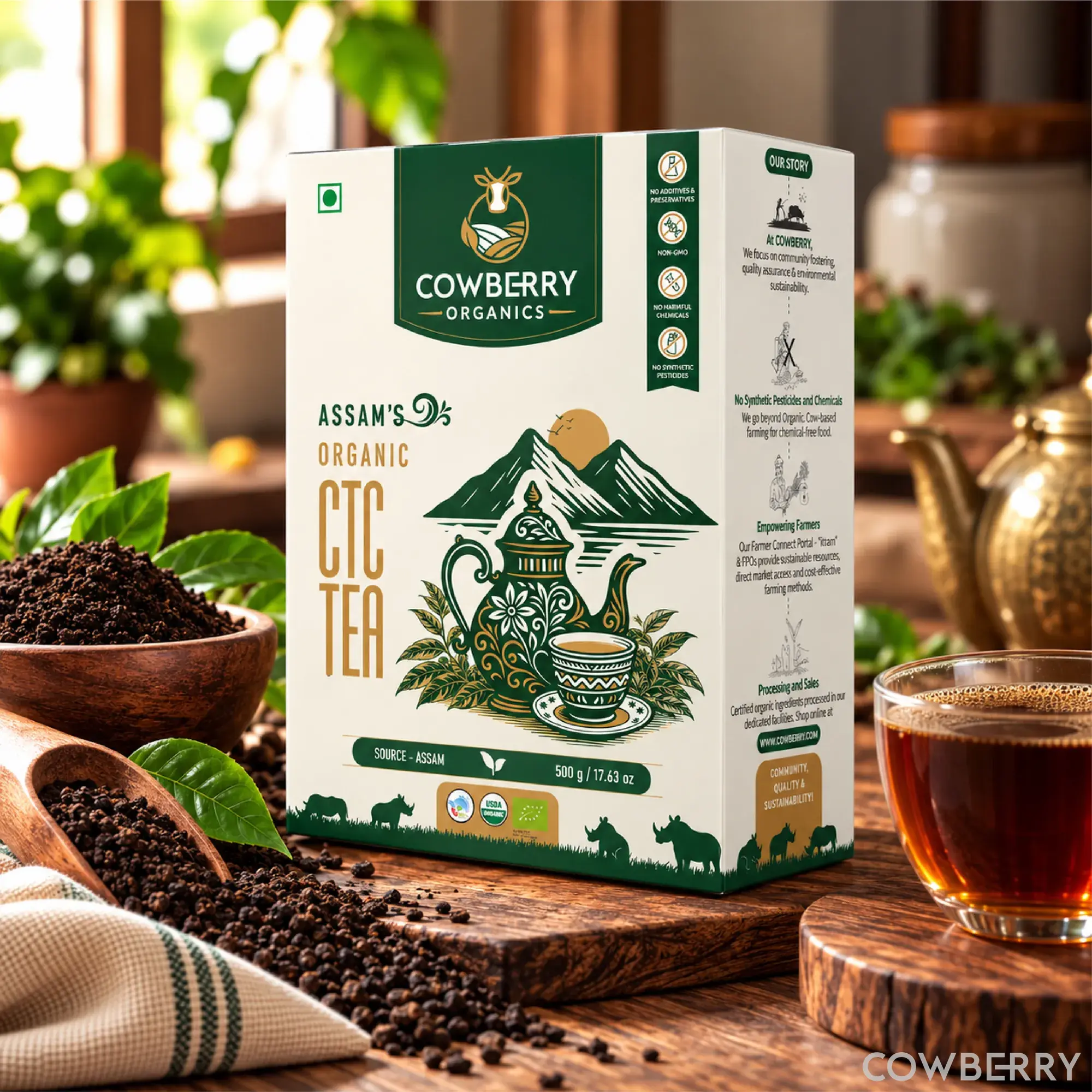
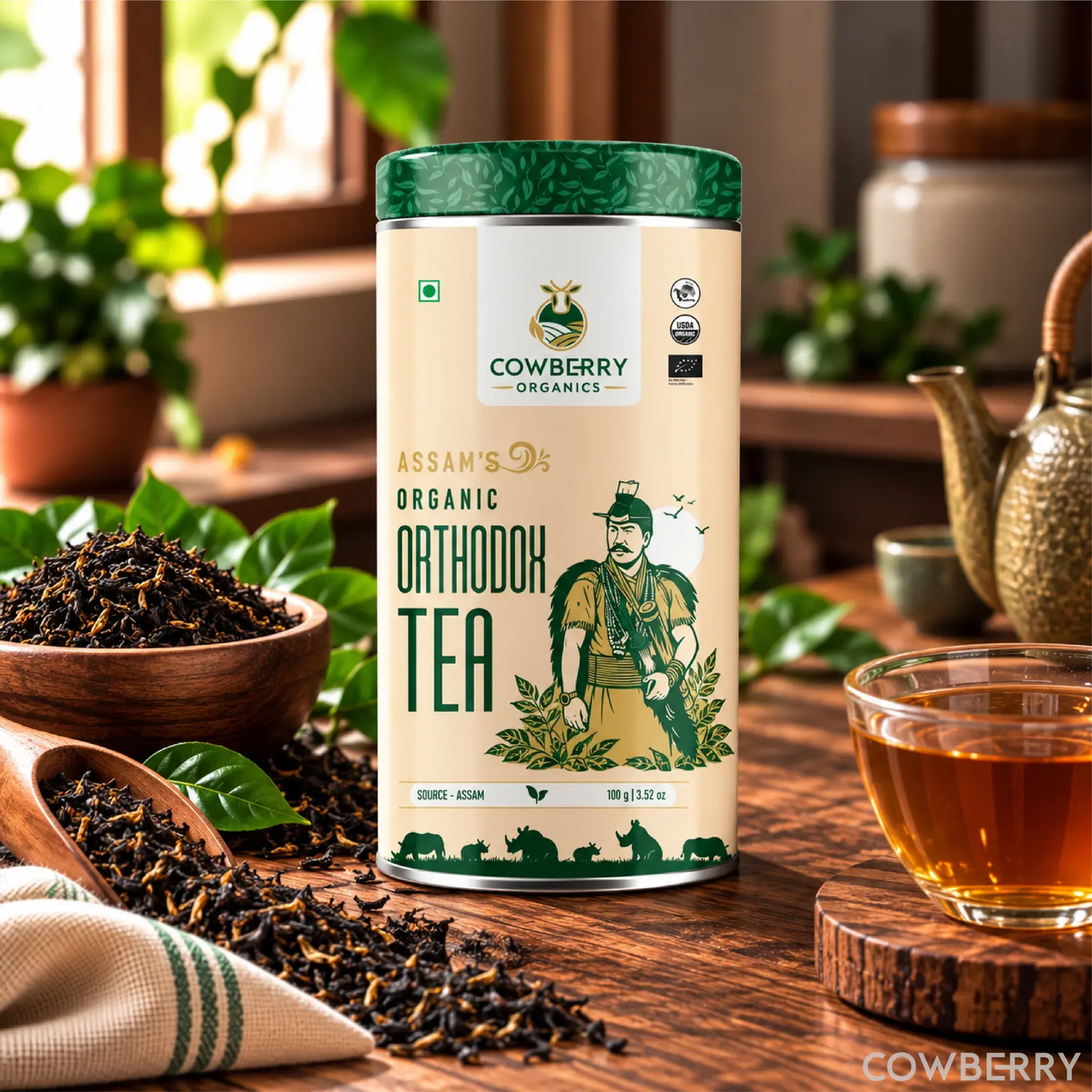
On cost, words and not numbers, because shelf prices shift and this page will not chase them. Orthodox tea is usually the dearer of the two: the traditional rolling keeps the leaf whole and takes more care than the fast crush-tear-curl line. CTC is the everyday-priced leaf, and the gap between them is smaller than the marketing around the teacup suggests. COWBERRY packs them accordingly: the CTC tea comes in 500 g and 1 kg packs for the daily pot, the orthodox in a 100 g pack for the leaf that is brewed by the cup.
Where each fits follows. CTC belongs in the home dabba and the family pot, boiled twice a day for chai. Orthodox belongs in the slow cup: plain black tea in the afternoon, a pot for guests, the leaf you steep rather than boil. Keep both well, and either stays fresh: the storage rules are on does chai patti expire.
Which for whom
- The daily milk-chai drinker: CTC granules, strong and bold, made for milk.
- The plain black tea drinker: orthodox whole leaf, smooth and layered, steeped three to five minutes.
- Anyone who wants the strongest, fastest cup: CTC; it is the bolder brew of the two.
- Anyone who finds tea bitter or harsh: orthodox, the smoother cup, and skip the long boil.
- Pregnancy: the NHS limit is no more than 200 mg of caffeine a day, and either tea here counts about 75 mg a cup toward it.
- Health questions past the cup: chai patti benefits has the findings in full, and the chai patti hub gathers the tea family.
FAQs
What is CTC and orthodox tea?
CTC tea is leaf crushed, torn and curled into tiny pellets that brew strong and bold; orthodox tea is whole leaves rolled the traditional way, steeping smooth and layered. Both are black tea from the same plant, and the process after picking makes the difference.
Is CTC tea better?
For milk chai, yes: its strong, bold brew stands up to milk and sugar and colours the cup deep. For a plain cup, orthodox is the better fit, smoother and more layered. Better follows the cup you want to drink, not one process being superior to the other.
Does orthodox tea have caffeine?
Yes, orthodox tea is black tea, and black tea carries caffeine. The NHS number for a cup of tea is about 75 mg, one figure for all black tea, with no printed split between CTC and orthodox. See does CTC tea have caffeine for the full caffeine picture.
Is orthodox tea good for health?
The big observational picture favours tea: across 38 cohorts and close to two million people, a 2024 meta-analysis found tea drinkers had a 10 percent lower risk of dying from any cause over the follow-up, with heart disease and cancer showing similar numbers; the authors read it as an association, not proof. Orthodox tea is black tea, so it sits inside that picture, and chai patti benefits has the detail.
Which is better for milk chai, CTC or orthodox tea?
CTC. Its strong, bold brew holds its body through milk and sugar, and the granules are made for the boil. Orthodox's smooth layers get lost in a milky pot, and it is happier steeped and drunk plain. For chai the pellets win; for a plain black cup the whole leaf wins.
Can orthodox tea be boiled for chai?
It can, but it suits steeping better: the brewing note says one teaspoon in hot water at 90-95°C, steeped for three to five minutes, then strained. Boiling whole leaf long and hard pushes it toward harshness. If the pot must boil, CTC granules are the leaf made for that job.
References
- Kim Y, Je Y. Tea consumption and risk of all-cause, cardiovascular disease, and cancer mortality: a meta-analysis of thirty-eight prospective cohort data sets. Epidemiol Health, 2024
- Zhao Y, Asimi S, Wu K et al. Black tea consumption and serum cholesterol concentration: Systematic review and meta-analysis of randomized controlled trials. Clin Nutr, 2015
- NHS: foods to avoid in pregnancy (caffeine section)
Shop this article
Keep reading

Coffee vs tea: caffeine, benefits and which is better
Coffee calories per 100g: powder, beans and filter coffee

Coffee in pregnancy: how much caffeine is safe