by COWBERRY

7 minute read
Loose leaf tea vs tea bags: taste, cost and which is better

Loose leaf tea vs tea bags in one line: loose leaf is the dry tea leaf sold whole, weighed per pot, and it brews the fuller, more controllable cup; tea bags hold fine broken particles that steep fast and handy but give up less of the leaf. Loose leaf wins on taste and value, bags win on speed, and the chai patti guide covers the leaf behind both.
Loose leaf tea vs tea bags: the verdict in three lines
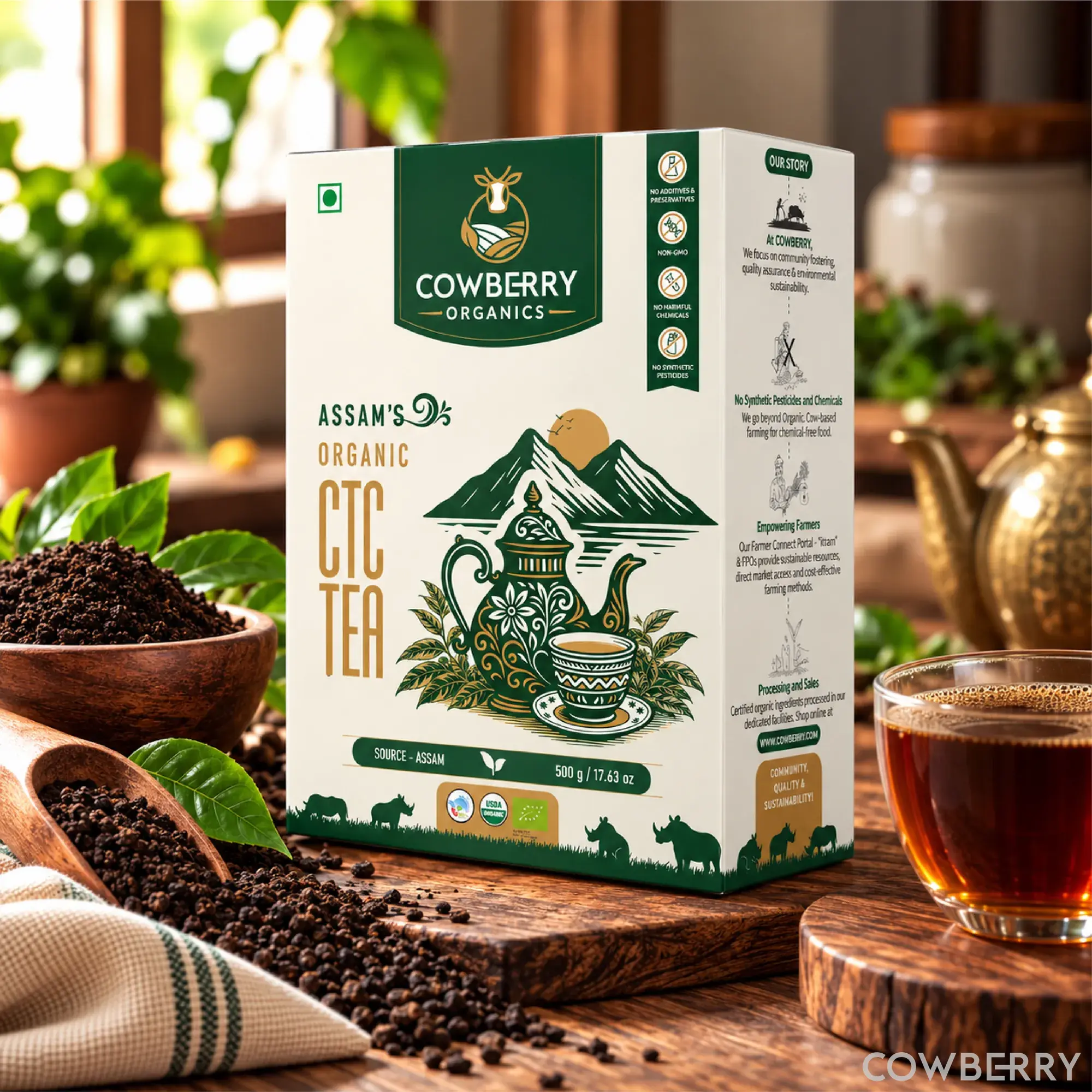
Loose leaf is the leaf itself. Sold whole, as CTC granules or rolled orthodox leaves, weighed out per pot, and brewed the way the leaf wants: boiled with milk for chai, or steeped plain.
Tea bags are the leaf in portions. Fine, broken particles sealed in filter paper, one cup per bag, and a bag left sitting in the cup keeps extracting until the brew turns harsh.
Loose leaf wins on taste, value and control; bags win on speed and nothing-to-wash. That one bag win is real, and the table below marks it honestly, because loose leaf tea vs tea bags is about the cup and the moment, not about nutrition numbers no source prints.
Side by side: difference between loose leaf tea and tea bags
The difference between loose leaf tea and tea bags, line by line, as each is sold and brewed.
| Point | Loose leaf tea | Tea bags |
|---|---|---|
| What it is | The dry tea leaf sold loose, CTC granules or rolled whole leaves, measured per pot | Measured portions of finer, broken leaf sealed in filter paper |
| Leaf inside | Whole pieces you can see, sniff and weigh | Fine particles; you see the bag, not the leaf |
| Brewing | Pot, strainer or infuser; you set the amount and the time | Bag in the cup, one steep; no strainer to wash |
| Taste | Full-flavoured: strong and malty from CTC, smooth and layered from orthodox | Quick and decent, thinner; turns harsh if the bag sits |
| Cost per cup | Usually less, since you buy leaf alone | Usually a little more for the paper and the portioning |
| Caffeine | One NHS figure for a cup of tea, whatever the packing | The same figure |
| Where it wins | The home pot, the chai ritual | Travel, office, the single quick cup |
Nutrition and caffeine: no printed split by packing
The question is loose leaf tea vs tea bags health, asked honestly: no food table prints a dry-leaf composition for either packing. IFCT 2017 has no entry for tea leaves, USDA records only the brewed drink, and the GI lists pass tea by entirely. So there is no printed per-100 g comparison between the two, and this page will not invent one.
What the sources do print travels with the tea, not the packing. The NHS estimate for a cup is about 75 mg of caffeine, the same whether the leaf came from a tin or a bag. And the big observational finding, a 2024 meta-analysis of 38 cohorts associating tea drinking with lower death rates, counts tea drinkers without splitting them by packing; the association, and its limits, are on chai patti benefits. The plain arithmetic of the cup is on chai patti nutrition: milk and sugar bring the numbers, the leaf brings almost none.
Taste and cooking: why loose leaf tea is better in the pot
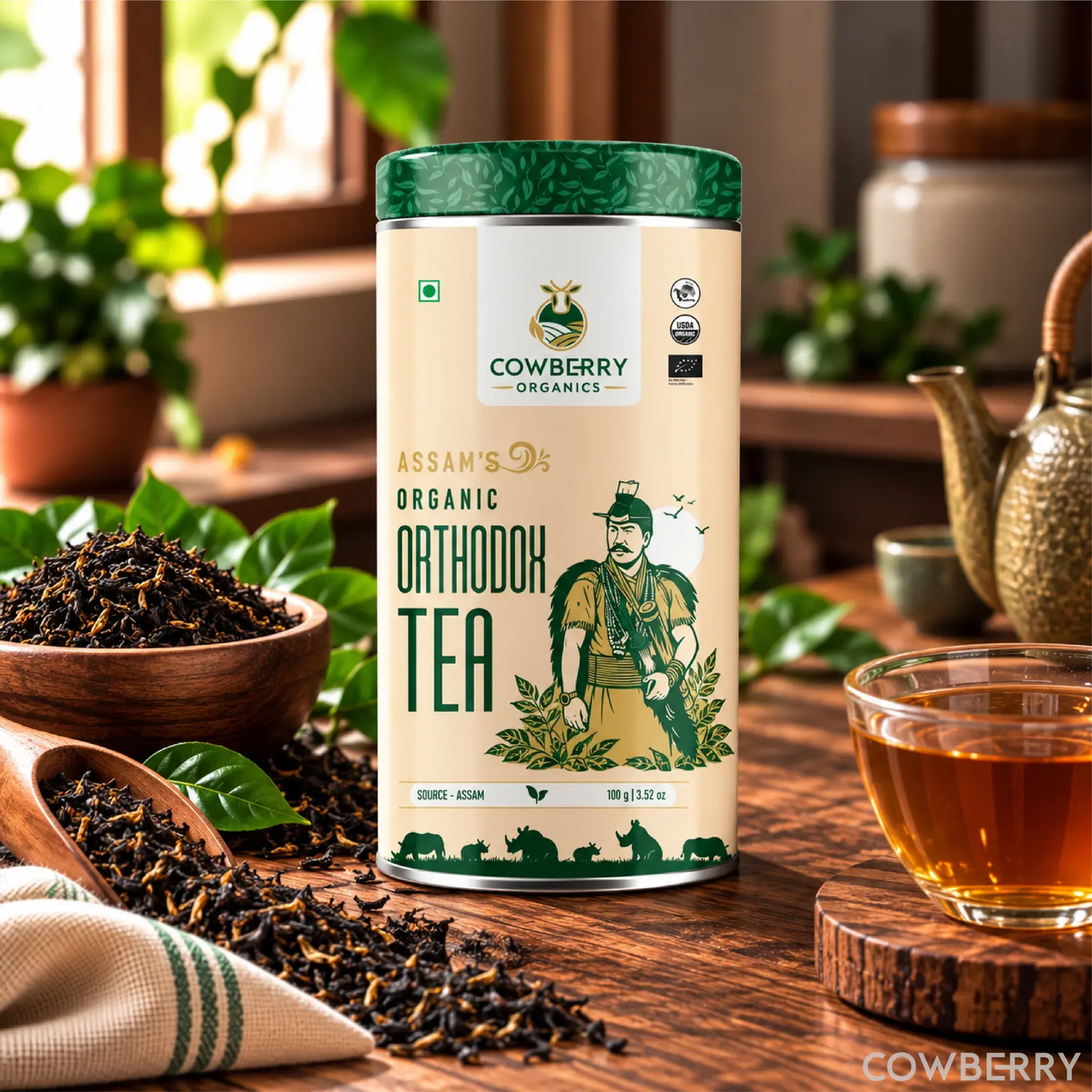
Loose leaf, two ways. Pick the CTC granules and boil them with water and milk for the strong, bold cup the chai recipe pours; pick the orthodox whole leaves and steep a teaspoon in hot water for three to five minutes for a smooth, balanced plain cup. Either way the leaf is whole, the measure is yours, and the strainer is the only filter between leaf and cup.
Tea bags, one way. One bag, one cup, water on top, and the tea is ready in a minute or two with nothing to wash. The trade-off is in the leaf inside: the fine particles give up their colour fast, which is the bag's gift, and their rough edge, which is why the bag should come out rather than sit.
The taste gap. The same tea, loose and bagged, does not taste the same: loose leaf keeps its flavour steps, and the bag's broken leaf flattens them for speed. When taste leads the decision, loose leaf is better; when the clock leads, the bag wins.
Cost and where each fits
Cost, in words rather than rupees, because the shelf price moves and this page does not chase it. Loose leaf is usually the better value over a month of daily cups: you buy leaf alone, and each pot costs what you spoon out. The bag's price covers more than leaf, the paper, the string and the portioning chief among them, so its cup runs a little dearer, even though a box of bags looks cheap at the till.
Where each fits follows the value and the moment. Loose leaf belongs in the home dabba: the family pot boiled twice a day, the masala chai simmered with ginger, the afternoon plain cup. Bags belong where brewing is a detour, not a ritual: the office desk, the train, the hotel kettle, the one quick cup before a meeting. That is the case where bags win, and it is worth having both: loose leaf at home, a box of bags in the bag. Kept airtight and dark, either stays fresh, and does chai patti expire has the rules.
Which for whom
- The daily chai maker: loose CTC granules, strong and malty, priced for the twice-a-day pot.
- The plain tea sipper: loose orthodox whole leaf, steeped smooth and layered.
- The office, the train, the single quick cup: tea bags, and no strainer to wash.
- Anyone who wants to see and sniff the leaf before buying: loose leaf, where the leaf is the product and the pack hides nothing.
- Anyone watching the budget per cup: loose leaf, which usually costs less cup for cup.
- Both kinds of drinker, honestly: the two packings are not rivals; the chai patti hub carries the whole tea family, from leaf to cup.
FAQs
Is loose leaf tea healthier?
There is no printed composition to compare the two packings with: the food tables carry no dry-leaf figures for either, so one cannot honestly be ranked above the other on nutrients. The findings that exist are for tea drinking in general, and a 2024 meta-analysis associated tea with lower death rates across 38 cohorts, as an association only. The real differences are taste, strength and control.
Why use loose leaf tea?
For the fuller cup and the control: you see and sniff the leaf, measure the strength you want, and brew CTC granules or whole orthodox leaves the way each likes. It usually costs less per cup than bags, and the same leaf that fills a bag brews better loose. For choosing between grades, see which loose leaf tea is best.
Why drink loose leaf tea?
Because the cup it makes is the leaf's own: CTC granules brew strong and malty for milk chai, whole orthodox leaves steep smooth and layered for a plain cup, and nothing in a filter flattens the flavour. Drink it loose when taste leads, and keep bags for the moments when speed leads instead.
Is loose leaf tea more expensive?
Per pack, bags can look cheaper, but per cup loose leaf usually costs less: you buy leaf alone, while the bag's price covers the paper, the string and the portioning. The everyday CTC leaf is priced for daily chai, and a pot of it costs less than most people guess before they try it.
What is loose leaf tea?
Any tea leaf sold loose rather than bagged. In Indian kitchens loose leaf usually means CTC granules for milk chai, or the rolled whole leaves of orthodox tea for a plain cup. You can see, sniff and measure the leaf, and one pack serves both kinds of cup.
Why is loose leaf tea better for you?
Better for the cup, mostly: the leaf is whole, the measure is yours, and nothing dulls the brew. On health, the honest answer is that no table prints a comparison between the packings, and the tea findings do not split by bag or tin. Taste, freshness and control are where loose leaf leads.
References
Shop this article
Keep reading
Coffee vs tea: caffeine, benefits and which is better
Coffee calories per 100g: powder, beans and filter coffee
Coffee in pregnancy: how much caffeine is safe