by COWBERRY

8 minute read
10 benefits of chai patti (and its side effects)

Chai patti benefits are real but modest, and each one below is tied to its source: polyphenols, a mild caffeine lift, an association with lower mortality in large cohorts, and a small measured drop in LDL cholesterol. The side effects are caffeine and iron timing, and this page sets both out honestly. The chai patti hub collects the whole tea cluster in one place.
Chai patti benefits: the honest short list
What a brewed cup carries, in the ICMR-NIN dietary guidelines' own wording: caffeine at 30 to 65 mg per 150 ml cup, theobromine and theophylline, known for relaxing arteries, plus flavonoids with other polyphenols that act as antioxidants, which the guidelines say may reduce the risk of coronary heart disease and of stomach cancer. What the bigger studies add is an association: tea drinking tracks with lower all-cause, cardiovascular and cancer mortality, while one pooled analysis of trials measured a small drop in LDL. What this page does not do is promise any of it, because association is not proof, and the one measured effect is small.
The ten items below are the whole list, each with its source; the page on chai patti ke fayde says the same in Hinglish.
Chai patti benefits 1 to 4: what the leaf and the cup carry
1. Flavonoids and other antioxidant polyphenols
Polyphenols come first. Per the ICMR-NIN dietary guidelines, tea of any kind — green or black — holds flavonoids and other polyphenols that work as antioxidants, and the guidelines say they may reduce the risk of coronary heart disease and of stomach cancer. The same guidelines add that these land best in a cup without milk, taken in moderation. No per-cup amount is printed anywhere, so the point stays qualitative.
2. Theobromine and theophylline
Two further compounds get named in the same guidelines: theobromine and theophylline, printed as relaxing the arteries and so helping blood circulate. Again no amount per cup is printed; the leaf simply carries them, and that is the whole point.
3. A mild caffeine lift
Chai patti carries caffeine — the printed cup is 150 ml at 30 to 65 mg, set against 80 to 120 mg for brewed coffee and 50 to 65 mg for instant. Caffeine stimulates the central nervous system, which is the lift a tea drinker feels; the same guidelines ask for moderation so that the day's caffeine does not pass the tolerable limit of 300 mg.
4. No calorie figure to count for a plain cup
The tables print no figure for the dry leaf or for the brew, so this page gives no calorie number for a plain cup; the printed numbers come with the sugar stirred in. The arithmetic, per 100 g and per cup, is on chai patti nutrition.
Chai patti benefits 5 to 10: what the studies found
5. Lower all-cause mortality, an association
A 2024 meta-analysis merged 38 prospective cohort data sets covering 1,956,549 participants and lined up the heaviest tea drinkers beside the lightest. All-cause mortality landed at a pooled estimate of 0.90 — roughly 10 percent lower among the highest tea group. That is an association measured across cohorts, not a tested effect of the next cup.
6. Lower cardiovascular mortality, an association
The same analysis put cardiovascular mortality at 0.86 — about 14 percent lower among the heaviest tea drinkers. Same reading as above: observational, and the comparison is between people who already drank more tea and people who drank less, not between two groups given different things.
7. Cancer mortality, the least certain of the three
Cancer mortality pooled to 0.90, with a confidence interval running 0.78 to 1.03 that crossed 1.0 — the weakest of the three associations, and not a cancer claim. The page makes none.
8. The dose where the association peaks
The dose-response part of the 2024 analysis placed the greatest risk reductions at 2.0 cups daily for all-cause mortality and then at 1.5 cups daily for cancer mortality, and little more was gained past those points. The authors' conclusion: moderate tea drinking, around 1.5 to 2.0 cups a day, is associated with lower mortality than drinking none.
9. A small, measured drop in LDL cholesterol
Ten randomised trials with 411 participants, pooled in 2015, found black tea lowered LDL cholesterol by 4.64 mg/dL on average, a small shift, with total and HDL cholesterol showing no remarkable change. The same review saw the LDL effect more clearly in people already at higher cardiovascular risk.
10. Room inside the day's caffeine limit
Two cups of chai at 60 to 130 mg of caffeine sit comfortably inside the 300 mg tolerable daily limit the guidelines print, which is why moderation is a workable instruction rather than a tightrope; the per-cup amounts sit on how much caffeine is in tea.
Chai patti side effects: caffeine and iron, the two to manage
For the brewed cup the side-effect picture stays short, and both items have printed rules attached.
- Caffeine. The guidelines print a tolerable limit of 300 mg of caffeine a day, with an added line against heavy tea drinking because of the caffeine it carries. They also note that caffeine can induce physiological dependence, which is the habit side of a daily chai.
- Iron absorption. Tannin in tea is known to interfere with iron absorption, so the guidelines say tea and coffee are best avoided before, during or soon after a meal. In a 2017 controlled trial, twelve healthy UK women ate one iron-labelled porridge meal three ways: absorption was 5.7% with water, 3.6% when the tea was taken with the meal, and 5.7% when the tea waited a full hour after it, with the tea's inhibiting effect falling from 37.2% to 18.1% — roughly halved. The same guidelines count guava, pineapple and citrus among the vitamin C foods that lift iron absorption from plant foods, so pair those with the meal while the tea stays an hour away.
- Pregnancy. The guidelines write that too much of caffeine-containing drinks such as coffee and tea adversely affects fetal growth, so it should be kept to a minimum; the day's limit and the arithmetic are set out on chai patti in pregnancy.
Two plain cups a day stay inside the caffeine limit; iron timing is the other thing to watch. If you take medicines or carry a health problem, ask your doctor or dietitian where the day's tea fits.
How much chai patti per day
The guidelines print a caffeine limit, not a cup count: 300 mg of caffeine a day, with moderation the rule rather than the full allowance. At 30 to 65 mg per 150 ml cup, that limit is hit at roughly 4.6 cups on the top end of the range and 10 cups on the bottom, so two cups come to 60 to 130 mg, well inside it. For iron, the hour's gap around meals is the timing that matters, and the polyphenol note from the same guidelines adds a habit worth keeping: the benefits land best in a cup without milk, taken in moderation.
Brew the leaf the way each style wants: the CTC pot for milky chai follows the chai patti recipe, and the orthodox whole leaf steeps a teaspoon in water at 90-95 °C for 3 to 5 minutes, per the pack's own guidance on how to drink orthodox tea. More ways with the same leaves are gathered on the loose leaf tea recipes page.
Which chai patti to buy for the benefits
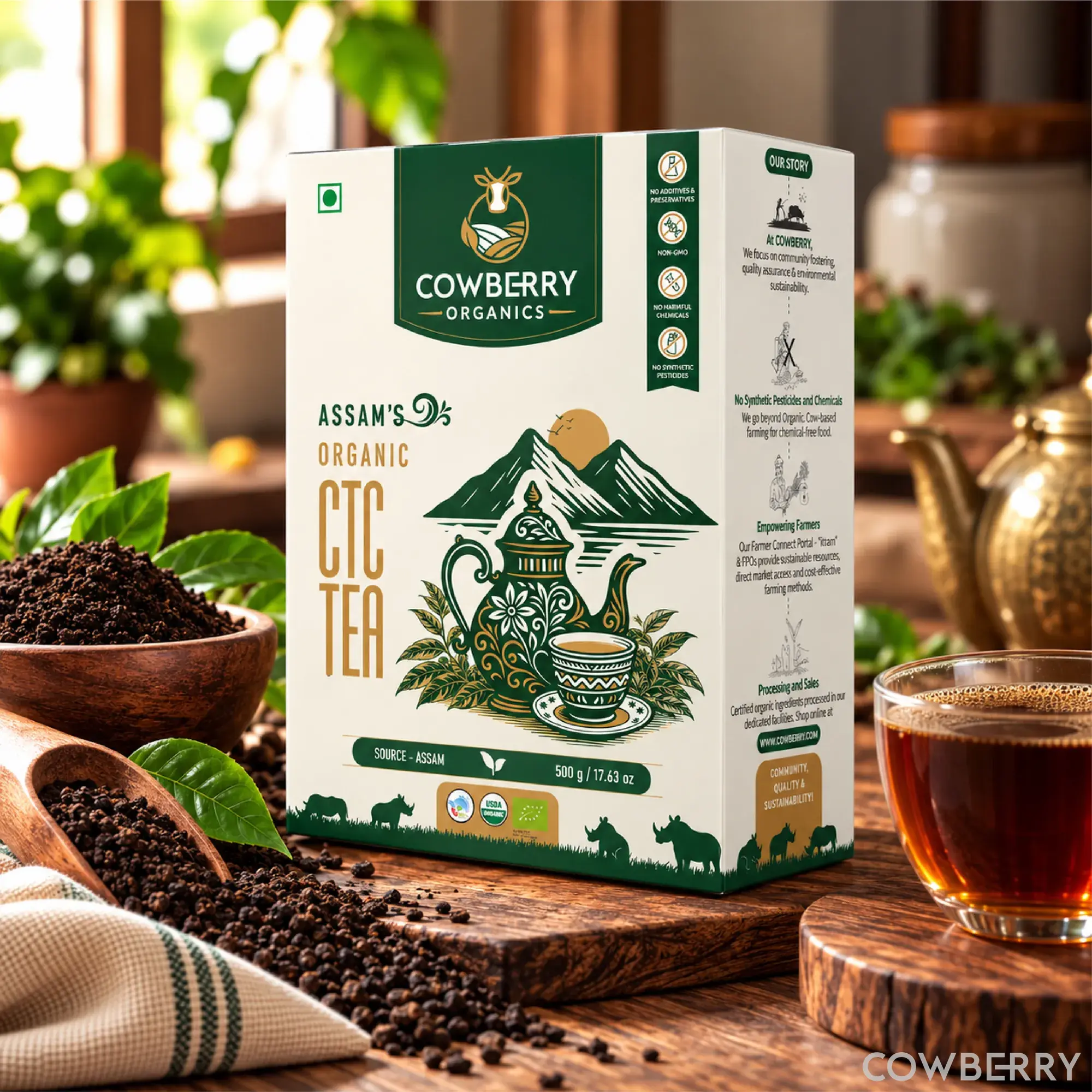
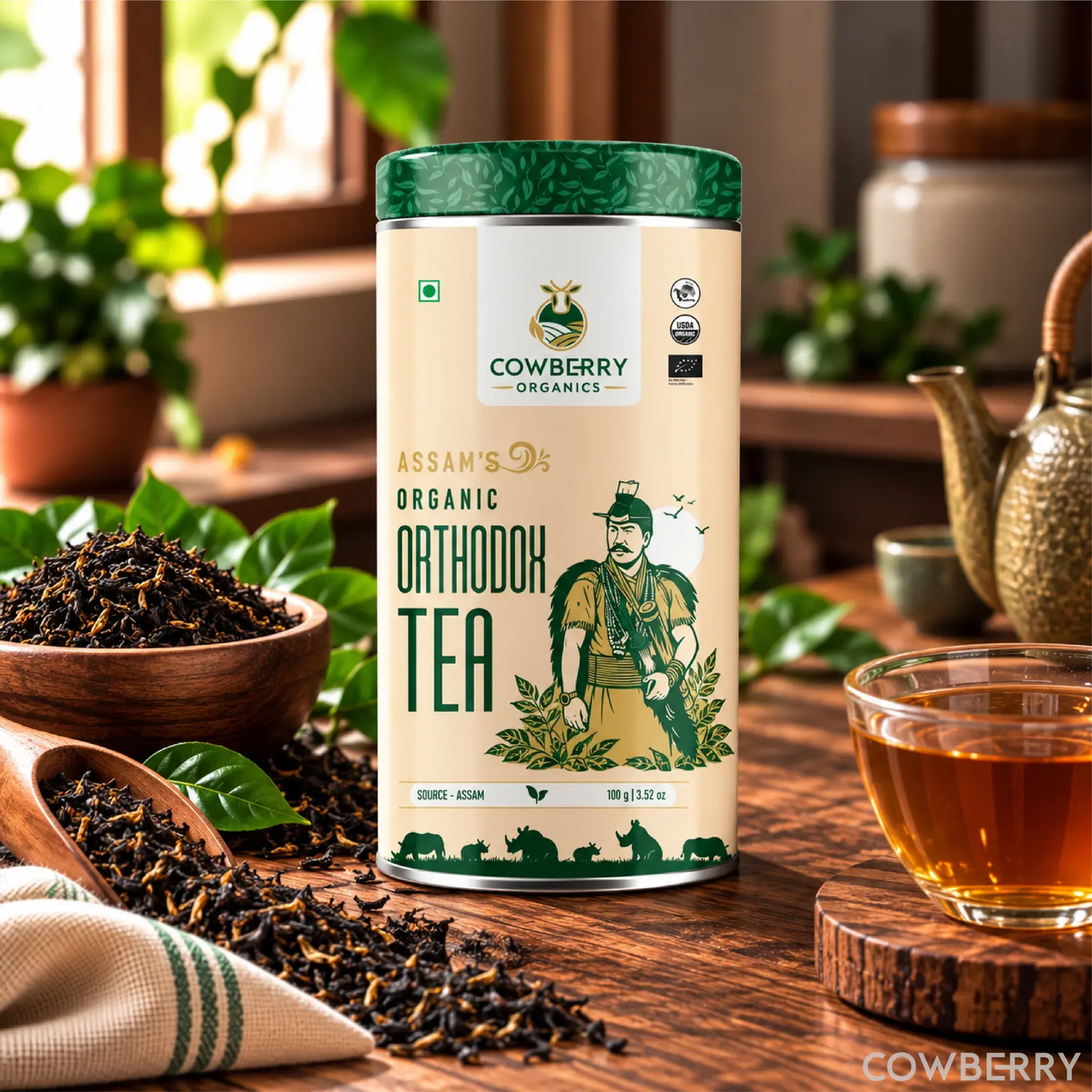
The findings above cover black tea as a family, so the buying choice is about the cup you want. Pick CTC granules for the strong, bold milky chai brewed daily, and rolled whole orthodox leaves for the plain cup the no-milk note points at. COWBERRY's CTC black tea comes in 500 g and 1 kg packs and its orthodox tea in a 100 g pack; the pair is India Organic, USDA & EU certified, its leaf grown in Assam without synthetic pesticides. The two routes the leaf takes are on what is CTC tea and the what is orthodox tea guide.
Keep the pack airtight, dark, cool and dry once opened, as does chai patti expire explains, so the leaf keeps the flavour that makes the habit worth keeping. The chai patti hub holds every tea page in one place.
Talk to your doctor or dietitian
This page lists what the sources print, not medical advice for any one person. Caffeine tolerance, iron status and medicines all change how a daily chai fits a particular body, so if you have anaemia or low iron, a heart condition, trouble sleeping, or you are pregnant or on medication, set your tea habit with your doctor or dietitian. Check with your doctor or dietitian before you change how much tea you drink each day.
FAQs
Is CTC tea good for health?
CTC tea is black tea, and the black tea findings are associations plus one small measured effect: a 2024 meta-analysis pooling 38 cohort data sets links heavier tea drinking with lower all-cause, cardiovascular and cancer mortality, while trials pooled in 2015 recorded a 4.64 mg/dL drop in LDL cholesterol. The processing style changes none of those findings; the full list is above.
Is orthodox tea good for health?
Orthodox tea is black tea, so the same findings cover it too: the 2024 mortality association across 38 cohort data sets and the small measured LDL reduction from the 2015 trial meta-analysis. The research does not split the two processing styles. The ten items on this page are the complete, sourced list.
Does CTC tea have caffeine?
Yes. The Dietary Guidelines for Indians put caffeine in tea at 30 to 65 mg per 150 ml cup, one range for black tea whether CTC or orthodox, and a tolerable limit of 300 mg a day with moderation. Every cup's number, one by one, is listed on how much caffeine is in tea.
Is CTC tea bad?
Not in moderation. The guidelines ask for moderation because of the caffeine, print a tolerable limit of 300 mg a day, and note that heavy tea drinking is to be avoided on account of the caffeine it brings. The other caution is timing: tea interferes with iron absorption, so keep it at least an hour away from meals.
References
- Dietary Guidelines for Indians, ICMR-National Institute of Nutrition
- Kim Y, Je Y. Tea consumption and risk of all-cause, cardiovascular disease, and cancer mortality: a meta-analysis of thirty-eight prospective cohort data sets. Epidemiol Health, 2024
- Zhao Y, Asimi S, Wu K et al. Black tea consumption and serum cholesterol concentration: Systematic review and meta-analysis of randomized controlled trials. Clin Nutr, 2015
- Ahmad Fuzi SF, Koller D, Bruggraber S et al. A 1-h time interval between a meal containing iron and consumption of tea attenuates the inhibitory effects on iron absorption. Am J Clin Nutr, 2017
Shop this article
Keep reading
Coffee vs tea: caffeine, benefits and which is better
Coffee calories per 100g: powder, beans and filter coffee

Coffee in pregnancy: how much caffeine is safe