by COWBERRY

6 minute read
Loose leaf tea recipes: chai, masala chai and more

Loose leaf tea recipes for every hour of the day, each one built on the same two leaves: Assam CTC for the milky pots and rolled orthodox whole leaves for the plain cups. The recipes here that exist on the site get a link; the rest get a two-line method. The chai patti hub page holds the full tea shelf.
Everyday milk chai: the morning pots
Chai. The everyday pot: two cups of water, one cup of milk and two teaspoons of Assam CTC leaves, simmered a full two minutes, sweetened with one and a half teaspoons of sugar in each cup. Two cups in 10 minutes, about 29 kcal and 7.5 g of carbohydrate per cup from the sugar.
Masala chai. Four green cardamom pods, an inch of cinnamon, and the four cloves with four black peppercorns plus an inch of ginger boiled into the water first, then the tea and the milk. Two cups in 15 minutes; the sugar in each cup comes to about 39 kcal and 10.0 g of carbohydrate.
Doodh patti chai. The milk-forward pot: more milk than water, CTC leaves boiled straight in it, a good spoon of sugar, one hard boil and strain. Leave the water out entirely for the creamiest cup, and keep the leaves at about a spoon a cup.
Adrak chai. Ginger chai: crush a thumb of fresh ginger into the water before the leaves go in, then finish the pot exactly like the plain chai above. More ginger means more bite, and there is no need to peel it first.
Afternoon plain cups and sweet twists
Plain orthodox cup. One teaspoon of whole rolled orthodox leaves, water heated to 90-95 °C, a 3-to-5-minute steep, then strain and drink it plain. That guidance comes straight from the pack, and the same leaves give a second, lighter cup when topped up with fresh hot water.
Orthodox with lemon or honey. Brew the plain cup above, then finish it with lemon or a spoonful of honey. These are the two ways the pack itself serves orthodox tea.
Jaggery tea. Chai sweetened with jaggery powder instead of sugar, brewed with ginger and two cardamom pods, with a milk pot and a black-tea version. Two cups in 15 minutes; a cup carries about 35 kcal and 8.5 g of carbohydrate.
Brown sugar tea. The everyday CTC pot with demerara instead of white sugar, two teaspoons a cup, and optional ginger and cardamom. Two cups in 10 minutes.
Light and cold cups for the evening
Turmeric tea. No tea leaves and no milk: water simmered with half a teaspoon of turmeric powder and a quarter teaspoon of freshly ground black pepper, then lemon juice and honey. Two cups in 11 minutes, and no caffeine at all.
Iced tea. Brew the plain orthodox pot double strength, let it cool, pour it over ice and finish with a slice of lemon. For a smoother glass, cold-brew instead: leaves covered in cold water, the pot in the fridge, strained when the colour and taste are right.
For the milkier side of the menu, which loose leaf tea is best walks the shelf, and the how to drink orthodox tea page carries the full plain-cup method with the mistakes to avoid.
Which leaf each recipe wants
Every pot above divides on one line: CTC pellets for the milky, boiled cups, and whole rolled orthodox leaves for the plain, steeped ones. The CTC leaf, crushed, torn and curled into small pellets, releases fast and stands up to milk and sugar, which is why the chai, masala chai, doodh patti, adrak, jaggery and brown sugar pots all start from it; the what is CTC tea guide explains how the pellets are made. The orthodox whole leaf steeps smooth and layered instead, which is what the plain, lemon, honey, iced and cold-brew cups want; its story is on what is orthodox tea. The turmeric cup needs no leaf at all, and the packings are compared on loose leaf tea vs tea bags.
Caffeine and the timing rule for these cups
Almost every recipe on this page carries caffeine: the Dietary Guidelines for Indians print 30 to 65 mg for a 150 ml cup of tea, and ask for moderation so a day's total sits under the tolerable limit of 300 mg. The turmeric tea is the exception, since it contains no tea leaves. The other printed rule is timing: the guidelines count tea and coffee among the drinks to keep out of the meal window — not before, not during, not soon after — because the tannin in tea interferes with iron absorption, and they list guava, pineapple and citrus with the vitamin C foods that raise iron absorption from plant foods. For caffeine cup by cup, the guide is how much caffeine is in tea, with the health findings behind the habit on chai patti benefits.
Buying the leaves for these recipes
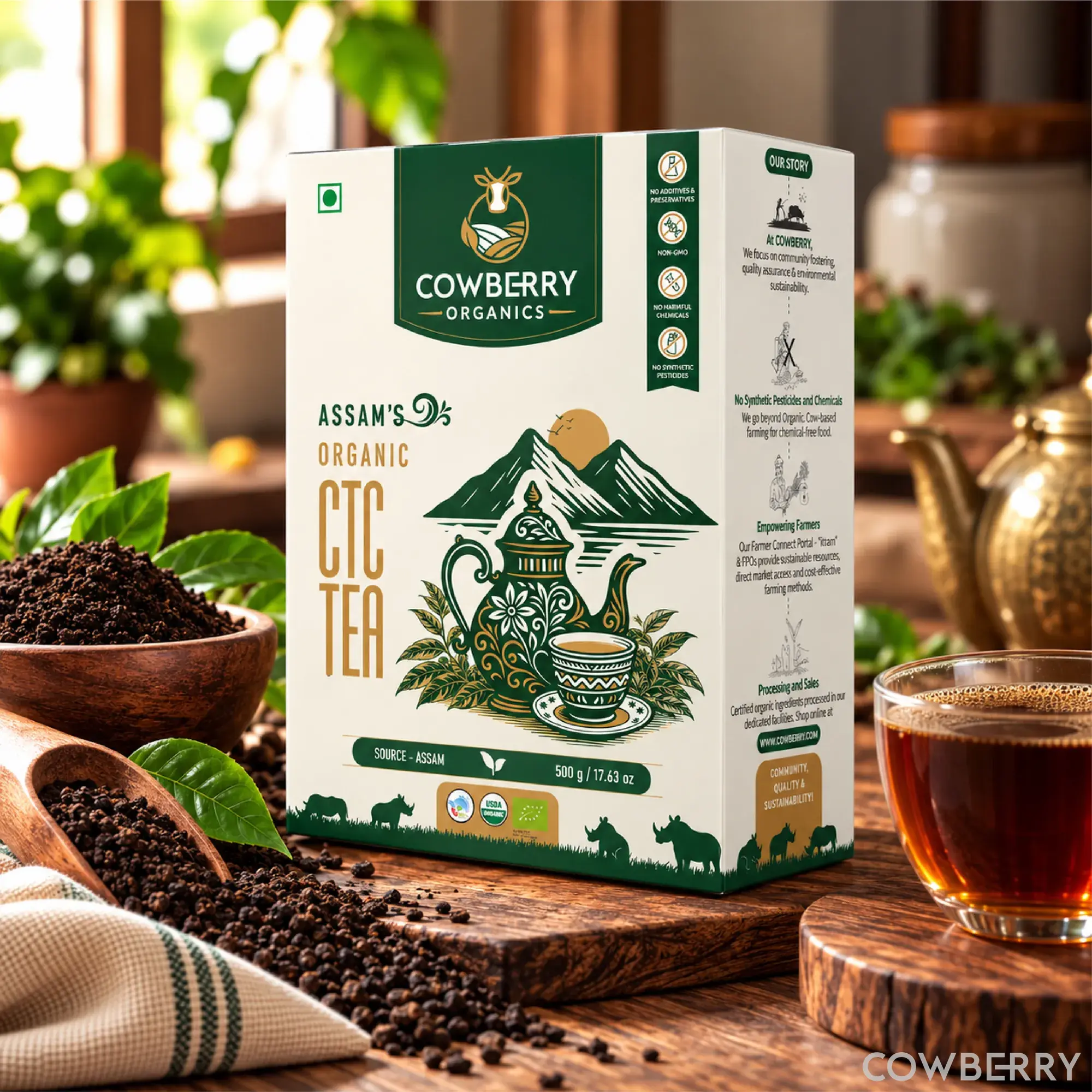
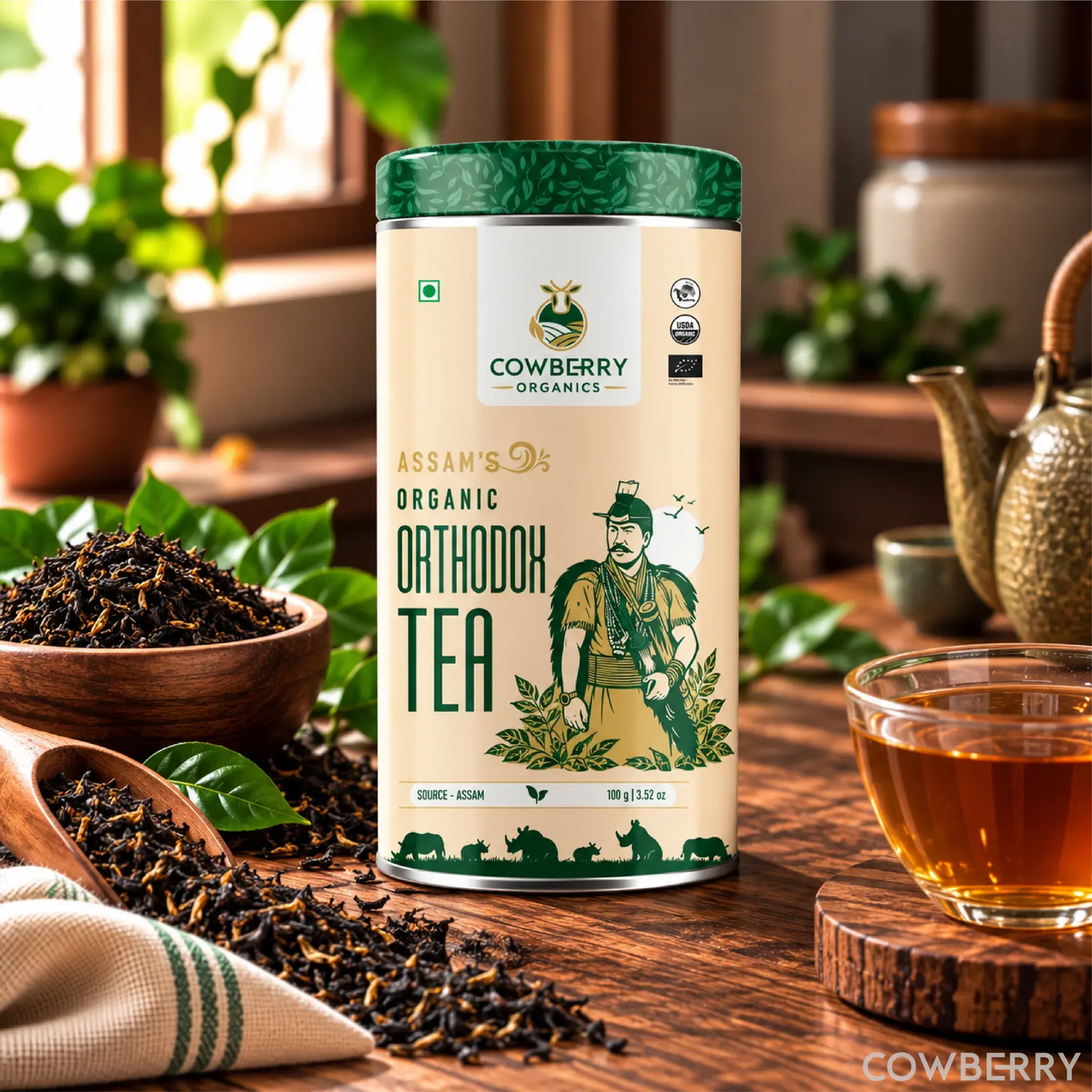
One pack of each leaf covers this whole list. COWBERRY packs the CTC black tea in 500 g and 1 kg, sized for a kitchen that boils chai twice a day, and the rolled orthodox leaf in a 100 g pack for the slower plain cups; both carry that India Organic, USDA & EU certified mark, grown in Assam without synthetic pesticides. Store whichever you buy airtight, in a dark, cool and dry spot, away from the stove and strong-smelling shelves, as does chai patti expire explains. Everything else about the leaf — names, nutrition, the full shelf — lives on the chai patti hub.
FAQs
What is loose leaf tea?
Any tea leaf sold loose rather than sealed into bags: in Indian kitchens that usually means CTC granules for the milky pots, or rolled whole orthodox leaves for plain cups. Every recipe on this page uses one of the two, and the packings are compared on loose leaf tea vs tea bags.
Does chai patti have caffeine?
Yes. Per the Dietary Guidelines for Indians, a 150 ml cup of tea holds 30 to 65 mg of caffeine, with moderation as the rule so the day's total stays under the tolerable limit of 300 mg. The one recipe on this page without caffeine is the turmeric tea, which uses no tea leaves at all.
What is CTC tea?
Black tea made the Crush, Tear and Curl way: cut leaves turned into small, even pellets that brew quickly into a strong, full-bodied cup, which is why it is the leaf for milk chai. The chai, masala chai, jaggery tea and brown sugar tea recipes above all start from it. More on what is CTC tea.
How to make chai patti?
In the kitchen, chai patti becomes chai: boil the water, simmer the leaves for two minutes, add the milk, sweeten the cups and strain, exactly as the chai patti recipe above walks through. In the factory, the leaf is made by the two routes — CTC crush-tear-curl and orthodox rolling — explained on how chai patti is made.
Can loose leaf tea go bad?
It goes flat rather than bad: air, light, heat and moisture slowly take the aroma out of the leaf, and strong smells creep in. Loose leaf tea keeps fine for about a year when stored airtight, dark, cool and dry; does chai patti expire has the full storage rules.
References
Shop this article
Keep reading
Rajma recipe: 5 ways to cook rajma beans at home
Dalia recipes: 10 easy broken wheat dishes from khichdi to laddu
Amaranth recipes: 8 rajgira dishes from roti to ladoo