by COWBERRY

8 minute read
Does CTC tea have caffeine? How much caffeine is in tea

Does CTC tea have caffeine? Yes. CTC tea is black tea, and the NHS lists one figure for a cup of tea, 75 mg, without splitting black from green, so a mug of CTC chai carries that much. Orthodox and loose leaf start from the same number: one estimate per cup, not one per type. What follows is the numbers in practice.
Does CTC tea have caffeine? Yes: about 75 mg a mug
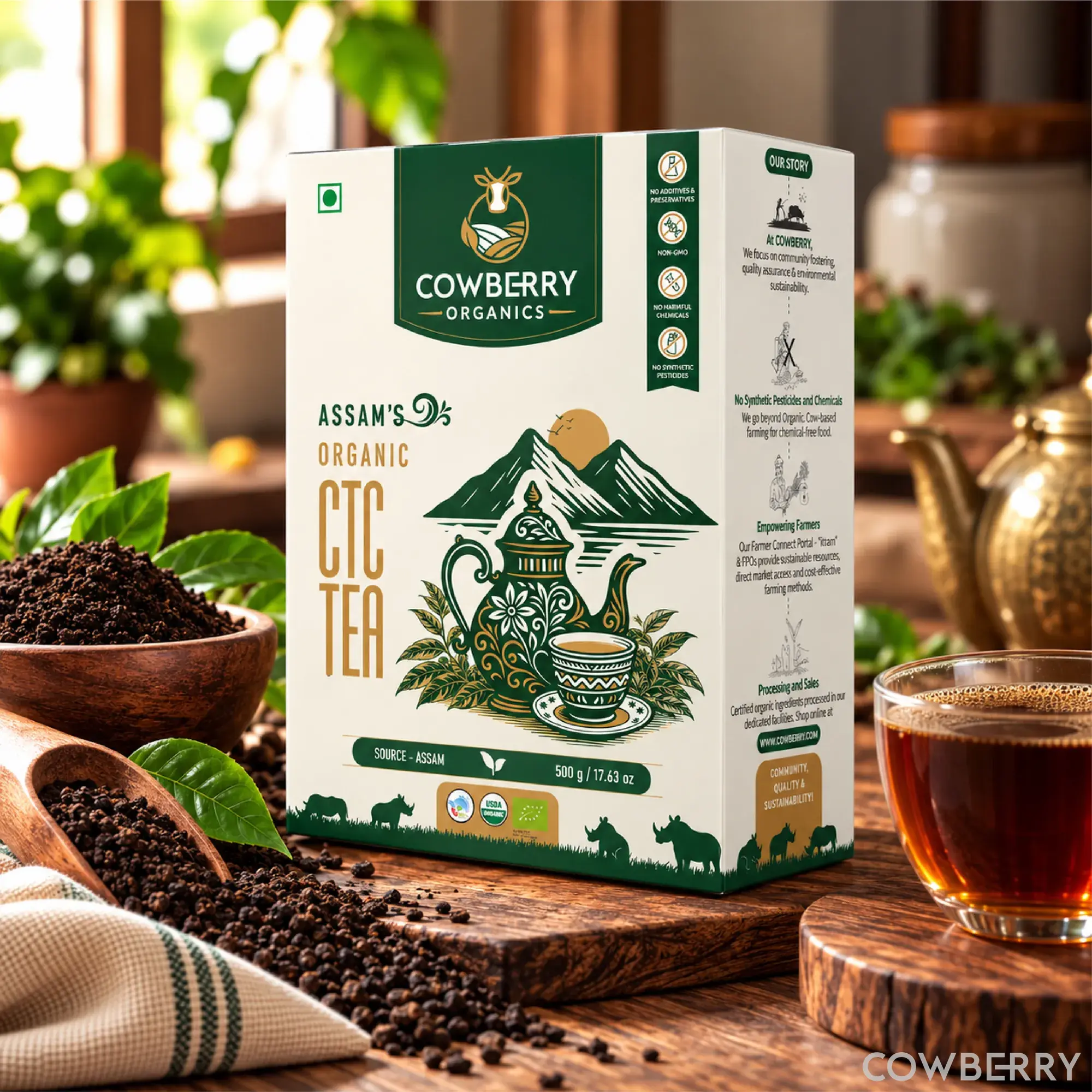
CTC tea has caffeine because it is tea. CTC stands for crush, tear and curl, the machine process that turns tea leaves into small, uniform pellets; COWBERRY's CTC comes from the tea gardens of Assam, and its pack describes the tea as rich in caffeine. The NHS gives tea a single estimate, 75 mg a cup, without separate figures for CTC, orthodox or loose leaf, so that is the working number for all of them. What moves the number in your kitchen is how much leaf you use, how long you steep or boil it and how large the cup is: more leaf and more time mean a stronger, higher-caffeine brew. The full story of the process is on what is CTC tea, and the classic brew is our chai recipe.
Does orthodox tea have caffeine? The same leaf, the same estimate
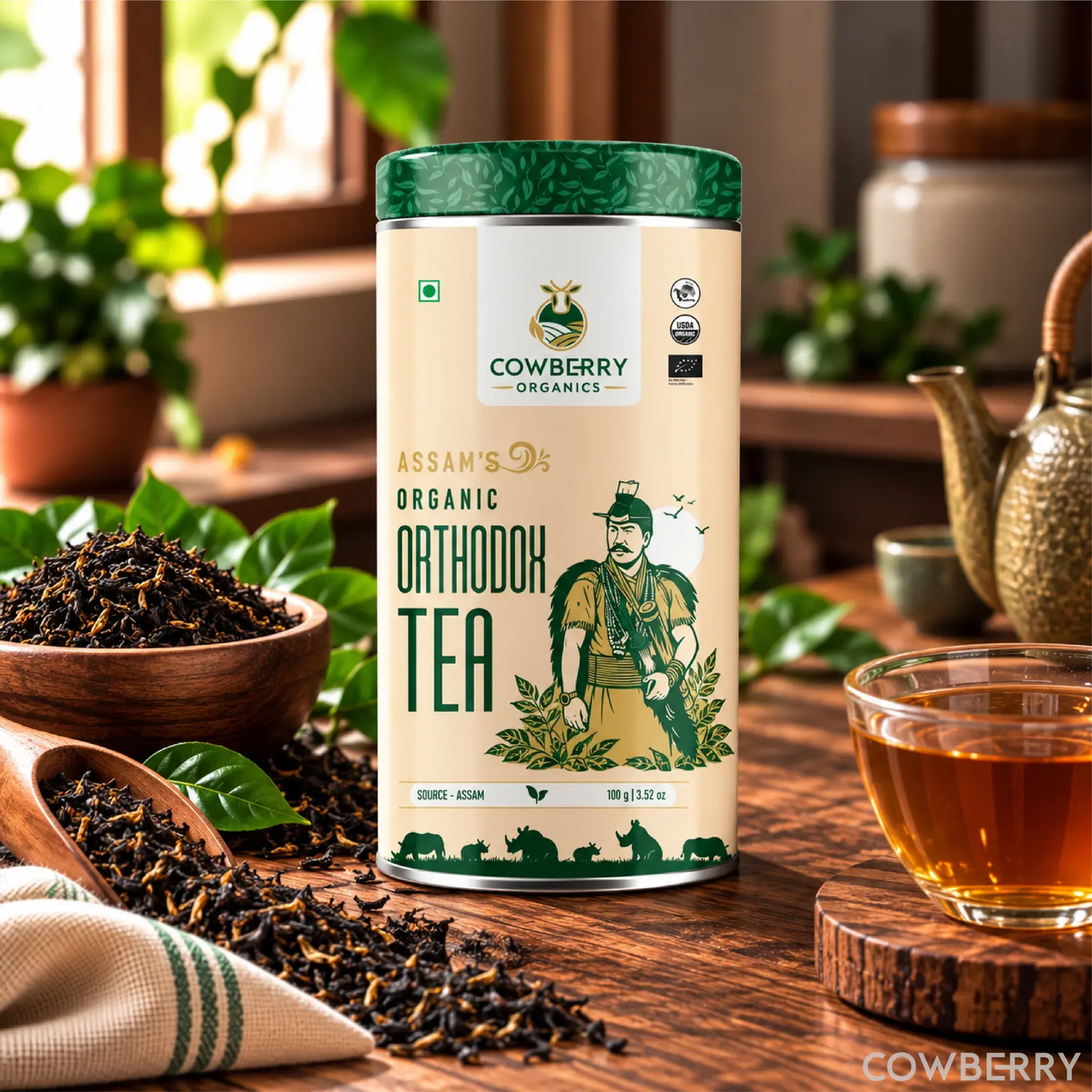
Orthodox tea has caffeine for the same reason: it is whole-leaf black tea. Orthodox processing rolls whole tea leaves rather than crushing them, keeping their aroma and layered flavour, and the result is still black tea — the kind the NHS's 75 mg per cup covers. COWBERRY's orthodox pack describes strength and flavour rather than a caffeine number, and no printed figure separates orthodox from CTC. What separates them in the cup is the leaf and the time: a heaped teaspoon steeped for five minutes brews stronger than a quick, light steep of the same leaf. The pack prints the orthodox method plainly: a teaspoon of leaf, water at 90 to 95°C, three to five minutes of steeping. Those are the brewer's numbers; the caffeine figure stays the shared 75 mg. The two processes side by side are on CTC tea vs orthodox tea.
Does chai patti or loose leaf tea have caffeine?
Chai patti — the Hindi name for the tea leaves themselves, as the chai patti in English page explains — has caffeine because the leaf does; the NHS lists tea among the foods and drinks caffeine is found in. Loose leaf tea is the same leaf sold whole instead of crushed, so it has caffeine too. The green pack says it plainly: the leaf holds a moderate amount of caffeine, lighter than coffee. If the question on your mind is whether loose leaf carries more, the honest answer is that no printed figure ranks loose leaf against CTC or dust; the cup you brew is set by the leaf measure and the steeping time, not by the form the leaf is sold in. The spices and milk in a masala chai add flavour, not caffeine — no spice appears on the NHS list of caffeine sources — so the chai patti stays the only caffeine in the cup. More loose leaf ways to brew are in loose leaf tea recipes.
How tea's caffeine compares: coffee, cola, energy drinks, chocolate
The NHS's per-item estimates put tea in the middle of the caffeine shelf. One cup of instant coffee carries 100 mg against tea's 75 mg, and filter or coffee-shop coffee can be stronger than that; a can of cola holds 40 mg, a 250 ml can of energy drink 80 mg, a 50 g bar of plain dark chocolate under 25 mg, and a 50 g bar of plain milk chocolate under 10 mg. The table below is the same list in one place.
| Drink or food | Caffeine (NHS estimate) |
|---|---|
| Tea, one mug, black or green | 75 mg |
| Instant coffee, one mug | 100 mg |
| Filter or coffee-shop coffee, one mug | can be more than 100 mg |
| An energy drink, 250 ml can | 80 mg |
| A can of cola | 40 mg |
| Plain dark chocolate, a 50 g bar | under 25 mg |
| Plain milk chocolate, a 50 g bar | under 10 mg |
Read the table with mugs, not items: two mugs of tea at about 150 mg already beat one instant coffee for caffeine, and a mug of tea plus a mug of instant coffee comes to about 175 mg before any cola or chocolate. Tea is the lighter habit per cup; the cups are simply easy to stack.
How many cups of tea in a day?
For a daily tea habit, the printed numbers point to two. In pregnancy, the NHS sets the day's caffeine at no more than 200 mg; two mugs of tea are about 150 mg, and a third mug pushes the day to about 225 mg, over the line — the full arithmetic is on chai patti in pregnancy. For everyone, a 2024 meta-analysis of thirty-eight prospective cohort data sets found the greatest reduction in death risk among tea drinkers at about two cups a day, with no further reduction beyond that; those were associations from observational data, not a promise, but they sit comfortably with a two-cup habit. Note the word about in both figures: the NHS prints them as estimates, and your mug may hold more or less depending on how the tea is brewed. Ten randomised trials pooled in a 2015 meta-analysis add one modest, measured effect: black tea cut LDL cholesterol by about 4.64 mg/dL, with total and HDL cholesterol unchanged. The chai patti hub carries the wider tea picture.
Does green tea have caffeine? Yes, and the same figure applies
Green tea has caffeine as well: the same 75 mg a cup applies to it, the NHS figure covering black and green alike. The green pack puts its caffeine as moderate and lighter than coffee, which matches the NHS picture of a cup of green sitting below a cup of instant coffee. The two teas come from different processing — green tea skips the heavy oxidation, which is what keeps its colour, while black tea is oxidised fully — but the printed estimate does not separate them, so count a cup of green the same as a cup of black. The gentle brew is part of the picture: the green pack's method is a teaspoon of leaf in 80 to 85°C water for two to three minutes, never boiling. How green tea and orthodox differ cup by cup is on orthodox tea vs green tea.
Tea around meals: the hour that protects your iron
One timing rule matters around tea, and it is about iron, not caffeine. The Dietary Guidelines for Indians name tea among the drinks that tie up the iron in a meal and keep it from being absorbed; they say tea should be avoided before, during or soon after a meal, and for at least an hour before and after eating. A 2017 controlled trial tested that hour: in twelve healthy UK women, a labelled porridge meal gave iron absorption of 5.7% with water alone and 3.6% when tea went down with the meal; tea an hour after the meal put absorption back at 5.7%, and the inhibition the tea caused dropped from 37.2% to 18.1%. The rule that follows is exactly one hour: finish the dal, wait an hour, then pour the tea. Vitamin C foods in the meal — the guidelines name guava, pineapple and citrus fruits — help plant iron along, so put the lemon on the dal and the tea after the hour. The same guidelines extend the rule to iron-folic acid supplements: keep tea away from those too.
FAQs
Does CTC tea have caffeine?
Yes. CTC tea is black tea in granule form, and the NHS figure for one cup of tea is 75 mg, with black and green counted alike, so a mug of CTC chai carries about that much. The crush-tear-curl process changes the leaf's shape, not whether caffeine is in it.
Does orthodox tea have caffeine?
Yes. Orthodox tea is whole-leaf black tea, and the same NHS figure of 75 mg per cup of black tea applies. Neither orthodox nor CTC has its own separate printed caffeine number; both are black tea, so both start from the same estimate.
Does chai patti have caffeine?
Yes. Chai patti, the tea leaves used to brew chai, are on the NHS list of foods and drinks caffeine is found in, at about 75 mg per cup. The milk, sugar and spices in a cup of chai add their own things; the caffeine belongs to the leaves.
Does loose leaf tea have more caffeine?
No printed figure says so. The estimates that exist — the NHS's 75 mg per cup of tea — do not split loose leaf from CTC or dust tea. Loose leaf is the same leaf sold whole, so the caffeine in the cup follows how much leaf you use and how long it brews, not the form it is sold in.
Does green tea have caffeine?
Yes, about 75 mg a cup by the NHS estimate, which covers green tea alongside black. The green-tea pack describes the caffeine as moderate and lighter than coffee. Brewed gently, it makes a lighter cup, but the caffeine is still in it.
Is chai patti caffeine?
No. Chai patti is the tea leaf; caffeine is one of the substances inside it. The leaves carry caffeine into the brew, which is why a cup of tea shows up in the NHS caffeine estimates at 75 mg, but the patti itself is tea leaves, not caffeine.
How many grams of caffeine are in black tea?
The printed figure is per cup, not per gram: a brewed cup of black tea comes to about 75 mg of caffeine. No per-gram figure for the dry leaf is given, and the cup you brew is what the numbers describe, since the leaf measure and the steeping time decide it.
References
- NHS: foods to avoid in pregnancy (caffeine section)
- Dietary Guidelines for Indians, ICMR-National Institute of Nutrition
- Kim Y, Je Y. Tea consumption and risk of all-cause, cardiovascular disease, and cancer mortality: a meta-analysis of thirty-eight prospective cohort data sets. Epidemiol Health, 2024
- Zhao Y, Asimi S, Wu K et al. Black tea consumption and serum cholesterol concentration: Systematic review and meta-analysis of randomized controlled trials. Clin Nutr, 2015
- Ahmad Fuzi SF, Koller D, Bruggraber S et al. A 1-h time interval between a meal containing iron and consumption of tea attenuates the inhibitory effects on iron absorption. Am J Clin Nutr, 2017
Shop this article
Keep reading

Coffee vs tea: caffeine, benefits and which is better
Coffee calories per 100g: powder, beans and filter coffee
Coffee in pregnancy: how much caffeine is safe