by COWBERRY

9 minute read
Coffee vs tea: caffeine, benefits and which is better

Coffee vs tea comes down to caffeine, taste and habit: the NHS puts a mug of instant coffee at about 100 mg of caffeine against about 75 mg for a mug of tea, and filter coffee can carry more. This page compares the two drinks on those numbers, the health research and where each fits an Indian day. For coffee on its own, see the coffee hub.
Coffee vs tea: which is better?
Caffeine: coffee is the stronger cup. A mug of instant coffee carries about 100 mg of caffeine, and filter coffee can carry more, against about 75 mg in a mug of black or green tea, per the NHS estimates. If caffeine is the thing you are managing, tea is the gentler default.
Health evidence: coffee has the larger body of it, tea the more modest one. A 2017 BMJ umbrella review of 201 meta-analyses found coffee drinking more often associated with benefit than harm, with the greatest risk reductions at three to four cups a day, though the studies are observational. One exception sits in the same review: in pregnancy, higher coffee intake was associated with low birth weight, preterm birth and pregnancy loss. For tea, the most relevant trial finding is a Cochrane review on green tea and weight loss, which found only a small, statistically non-significant effect.
Which is better depends on who is drinking. Coffee suits the strong morning cup and the filter kaapi ritual; tea suits a lighter cup through the day. Neither is medicine: the mug count, and what goes into the mug, matter more than the choice.
For coffee on its own, from its names to its everyday uses, the coffee hub is the fuller page.
Side by side: caffeine and how each is made
Where the two drinks truly differ is caffeine per mug and the making of the cup. The caffeine figures are the NHS estimates, given for a mug of each drink.
| Coffee | Tea | |
|---|---|---|
| Caffeine per mug | Instant coffee about 100 mg; filter coffee and coffee-shop coffee can carry more | About 75 mg, black or green |
| What it starts from | Roasted coffee beans, ground and brewed, or instant coffee dissolved in hot water | Dried tea leaves steeped in hot water; black CTC leaves for everyday chai |
| How the cup is made | South Indian filter, moka pot or french press, or a spoon of instant in hot water or milk | Leaves simmered in water or milk, then milk, sugar and spices to taste |
| Usual Indian serving | Filter kaapi: decoction with hot milk, frothed between the tumbler and davarah | Chai: milk tea, plain or masala; green tea without milk |
The pattern is simple: coffee is the stronger brew with the bigger caffeine number, tea the lighter one, and both are mostly water once brewed. What changes the cup is the milk, sugar and spices that go in after.
Nutrition: what each drink carries
The nutrition figures below are for dry coffee powder, the only form of either drink that the composition tables carry values for: 353 kcal, 12.2 g protein, 0.5 g fat and 75.4 g carbohydrate per 100 g, with 4.41 mg iron, 141 mg calcium, 327 mg magnesium and 3540 mg potassium, all from USDA FoodData Central. IFCT 2017 does not list coffee, and no values are printed for dry tea leaves or for a brewed cup of either drink.
Those dry-powder figures overstate what reaches the cup. A 5 g teaspoon of coffee powder is about 18 kcal, and the mug itself is mostly water; the calories a chai or a filter kaapi actually carries come from the milk and sugar poured in, which these tables do not cover. For the per-serving arithmetic on coffee, see the coffee calories per 100g page.
| Nutrient | Coffee beans / powder (dry) |
|---|---|
| Energy (kcal) | 353 |
| Protein (g) | 12 |
| Fat (g) | 0.5 |
| Carbohydrates (g) | 75 |
| Dietary fibre (g) | 0 |
| Iron (mg) | 4.4 |
| Calcium (mg) | 141 |
| Magnesium (mg) | 327 |
| Potassium (mg) | 3540 |
| Sodium (mg) | 37 |
| Zinc (mg) | 0.3 |
| Folate (mcg) | 0 |
| Vitamin C (mg) | 0 |
Per 100 g raw, edible portion. Composition: USDA FoodData Central (SR Legacy), FDC ID 171893, NDB 14214. — means not reported. These are average values for the food; the label on a pack gives the values for that product.
Taste and how each is drunk in India
Filter kaapi and instant coffee. The brewed side of Indian coffee is filter kaapi: hot water poured over ground roasted beans in the two-tier steel filter, the decoction that drips through mixed with hot milk and frothed between the tumbler and davarah. Instant coffee needs no equipment, just a spoonful stirred into hot water or hot milk. The coffee how to make page walks through both, plus the french press.
Chai and green tea. Tea means chai first: black CTC leaves simmered with water, milk and sugar, usually drunk through the day, plain or with ginger, cardamom and other masala spices. Green tea is brewed plain, with no milk. The loose leaf tea recipes roundup has the chai and masala chai methods, and the chai patti hub covers tea itself.
The practical difference in the kitchen. Coffee asks for a filter, a pot or a press and usually gives a deeper, more bitter cup; tea asks for a pan and a strainer and gives a lighter one. Both take milk and sugar in most Indian homes, and that is where the two drinks meet.
Cost and where each fits
Loose tea leaves usually work out the cheaper cup of the two, because a small spoon of leaves steeps a mug, while the same mug of coffee starts from beans or powder that cost more for the same number of cups. Instant coffee sits between them, and freshly ground filter coffee is usually the costliest of the three; no numbers here, since local prices move and the real question is where each fits.
Tea fits the whole day: the first chai with the morning, the office cup, the evening cup, and masala chai when the kitchen wants ginger and cardamom in the pan. Coffee fits the strong start: the filter kaapi ritual with a South Indian breakfast, the instant cup at a desk, and any moment that wants the bigger caffeine number per mug. Many homes keep both, and the choice is usually habit, time and how much caffeine the moment needs.
Which for whom
- Pregnancy: keep the day's caffeine under 200 mg, the NHS limit. A mug of instant coffee is about 100 mg, so two mugs use the whole allowance; a mug of tea is about 75 mg, so two mugs are 150 mg and leave room for little else, and filter coffee can carry more than the 100 mg figure. Count the cola and chocolate too. See coffee in pregnancy and chai patti in pregnancy.
- Children: neither drink is for children. A 2017 review of caffeine safety works with a level of 2.5 mg per kg of body weight a day for children and adolescents, from limited data, and that is a research level, not a serving suggestion for coffee or tea. See coffee for babies.
- Healthy adults: the same review found that intakes up to 400 mg of caffeine a day in healthy adults were generally not associated with the adverse effects it examined, across heart, behaviour, bone and reproduction outcomes. The BMJ umbrella review put coffee's greatest risk reductions at three to four cups a day, in observational studies, not trials.
- Weight loss: neither drink is a slimming shortcut. Green tea preparations produced a small, statistically non-significant weight loss in a Cochrane review of overweight and obese adults, and a plain cup of either drink is mostly water, with the calories arriving in the milk and sugar. The honest reads are coffee for weight loss and green tea for weight loss.
- Anyone counting caffeine: tea's 75 mg a mug against coffee's 100 mg or more makes tea the usual pick for the late cup, though both carry caffeine.
FAQs
Is coffee good for health?
Mostly, the evidence leans that way. A 2017 BMJ umbrella review of 201 meta-analyses found coffee drinking was more often associated with benefit than harm: at three to four cups a day versus none, the relative risk was 0.83 for all-cause mortality and 0.85 for cardiovascular disease, and high versus low consumption carried an 18 percent lower risk of incident cancer. The findings come from observational studies, so they show association, not cause.
Which coffee is best for health?
The research does not crown a type: the big reviews pool every way of drinking coffee, so no form has a health edge on the evidence. What differs between them is caffeine per mug and taste. Pick the coffee you enjoy and keep the cups moderate; the umbrella review found its greatest risk reductions at three to four cups a day.
Which has more caffeine: coffee or tea?
Coffee. The NHS estimates a mug of instant coffee at about 100 mg of caffeine and a mug of black or green tea at about 75 mg, and it notes that filter coffee and coffee bought from coffee shops can contain more. The usual mug of coffee therefore carries about 25 mg more caffeine than the usual mug of tea.
How much coffee and tea is safe during pregnancy?
The NHS line is no more than 200 mg of caffeine a day. A mug of instant coffee is about 100 mg, so two mugs use the whole allowance; a mug of tea is about 75 mg, and filter coffee can carry more than the 100 mg figure. Count tea, coffee, cola and chocolate together, and keep the total under 200 mg. Higher intakes have been linked with a greater chance of miscarriage and stillbirth.
Coffee vs tea: which is better for weight loss?
Neither has a proven effect. Plain black coffee and plain tea are mostly water, and the calories arrive with the milk and sugar added. For green tea, a Cochrane review of trials in overweight and obese adults found a small, statistically non-significant weight loss, so it is not something to count on. The caffeine does not change the calorie arithmetic of either drink.
Can I drink coffee and tea every day?
For most healthy adults, yes, in moderation. A 2017 systematic review found intakes up to 400 mg of caffeine a day in healthy adults were generally not associated with the adverse effects it examined, which is about four mugs of instant coffee at the NHS estimate. The review left people with existing conditions outside its scope, so check with your doctor about your own total.
References
- Poole R, Kennedy OJ, Roderick P et al. Coffee consumption and health: umbrella review of meta-analyses of multiple health outcomes. BMJ, 2017
- Wikoff D, Welsh BT, Henderson R et al. Systematic review of the potential adverse effects of caffeine consumption in healthy adults, pregnant women, adolescents, and children. Food Chem Toxicol, 2017
- NHS: foods to avoid in pregnancy (caffeine section)
- Jurgens TM, Whelan AM, Killian L et al. Green tea for weight loss and weight maintenance in overweight or obese adults. Cochrane Database Syst Rev, 2012
- USDA FoodData Central
Shop this article
Keep reading
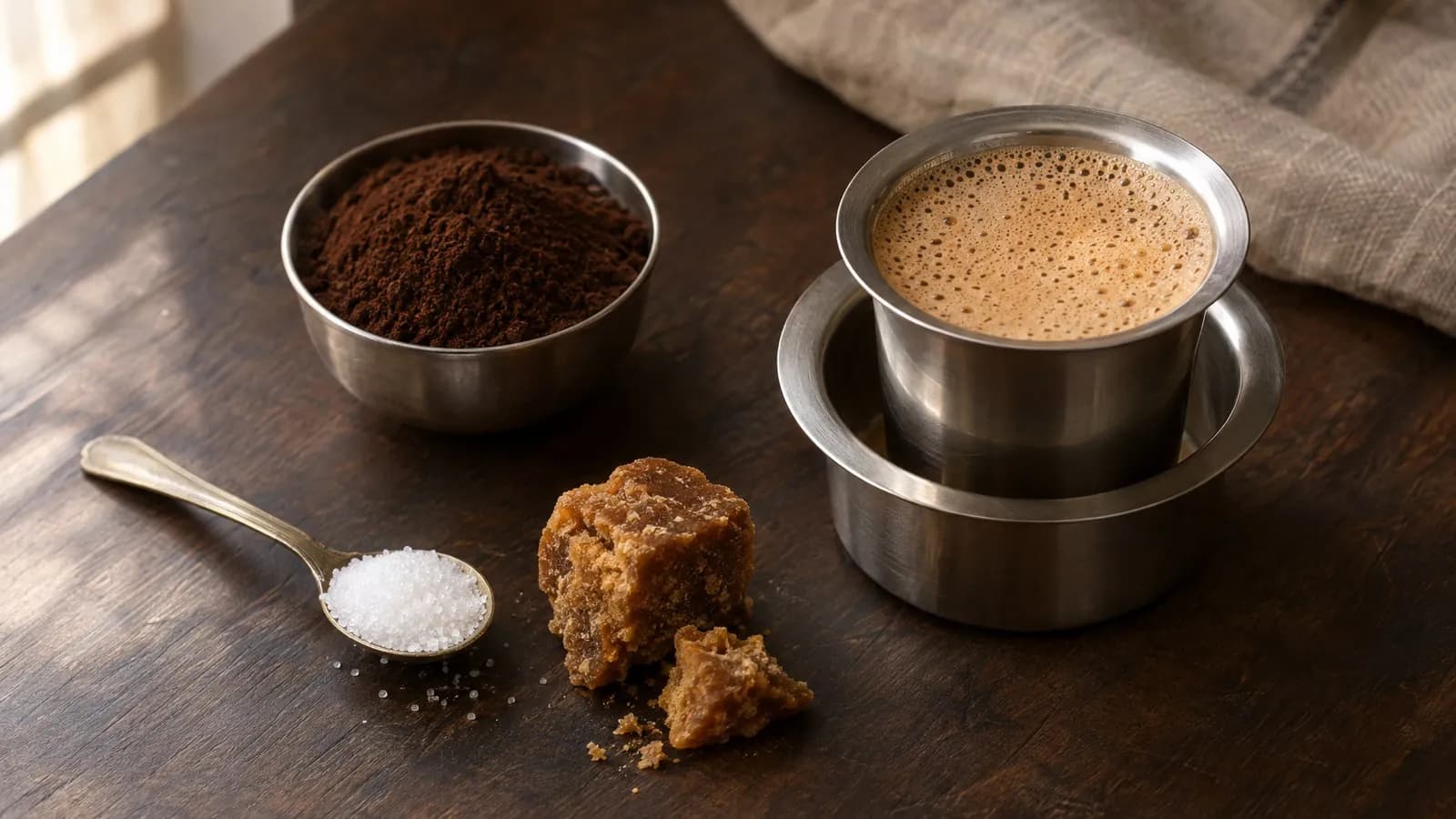
Coffee calories per 100g: powder, beans and filter coffee
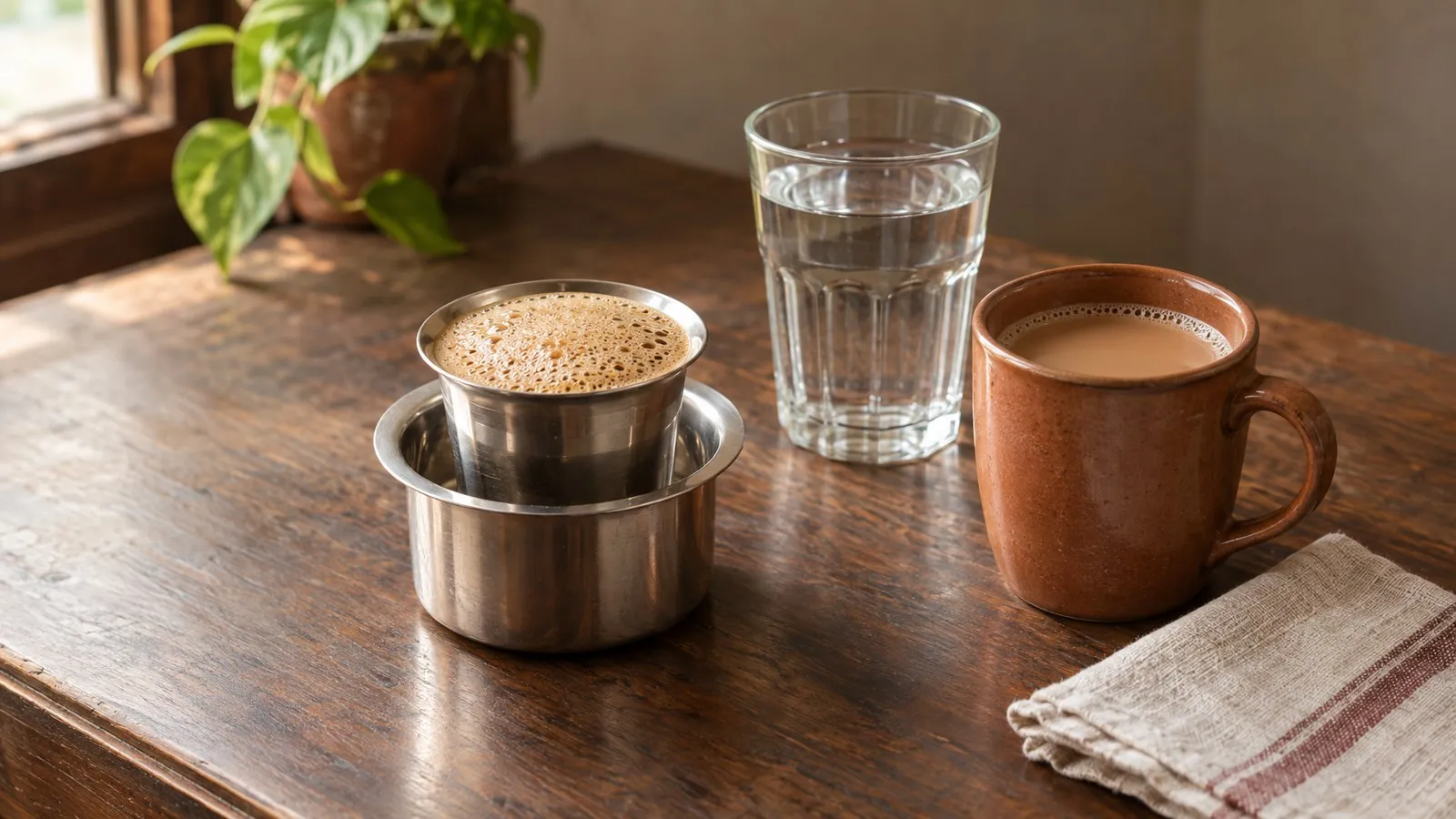
Coffee in pregnancy: how much caffeine is safe
Coffee in Hindi, Kannada, Tamil and other Indian languages