by COWBERRY

6 minute read
Chai patti in English, Hindi and other Indian languages

Chai patti in English is tea leaves: chai is the Hindi word for tea, and patti means leaves, so the phrase names the dry tea leaf Indian kitchens brew. Hindi says chai patti, English says tea, and the botanical name for the tea plant is in the table below. The chai patti guide covers brewing, nutrition and benefits; this page covers every name.
Chai patti in English and Hindi: quick answer
The phrase chai patti is Hindi: chai is tea, and patti means leaves, so chai patti in English is tea leaves, the dry leaf Indian kitchens boil for chai. English uses the one word tea for leaf and drink alike. The Indian Food Composition Tables of 2017 do not list tea leaves, so no Hindi or regional name is recorded in them; each name in the table below carries its own source. Where the table shows a dash, no name is recorded in the sources.
| Language | Name (romanised) |
|---|---|
| English | Tea |
| Hindi | Chai |
| Marathi | — |
| Gujarati | — |
| Punjabi | — |
| Bengali | — |
| Odia | — |
| Assamese | — |
| Kannada | — |
| Telugu | — |
| Tamil | — |
| Malayalam | Chaaya |
| Urdu | Chai |
| Sanskrit | — |
| Botanical name | Camellia sinensis |
Source: no source found. — means no name recorded in the source.
English ‘Tea’: Wikipedia: Tea. Hindi ‘Chai’: Wikipedia: Masala chai. Malayalam ‘Chaaya’: Wikipedia: Etymology of tea. Urdu ‘Chai’: Wikipedia: Etymology of tea. Botanical name ‘Camellia sinensis’: Wikipedia: Tea.
Chai patti in English and the botanical name
In English the leaf is simply tea, and the table also carries the tea plant's botanical name, Camellia sinensis. Loose leaf tea meaning follows from the same word: the dry leaf sold loose, weighed out of a tin, rather than sealed into tea bags, and the difference is in the pack, not the plant.
In Hindi the leaf is chai patti, and the chai patti most Indian kitchens mean is CTC tea: Assam leaf crushed, torn and curled into small uniform pellets that brew a strong, bold cup made for milk. COWBERRY's CTC black tea is exactly that leaf, sealed air-tight right after processing; how the pellets are made is on what is CTC tea. Note the split: chai alone names the brewed drink, chai patti names the dry leaf that makes it.
Chai patti in Hindi, Tamil, Marathi and other Indian languages
Hindi and Urdu. Both languages call the leaf chai, and the table records the same word twice, once for each language, because the sources that print it are different: the masala chai article for Hindi, and the etymology table for Urdu.
Malayalam. The recorded South Indian name is chaaya, from the same etymology table.
Tamil, Marathi, Kannada, Bengali, Gujarati, Punjabi, Odia, Assamese, Telugu and Sanskrit. No printed source records a word for any of these languages, so the table shows a dash for each. That is the honest answer to chai patti in Tamil and chai patti in Marathi: no printed source records a name. On shelves and menus across the country the pack is simply labelled tea, with chai patti understood across India.
Often confused with: CTC, dust, loose leaf and green tea
The names around chai patti mark grades and processing styles of one leaf, not different plants. CTC tea is the pellet form, crushed, torn and curled into small uniform granules; dust tea is the finest, powder-like grade of the same leaf, brewed for a fast, strong cup; the two are set side by side on CTC tea vs dust tea.
Loose leaf tea is any leaf sold loose, whether CTC granules or whole rolled leaves, and loose leaf tea vs tea bags compares the two packings. Orthodox tea is black tea made the traditional way, whole leaves carefully rolled to keep their flavour and aroma, covered on what is orthodox tea. Green tea leaves are the same plant handled differently: minimally processed so the leaf keeps its green colour, where black tea is fully oxidised; orthodox tea vs green tea lays out the split.
Where India's tea grows: Assam
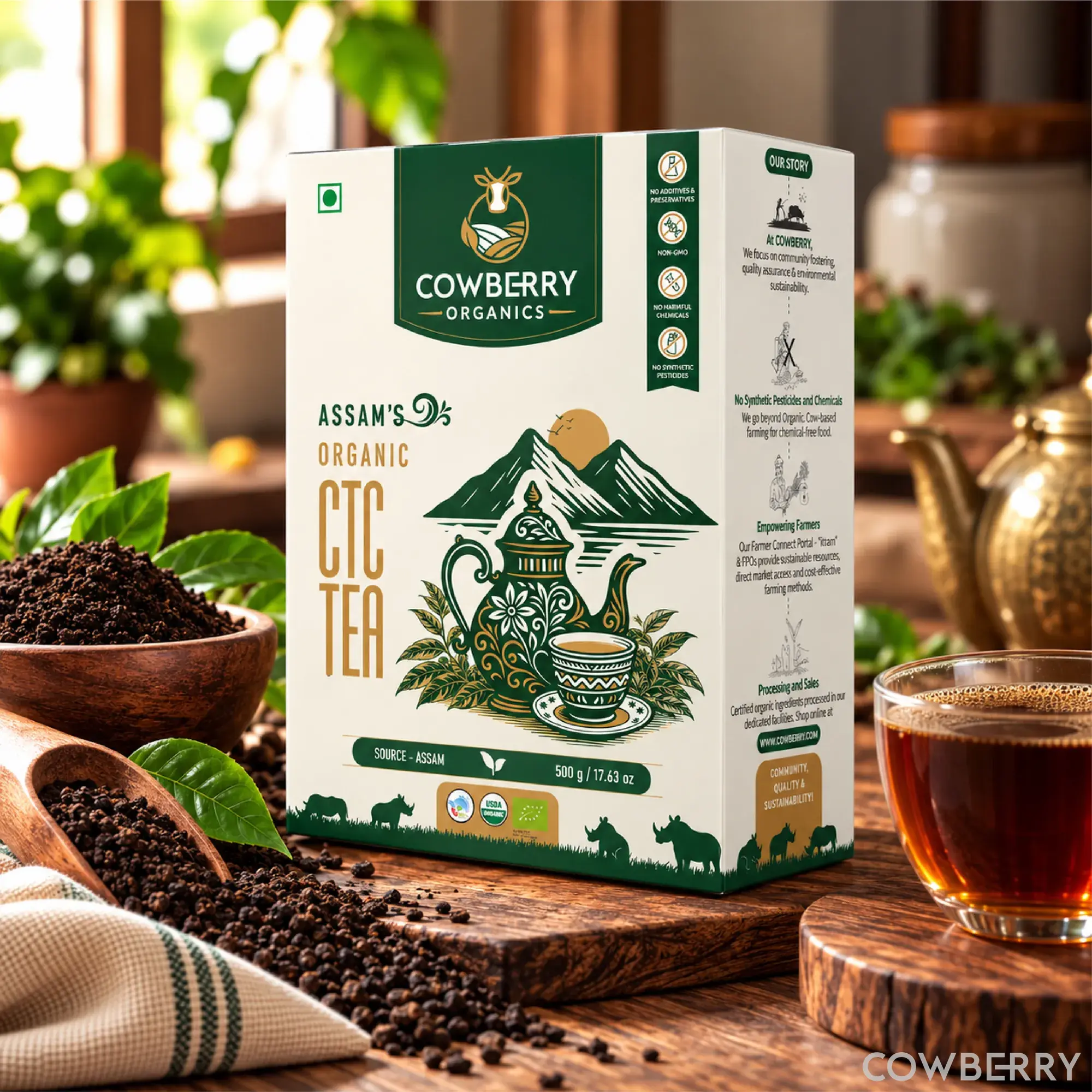
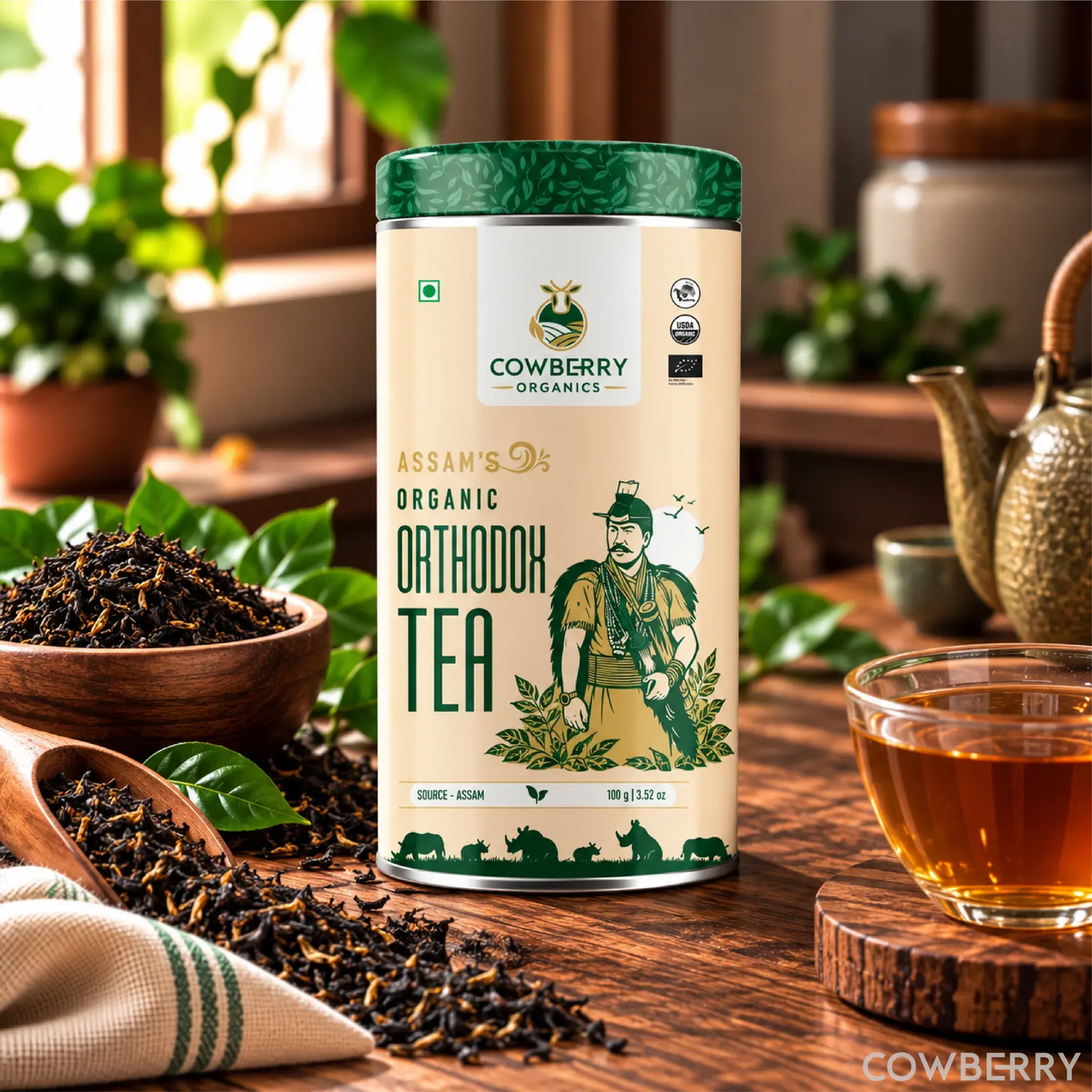
The COWBERRY teas on this page come from one region: the organic tea gardens of Assam, where the CTC leaf and the orthodox whole leaves are grown without synthetic pesticides or chemicals. The orthodox tea is whole leaf rolled the traditional way, sold in a 100 g pack; the CTC tea comes in 500 g and 1 kg packs for the daily chai pot.
Whichever name the leaf carries, the kitchen puts it to work the same way: brewed into chai with milk, spiced into masala chai, or matched to a recipe from the loose leaf tea recipes roundup. The chai patti hub collects the whole family, from nutrition to storage.
FAQs
What is loose leaf tea?
The dry tea leaf sold loose, weighed out of a tin or pack, rather than sealed into tea bags: in Indian kitchens that is usually CTC granules for milk chai, or rolled whole orthodox leaves for a plain cup. The same leaf fills a tea bag; the difference is the pack, not the plant. See loose leaf tea vs tea bags.
Does chai patti have caffeine?
Yes. Chai patti is black tea leaf, and a cup of it carries about 75 mg of caffeine on the NHS's per-cup list, whether the leaf is black or green. The name changes nothing: CTC granules, dust and whole orthodox leaves all come from the same tea plant. The cup-by-cup picture is on how much caffeine is in tea.
What is CTC tea?
Black tea made by the Crush, Tear and Curl method, which turns the leaf into small uniform pellets that brew a strong, bold cup and stand up to milk; it is the chai patti most Indian kitchens mean. COWBERRY's CTC tea is Assam leaf, sealed air-tight right after processing. More on what is CTC tea.
What is orthodox tea?
Black tea made the traditional way: whole leaves are carefully rolled and processed to preserve their natural flavour and aroma, and the cup comes out smoother and more layered than CTC, usually drunk plain rather than with milk. COWBERRY's orthodox tea is rolled whole leaf from organic Assam gardens. More on what is orthodox tea.
Is orthodox tea green tea?
No, though both come from the same tea plant. Orthodox tea is black tea: the rolled whole leaves are fully oxidised, which gives the strong, dark cup. Green tea leaves are minimally processed so they keep their green colour and a lighter, delicate flavour. The full comparison is on orthodox tea vs green tea.
What is chai patti in Hindi?
Chai patti is itself Hindi: chai means tea, and patti means leaves, so the phrase names the dry tea leaf used to brew the drink, and the same phrase serves Urdu too. In English the leaf is tea leaves; the drink made from it keeps its Hindi name, chai, wherever it is brewed.
References
Shop this article
Keep reading
Coffee vs tea: caffeine, benefits and which is better
Coffee calories per 100g: powder, beans and filter coffee

Coffee in pregnancy: how much caffeine is safe