by COWBERRY

5 minute read
How chai patti is made: from tea leaf to CTC and orthodox tea

How chai patti is made depends on which chai patti: the CTC kind is crushed, torn and curled into small pellets, while orthodox tea is rolled whole. Both routes begin in the tea gardens of Assam and end with a pack on the shelf. This page walks the journey from leaf to packet for each, as part of our chai patti guide.
The short answer: one leaf, two routes
In short, the leaf is picked in Assam and then takes one of two routes. The CTC route runs it through machines that crush, tear and curl it into tiny, even pellets, the leaf sold for milk chai. The orthodox route keeps the leaf whole and rolls it, the leaf sold for a plain cup. After processing, the finished tea is packed and sealed so it stays fresh until the first brew. That is the chai patti making process in a paragraph, each route explained below; for the brewing side, the chai patti hub points to every recipe and guide.
The plucking: hand-picked in Assam
Both teas start as fresh leaf from the tea gardens of Assam, the region where Indian tea cultivation has had its heartland for over a century. The orthodox leaf is hand-picked in Assam, and the CTC leaf is freshly plucked from the same gardens; COWBERRY grows both without synthetic pesticides, and the CTC that reaches the factory becomes a robust, full-bodied black tea. From here the two routes part ways, and that split is what decides whether the packet holds pellets or whole leaves.
How CTC tea is made: crush, tear, curl
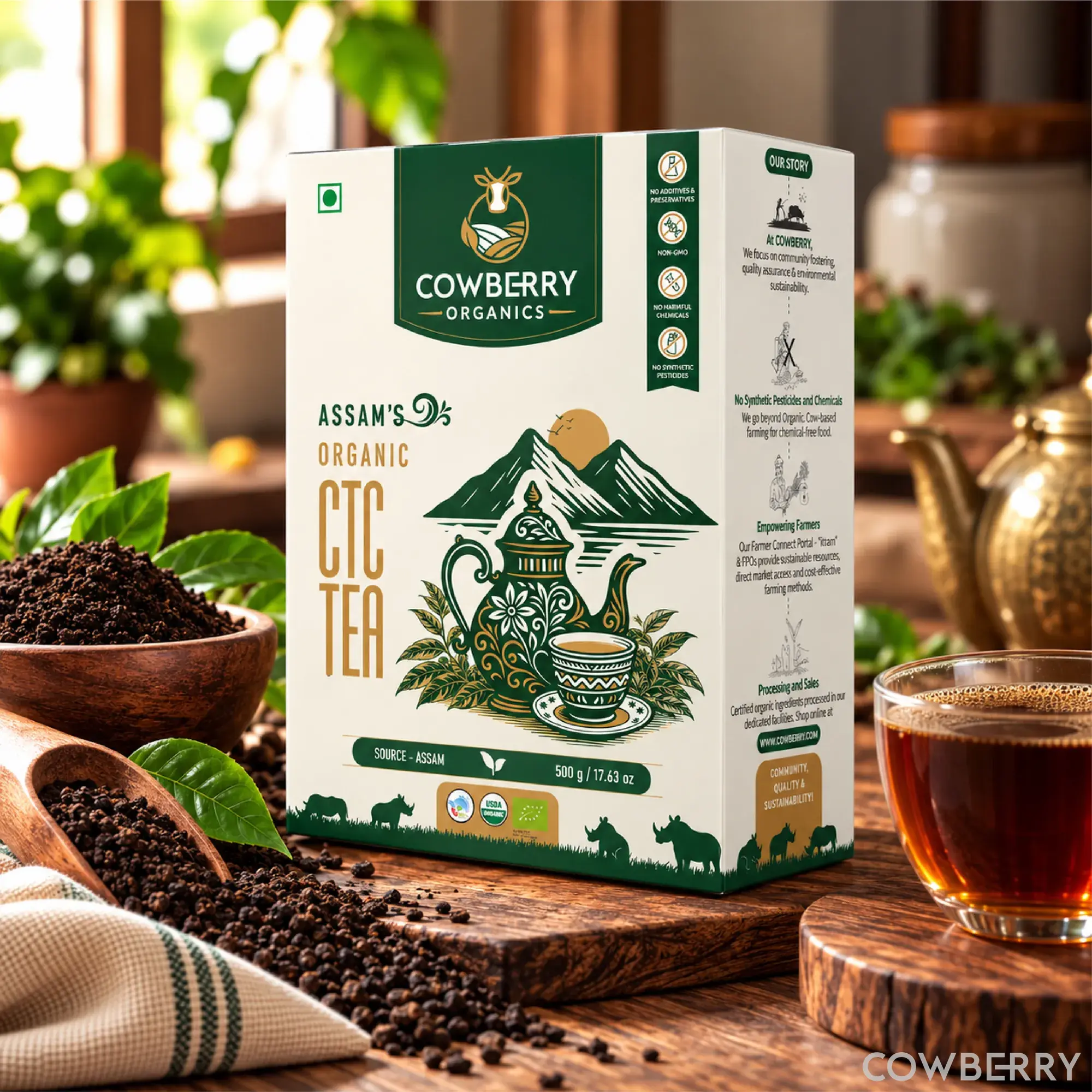
The CTC tea making process is the machine route, and the name is the method: the letters stand for Crush, Tear, Curl, the three actions the rollers perform on the leaf until it is no longer whole but a heap of tiny, even pellets. Those pellets are the chai patti that Indian milk chai is made from, and the pellet form is the point of the method: the pack credits it with better brewing efficiency and a full-bodied taste that carries milk and spice well.
The method is believed to go back to Assam in the 1930s, when British tea planters came up with the cut-tear-curl technique, the story goes, as a quick fix for machines that had broken down. Nothing else goes into the tea: no artificial flavours or additives. The method, its uses and its health picture are on our guide to what is CTC tea.
How orthodox tea is made: the whole-leaf roll
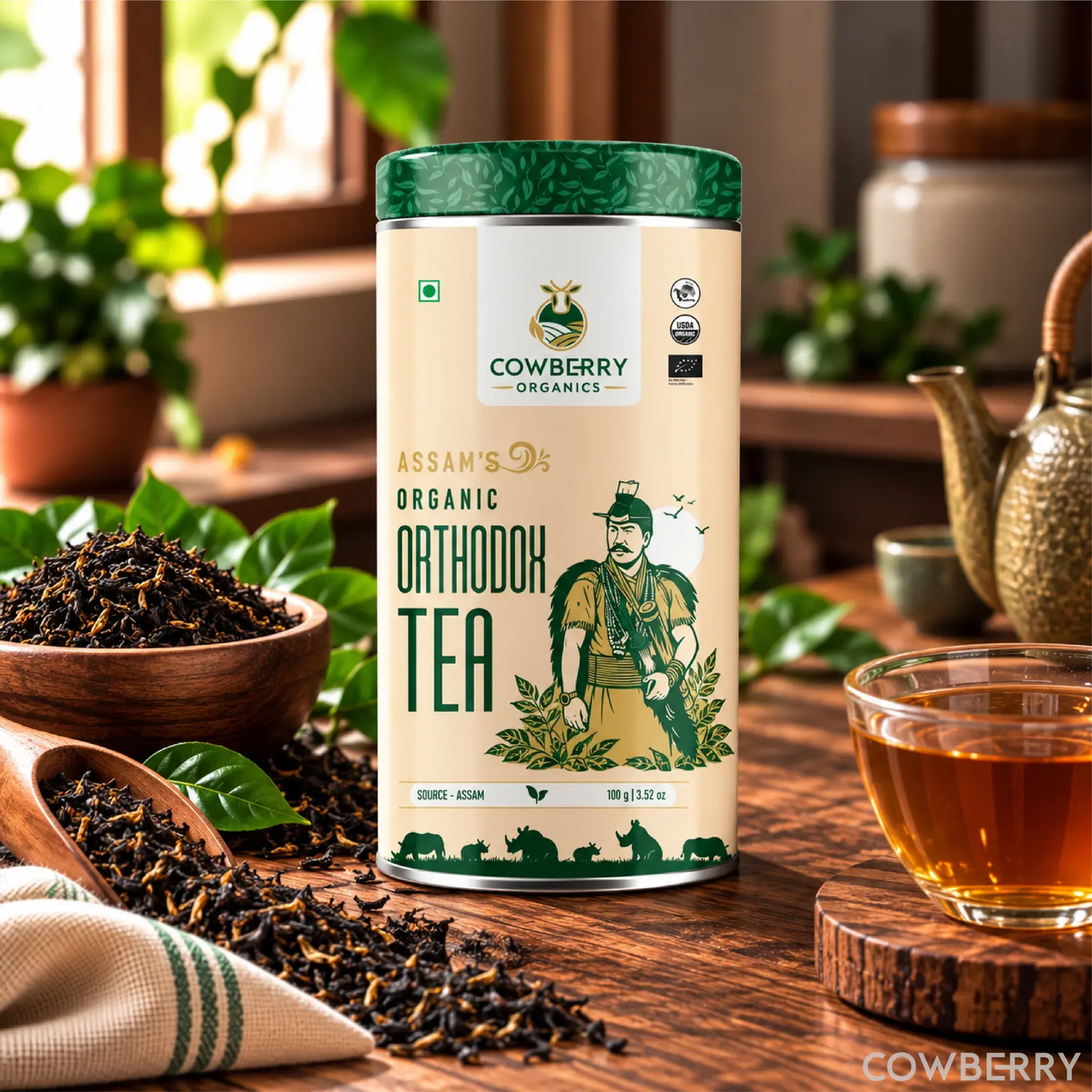
The orthodox route is the older, traditional way. Instead of cutting, the whole leaves are carefully rolled, and the rolling is what develops the aroma, the layered flavour and the balanced strength that set orthodox apart from conventionally processed varieties. Because the leaf stays whole, its delicate flavours and aromas open up gradually in the cup rather than all at once, and the tea keeps its natural aroma, texture and flavour through processing. The method is the traditional one, practised for generations in Assam's tea gardens, and the finished pack is 100% organic whole tea leaves, with no artificial flavours, colours or preservatives. The complete story is what is orthodox tea, and the brewing side is how to drink orthodox tea.
The packing step and what happens next
Once the leaf is processed, the packing step decides how fresh the tea stays. CTC tea goes into air-tight packaging the moment processing ends, so what the factory put in is what the pack still holds when it is opened; the orthodox leaf is packed whole and kept, once opened, in an airtight container somewhere cool and dry, away from moisture and strong smells. The packs tell the tale: CTC is sold in 500 g and 1 kg bags, orthodox in a 100 g box.
After the packet comes the pot: for the milky cup, the chai patti recipe; for the plain cup, how to drink orthodox tea; more ideas in the loose leaf tea recipes round-up. Shelf life is covered on does chai patti expire. One habit belongs to the hour of drinking: the ICMR-NIN dietary guidelines say tea should be avoided for at least one hour before, during or soon after a meal, because it binds the iron in food.
FAQs
How to make chai patti?
At home, chai patti is made into chai: heat water with the leaves, let the tea brew, add milk and sugar to taste, and our chai patti recipe walks through the pot. In the factory, chai patti is made from plucked Assam leaf by the two routes on this page, CTC crush-tear-curl and orthodox rolling.
What is CTC tea?
CTC tea is chai patti made by machines: the letters stand for Crush, Tear, Curl, and the process cuts the plucked leaf into tiny, even pellets instead of leaving it whole. The pellets brew a strong, full-bodied cup that suits milk chai, and the full story is on our what is CTC tea guide.
What is orthodox tea?
Orthodox tea is the other way of making black tea: the whole leaf is carefully rolled, not cut, so the cup pours smoother and more layered next to CTC's strong, bold brew. Hand-picked and rolled in Assam, it is the leaf for a plain cup; the guide is what is orthodox tea.
Does chai patti have caffeine?
Yes. Chai patti is black tea, and the caffeine comes along in the cup whether the leaf is CTC or orthodox. For the amounts per cup across tea styles, and the limits that matter in pregnancy, see how much caffeine is in tea.
Can loose leaf tea go bad?
Loose leaf tea will not spoil the way fresh food does; it goes flat instead, as air, moisture, heat and strong smells slowly take the aroma and flavour out of the leaves. Keeping the pack tightly closed somewhere cool and dry holds it; see does chai patti expire for the shelf life.
References
Shop this article
Keep reading
Coffee vs tea: caffeine, benefits and which is better
Coffee calories per 100g: powder, beans and filter coffee
Coffee in pregnancy: how much caffeine is safe