by COWBERRY

7 minute read
Orthodox tea vs green tea: processing, caffeine and taste

Orthodox tea vs green tea in one line: both come from the same tea plant, and the difference is what happens after picking. Orthodox leaves are rolled whole and fully oxidised into black tea with a smooth, layered cup; green tea leaves are minimally processed, kept green, and brew into a light, delicate cup. The chai patti guide covers black tea's family; here the two teas meet.
Orthodox tea vs green tea: the verdict in three lines
Same plant, two roads after picking. Orthodox leaves are carefully rolled whole and fully oxidised into black tea; green tea leaves are minimally processed so the leaf keeps its natural green colour, delicate flavour and fresh taste.
The cup follows the process. Orthodox steeps smooth, balanced and layered, strong enough to carry milk; green tea brews light and delicate, meant to be drunk plain.
Caffeine does not follow. The NHS figure is the same about 75 mg for a cup of black or green tea, so the choice between the two is taste and use, not the caffeine number, and nutrition tables print no composition for either dry leaf.
Side by side: difference between orthodox tea and green tea
The difference between orthodox tea and green tea, row by row, with caffeine and the nutrition question handled below.
| Point | Orthodox tea | Green tea |
|---|---|---|
| What it is | Black tea: whole leaves rolled the traditional way, fully oxidised | Tea leaves minimally processed to stay green |
| Leaf | Dark rolled whole leaves | Whole young green leaves |
| Process | Traditional rolling, full oxidation | Minimal processing, no oxidation |
| Cup | Strong, dark | Light, delicate |
| Taste | Smooth, balanced, layered | Delicate flavour, fresh taste |
| Brewing | A teaspoon of leaves in 90-95°C water, steeped 3-5 minutes | A teaspoon in 80-85°C water, a 2-3 minute steep, no boiling water |
| Caffeine | About 75 mg a cup, per the NHS | The same figure |
| With milk | Strong enough for milk chai | Usually drunk plain, without milk |
| Best use | The black tea cup, the chai pot | The light plain cup |
Nutrition and caffeine: the same honest answer
Neither tea gets nutrition numbers on this page, because no food table records dry tea leaf: IFCT 2017 omits tea leaves, the USDA database covers only brewed tea, and the GI lists pass tea by. What the pot adds, milk and sugar chiefly, is where the numbers live.
Caffeine is the one figure that does exist, and the process does not move it: the NHS estimate for a cup of tea, black or green alike, is about 75 mg. One caution attached to green tea belongs to supplements, not cups: the safety review behind the liver warnings concerns concentrated catechin-rich preparations, not brewed tea drunk normally. The cup-by-cup detail is on does CTC tea have caffeine, and the arithmetic of chai is on chai patti nutrition.
Taste and cooking: two leaves, two kettles
Orthodox in the cup. The whole leaf's brewing note runs: a teaspoon of leaves, water at 90-95°C, and a steep of three to five minutes, strained and enjoyed neat or with a slice of lemon or a spoon of honey. That patient steep is what the smooth, balanced taste and the layered flavour ask for, and the same leaf carries milk when the pot calls for chai.
Green in the cup. The green leaf's note is cooler and shorter: one teaspoon in hot water at around 80-85°C, steeped for two to three minutes, and never boiling water, which makes the tea bitter. The result is light, delicate and fresh, a cup that asks for no milk and no sugar.
The why behind the gap. Full oxidation gives black tea its stronger taste and darker colour; minimal processing keeps green tea's natural green colour and delicate flavour. That single processing split explains everything on the tongue, and how to drink orthodox tea has the black side in detail, with green tea recipes for the green side.
Cost and where each fits
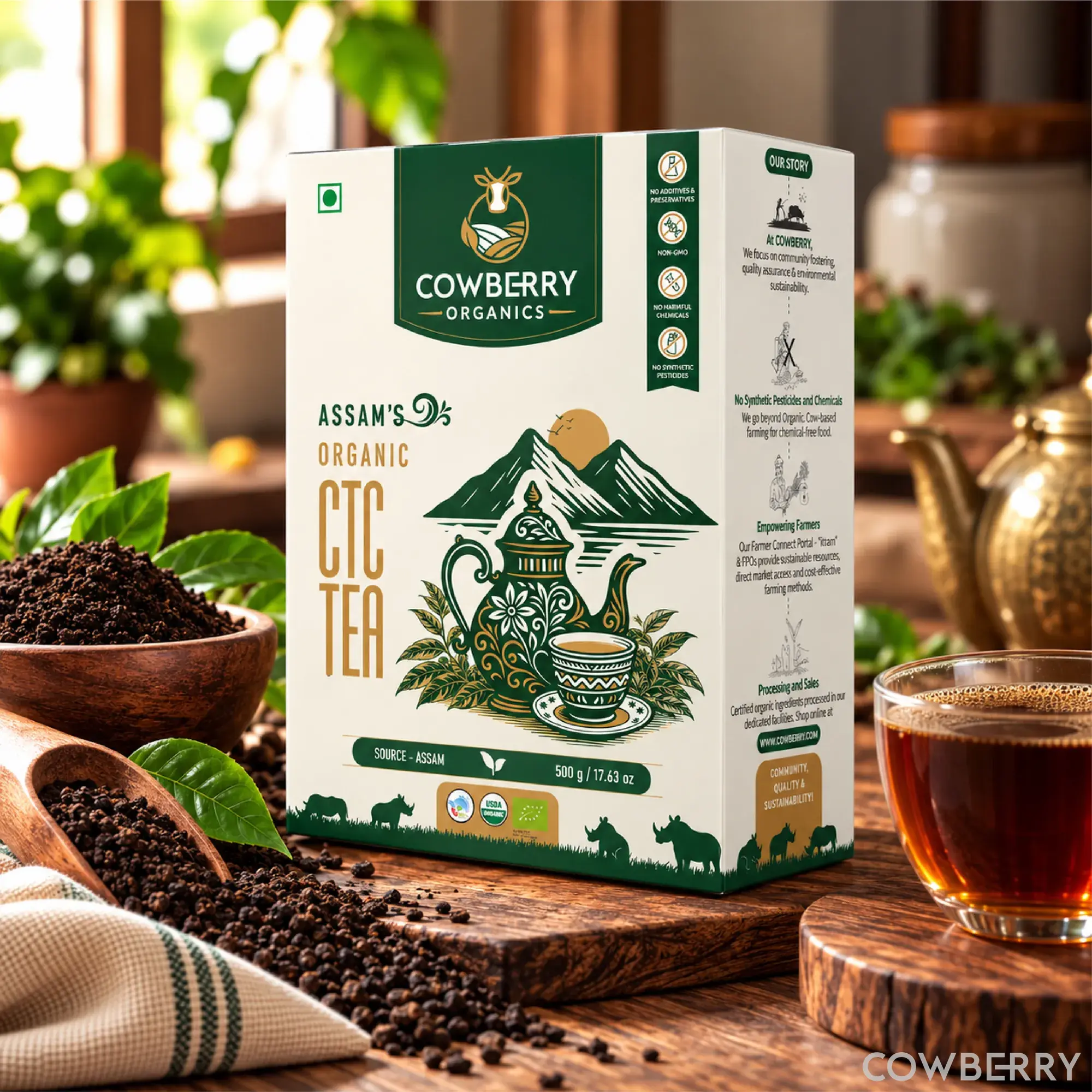
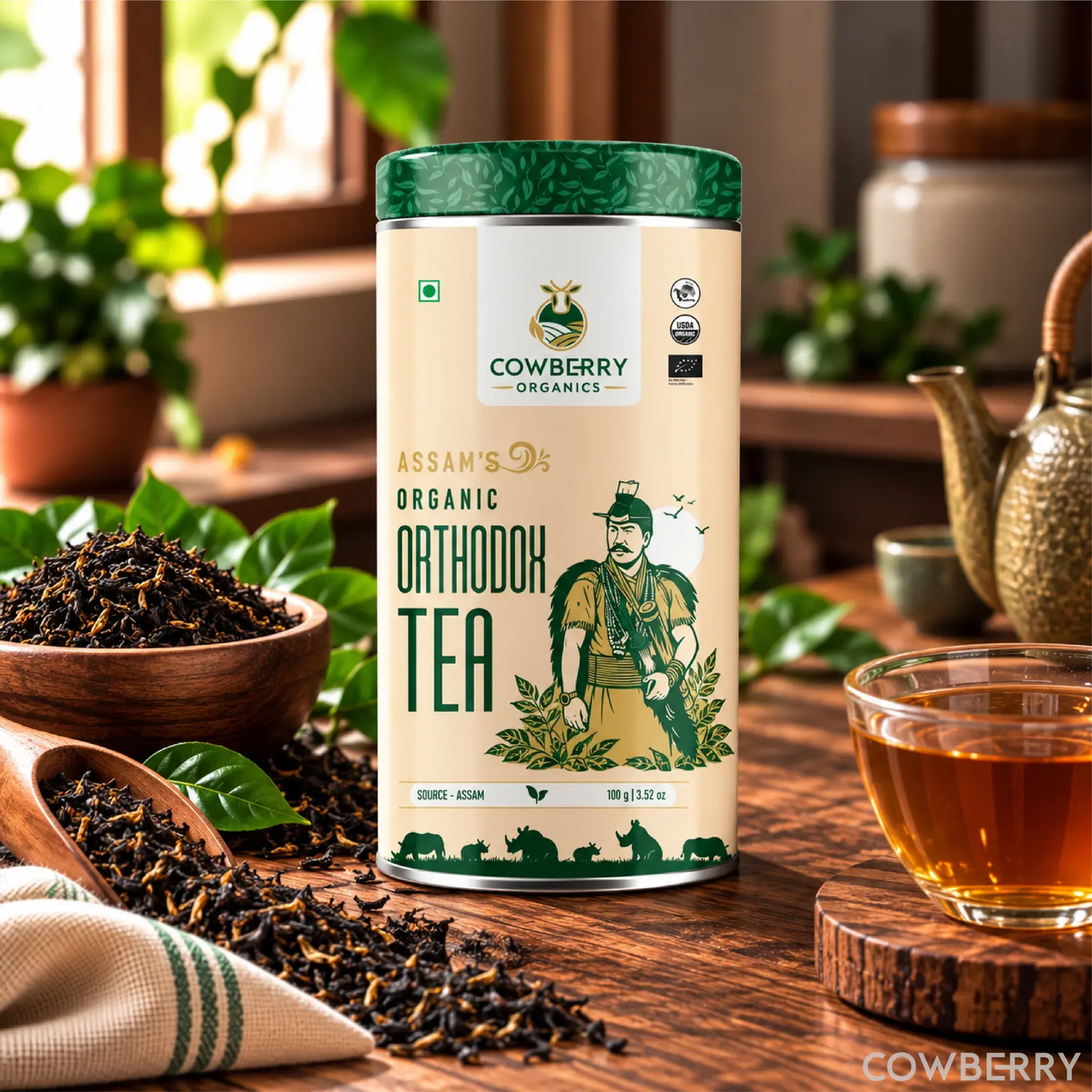
On cost, only words: shelf prices move, and this page will not chase them. The two leaves sit close in price, both small-pack teas: COWBERRY sells the orthodox tea in a 100 g pack and the green tea in 100 g and 500 g packs, both from organic Assam gardens.
Where each fits follows the cup. Orthodox belongs with the black tea drinker: the morning chai that carries milk, the afternoon plain cup with lemon or honey, the pot for guests. Green tea belongs with the light cup: the no-milk brew, the quiet evening steep, the switch from a strong chai to something delicate. Keep both airtight and dark, and either stays fresh, as does chai patti expire explains.
Which for whom
- The milk chai drinker: orthodox, the black tea side, strong enough to carry milk.
- The plain, light cup drinker: green tea, delicate and fresh, brewed well below the boil.
- Anyone watching weight: keep expectations honest. In the Cochrane review, green tea preparations produced a small, statistically non-significant weight loss in overweight or obese adults, too small to be clinically important, with no significant effect on keeping the weight off.
- Anyone taking green tea extract supplements: the liver warnings in the safety review concern concentrated extracts, not brewed cups; anyone on such supplements should ask a doctor about them.
- Pregnancy: keep the day's caffeine under the NHS limit of 200 mg, with each cup of either tea counting about 75 mg.
- Anyone managing iron intake: the Dietary Guidelines for Indians single out beverages like tea: they bind dietary iron, and the advice is to avoid tea before, during or soon after a meal. A 2017 isotope trial in twelve healthy UK women showed why one hour helps: the tea's inhibiting effect on iron absorption was roughly halved when the tea waited a full hour after the meal.
- The full picture: green tea has its own hub, and the chai patti hub gathers the black side.
Cook with it: see all loose leaf tea recipes; try Chai, Masala chai.
FAQs
Is orthodox tea green tea?
No. Orthodox tea is black tea, rolled whole and fully oxidised, which is what gives it the strong, dark cup. Green tea leaves take the other road: minimally processed, never oxidised, kept green and delicate. Same plant, opposite ends of the processing line, and the table above lines them up.
Does orthodox tea have caffeine?
Yes. Orthodox tea is a black tea, so caffeine comes with it: about 75 mg in a cup on the NHS list, the same number green tea gets. Processing changes the cup, not the caffeine, and does CTC tea have caffeine has the numbers behind the cup.
Does green tea have caffeine?
Yes. Green tea naturally contains a moderate amount of caffeine, as its own pack note puts it, and the NHS figure for a cup of tea, black or green, is about 75 mg. The processing changes the flavour, not the caffeine.
Is green tea good for health?
The observational picture is favourable: a 2024 meta-analysis of 38 cohorts associated tea drinking with lower death rates, as an association, not proof. For weight loss specifically, the Cochrane review found green tea's effect small and statistically non-significant. The honest framing, cup by cup, is on green tea.
Which is better for weight loss, orthodox tea or green tea?
Neither, on the published evidence. The Cochrane review found green tea preparations produced a small, statistically non-significant weight loss in overweight or obese adults, not clinically important, and no significant effect on keeping weight off. No study in the references prints a weight-loss finding for orthodox tea at all. Choose by taste.
What is green tea?
Tea leaves that are minimally processed to keep their natural green colour, delicate flavour and fresh taste, brewed in hot water at around 80-85°C for two to three minutes, never with boiling water. COWBERRY's green tea is whole young leaves from organic Assam gardens.
References
- Kim Y, Je Y. Tea consumption and risk of all-cause, cardiovascular disease, and cancer mortality: a meta-analysis of thirty-eight prospective cohort data sets. Epidemiol Health, 2024
- Jurgens TM, Whelan AM, Killian L et al. Green tea for weight loss and weight maintenance in overweight or obese adults. Cochrane Database Syst Rev, 2012
- Hu J, Webster D, Cao J et al. The safety of green tea and green tea extract consumption in adults - Results of a systematic review. Regul Toxicol Pharmacol, 2018
- NHS: foods to avoid in pregnancy (caffeine section)
- Dietary Guidelines for Indians, ICMR-National Institute of Nutrition
- Ahmad Fuzi SF, Koller D, Bruggraber S et al. A 1-h time interval between a meal containing iron and consumption of tea attenuates the inhibitory effects on iron absorption. Am J Clin Nutr, 2017
Shop this article
Keep reading

Coffee vs tea: caffeine, benefits and which is better
Coffee calories per 100g: powder, beans and filter coffee

Coffee in pregnancy: how much caffeine is safe