
Jaggery tea (gur ki chai)
Preparation Time
5 minutes
Cooking Time
10 minutes
Difficulty Level
easy
Meal Type
Drinks
Serves 2
Key Ingredients
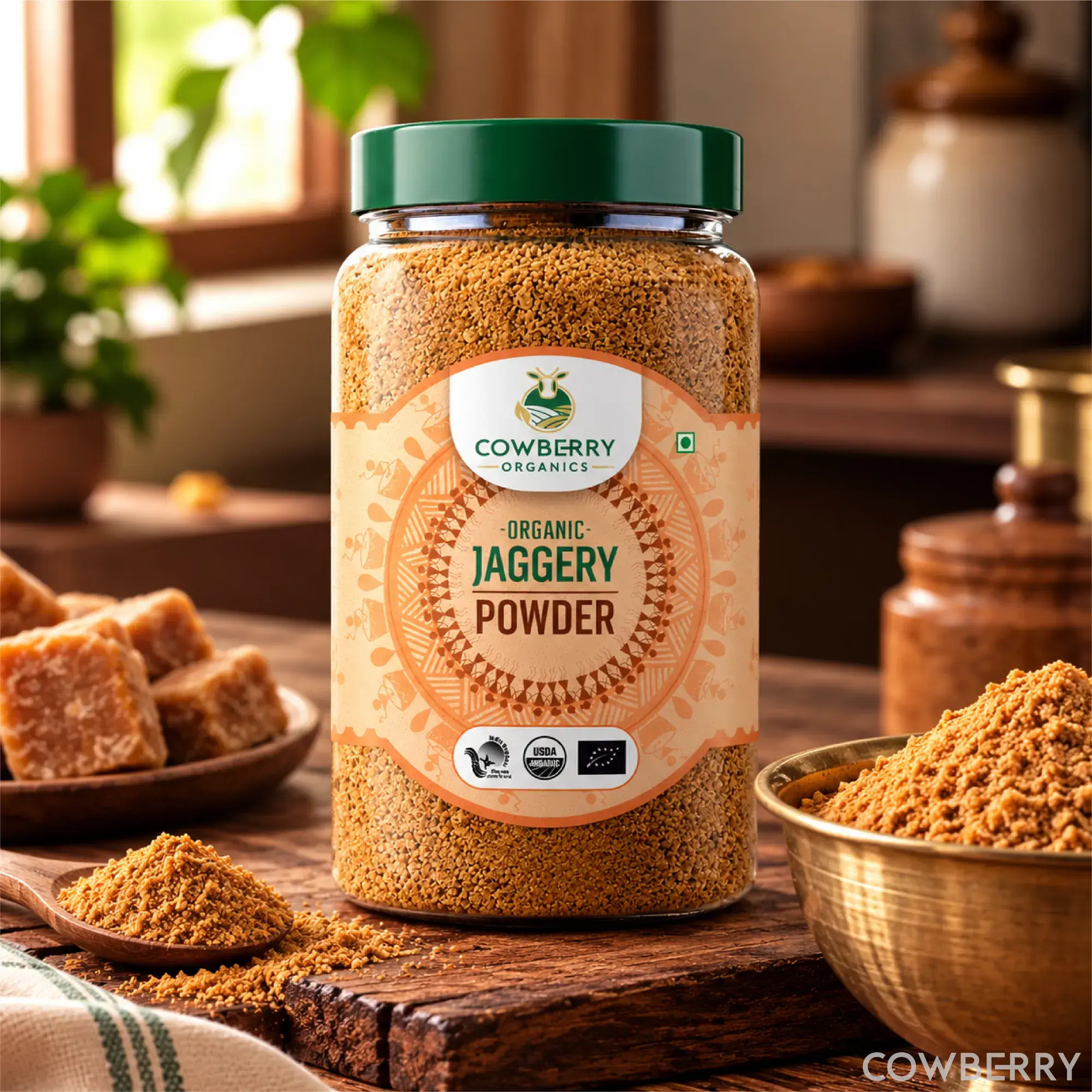
- Jaggery powder (20 g, 2 tsp per cup; adjust to taste)
About This Recipe
Gur wali chai is a winter habit across North India, especially in the sugarcane belt of western Uttar Pradesh, Punjab and Haryana, where fresh jaggery arrives with the cane harvest and goes straight into the chai pot. Jaggery gives the tea a caramel, faintly smoky sweetness that white sugar cannot, and it carries ginger and cardamom well. The honest comparison is on the jaggery page; the short version is that gur is still sugar with a little iron and calcium, so the win in this cup is taste.
The usual problem is curdling: drop jaggery into boiling milk tea and it can split into grainy curds. Jaggery can be mildly acidic, and acid plus heat makes the milk protein clump. This recipe fixes it by stirring the jaggery into the strained tea off the heat, where it dissolves in seconds. If you would rather sweeten in the pan, the second method also works: use less milk, boil the tea longer so the brew is strong, and add the jaggery at the very end with the flame off.
Both versions are here. The milk version is the everyday cup; the black version, just water, tea, ginger, cardamom and gur, is lighter and lets the taste of the jaggery come through. Jaggery powder dissolves quickly; grated block jaggery needs a minute of stirring. Tulsi leaves, a few peppercorns or a small piece of cinnamon go in with the ginger if you want a masala chai.
Ingredient List
Serving Size:
1x
2x
3x
Tea
- Water — 1 1/2 cups
- Ginger, crushed — 1 inch
- Green cardamom pods, crushed — 2 pieces
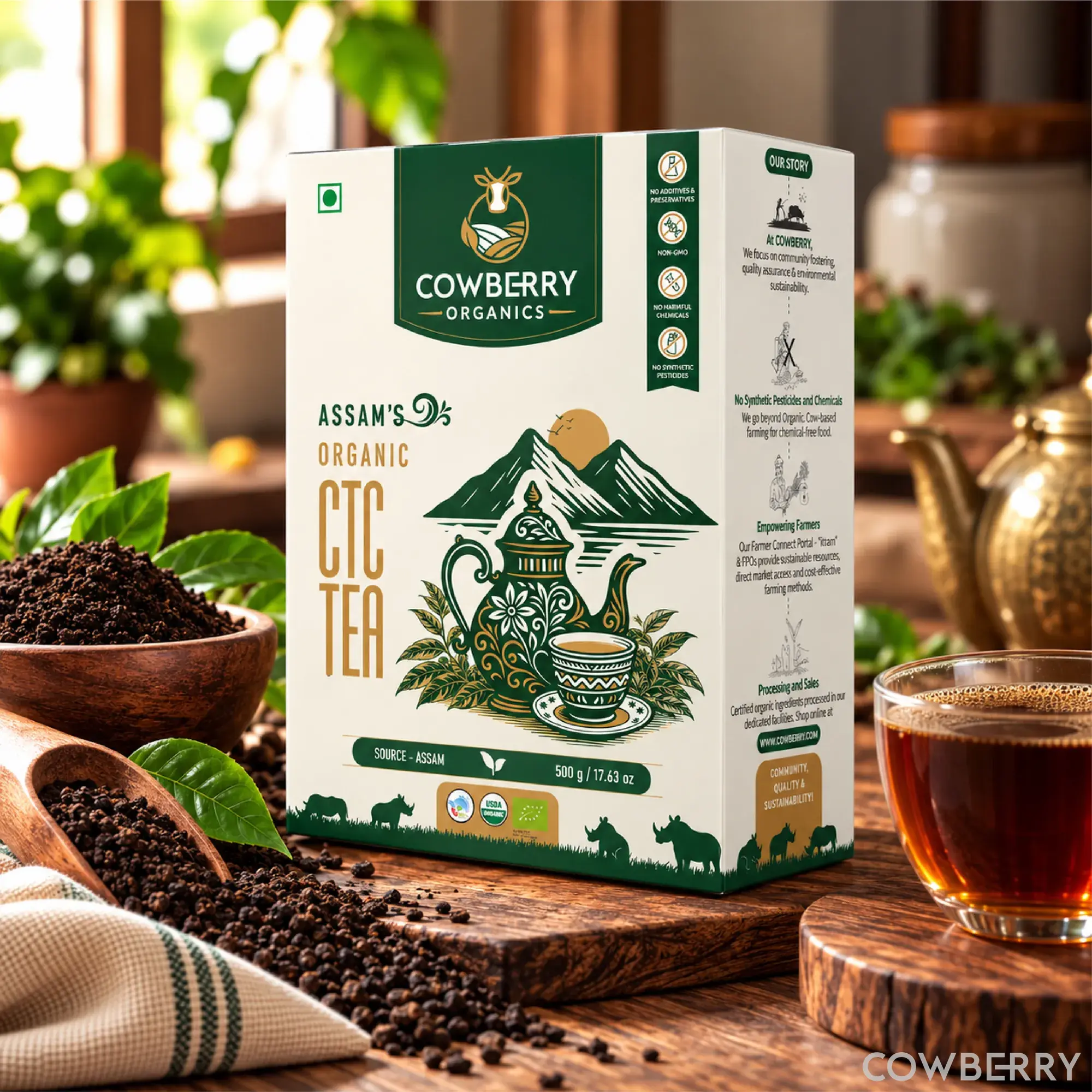
- Black tea leaves (CTC) — 2 tsp
Milk version
- Full-fat milk (skip for black jaggery tea) — 1 cup
Black tea version
- Extra water, in place of the milk — 1/2 cup
To sweeten
- Jaggery powder (20 g, 2 tsp per cup; adjust to taste) — 4 tsp
Skip The Store !
Get all you need for the recipe in just a few clicks
Serving Suggestions
Serve hot, in small cups, with something savoury to set off the caramel sweetness: mathri, namak pare, roasted chana or a plain paratha. In winter a til ke laddu or a square of peanut chikki beside the cup is the Makar Sankranti pairing. Black jaggery tea with a squeeze of lemon works as an afternoon cup on a hot day. Do not reheat the milk version once the jaggery is in; it may split.
Tips for Cooking Jaggery tea (gur ki chai)
Brew the tea stronger than you would for sugar chai; the caramel note of jaggery flattens a weak brew. Add the jaggery only once the flame is off, ideally after straining. If the milk still curdles, the jaggery may be on the acidic side or the milk close to turning: use fresh milk, and let the strained tea stand for a minute before the jaggery goes in.

Chef’s Note
If you are searching for gur tea benefits, keep expectations modest. Jaggery is 84.87 g carbohydrate per 100 g, nearly all of it sugar, with 4.63 mg iron and 107 mg calcium (IFCT 2017). With 2 teaspoons (10 g) of jaggery in each cup, the tea gets about 35 kcal, 8.5 g carbohydrate and 0.46 mg iron from it; the milk is extra and not counted. Drink it for the taste, and count it as sugar.
Per serving (approx.): 35 kcal, protein 0.2 g, carbs 8.5 g, fat 0 g, fibre 0 g. Computed from IFCT 2017 / USDA values for the listed quantities. Measures: 1 cup = 240 ml, 1 tbsp = 15 ml, 1 tsp = 5 ml.
Happy Cooking !!
!!
ByCOWBERRY
Jul 09, 2026
Recipes You’ll Love
More everyday cooking with COWBERRY organics, from the same kitchen.

Preparation Time
5 Min
Cooking Time
25 Min
Difficulty Level
easy

Preparation Time
10 Min
Cooking Time
10 Min
Difficulty Level
easy

Preparation Time
5 Min
Cooking Time
10 Min
Difficulty Level
easy