membership background

Grains & Millets articles from COWBERRY

Featured

What Is Brown Sugar? Types, How It Is Made, Nutrition and Uses

What Is Brown Sugar? Types, How It Is Made, Nutrition and Uses

What is brown sugar: sugar with part of the cane's molasses kept in — 380 kcal and 98.1 g of carbohydrate per 100 g. Types (demerara, muscovado, light and dark), names, how it is made, nutrition, uses, storage and buying.
05 Aug 2026by COWBERRY
11 minute read

Fresh Blogs

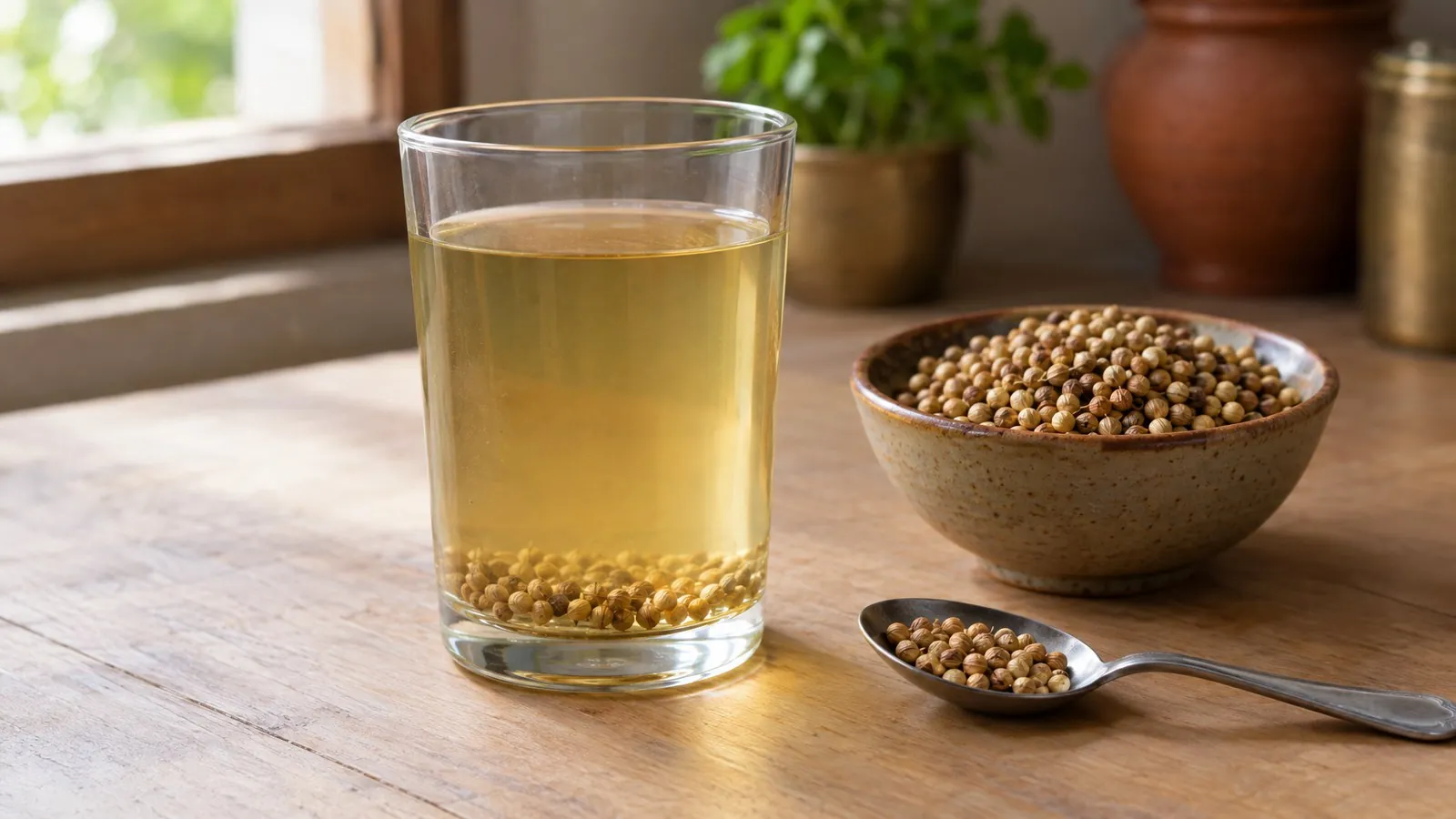
Coriander water benefits: what dhania water actually does

Coriander water benefits: what dhania water actually does

Coriander water benefits, answered honestly: the research reviewed here has no human trial showing coriander water does anything specific. Here is what is known about coriander, what one teaspoon of seeds holds, and how to make and drink the water.
05 Oct 2026by COWBERRY
7 minute read
Red rice vs brown rice: the fibre, GI and honest verdict
Red rice vs brown rice: the fibre, GI and honest verdict
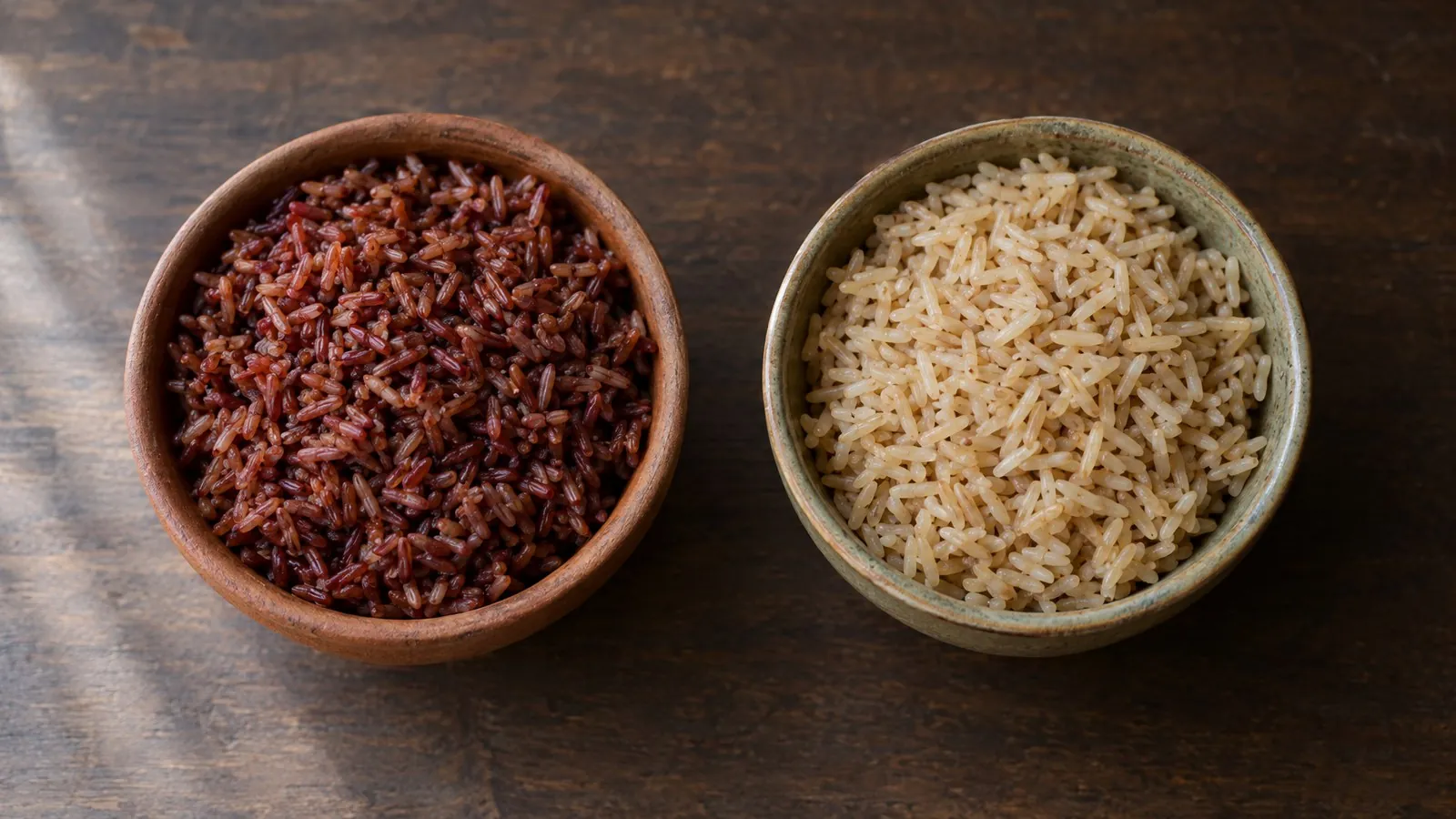
Red rice vs brown rice: brown rice lists more fibre and protein and an India-tested GI of 58, while red rice's seven foreign tests average 62. Side-by-side nutrition per 100 g, GI, cooking, cost and which to choose.
05 Oct 2026by COWBERRY
6 minute read

More Articles

Jowar vs wheat: nutrition, taste, and which one to choose
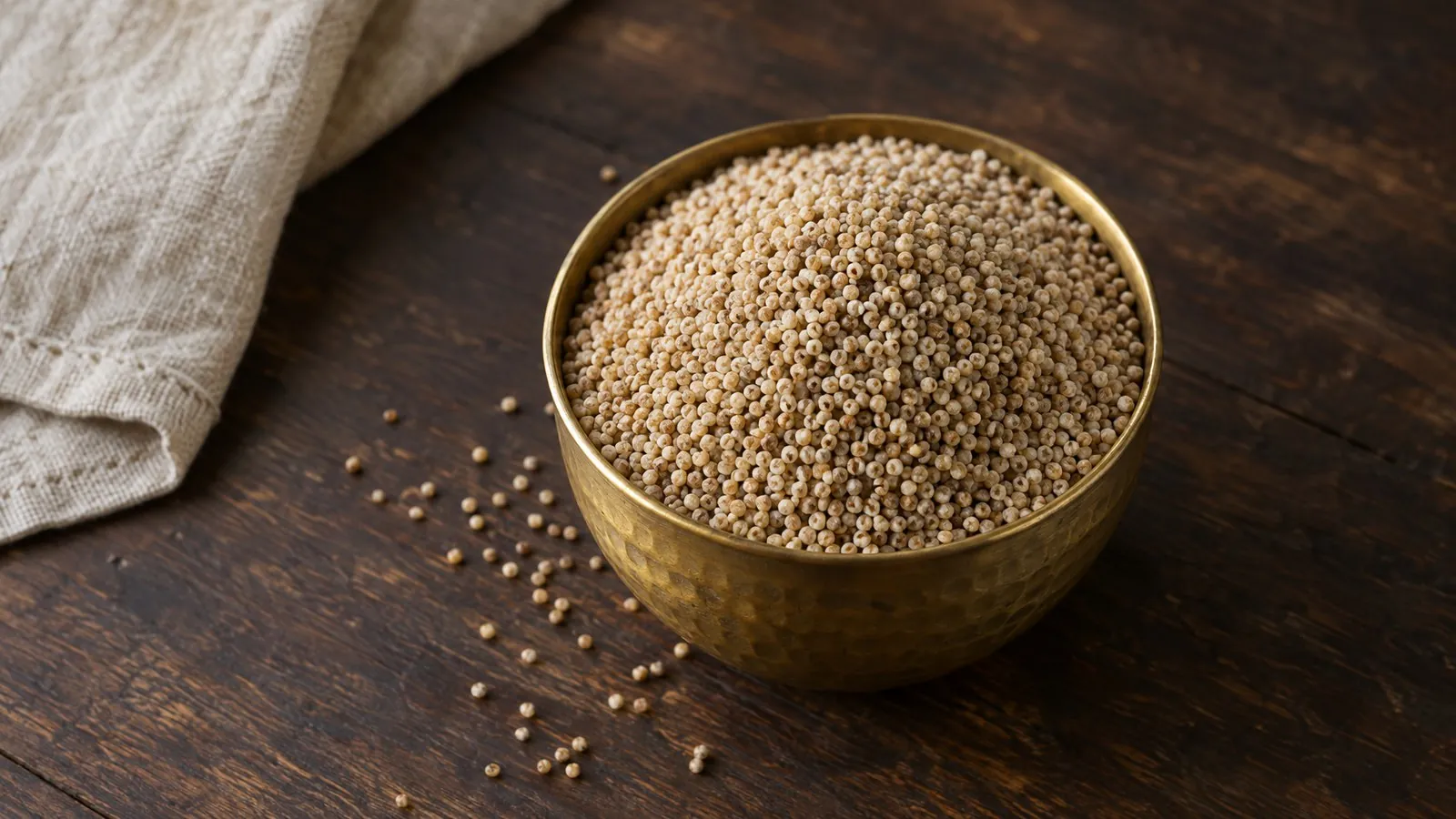
Jowar vs wheat: nutrition, taste, and which one to choose

Jowar vs wheat per 100 g: wheat has more protein, fibre and calcium and a lower tested GI; jowar is gluten-free with more magnesium and folate. Nutrition, taste, cost, and which to choose.
09 Jul 2026by COWBERRY
7 minute read
Varagu in English and 11 more names of kodo millet in India
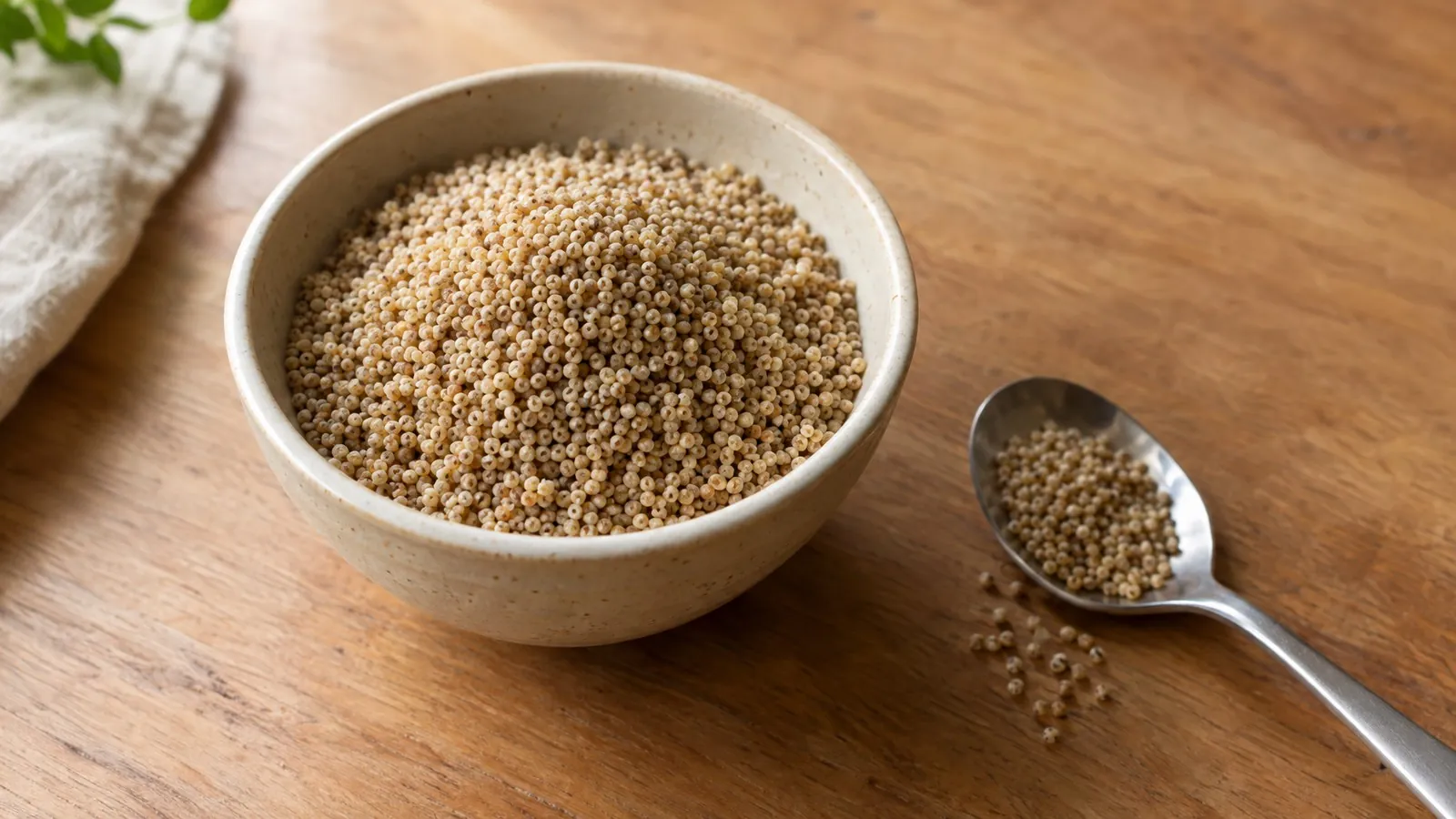
Varagu in English and 11 more names of kodo millet in India

Varagu in English is kodo millet, Paspalum scrobiculatum: arikelu in Telugu, harka in Kannada, kodra in Gujarati and Punjabi, koden in Hindi, konidhan in Assamese. All 12 names IFCT 2017 prints, with ICAR-IIMR spellings and the grains it is confused with.
09 Jul 2026by COWBERRY
7 minute read
10 benefits of kodra (kodo millet) and its side effects
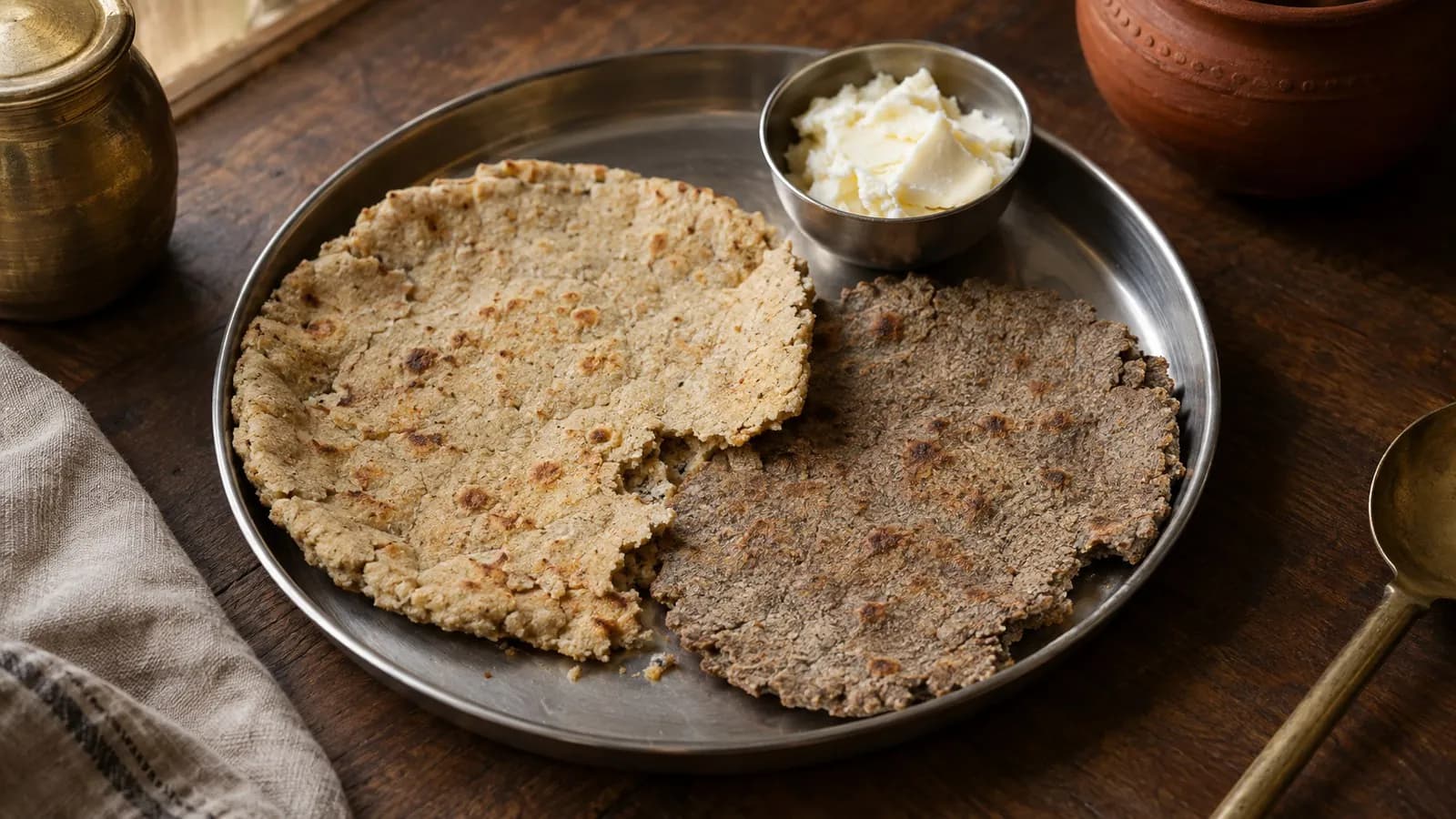
10 benefits of kodra (kodo millet) and its side effects

Kodra benefits tied to kodo millet's per-100 g numbers: 8.9 g protein, 6.4 g fibre, 2.3 mg iron, 122 mg magnesium, 39.5 mcg folate, no gluten, and a 2021 review's intermediate GI band for kodo. Kodo millet side effects, who should limit it, and how much per day.
08 Jul 2026by COWBERRY
11 minute read
Bajra vs jowar: two millets, one honest comparison
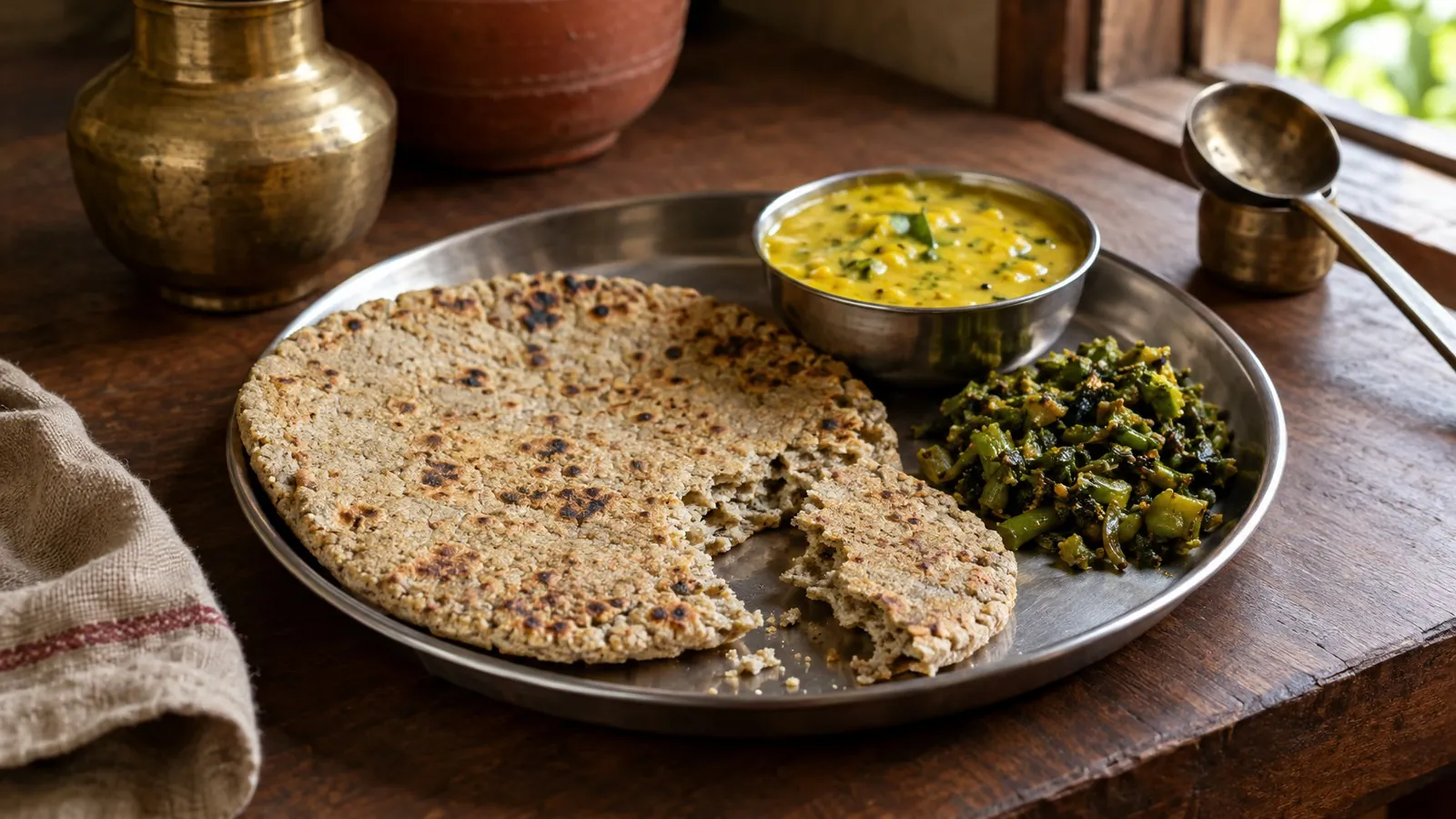
Bajra vs jowar: two millets, one honest comparison

Bajra vs jowar per 100 g: 348 kcal vs 334, 10.96 g vs 9.97 g protein, 5.43 g vs 1.73 g fat, and GI 57 vs 66. Nutrition, taste, cost, and which one to choose.
08 Jul 2026by COWBERRY
7 minute read
Jowar glycemic index: is jowar good for diabetes, and how much to eat
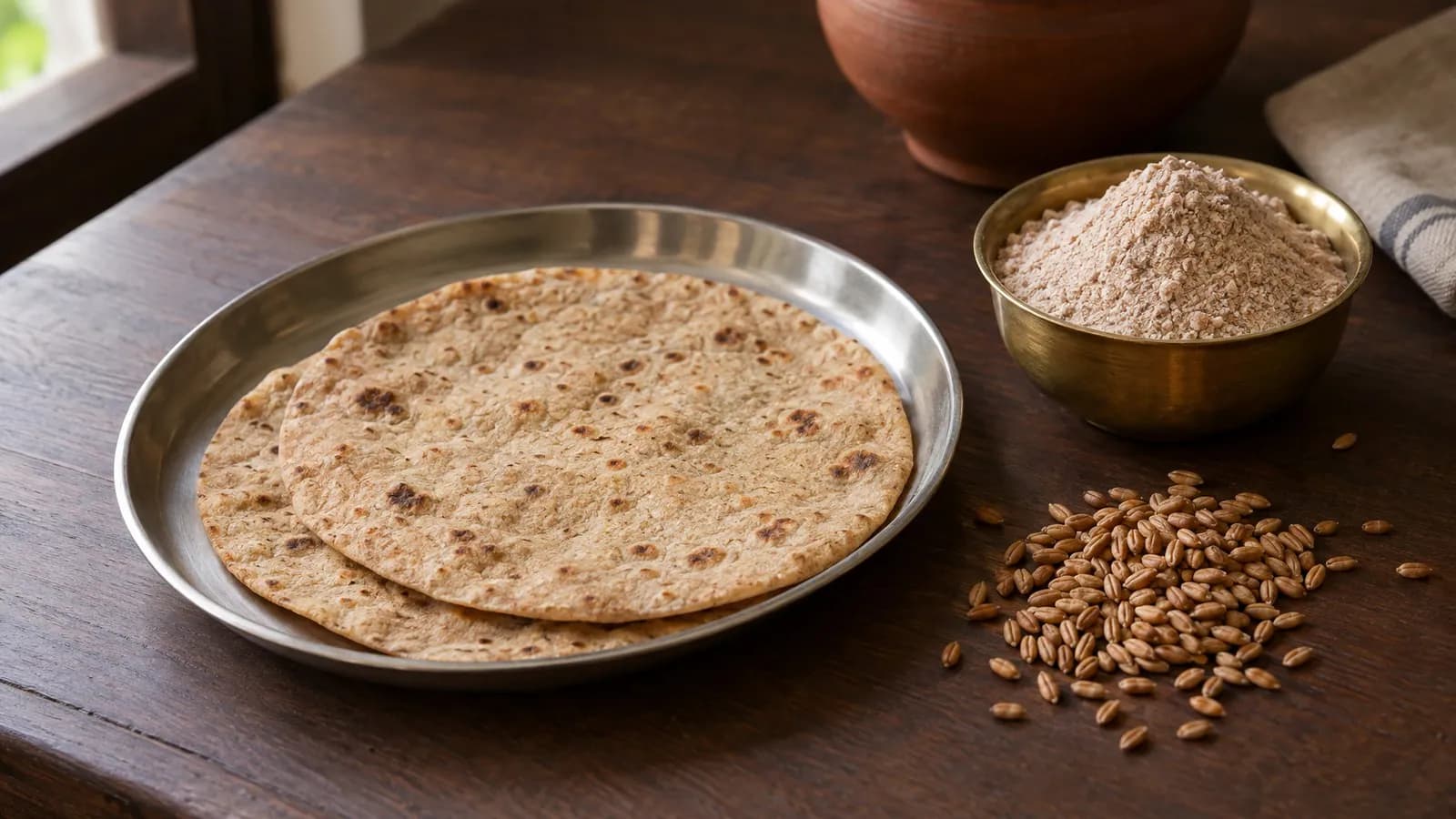
Jowar glycemic index: is jowar good for diabetes, and how much to eat

Jowar glycemic index: 66 (medium) for boiled whole grain, with 67.68 g carbohydrate and 10.22 g fibre per 100 g. What one bhakri means for blood sugar, what the 2021 millets meta-analysis found, and how much to eat.
07 Jul 2026by COWBERRY
9 minute read
Is khapli atta gluten free? What it means for your roti
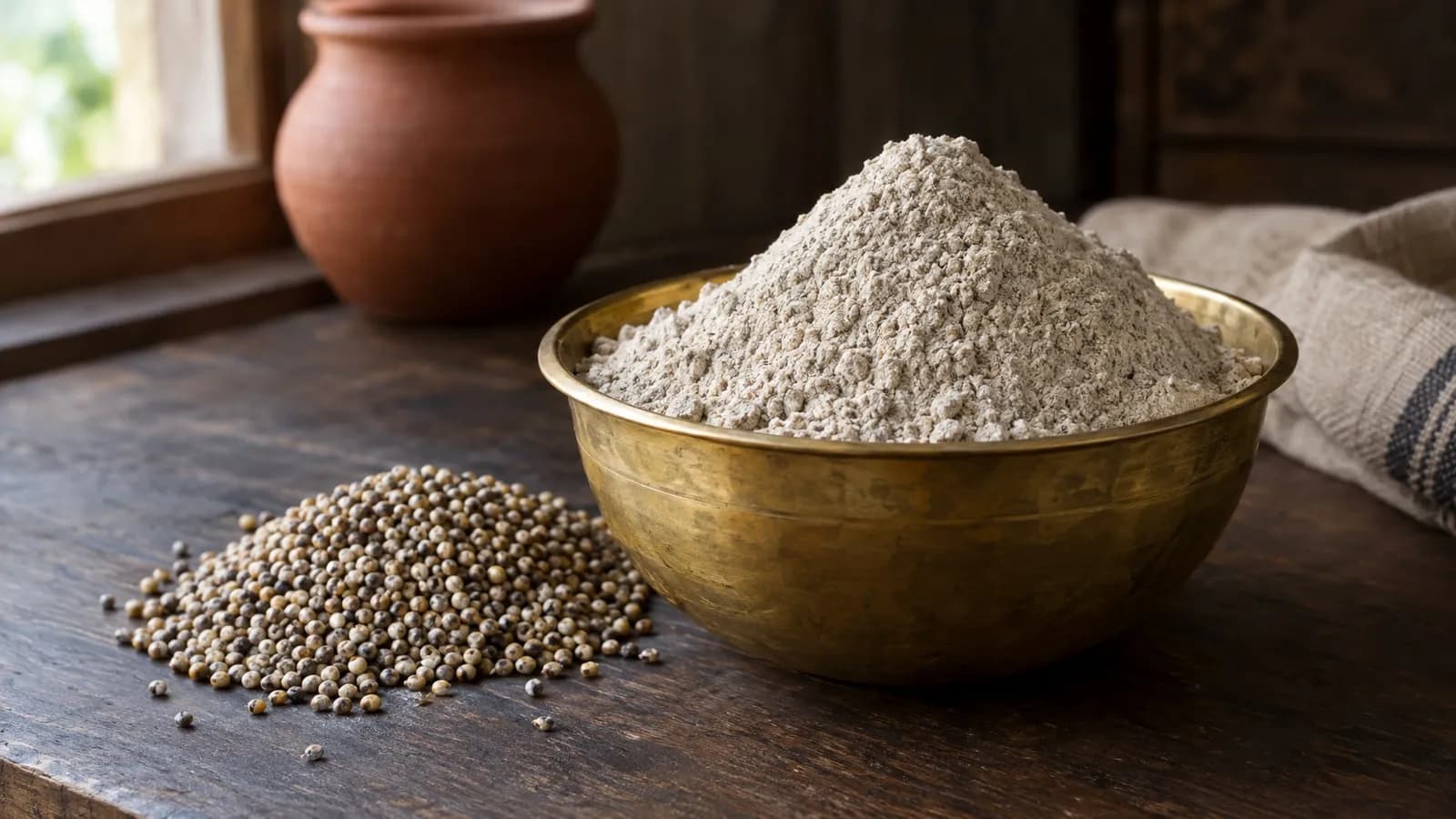
Is khapli atta gluten free? What it means for your roti

Is khapli atta gluten free? No: khapli atta is flour from emmer wheat, and the NHS names wheat among the cereals whose gluten causes coeliac disease. What that means for khapli roti, bread and halwa, what the 2023 wheat study found, and what to ask your doctor.
02 Jul 2026by COWBERRY
8 minute read
Does bajra have gluten? Why bajra flour is gluten-free
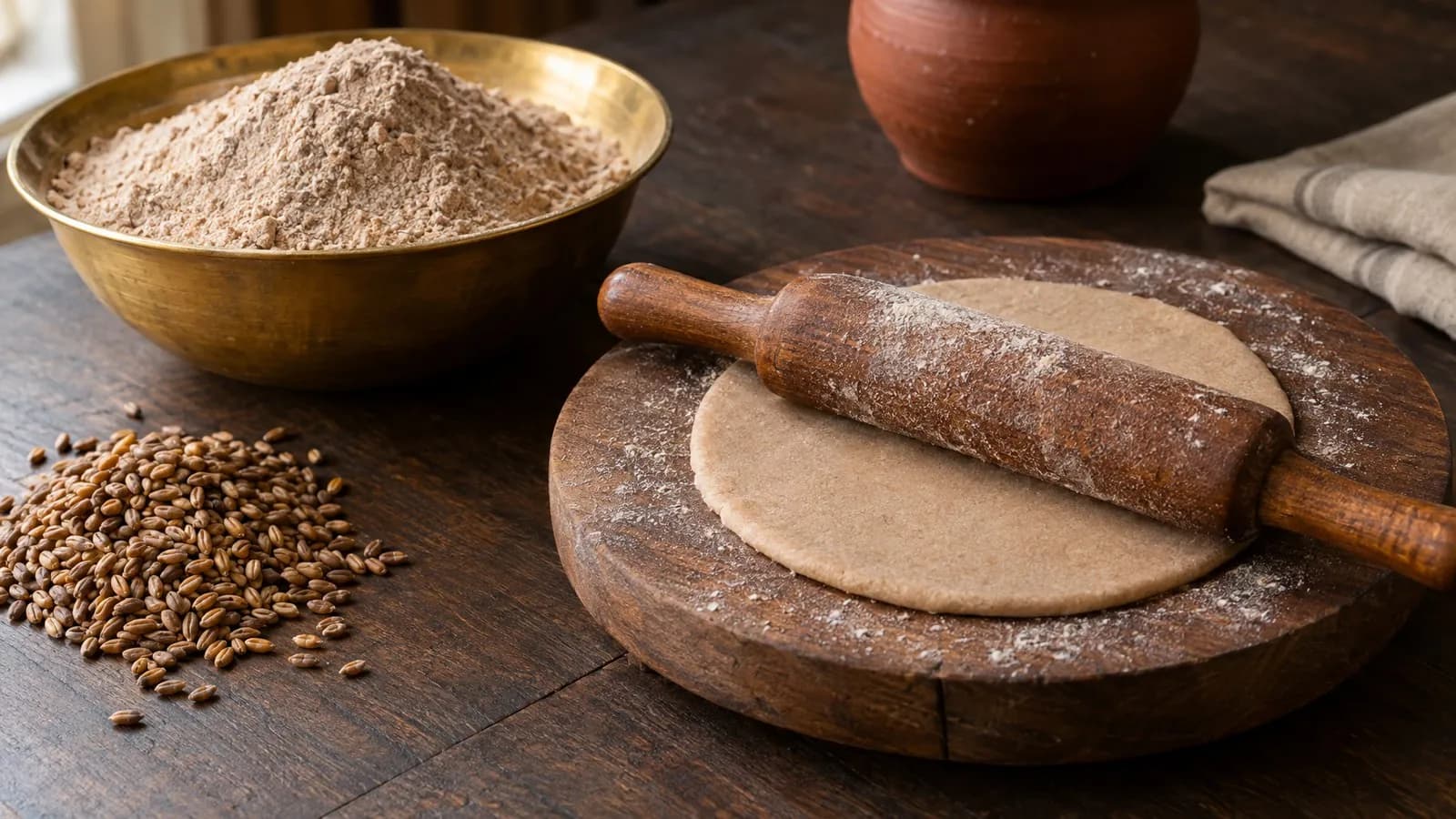
Does bajra have gluten? Why bajra flour is gluten-free

Does bajra have gluten? No: pearl millet is a gluten-free grain, and the flour made from it keeps that status. What gluten is, coeliac disease, and gluten-free cooking with bajra.
30 Jun 2026by COWBERRY
5 minute read
What is emmer wheat used for? How to eat khapli atta
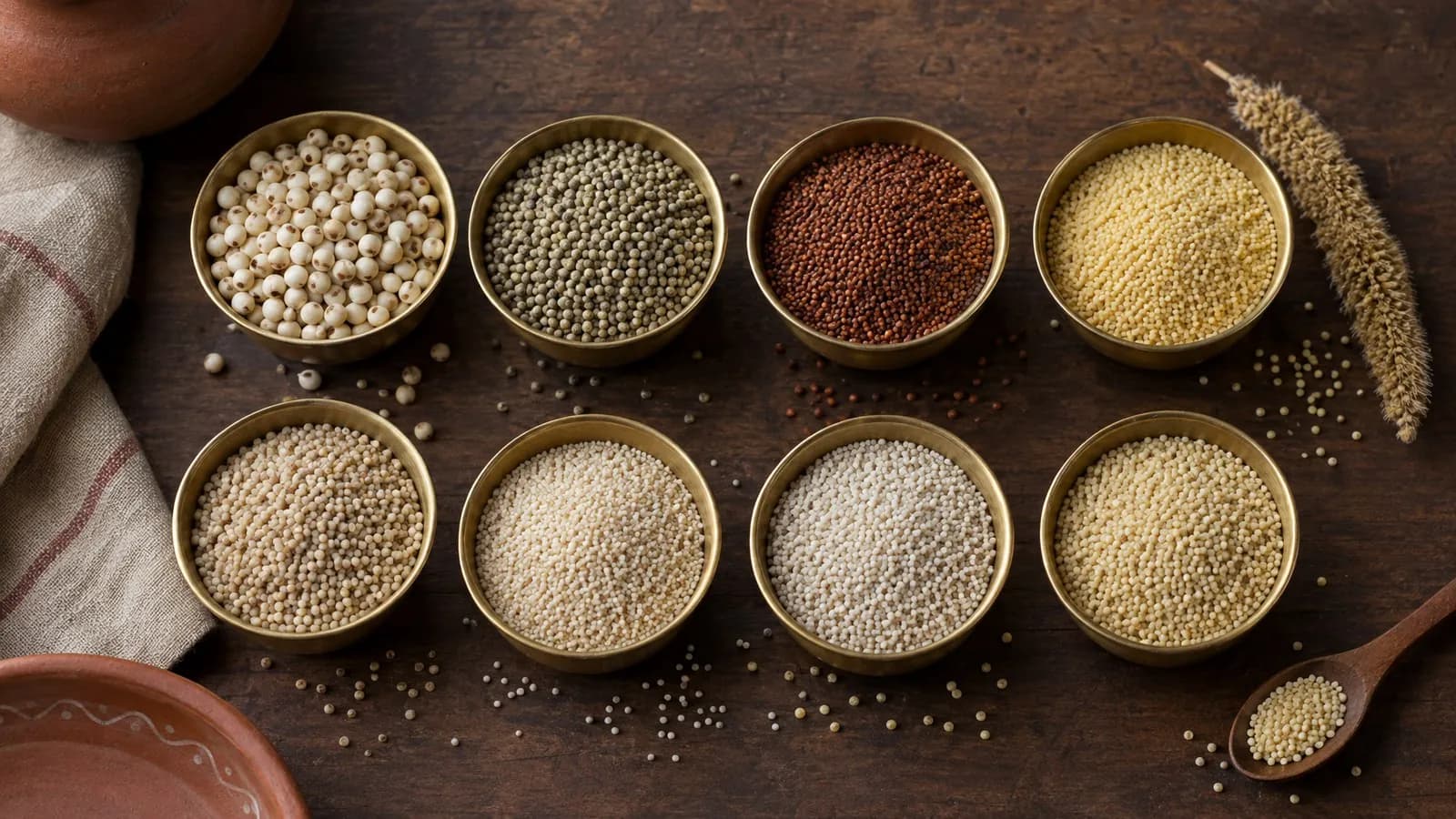
What is emmer wheat used for? How to eat khapli atta

What is emmer wheat used for? Khapli atta (emmer flour) goes into roti, paratha, bread, halwa and upma, and the whole grain into khichdi and dalia. Soak, rest and cooking times, quantities, mistakes and storage.
29 Jun 2026by COWBERRY
6 minute read
Types of millets in India: names, nutrition and how to use each
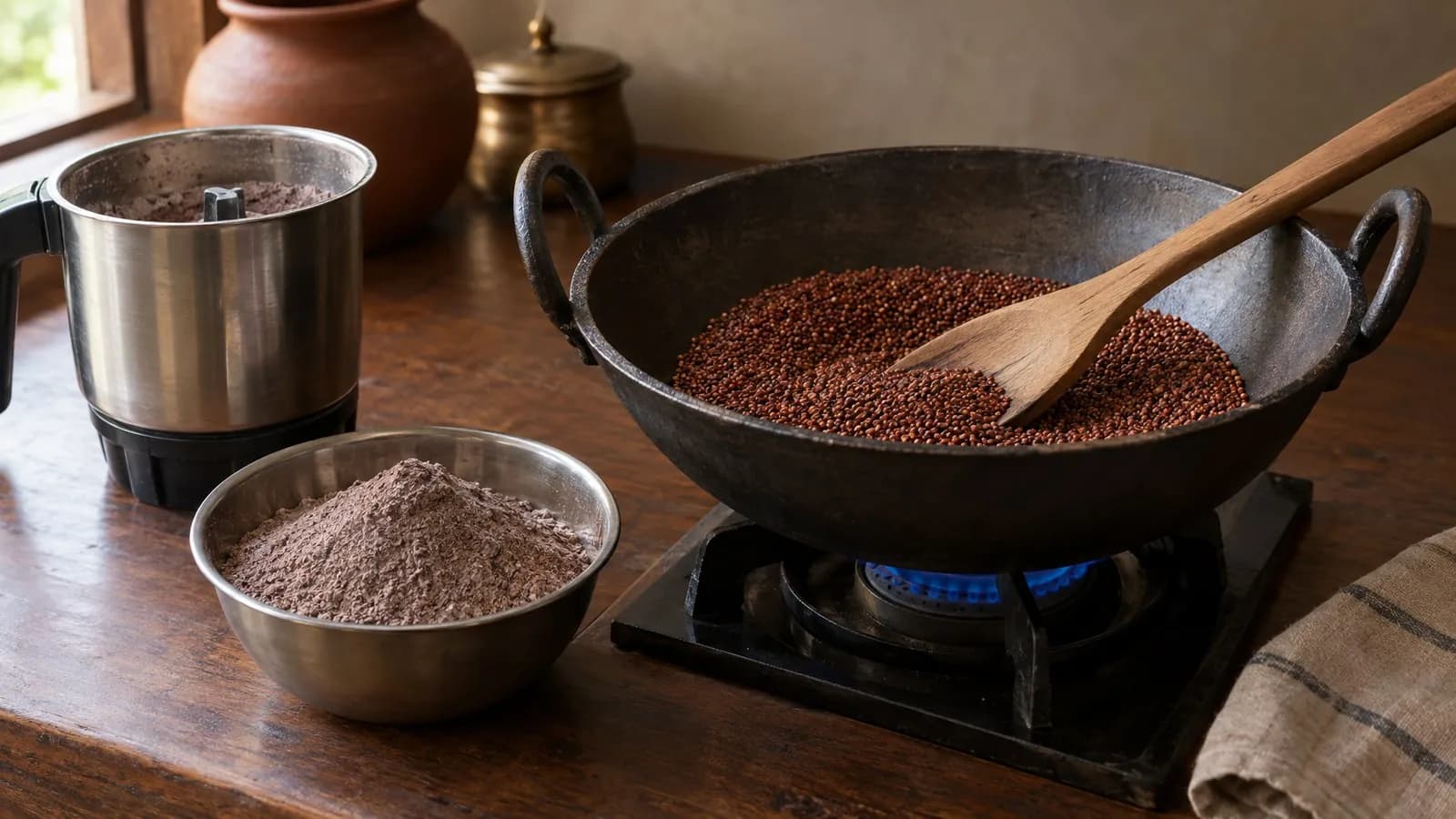
Types of millets in India: names, nutrition and how to use each

The types of millets in India in one guide: major millets (jowar, bajra), small millets (ragi, foxtail, kodo, little, barnyard, proso) and pseudo-millets, with names in Indian languages, IFCT 2017 nutrition per 100 g and the dish each one suits.
26 Jun 2026by COWBERRY
15 minute read
Ragi huri hittu: how to make ragi flour at home
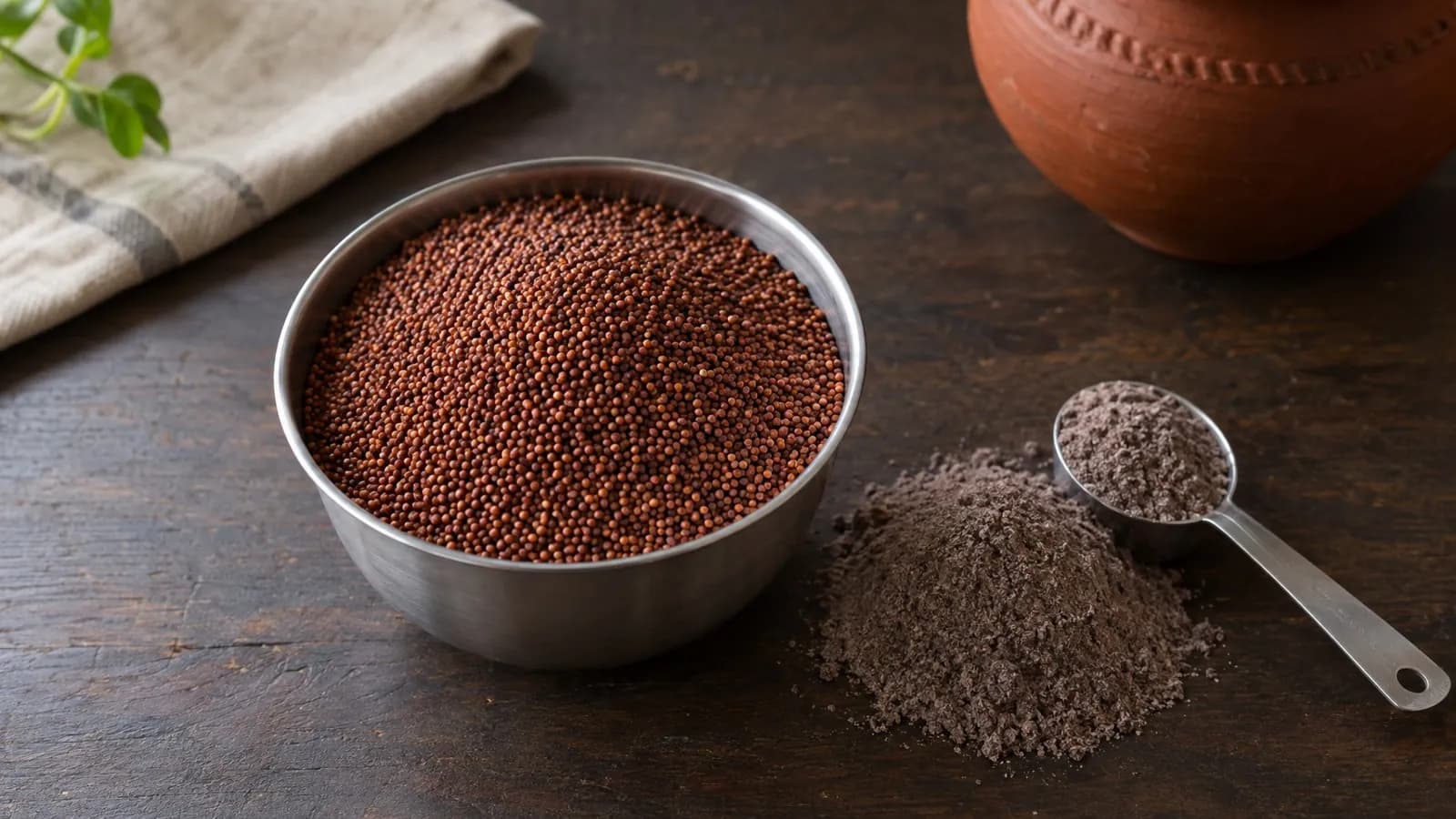
Ragi huri hittu: how to make ragi flour at home

Ragi huri hittu, roasted ragi flour made at home: clean the grain, slow-roast it, cool and grind it, with a sprouted route for malt flour. Step by step, the mistakes to avoid and how to store it.
20 Jun 2026by COWBERRY
7 minute read
Ragi nutritional value per 100 g: calories, protein, calcium and GI
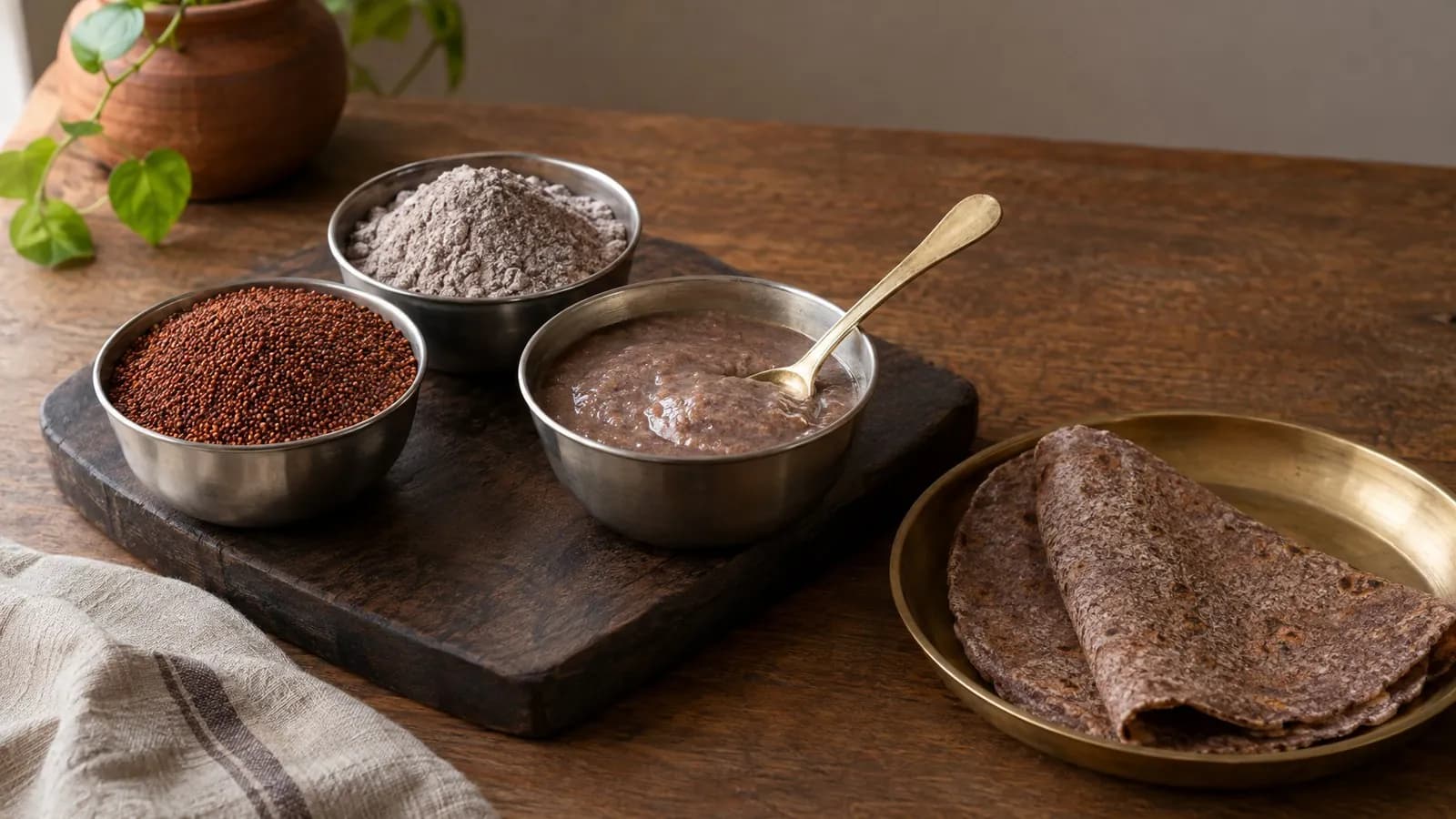
Ragi nutritional value per 100 g: calories, protein, calcium and GI

Ragi nutritional value per 100 g from IFCT 2017: 321 kcal, 7.2 g protein, 66.8 g carbs, 11.2 g fibre, 364 mg calcium, 4.6 mg iron, GI 68. Plus calories per roti, mudde, bowl of porridge and glass of malt, and ragi against wheat and rice.
18 Jun 2026by COWBERRY
11 minute read
How to eat ragi: flour, whole grain and everyday ways

How to eat ragi: flour, whole grain and everyday ways

How to eat ragi: as flour for rotis, dosa, mudde and porridge, as whole grain cooked like rice or sprouted, and as the roasted flour behind ragi malt. Methods, portions, tastes and the mistakes to avoid for each form.
17 Jun 2026by COWBERRY
7 minute read