by COWBERRY

7 minute read
How to eat ragi: flour, whole grain and everyday ways

How to eat ragi starts with the form you have: flour for rotis, dosa, mudde and porridge; whole grain to cook like rice or sprout; and sprouted flour for ragi malt. Each form has its own method, and this page lays them out, with the tastes to expect. The ragi hub covers the grain's names and nutrition.
Short answer
Ragi flour is the everyday form: it goes into ragi roti, ragi dosa, ragi mudde, ragi porridge and ragi malt, and ICAR-IIMR lists ragi roti, ragi dosa, ragi porridge and ragi upma among the popular dishes of ragi. Whole ragi grain is soaked and cooked like rice, or sprouted and then eaten as a salad, dried for malt flour or ground into flour. Sprouted ragi flour is the malt flour: sprout the grain, dry it, roast it lightly and grind it. The form you have decides the dish.
How to eat ragi flour
Ragi flour carries no gluten, so it behaves differently from wheat flour: the dough does not stretch, so ragi rotis are patted flat with wet fingers and mudde is stirred, not kneaded. For a roti, mix the flour with hot water and a pinch of salt, pat it thin with wet fingers on a damp cloth or plastic sheet and cook it on a tawa. For dosa, whisk the flour into a pouring batter and cook it thin and crisp; for porridge, simmer it in water or milk until it thickens, then sweeten or salt it. For malt, cook a little flour in water, thin it down and drink it warm. Baked forms work too: ICAR-IIMR names ragi cakes and ragi biscuits among the popular dishes, and the ragi cookies recipe bakes the flour with ghee and jaggery. The full set is on the ragi recipes roundup.
How to eat whole finger millet
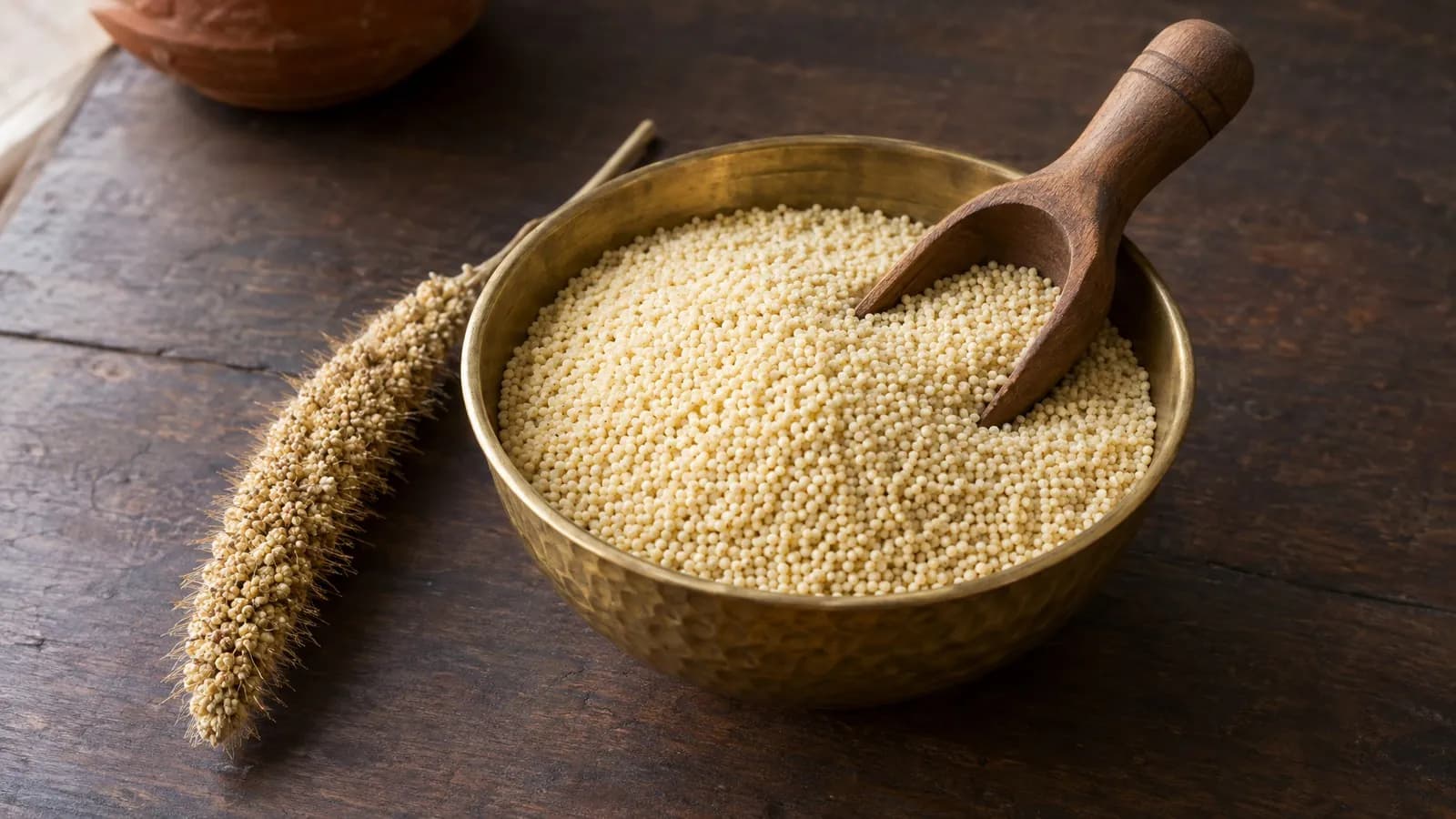
Whole ragi is eaten cooked, sprouted or milled. To cook it, rinse the grain, cover it with water and soak it overnight; the next day, drain and pressure cook it in fresh water until the grains split open and turn soft. Eat it as you would rice, with sambar or curd; the ragi khichdi recipe uses the flour instead. A katori of cooked ragi comes from 40 g of dry grain. To sprout it, follow the steps below and use the sprouts in salads or a light stir-fry, or dry them for malt flour. The ragi hub has the grain's names, nutrition and recipes in one place.
Soaked, sprouted and malted ragi
Soaking, sprouting, malting and fermenting sit on the ICMR-NIN list of household methods that make the nutrients in whole grains easier to digest and absorb, and sprouting, the guidelines add, raises the level of certain vitamins. Sprouted grains keep all of the original bran, germ and endosperm. To sprout ragi, rinse the grain, soak it overnight in plenty of water, drain it, then tie it in a damp muslin cloth or set it in a jar covered loosely with a cloth so air can move. Keep it in a warm corner out of direct light; the grains sprout in one to three days. Cut the sprouting short once the shoot reaches the length of the grain itself, since a longer sprout starts to use up the grain's stored nutrients. The guidelines add that sprouts need no further processing before they are eaten. Dried and roasted, sprouted ragi becomes malt flour for ragi malt; for babies, what to start and when is on the ragi for babies page, and the grinding steps are on ragi huri hittu.
Common mistakes (and the fix)
- Rolling ragi dough like wheat. Without gluten the sheet cracks and falls apart; pat it flat with wet fingers on a damp cloth or plastic sheet instead.
- Undercooking whole ragi. Grains that are not soaked and cooked until they split stay hard in the middle. The overnight soak first, then cook until soft.
- Making the malt too thick. Ragi thickens as it cools, so mix it thin and loosen it with a little water or milk just before drinking.
- Sweetening every ragi dish. The jaggery in sweet porridge, malt and laddus is added sugar; the savoury forms, roti, dosa, mudde and upma, carry none of it.
- Using flour that has turned. Milled ragi flour is the fragile form because the crushed germ oil oxidises, and a rancid smell is the sign. Smell the flour before you cook; a sour or musty note means the pack is past it.
- Boiling ragi malt for too long. Five to six minutes on a low flame, with stirring, is what the ragi malt recipe takes once the slurry goes in; keep stirring so it does not catch at the bottom.
Portion and method table
Portions below are the flour or grain weights used in the recipes on this site; a katori of cooked whole ragi is the one that starts from dry grain.
| Form | One serving | Method in one line |
|---|---|---|
| Ragi roti | 30 g flour | Hot-water dough, patted thin, cooked on a tawa |
| Ragi dosa | 15 g flour a dosa (8 from a cup) | Instant batter, no fermenting, cooked thin |
| Ragi mudde | 50 g flour | Flour stirred into boiling water into a firm ball |
| Ragi porridge | 22.5 g flour a bowl | Simmered in water or milk, sweet or savoury |
| Ragi malt | 15 g flour a glass | Cooked thin and drunk warm, sweet or salted |
| Cooked whole ragi | 40 g dry grain a katori | Soaked overnight, pressure cooked until the grains split |
These are the standard weights the recipe pages use, so the same numbers hold across the site. What each serving adds up to, and how much ragi fits a day, is on the how much ragi per day page.
Storing ragi, grain and flour
Whole ragi is the easy keeper: as ICAR-IIMR points out, finger millet serves as a famine crop because it stores well into lean years, and at home it wants a closed steel or glass container kept somewhere cool and dry. Ragi flour is the fragile one. ICAR-IIMR explains that dry milling crushes the germ, and once the oil in those broken cells meets air it oxidises, which is what gives stale flour its rancid odour and flavour; that is why the stability of whole-meal flours is limited. Keep the flour in an airtight container somewhere cool and dry, buy or grind it in amounts you will finish, and smell it before every use; a sour or musty note means it has turned. Making the flour at home is covered step by step on ragi huri hittu.
FAQs
How to eat finger millet?
Pick the form that fits the dish. Flour makes rotis, dosa, mudde, porridge, malt, upma and baked snacks. Whole grain is soaked overnight and pressure cooked until the grains split, then eaten like rice. Sprouted grain goes into salads, or is dried, roasted and ground into malt flour for drinks.
What does finger millet taste like?
Earthy and mild. COWBERRY describes its ragi as having a natural earthiness. Sweet or salted dishes both suit it. If a flour smells sour or musty instead, it may have gone rancid and should not be used.
Can ragi be eaten daily?
Yes, within the cereal allowance. The ICMR-NIN food pyramid gives cereals and nutricereals 250 g of a 2000 kcal day and asks for variety among them, ragi included. One roti takes 30 g of flour and one mudde 50 g. The day-by-day arithmetic is on the how much ragi per day page.
Is ragi a grain?
Yes. Ragi is the grain of finger millet, Eleusine coracana to botanists, a small-seeded cereal in the millet family. IFCT 2017 lists it among the grains with 321 kcal per 100 g, and ICAR-IIMR describes the seed as a naked caryopsis made of a pericarp, endosperm and germ. Whole ragi cooks like any other whole grain after an overnight soak.
How much ragi per day?
There is no daily allowance set for ragi on its own; ragi counts inside the 250 g of cereals and nutricereals the ICMR-NIN guidelines give a 2000 kcal day. As portions, a ragi roti is 30 g of flour, a mudde 50 g and a glass of malt 15 g. The portions, a sample day and the cautions are on the how much ragi per day page.
Is ragi gluten free?
Yes. Ragi is naturally gluten-free; it is not one of the gluten grains, which the NHS lists as wheat, barley and rye. The COWBERRY ragi products carry the naturally gluten-free claim on the pack. The flour still cooks differently from wheat, because no gluten means no stretch, so ragi rotis are patted, not rolled thin.
References
Shop this article
Keep reading
Foxtail millet vs quinoa: nutrition, taste and which to choose
Foxtail millet in Kannada, Hindi, Tamil and other Indian names
10 benefits of kangni (foxtail millet) and its side effects