by COWBERRY

6 minute read
Turmeric recipes: haldi milk, tea, laddu, roti and more

Turmeric recipes, all on one page and sorted by meal: the three drinks, the roti and the laddu, each with the turmeric per serving in grams and teaspoons, plus the quick ways the spice goes into dal, rice and everyday cooking. Every linked recipe is measured for two or for the batch stated. The haldi guide covers the spice itself.
Haldi recipes for drinks: milk, tea and water
Turmeric goes into the three drinks through hot liquid, simmered in the milk and the tea and whisked into the steaming water. The three recipes below each carry half a teaspoon for two cups, and each finishes with black pepper stirred in off the heat.
- Turmeric milk (haldi doodh): 1/2 teaspoon of turmeric simmered in 2 cups of milk, 1/4 teaspoon of black pepper stirred in off the heat, and 2 teaspoons of jaggery for the two cups; about 11 minutes and 20 kcal a cup.
- Turmeric tea (haldi chai): 1/2 teaspoon of turmeric simmered in 2.5 cups of water for two cups of tea, no tea leaves, with 1/4 teaspoon of pepper and 1 teaspoon of lemon juice stirred in off the heat, and 2 teaspoons of honey for the two; about 11 minutes and 24 kcal a cup.
- Turmeric water: 1/2 teaspoon of turmeric stirred into 2 cups of warm water, not boiled, with 1/4 teaspoon of pepper, 1 teaspoon of lemon juice and 2 teaspoons of honey for the two glasses; about 9 minutes and 24 kcal a glass, or about 3 kcal with the honey left out.
Each cup or glass carries a quarter teaspoon of turmeric (0.75 g), so the colour is even and the spice stays in the background. All three finish sweetened, and leaving the honey or jaggery out is the lighter version of each.
Turmeric recipes for the main course: roti, dal and rice
- Turmeric roti (haldi roti): 1 teaspoon (3 g) of turmeric kneaded into 240 g of atta (2 cups) with 3/4 cup of warm water, for eight rotis of 30 g of atta each, about 0.4 g of turmeric a roti; 40 minutes all in, 131 kcal a roti with the ghee in the dough and on the tawa, 98 kcal made with no ghee at all.
The dal and rice versions need no written recipe. Dal takes its haldi in the tadka: fry a quarter to half a teaspoon of turmeric powder for a few seconds in the hot oil or ghee with the jeera and hing, then pour the tadka over the boiled dal. For yellow rice, fry a quarter teaspoon with the jeera and whole spices in the ghee before the rice goes in and cook as usual; the colour runs through the pot and the taste stays mild. A pinch of black pepper in the tadka sits well beside the haldi, and the measured story of that pairing is on turmeric and black pepper.
Turmeric recipes for sweets: haldi laddu and a pinch more
- Haldi laddu (turmeric laddu): a tablespoon (9 g) of turmeric powder stirred into the warm besan in the last half minute of roasting, for a batch of sixteen laddus, about 0.6 g of turmeric and 93 kcal a laddu; about 28 minutes plus cooling.
For sweets without a written recipe, keep the amounts small. A pinch of turmeric goes into kheer or sooji sheera for colour; add it to the ghee at the start so it roasts instead of staying raw. A pinch whisked into salted chaas with roasted jeera powder makes a savoury glass. In both, the pinch is the whole point: colour, not heat.
How much turmeric per serving
The recipes keep the spice to a quarter teaspoon or less a person; that is how the colour stays even without the flavour turning raw or bitter. The table shows the turmeric in each serving, and every figure matches the recipe pages.
| Recipe | Serving | Turmeric per serving |
|---|---|---|
| Turmeric milk | 1 cup | 1/4 tsp (0.75 g) |
| Turmeric tea | 1 cup | 1/4 tsp (0.75 g) |
| Turmeric water | 1 glass | 1/4 tsp (0.75 g) |
| Haldi laddu | 1 laddu | 0.6 g |
| Turmeric roti | 1 roti | 0.4 g |
The page's measures match the recipes: 3 g to a level teaspoon and 9 g to a level tablespoon. Scale a drink for one by halving the batch, not the spice, and each cup still gets its quarter teaspoon; bigger amounts belong to the pot, where the teaspoon in the roti dough spreads across eight rotis and the tablespoon in the laddu batch across sixteen.
Buying, keeping and cooking the spice
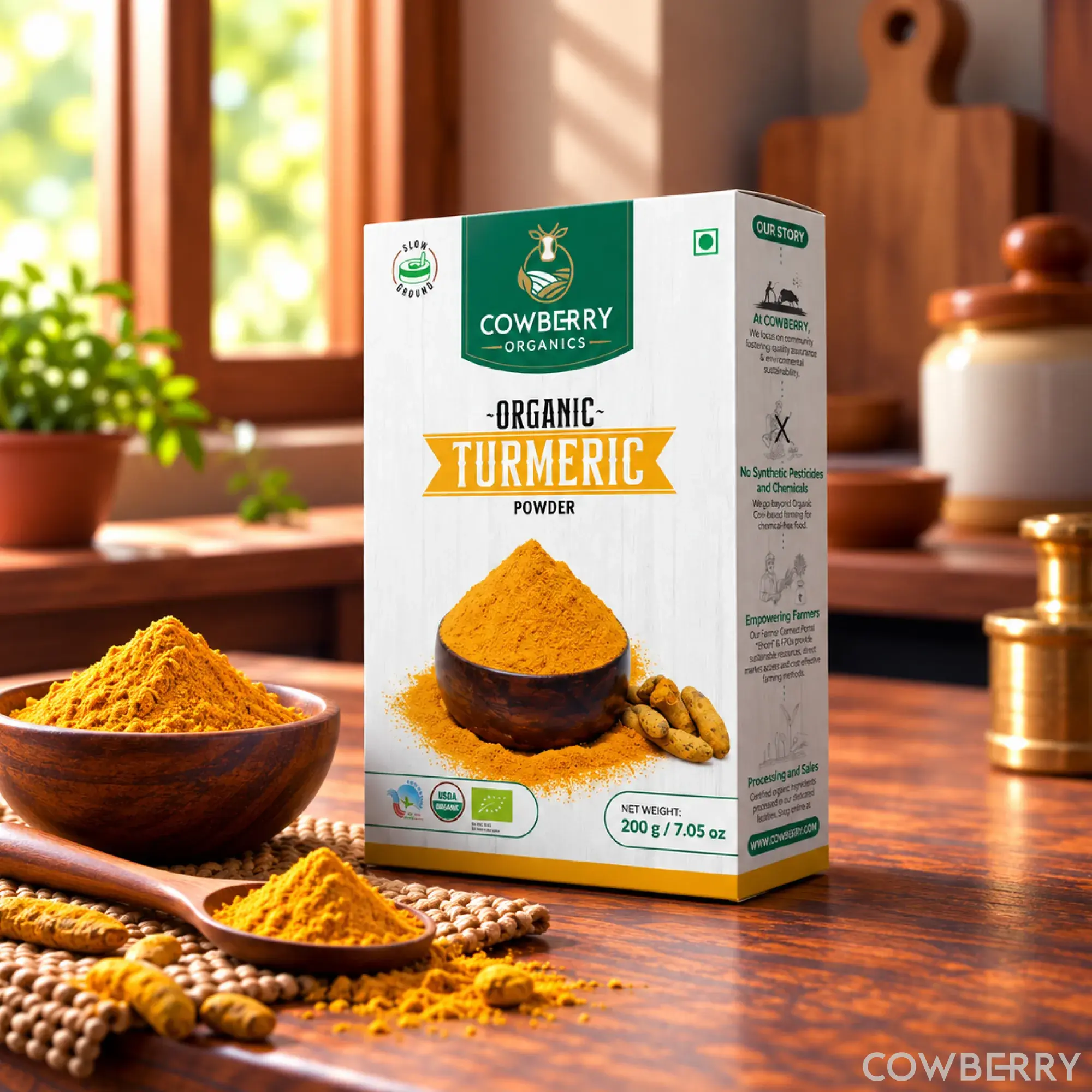
The recipes start from good powder. ICMR-NIN notes that powdered spices are more likely to be adulterated and advises preferring whole spices and buying certified products, so look for whole fingers or a certified powder, and keep the jar airtight in a cool, dry place to preserve the powder's freshness and aroma. Expect the spoon and the board to stain; the colour washes out of steel and fades from cloth with soap and water. For the amounts and habits around the spice, how to eat turmeric has the fuller guide, the turmeric nutrition page carries the per-100 g numbers, and names, storage and buying sit on the haldi guide.
FAQs
How to identify pure turmeric powder?
Start with the pack: certified products, or whole fingers of even colour, size and shape, as ICMR-NIN advises, because powdered spices are more likely to be adulterated. A 2024 study of 356 turmeric samples from India, Pakistan, Sri Lanka and Nepal found detectable lead (above 2 micrograms a gram) in 14 percent of them. The jar tests at home are on how to check turmeric purity.
Can haldi stains be removed?
Mostly, and quickly. Turmeric stains cloth and skin yellow, so rinse the cloth in soap and cold water as soon as it happens, and the mark on skin fades after a wash or two. Steel and glass come clean with ordinary washing; the colour is hardest to shift where it has been left to dry. Expect the stain with the colour.
Why turmeric is known as golden spice?
The nickname points at the colour: NCCIH credits curcumin, a major component of turmeric, with giving the spice its yellow colour, and the same compound puts the golden tint in every recipe on this page. The name is about appearance, not any claim; the evidence side of haldi is on turmeric benefits and side effects.
Is haldi farali?
No printed rule about haldi in vrat food appears in the ICMR-NIN guidelines or the NCCIH turmeric page, so none is set here. What is printed is the size: one level teaspoon weighs 3 g and holds about 8 kcal, a small line in any day's count. Whatever spice rule your family's fast keeps, haldi fits inside cooking amounts.
References
- Indian Food Composition Tables (IFCT) 2017, ICMR-National Institute of Nutrition
- Dietary Guidelines for Indians, ICMR-National Institute of Nutrition
- NCCIH: Turmeric (health information page)
- Forsyth JE, Mistree D, Nash E et al. Evidence of turmeric adulteration with lead chromate across South Asia. Sci Total Environ, 2024
Shop this article
Keep reading
Rajma recipe: 5 ways to cook rajma beans at home
Dalia recipes: 10 easy broken wheat dishes from khichdi to laddu
Amaranth recipes: 8 rajgira dishes from roti to ladoo