by COWBERRY

6 minute read
Turmeric nutrition facts per 100g: calories, protein, fibre and iron

Turmeric nutrition facts per 100 g: 281 kcal, 7.66 g of protein, 49.22 g of carbohydrate, 21.38 g of fibre and 46.08 mg of iron, from IFCT 2017. The page then turns the per-100 g figures into teaspoon and tablespoon servings, compares protein and fibre with black pepper and cumin, and explains the missing glycemic index. The haldi guide covers the spice itself.
Turmeric nutritional value per 100 g
The table prints turmeric powder beside its two closest spice-rack neighbours in the food composition tables: black pepper and cumin seeds. The turmeric figures are IFCT 2017's for the powder, the form the tables measure. Per 100 g of powder, turmeric carries 281 kcal of energy, 7.66 g of protein, 5.03 g of fat, 49.22 g of carbohydrate and 21.38 g of fibre, with 46.08 mg of iron, 122 mg of calcium, 260 mg of magnesium, 2374 mg of potassium, 24.41 mg of sodium, 2.64 mg of zinc and 13.86 mcg of folate. No vitamin C figure is printed for turmeric powder. The rest of the page reads the figures by the spoon, because that is how the spice is actually eaten.
| Nutrient | Turmeric powder | Black pepper | Cumin seeds |
|---|---|---|---|
| Energy (kcal) | 281 | 218 | 305 |
| Protein (g) | 7.7 | 10 | 14 |
| Fat (g) | 5 | 2.7 | 17 |
| Carbohydrates (g) | 49 | 36 | 23 |
| Dietary fibre (g) | 21 | 33 | 30 |
| Iron (mg) | 46 | 12 | 21 |
| Calcium (mg) | 122 | 405 | 878 |
| Magnesium (mg) | 260 | 196 | 442 |
| Potassium (mg) | 2374 | 1487 | 1886 |
| Sodium (mg) | 24 | 24 | 125 |
| Zinc (mg) | 2.6 | 1.2 | 4.3 |
| Folate (mcg) | 14 | 22 | 28 |
Per 100 g raw, edible portion. Composition: IFCT 2017 (ICMR-NIN). — means not reported. These are average values for the food; the label on a pack gives the values for that product.
Per teaspoon and per tablespoon
No kitchen eats turmeric per 100 g, so the useful numbers are the spoon ones. A level teaspoon of turmeric powder weighs 3 g, and a level tablespoon, the measure the haldi laddu recipe uses, weighs 9 g. One teaspoon works out to about 8 kcal, 0.2 g of protein, 1.5 g of carbohydrate, 0.6 g of fibre and 1.4 mg of iron. One tablespoon trebles that: about 25 kcal, 0.7 g of protein, 4.4 g of carbohydrate, 1.9 g of fibre and 4.1 mg of iron. Even the tablespoon is a spice measure, not a meal: the calories and carbohydrate stay small, and the figures that look big per 100 g shrink to garnish size at the spoon. The drink recipes carry half a teaspoon between two cups, a quarter teaspoon each, worth about 2 kcal and 0.4 g of carbohydrate a cup.
Protein and fibre: turmeric against its spice neighbours
Set against black pepper and cumin seeds per 100 g, turmeric is not the protein or fibre leader of the three. Its 7.66 g of protein sits below black pepper's 10.12 g and cumin seeds' 13.91 g, and its 21.38 g of fibre sits below black pepper's 33.16 g and cumin's 30.35 g. Where turmeric stands out is iron: 46.08 mg per 100 g against black pepper's 11.91 mg and cumin's 20.58 mg, more than double the next spice, and potassium at 2374 mg against black pepper's 1487 mg and cumin's 1886 mg. On calcium the roles swap, with cumin's 878 mg and black pepper's 405 mg above turmeric's 122 mg. The comparisons stay honest only at the spoon: the 1.4 mg of iron in a teaspoon is what actually reaches the plate, and fibre from a spice is garnish, not bulk. The turmeric vs curcumin page compares the spice with the compound inside it.
Glycemic index of turmeric
No glycemic index is printed for turmeric powder. What the spoon adds is 1.5 g of carbohydrate, so the practical question for turmeric is size, not index: the spice travels on top of the rice, roti or dal, and the index belongs to those. Where the glycemic index does its real work for the foods turmeric usually meets is their own pages' subject; for the spice itself, the honest answer stays the same, whichever way it is cooked.
Micronutrients: iron, potassium, magnesium and the rest
The iron line is the one people quote for turmeric, so it gets the careful reading first. Per 100 g of powder the printed figure is 46.08 mg, more than black pepper's 11.91 mg and cumin seeds' 20.58 mg; per teaspoon it is 1.4 mg. The ICMR-NIN guidelines note that vitamin C foods like guava, pineapple and citrus fruits improve iron absorption from plant foods, so the squeeze of lemon that the turmeric tea and turmeric water already carry is the right company for the iron. Beyond iron, IFCT 2017 prints 2374 mg of potassium, 260 mg of magnesium, 122 mg of calcium, 2.64 mg of zinc and 13.86 mcg of folate per 100 g, with 24.41 mg of sodium. A teaspoon brings only the small amounts worked out above, so turmeric is best read as a seasoning for the plate, not a main source of any of these.
Using the numbers
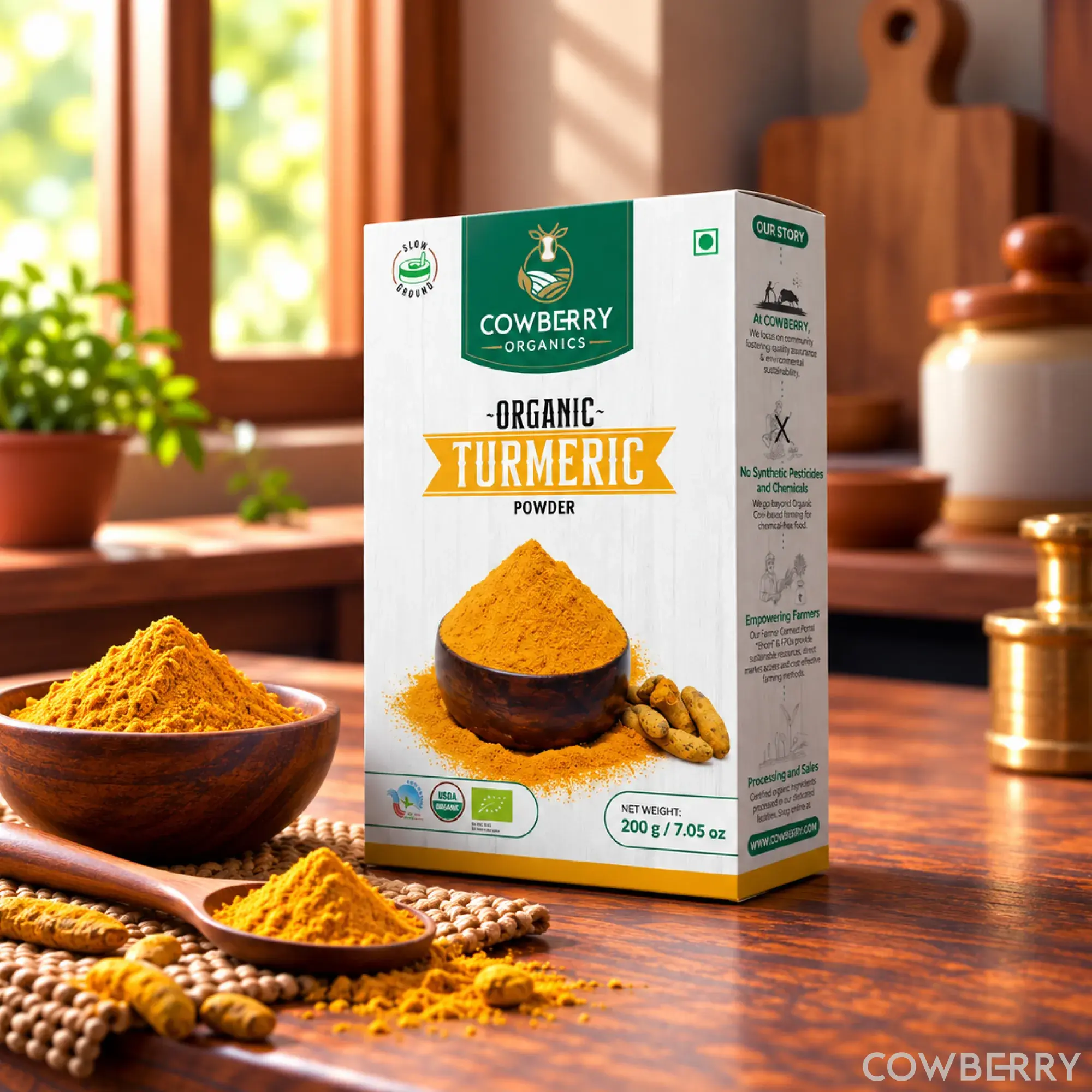
The numbers above assume the powder is the real thing, which is where buying matters. COWBERRY's turmeric is organically grown in Maharashtra (Sangli) and Andhra Pradesh, cold processed and slow ground with nothing added. Powdered spices are more likely to be adulterated, ICMR-NIN notes, and it advises preferring whole spices and always buying certified products. What to cook with it: the turmeric recipes page groups the haldi milk, tea, water, laddu and roti, and how to eat turmeric covers amounts and habits. The health reading of the same numbers is on turmeric benefits and side effects, and names, storage and buying sit on the haldi guide.
FAQs
What is turmeric powder?
Turmeric powder is the dried, ground rhizome of the turmeric plant, the form IFCT 2017 measures at 281 kcal, 7.66 g of protein and 21.38 g of fibre per 100 g. By the spoon, a level teaspoon weighs 3 g and carries about 8 kcal and 1.5 g of carbohydrate. It is the everyday cooking form of haldi.
Why turmeric is yellow?
The colour comes from curcumin, which NCCIH calls a major component of turmeric and credits with giving the spice its yellow colour. The same compound is behind the stains turmeric leaves on cloth and skin, Curcumin is part of the turmeric plant itself.
What is haldi called in English?
Haldi is called turmeric in English; the food tables print the powder as turmeric powder, with the botanical name Curcuma domestica. The same name list carries haldi for Hindi, Punjabi and Urdu, halad for Marathi and haddar for Gujarati, among thirteen Indian languages. The full list is on haldi in English.
Is turmeric milk good for health?
Haldi milk is a food use of turmeric, and its nutrition is mostly the milk's: at the recipe's quarter teaspoon a cup, the haldi adds about 2 kcal and 0.4 g of carbohydrate. NCCIH says it does not know enough to conclude definitively whether turmeric or curcumin is beneficial for any health purpose, so the drink is best read as milk with a little spice, not as a supplement.
Can turmeric be eaten in fast?
Neither the ICMR-NIN guidelines nor the NCCIH turmeric page prints a rule about haldi in vrat, so no rule is set here. The size of it is known: one level teaspoon weighs 3 g and carries about 8 kcal, a tiny share of any day's count, fasting or not. Keep whatever spice rule your family's fast follows.
References
Shop this article
Keep reading
Coriander water benefits: what dhania water actually does
Peanuts in Hindi (moongfali): groundnut names in Indian languages
Coriander vs cilantro: are they the same herb?