by COWBERRY

7 minute read
How to eat turmeric: raw haldi, powder and how much per day

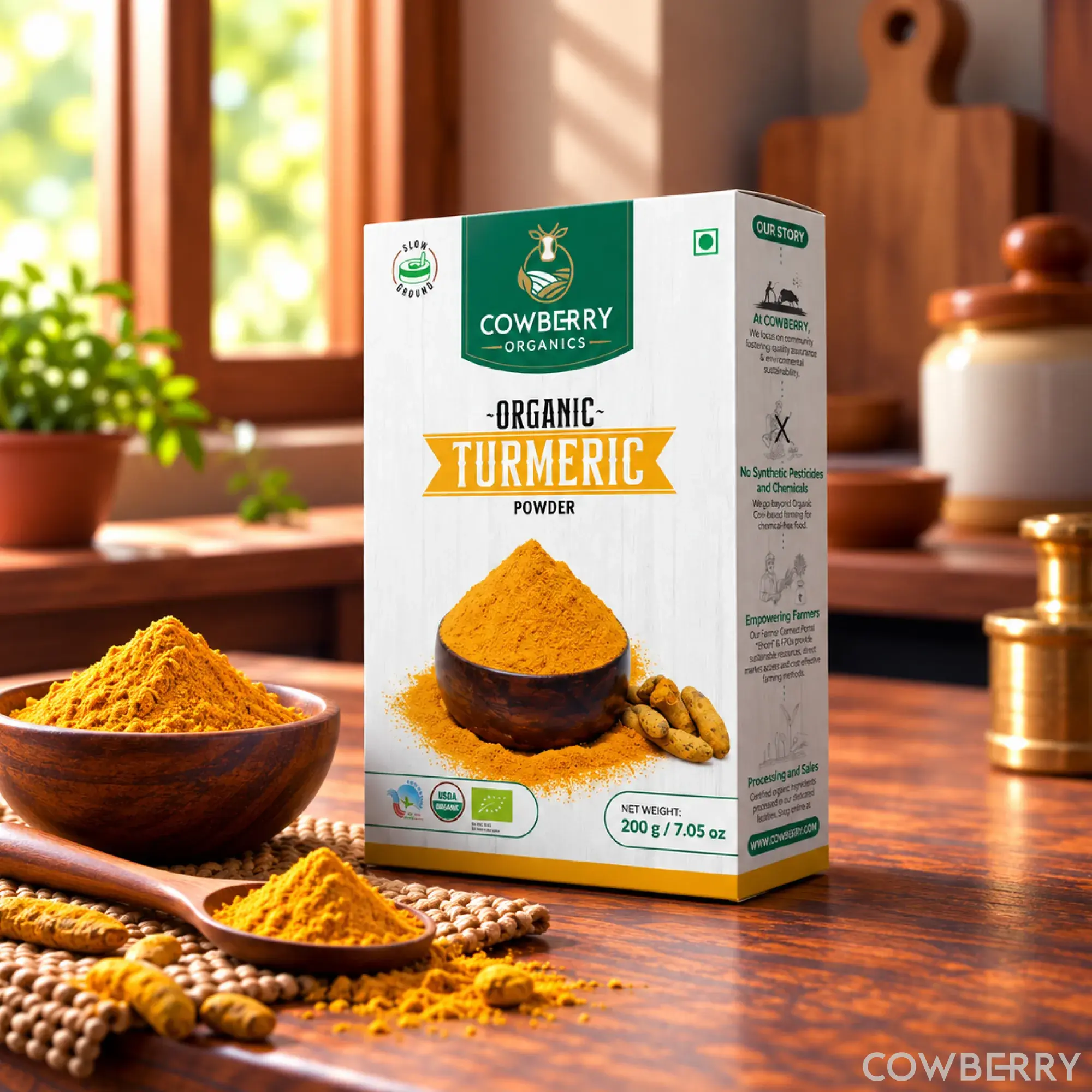
How to eat turmeric: cook the powder into the tadka, dal and sabzi at a quarter to half a teaspoon, grate or pound raw haldi into chutneys and pickles, and take it as haldi doodh, turmeric tea or turmeric water, all in gram-sized amounts since one level teaspoon is 3 g. The ways, the amounts and the common mistakes are below; the spice's own story is on the haldi guide.
Short answer: the ways to eat turmeric
Turmeric goes into food four ways in an Indian kitchen. Powdered haldi cooks into the tadka, dal and sabzi; it dissolves into warm milk as haldi doodh, into hot water as turmeric water and simmers in water as turmeric tea. Raw haldi, the fresh root, is grated or pounded into chutneys and pickles. Whichever way you choose, the amount is measured in grams: a level teaspoon of the powder is 3 g, and a quarter to half a teaspoon flavours a pot for four. There is one pairing worth knowing from the research, and one separate category worth knowing about: piperine from black pepper raised curcumin's bioavailability when the two were combined in a complex, a 2017 review reports, and curcumin supplements are a different product with their own rules.
Step by step: how to eat turmeric powder
- Measure. A quarter to half a teaspoon for a dal or sabzi for four; one level teaspoon weighs 3 g.
- Fry it in the tadka. Once the oil or ghee is hot, stir the haldi in for a few seconds until it releases its colour and smell, then carry on with the onion and the other spices.
- Or stir it into the simmering pot. In dal, khichdi and sabzi, the powder goes in with the salt once the pot is bubbling, so it cooks into the liquid instead of sitting raw on top.
- Or dissolve it in a drink. Whisk half a teaspoon into 2 cups of milk for haldi doodh, into 2 cups of hot water for turmeric water, or simmer it in water for turmeric tea; each makes two cups.
- Add a pinch of black pepper if you like. What the research does and does not show about the pairing is on turmeric and black pepper.
- Store it right. Keep the powder in an airtight container in a cool, dry place, use a dry spoon and close the lid tight.
How to eat raw haldi (fresh turmeric)
Raw haldi (kachi haldi) is the fresh root, and it is handled differently from the powder. NCCIH describes turmeric as a plant in the ginger family whose rhizome has been used for culinary and cosmetic purposes; in the kitchen the fresh root is peeled or scrubbed, then grated into chutneys, sliced thin into pickles or pounded with other aromatics into a paste. Raw haldi is used by the piece, not the spoonful. IFCT 2017 lists composition values for turmeric powder only, so this page gives no nutrition numbers for the fresh root; use it as a flavour ingredient and let the powder carry the measured amounts.
How much per day?
No daily amount of turmeric is set by ICMR-NIN, NCCIH or the curcumin reviews, so this page does not invent one. Two figures give scale. ICMR-NIN's Dietary Guidelines give the suggested balanced day of an elderly man in their 65 kg reference table a total of 10 g of spices, turmeric being one of many; that figure covers all spices together for that age group, so it is not a turmeric dose. At the spoon, a level teaspoon (3 g) of the powder is about 8 kcal, 1.5 g of carbohydrate and 0.6 g of fibre, so even a teaspoon across a day of cooking adds little. Supplements are the exception to all of this: NCCIH rates oral turmeric or curcumin products that are not modified to raise absorption as likely safe at recommended doses for two to three months, and it tells anyone taking any medicine to talk with a health care provider before starting.
Common mistakes
- Stirring the powder into cold or finished food. Uncooked turmeric usually tastes raw; give it the tadka's heat or the simmer so the flavour opens up.
- Burning it in a dry pan. Haldi scorches fast and can turn bitter; it needs the oil or the liquid of the dish, and only a few seconds of direct heat.
- Assuming more is better. None of the turmeric studies in the references links a bigger spoon of haldi in food to any health result; doubling it mainly changes the colour and taste of the dal.
- Thinking of capsules as a stronger version of the spice. Supplements carry cautions the spice jar does not: NCCIH notes liver damage reported in some people taking highly bioavailable curcumin products and warns of harmful interactions between some herbs and medicines. A capsule is a doctor conversation, not a kitchen upgrade.
- Storing it badly. An open bowl near the stove is the opposite of what the powder needs; an airtight container in a cool, dry place preserves its freshness and aroma.
Time and quantity table
The amounts below are kitchen working numbers, and the 3 g teaspoon is the measure every figure on this page is worked from.
| Use | Amount |
|---|---|
| Dal or sabzi for four | A quarter to half a teaspoon, into the tadka or the simmer |
| One level teaspoon | 3 g, about 8 kcal, 1.5 g of carbohydrate and 0.6 g of fibre |
| Haldi doodh | Half a teaspoon in 2 cups of milk, with a quarter teaspoon of black pepper, for two cups |
| Turmeric water | Half a teaspoon in 2 cups of hot water, for two glasses |
| Raw haldi | A small piece, grated into chutney or sliced into pickle; IFCT 2017 lists values for the powder only |
| Storage | Airtight container, cool dry place, dry spoon |
Keep the drinks unsweetened when you are watching calories, and see the recipes behind each row on turmeric recipes; the spice's full story is on the haldi guide.
FAQs
What is turmeric?
Turmeric is the dried rhizome of Curcuma longa, a plant of the ginger family, ground into the yellow spice; in the kitchen it comes as powder or as raw haldi, the fresh root. It is cooked, grated, brewed or pounded into food rather than eaten plain by the spoon.
What is turmeric powder?
Turmeric powder is the dried root ground fine, the form IFCT 2017 measures: 281 kcal of energy, 7.66 g of protein and 49.22 g of carbohydrate per 100 g. At the spoon that is about 8 kcal and 1.5 g of carbohydrate in a 3 g teaspoon, a small addition to any dish.
Is haldi milk good for health?
Haldi doodh is warm milk with turmeric, and its profile is the milk's first, the haldi's second: the spice contributes about 8 kcal a teaspoon and the yellow colour, while the milk brings the protein and the energy. Unsweetened, it is a simple home drink; on health claims for turmeric itself, NCCIH finds the evidence too short to conclude a benefit.
Can turmeric be eaten in fast?
Neither ICMR-NIN nor IFCT 2017 gives a rule for turmeric in vrat food, so this page gives none; follow the fasting practice your family keeps. What the numbers do pin down is the size of the spice: a level teaspoon is 3 g, about 8 kcal, small enough to vanish in any fast-day count.
Which turmeric is best for health?
ICMR-NIN gives no ranking of turmeric varieties, so the practical answer is about buying, not variety: it advises whole spices of even colour, size and shape, always bought certified, since powdered spices are more likely to be adulterated. Grind or use a certified powder and the rest is cooking.
References
Shop this article
Keep reading
Coriander water benefits: what dhania water actually does
Peanuts in Hindi (moongfali): groundnut names in Indian languages
Coriander vs cilantro: are they the same herb?