by COWBERRY

10 minute read
Rajma beans (red kidney beans): nutrition, benefits, cooking

Rajma beans are red kidney beans: the seeds of Phaseolus vulgaris, the common bean plant, cooked soft into the curry of the classic rajma chawal plate. Every topic opens into its own detailed page: names, nutrition per 100 g and per katori, benefits, side effects, cooking, storage and recipes.
What is rajma?
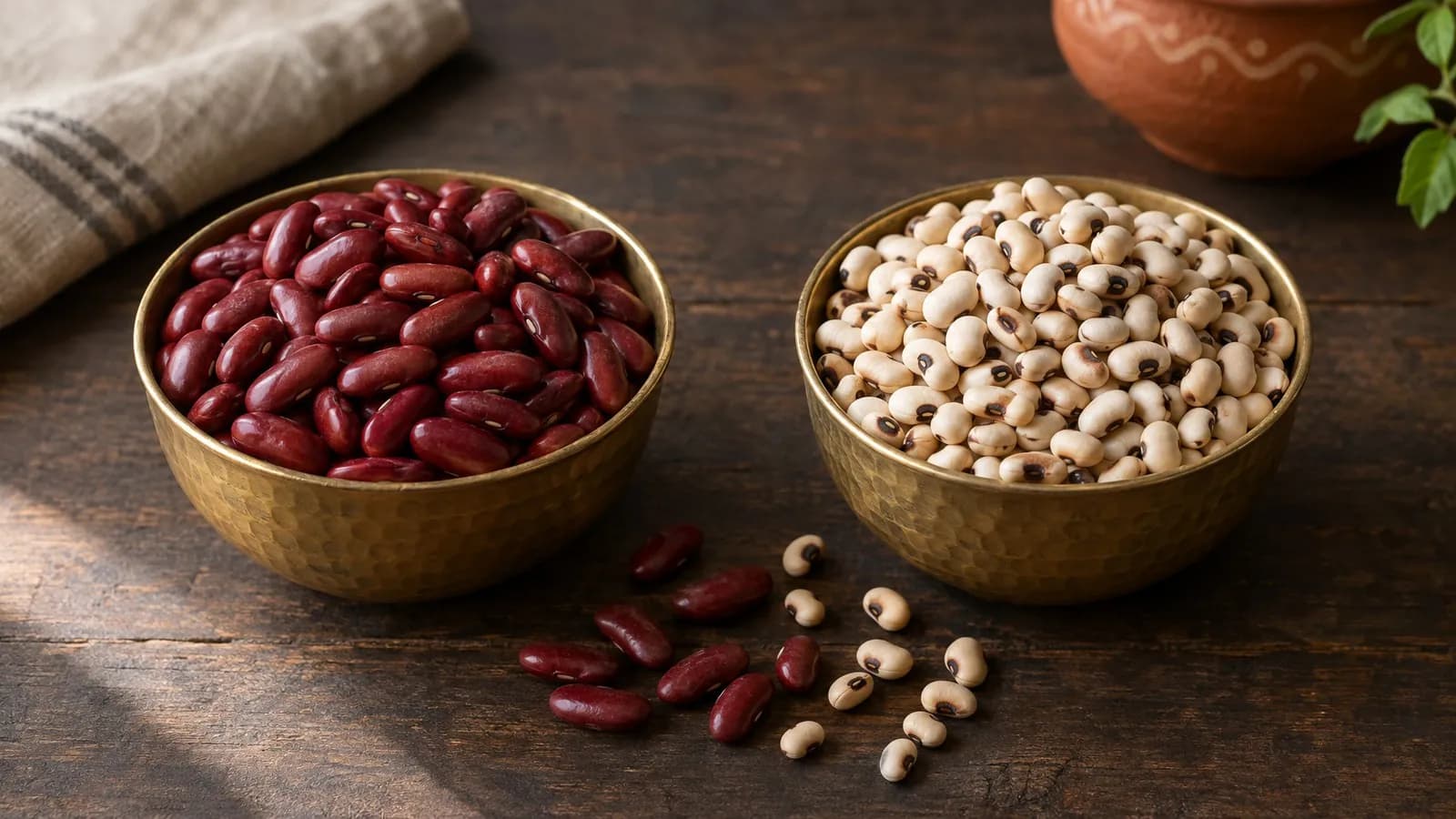
Rajma is the Hindi name for the red kidney bean, and the two names point at one food: the dried seed of Phaseolus vulgaris, the common bean plant. The English name comes from the bean's shape, which curves like a kidney. In Indian kitchens the beans are soaked, cooked until every one mashes soft, and simmered into a spiced curry that is served over rice as rajma chawal or beside rotis. Cooks usually reach for red rajma, and white kidney beans or chitra rajma when they want a change; the variety guide is on types of rajma. Per 100 g, the raw bean carries about 300 kcal, with 19.9 g of protein and 16.6 g of fibre (IFCT 2017). For how it measures up against cowpea, see rajma vs lobia, and the full story of the bean's many names is on kidney beans in Hindi.
Rajma names in Indian languages
IFCT 2017 records the same bean under one food code with a local name in each Indian language: Hindi rajmah, Punjabi lal rajmah, Urdu rajma, and the rest below. Wherever the name differs, the bean does not; the table lists the names, with the Odia cell blank exactly as IFCT 2017 leaves it, and the kidney beans in Hindi page explains which names are shared with other dals and which ones to use where.
| Language | Name (romanised) |
|---|---|
| English | Rajmah, red |
| Hindi | Rajmah |
| Marathi | Shravangheveda |
| Gujarati | Phansi (lal) |
| Punjabi | Lal rajmah |
| Bengali | Barbati beej |
| Odia | — |
| Assamese | Rajmah |
| Kannada | Thugare bele |
| Telugu | Barigalu |
| Tamil | Karamani Payir |
| Malayalam | Rajmah |
| Urdu | Rajma |
| Sanskrit | Makussttaka |
| Botanical name | Phaseolus vulgaris |
Source: IFCT 2017 (ICMR-NIN) local-names list. — means no name recorded in the source.
Rajma nutrition per 100 g and per katori
The headline numbers per 100 g of raw rajma: 48.6 g of carbohydrate, 19.9 g of protein, 16.6 g of fibre and 300 kcal, with 6.13 mg of iron, 316 mcg of folate, 173 mg of magnesium and 1324 mg of potassium (IFCT 2017). The table below sets rajma beside the two nearest dals; every figure is for the raw food, so what lands on the plate after cooking weighs more than the dry measure it came from. What a cooked portion gives: a katori from 30 g of dry beans lands near 90 kcal, 14.6 g of carbohydrate, 6 g of protein and 5 g of fibre, and a full plate from 50 g dry lands near 150 kcal, 24.3 g of carbohydrate, 10 g of protein and 8.3 g of fibre. The tested GI of 45, low on the University of Sydney scale, is unpacked on rajma glycemic index.
| Nutrient | Rajma (red kidney beans) | Cowpea (lobia) | Bengal gram dal (chana dal) |
|---|---|---|---|
| Energy (kcal) | 300 | 321 | 329 |
| Protein (g) | 20 | 21 | 22 |
| Fat (g) | 1.8 | 1.1 | 5.3 |
| Carbohydrates (g) | 49 | 54 | 47 |
| Dietary fibre (g) | 17 | 12 | 15 |
| Iron (mg) | 6.1 | 5 | 6.1 |
| Calcium (mg) | 126 | 84 | 46 |
| Magnesium (mg) | 173 | 213 | 118 |
| Potassium (mg) | 1324 | 1243 | 957 |
| Sodium (mg) | 10 | 13 | 21 |
| Zinc (mg) | 2.7 | 3.6 | 3.6 |
| Folate (mcg) | 316 | 249 | 182 |
| Glycemic index (GI) | 45 | 37 | 11 |
Per 100 g raw, edible portion. Composition: IFCT 2017 (ICMR-NIN). GI: University of Sydney GI database. — means not reported. These are average values for the food; the label on a pack gives the values for that product.
Benefits of rajma
Protein that pairs with cereals
19.9 g of protein per 100 g, about 6 g in a katori (30 g dry) and 10 g in a plate (50 g dry); the pairing is the point. ICMR-NIN notes that cereals, millets and pulses work together to build good quality protein, which is why rajma and rice make a natural team.
Fibre that fills
16.6 g of fibre per 100 g, about 5 g in a katori and 8.3 g in a plate. The dietary guidelines credit fibre with holding back the absorption of carbohydrate and fat and with adding to the satiety value of a meal.
Blood sugar
The tested GI of 45 sits in the low band, and in a 2009 pooling of 41 controlled trials, pulses eaten on their own brought fasting blood glucose and fasting insulin down, in people with diabetes and in people without. The swaps that make rajma work on a diabetes plate, and the portions to keep to, are on is rajma good for diabetes.
Weight
A katori is about 90 kcal with 6 g of protein and 5 g of fibre, and the swap is what makes it work: rajma replaces a share of the rice rather than joining it. The fuller case, with the better and worse ways to eat it, is on rajma for weight loss.
Pregnancy
316 mcg of folate per 100 g makes rajma a useful pulse on a pregnancy plate, and the protein, iron and fibre ride along with it. The do's, the don'ts and the cooking rules for expecting mothers are on rajma in pregnancy.
Babies
Rajma suits a baby's bowl once it is cooked completely soft and mashed smooth, never whole or firm; the WHO warns against foods that may cause choking, and whole beans stay out of a baby's bowl on the same grounds. First-food timing, textures and the allergy cautions are on rajma for babies.
Side effects: gas, lectins and who should go slow
Kidney beans can cause gas for some people. The sugars responsible, galacto-oligosaccharides such as raffinose, pass the small intestine undigested and are fermented in the colon, which releases gas, though how large a role they play has recently been questioned; on a steady intake, most people who get gas settle within a few weeks. The serious warnings are about cooking: kidney bean lectins are anti-nutritional factors that can cause intestinal disorders, so raw or half-cooked rajma must never be served, and a review of kidney bean safety also lists allergy to the bean's proteins as a possible reaction. Cooking is also the fix the guidelines name: boiling and pressure cooking destroy the enzyme inhibitors that would otherwise block digestion in pulses, and the evidence shows no harmful lectins or trypsin inhibitors left in properly cooked pulses. Gas or discomfort that persists is a doctor question. The Hindi rundown of all this is rajma ke fayde aur nuksan.
How to cook rajma
The method every rajma dish starts from: soak the beans for 8 to 12 hours, or overnight, with the beans well under the water (the full method and the quick-soak of about an hour are on how to soak rajma), then pressure-cook in fresh water, 3 cups with a teaspoon of salt for every cup of beans, to the first whistle on high and then 20 minutes on low. One cup of dry rajma is about 200 g, enough for four servings of 50 g dry. The test that ends the cook is the two-finger press: every bean must crush completely, with no chalky centre, before tomatoes or anything acidic join the pot, and a bean that still feels firm asks for 2 to 3 more whistles on low. Keep the cooking water instead of draining it, since boiling pulses in just enough water, with none poured off, is how the guidelines say folate is retained. Whistles, water ratio and the fixes for beans that stay hard are on how to cook rajma.
How to store rajma
Dry rajma keeps for months in a clean, airtight jar in a cool, dry cupboard, away from moisture and checked for insects before use. Soaked, drained beans go in the fridge, covered, and are used soon; cooked rajma keeps up to two days chilled, or frozen for longer and used within a day of defrosting. The signs that a batch has turned, for every form of rajma, are on how to store rajma.
Rajma recipes to start with
Three pages cover the classics. The rajma curry recipe runs the dhaba order of work: soaked beans pressure-cooked soft, then simmered into an onion-tomato masala and finished with a ghee-chilli tadka, about 1 hour 25 minutes from the end of the soak. The rajma khichdi recipe cooks the beans and then the rice in one pot, about 1 hour 10 minutes, and the rajma chawal recipe pairs the curry with steamed rice the classic way, 50 g of dry rajma to 75 g of raw rice a plate. Salad, tikki and the other no-gravy ideas are in the rajma recipe roundup.
How to buy rajma: what to look for
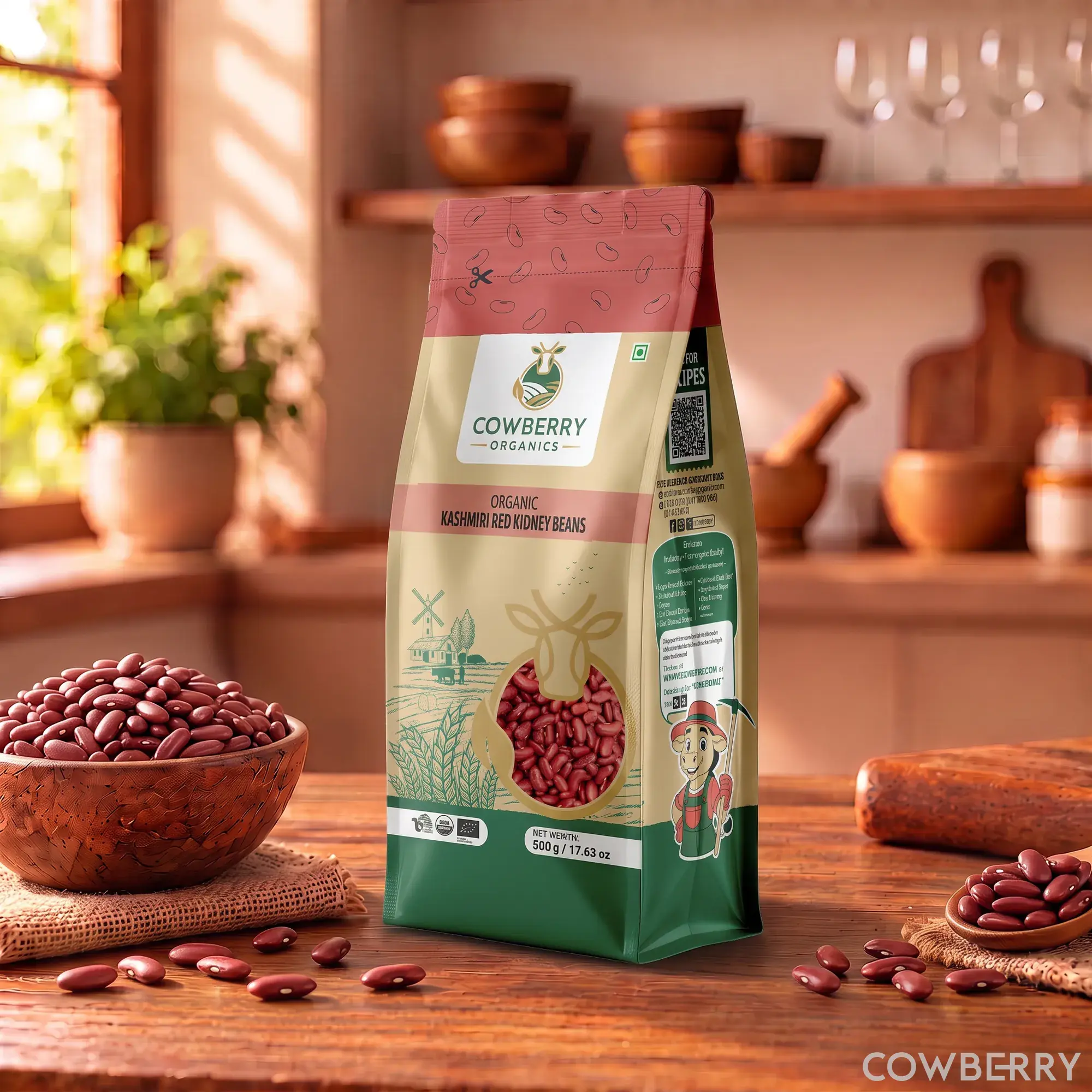
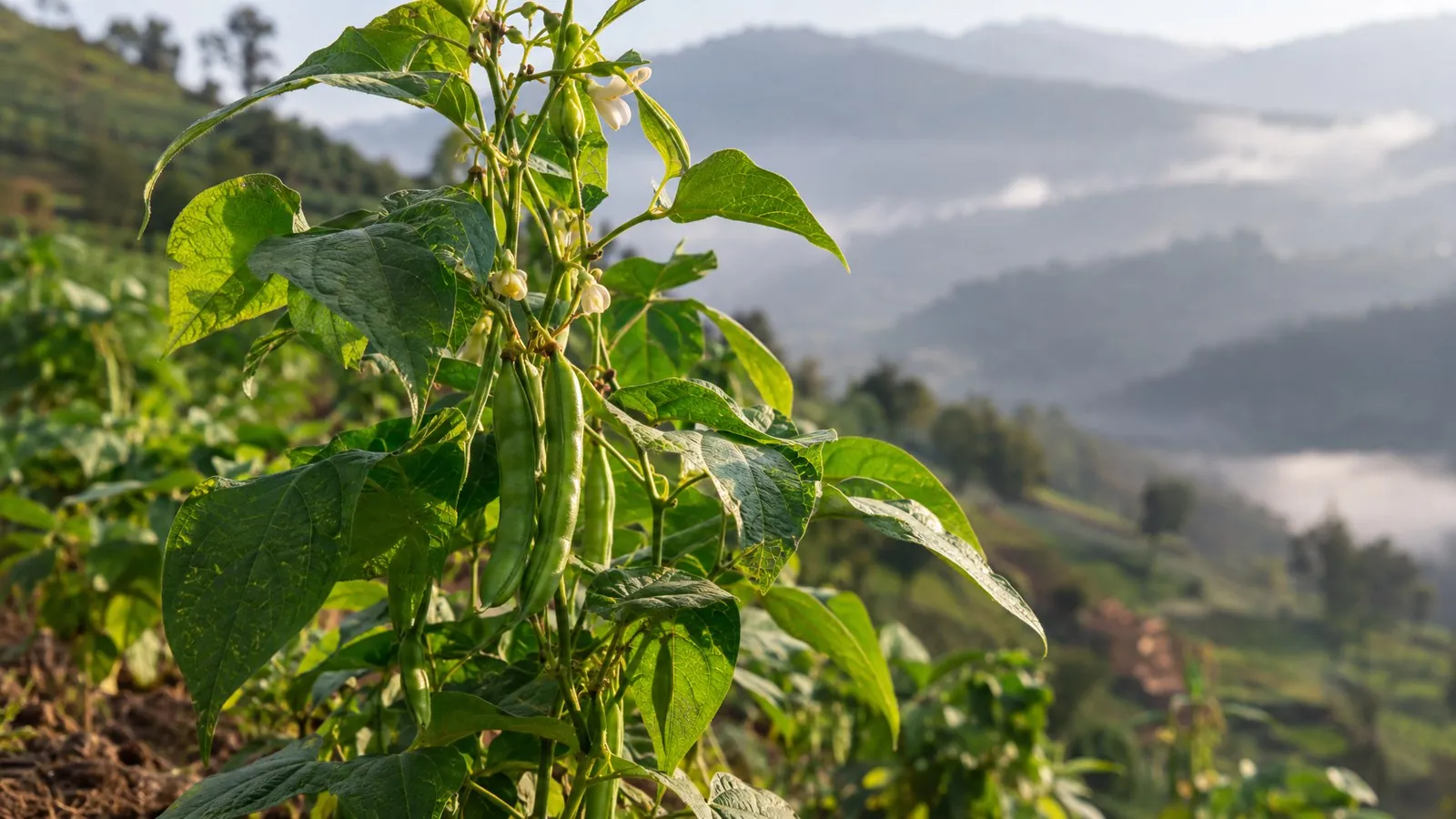
Look for a recently packed lot, because old beans can stay hard however long they cook, and for clean, unbroken beans without exit holes, webbing or dust at the bottom of the pack. COWBERRY's organic Kashmiri red kidney beans are the small, deep-red rajma grown in the mountain regions of Himachal Pradesh and Jammu, hand-picked at full maturity and left unpolished, India Organic, USDA & EU certified, and they cook soft while holding their shape. Keep the opened pack in a cool, dry, airtight jar, away from damp and heat, as the pack itself advises. How the bean is grown, plant to pod, is on how rajma is grown.
FAQs
What is rajma?
Rajma is the red kidney bean: the seed of Phaseolus vulgaris, the common bean plant, named for its kidney-like curve. In Indian kitchens it is soaked, cooked completely soft and simmered into a spiced curry served with rice as rajma chawal. Per 100 g raw, the numbers are about 300 kcal, 19.9 g of protein and 16.6 g of fibre (IFCT 2017).
Difference between rajma and kidney beans?
There is none; they are two names for one bean. Rajma is the Hindi word and kidney bean the English one, and IFCT 2017 records the same Phaseolus vulgaris seed under both, with the English name printed as Rajmah, red. The regional names across Indian languages are in the names table above.
How much protein in rajma?
Per 100 g, raw rajma carries 19.9 g of protein (IFCT 2017). Cooked portions keep the count simple: about 6 g in a katori (30 g dry) and about 10 g in a plate (50 g dry). Serve it with rice or roti and the pulse and cereal proteins complement each other, which is the idea behind rajma chawal.
Can kidney beans cause gas?
Some people get gas from rajma. Its galacto-oligosaccharides, raffinose among them, are not digested in the small intestine and are fermented in the colon with gas as a by-product, though whether this alone explains the gas has recently been questioned. Most people who get gas settle down within a few weeks, as long as the intake stays steady. Persistent gas or discomfort is one for the doctor or dietitian.
Which rajma is best?
No single variety is the best for everyone; a recently packed lot that you cook all the way through beats any name. COWBERRY's organic Kashmiri red kidney beans are the small, deep-red type from the mountain regions of Himachal Pradesh and Jammu, hand-picked at full maturity, unpolished, and they cook soft while holding their shape.
Is rajma good for kidneys?
The bean is named for its shape, not the organ, and for healthy kidneys rajma is a normal part of a balanced dal rotation. For kidneys that are already diseased, protein and potassium are usually set by the doctor, and rajma carries 19.9 g of protein and 1324 mg of potassium per 100 g, so do not change your pulse routine without asking. Any kidney concern is a doctor question first.
How much rajma per day?
The Dietary Guidelines for Indians give pulses a slot of 85 g on the adult daily plate. In rajma terms that is about three katori, or just under two plates of 50 g dry each, since a katori is cooked from 30 g of dry beans. It is a general adult figure, not a medical dose; how much of that share goes to rajma is one to decide with your dietitian.
Is rajma gluten free?
Rajma itself is naturally gluten free, as COWBERRY's pack FAQ notes for its Kashmiri red kidney beans, so the bean fits a gluten-free plate. The dish is gluten free only if everything around it is too: check the flours, the hing and any ready masalas in the recipe.
References
- Indian Food Composition Tables (IFCT) 2017, ICMR-National Institute of Nutrition
- Dietary Guidelines for Indians, ICMR-National Institute of Nutrition
- University of Sydney glycemic index database (GI search)
- Sievenpiper JL, Kendall CW, Esfahani A, et al. Effect of non-oil-seed pulses on glycaemic control: a systematic review and meta-analysis of randomised controlled experimental trials in people with and without diabetes. Diabetologia, 2009
- Thompson HJ. Improving human dietary choices through understanding of the tolerance and toxicity of pulse crop constituents. Curr Opin Food Sci, 2019
- He S, Simpson BK et al. Phaseolus vulgaris lectins: a systematic review of characteristics and health implications. Crit Rev Food Sci Nutr, 2018
- Kumar S, Verma AK et al. Clinical complications of kidney bean (Phaseolus vulgaris L.) consumption. Nutrition, 2013
Shop this article
Keep reading
Green gram plant: crop, varieties and how it grows in India
Rajma vs lobia: difference, nutrition and which to choose
Rajma plant: how rajma is grown in India (it is not a tree)