by COWBERRY

6 minute read
How to store rajma for long time: fridge, soaked and boiled

How to store rajma for long time: dry rajma keeps for months in a clean, airtight jar in a cool, dry cupboard; soaked rajma goes in the fridge, drained and covered, and is used soon; cooked rajma keeps two days chilled, or frozen for longer. The spoilage signs follow; the rajma beans guide covers the bean in full.
How to store rajma for long time: the quick table
One table, every form of rajma.
| Form | Where | How long | Rule |
|---|---|---|---|
| Dry beans | Airtight jar, cool dry cupboard | Months | Keep moisture out; check for insects before use |
| Soaked, drained | Covered box in the fridge | Use soon | Throw out if sour or slimy |
| Cooked | Cooled, covered, in the fridge | Up to two days | Chill within one to two hours of cooking |
| Cooked, frozen | Freezer | Longer | Use within a day of defrosting |
The dry jar is the long-term store and the one worth getting right; the fridge rules below follow the UK Food Standards Agency's advice for cooked food: cool at room temperature, refrigerate within one to two hours and use the leftovers within two days, or freeze them.
Dry rajma: the jar, the cupboard and the pests
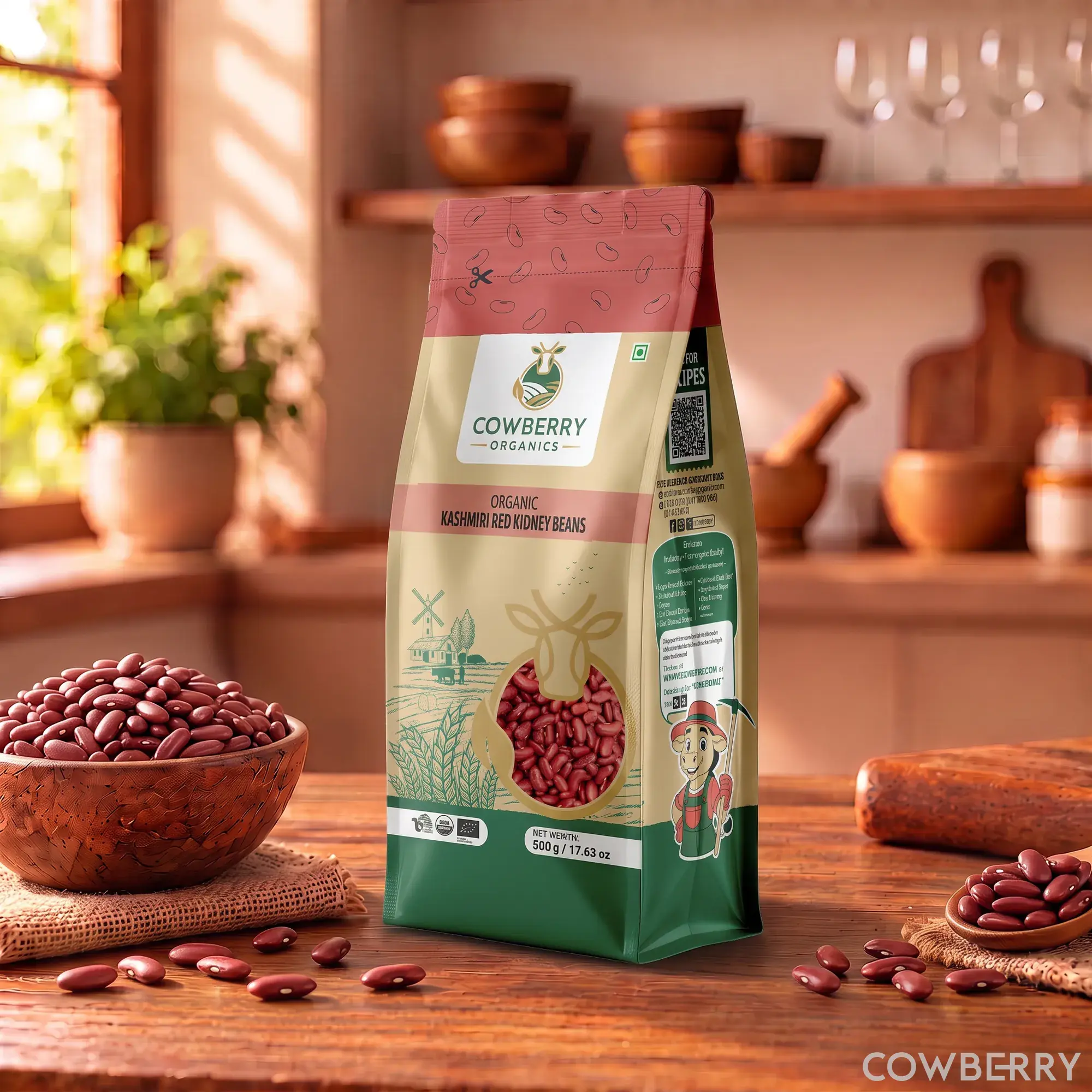
For the dry beans, COWBERRY's own pack advice is to store them in a cool, dry place in an airtight container to maintain freshness, and that is the whole method: a clean, dry jar with a tight lid, kept in a cupboard away from the stove, the window and any steam. Moisture is the enemy, because damp beans go mouldy, and FAO's grain storage bulletin has separate chapters on drying, storage insects and moulds. The insect to watch for is the pulse beetle: a study of stored pulses describes Callosobruchus beetles as cosmopolitan pests of stored legumes including the Phaseolus genus that rajma belongs to, with the female gluing her eggs to the grain, the grub feeding inside it and the adult leaving through a round exit hole. So before a batch goes into the jar, look the beans over for exit holes, webbing and dust at the bottom of the pack, and keep the jar dry. Buy what you will use in a season, and the jar takes care of the rest.
How to store soaked rajma in fridge
Soaked rajma goes in the fridge and is used soon: drain the beans well, tip them into a covered box or bowl and put them in the fridge straight away. Soaking is also the first step of sprouting, which the Dietary Guidelines for Indians describe as taking 1 to 3 days in a moist cloth, so a soaked batch left out in a warm kitchen is not a stable food. The test before use is the nose and the fingers: sourness or slime means throw the batch away. Use soaked rajma from the fridge the way you would a fresh soak, draining any water that collected and cooking it in fresh water, as how to cook rajma describes.
How to store boiled rajma in fridge (and freezer)
Cooked rajma follows the standard cooked-food rules the UK Food Standards Agency lays out: cool the pot at room temperature, get it refrigerated within one to two hours, and use the leftovers within two days, or freeze them. The Food Standards Agency advises against putting warm food in the fridge and suggests dividing food into smaller portions to cool it quickly, so spread the rajma in shallow containers, let the steam go, then cover and refrigerate. Keep the beans in their cooking water or in the gravy of rajma curry. For the freezer, cooled rajma or rajma curry goes into a lidded container and keeps for longer; defrost in the fridge and use within a day of thawing, reheating until hot all the way through before serving.
Signs rajma has gone bad
- Dry beans: a musty or sour smell, mould spots, clumped grains, webbing, live beetles or round exit holes in the beans; throw the batch away and wash the jar.
- Soaked beans: sour smell, sliminess, or a film of foam on the water; discard and start a fresh soak.
- Cooked rajma: a sour or yeasty smell, or any mould on the surface; do not taste-test suspicious food, throw it away.
The one rule behind all three: moisture and warmth are what spoil rajma, so dry, cool and covered is the storage pattern in every form. When in doubt, throw it out.
How long can rajma be stored
There is no standard shelf life to quote for dry rajma, so the honest answer is: months in a dry, sealed jar, and less in a damp kitchen. Old age can show at the cooking stage rather than the jar stage, because an old batch may be slow to soften however long it cooks, as the rajma chawal recipe notes, so a batch that has sat a long time is worth a small test cook before you plan a meal around it. Cooked rajma keeps up to two days chilled, and soaked rajma only briefly, as the table above sets out. For the bean itself and how to cook it, see how to cook rajma, and for everything rajma, from types to nutrition, start at the rajma beans guide.
FAQs
How to store rajma in fridge?
Two forms of rajma live in the fridge, and both want the same handling: drained and covered. Soaked rajma goes into a covered box, drained of its soaking water, and is used soon. Cooked rajma is cooled at room temperature, refrigerated within one to two hours and used within two days; the UK Food Standards Agency's cooked-food advice sets both limits.
How to store soaked rajma in fridge?
Drain the soaked beans completely, tip them into a covered box or bowl and refrigerate, then use them soon. Soaking is the first step of sprouting, so a soaked batch left at room temperature is not a stable food; keep it cold. Before cooking, drain off any water that collected and check for a sour smell or a slimy feel; if either appears, throw the batch away.
How to store boiled rajma in fridge?
Cool the cooked rajma at room temperature, then chill it in the fridge, covered, within one to two hours of cooking; use it within two days or freeze it. Keep the beans in their cooking water or gravy so they stay moist, and cool them in a shallow, uncovered container first so the fridge is not warmed. Reheat until hot all the way through before serving.
Which rajma is best?
For storing, the best rajma is the freshest pack you can buy, because an old batch may be slow to soften however long it cooks. COWBERRY's organic Kashmiri red kidney beans are hand-picked and unpolished, harvested at full maturity. The types themselves are compared on types of rajma.
What is rajma?
Rajma is the red kidney bean, the Hindi name for Phaseolus vulgaris, the bean of rajma chawal. Cooked soft, it is eaten as a curry with rice and in khichdi. Its nutrition, from protein to fibre, is under rajma nutrition per 100 g, and how to soak and cook it is on how to cook rajma.
References
- Dietary Guidelines for Indians, ICMR-National Institute of Nutrition
- FAO: Grain storage techniques, evolution and trends in developing countries
- UK Food Standards Agency: How to chill, freeze and defrost food safely
- Erler F, Ceylan F, Erdemir T, Toker C. Preliminary results on evaluation of chickpea, Cicer arietinum, genotypes for resistance to the pulse beetle, Callosobruchus maculatus. J Insect Sci, 2009
Shop this article
Keep reading
Green gram plant: crop, varieties and how it grows in India
Rajma vs lobia: difference, nutrition and which to choose
Rajma plant: how rajma is grown in India (it is not a tree)