by COWBERRY

14 minute read
Poha (flattened rice): what it is, types, nutrition and benefits

Poha is flattened rice: paddy that is soaked, heated, pressed flat between rollers and dried into light flakes that need only a rinse before cooking. Per 100 g, IFCT 2017 gives it 354 kcal, 7.4 g protein, 3.5 g fibre and 4.5 mg iron, nearly seven times the iron of raw milled rice. Below: its names, types, nutrition, benefits, cooking, storage and buying, with recipes.
What is poha and what is it made of?
Poha is rice that has been flattened into flakes, which is why English recipes call it flattened rice, beaten rice or rice flakes. It starts as paddy, the rice grain still in its husk, rather than as milled rice. The paddy is cleaned, soaked and heated; the husk comes off, and the grain is pressed flat between heavy rollers and dried until the flakes are crisp.
Because the grain is heated before it is flattened, poha does not need boiling. A short rinse and a few minutes of rest soften it, which is what makes it such a quick breakfast. Maharashtra's kanda poha folds the rinsed flakes into an onion tempering, Indore's version is steamed, and in Tamil and Malayalam kitchens the same flakes go by the name aval.
The gap between the rollers decides how thick the flakes come out, from sturdy flakes for cooked breakfasts to fine ones for laddu and cutlets, and red poha is made from unpolished red rice, bran and all; the types are compared further down. The rice varieties themselves, red rice included, are described under types of rice grown in India.
Poha names in Indian languages
Poha is the Hindi name, and IFCT 2017 records a different word in most other Indian languages, which helps when you shop in a local market or read a regional recipe. It lists the food as rice flakes, with pohe in Marathi, paunva in Gujarati, chirwre in Punjabi, chide in Bengali, chudaa in Odia, chira in Assamese, avalakki in Kannada, atukulu in Telugu and aval in both Tamil and Malayalam. The botanical name is that of rice itself, Oryza sativa, because poha is a form of rice rather than a different crop. IFCT gives no Urdu or Sanskrit name, so those rows show a dash rather than a guess, and every name in the table is copied from that IFCT list.
| Language | Name (romanised) |
|---|---|
| English | Rice, flakes |
| Hindi | Poha |
| Marathi | Pohe |
| Gujarati | Paunva |
| Punjabi | Chirwre |
| Bengali | Chide |
| Odia | Chudaa |
| Assamese | Chira |
| Kannada | Avalakki |
| Telugu | Atukulu |
| Tamil | Aval |
| Malayalam | Aval |
| Urdu | — |
| Sanskrit | — |
| Botanical name | Oryza sativa |
Source: IFCT 2017 (ICMR-NIN) local-names list. — means no name recorded in the source.
Poha nutrition per 100 g
Per 100 g of dry flakes, IFCT 2017 reports 354 kcal, 7.4 g protein, 1.1 g fat, 76.8 g carbohydrate and 3.5 g fibre. Set against raw milled rice, the flakes carry roughly seven times the iron (4.5 mg against 0.65 mg), four times the magnesium (77.9 mg against 19.3 mg) and more potassium (148 mg against 108 mg). There is little calcium, 9.2 mg, and just 2.6 mg of sodium, so the salt on a plate of poha is whatever the cook adds.
Against oats, poha has under half the protein (7.4 g versus 16.9 g) and a third of the fibre (3.5 g versus 10.6 g), but a similar iron count (4.5 mg versus 4.7 mg) and far less fat (1.1 g versus 6.9 g). There is no GI figure for plain poha in the data behind this page, so the 59 used here averages two India-tested poha dishes that scored 43 and 74. That puts poha in the medium band, next to oat porridge at 60.
A plate on this site means 50 g of dry poha, which gives 177 kcal, 3.7 g protein, 38.4 g carbohydrate, 1.7 g fibre and 2.2 mg iron before anything goes into the pan. The kanda poha recipe adds half a tablespoon of groundnut oil, a share of the peanuts and a little sugar to each plate and comes to 294 kcal, 5.8 g protein and 11.5 g fat. Plain-plate and bowl figures, protein in context and the full list of minerals are on the poha calories and nutrition page.
| Nutrient | Poha (rice flakes) | White rice (raw, milled) | Oats |
|---|---|---|---|
| Energy (kcal) | 354 | 357 | 389 |
| Protein (g) | 7.4 | 7.9 | 17 |
| Fat (g) | 1.1 | 0.5 | 6.9 |
| Carbohydrates (g) | 77 | 78 | 66 |
| Dietary fibre (g) | 3.5 | 2.8 | 11 |
| Iron (mg) | 4.5 | 0.7 | 4.7 |
| Calcium (mg) | 9.2 | 7.5 | 54 |
| Magnesium (mg) | 78 | 19 | 177 |
| Potassium (mg) | 148 | 108 | 429 |
| Sodium (mg) | 2.6 | 2.3 | 2 |
| Zinc (mg) | 1.5 | 1.2 | 4 |
| Folate (mcg) | 8.5 | 9.3 | 56 |
| Vitamin C (mg) | — | — | 0 |
| Glycemic index (GI) | 59 | 50 | 60 |
Per 100 g raw, edible portion. Composition: IFCT 2017 (ICMR-NIN); USDA FoodData Central (SR Legacy), FDC ID 169705, NDB 20038. GI: University of Sydney GI database. — means not reported. These are average values for the food; the label on a pack gives the values for that product.
Benefits of poha
What poha offers follows from its numbers: a quick-cooking grain, mostly carbohydrate, with more iron than the rice it is made from.
Iron, and a way to absorb it
Poha gives 4.5 mg iron per 100 g, nearly seven times the 0.65 mg in raw milled rice, and a 50 g plate carries about 2.2 mg. Absorption is a different story. A 2007 laboratory study of rice flakes linked their phytin phosphorus and fibre to the binding of iron, which is why what you eat with poha matters. The ICMR-NIN dietary guidelines say citrus fruits and other vitamin C foods improve iron absorption from plant foods eaten in the same meal, which is the job of the lemon squeezed over kanda poha, and that tea binds iron and belongs well away from mealtimes.
Little fat of its own
A 50 g plate of flakes brings 0.6 g of fat. Half a tablespoon of groundnut oil in the pan adds 7.5 g, so the cook, not the grain, decides how rich the plate is.
Quick to cook
With 76.8 g carbohydrate and 354 kcal per 100 g, poha is mainly an energy food, and a 50 g plate gives 38.4 g carbohydrate. The flakes need only a rinse and a few minutes of steam in the pan, so the kanda poha recipe takes 25 minutes from start to finish.
No gluten of its own
Gluten comes from wheat, barley and rye, according to the NHS, so rice flakes carry none of their own, and poha upma or poha dosa can stand in for a wheat breakfast. With coeliac disease, packs still need checking; talk to your doctor or dietitian about relying on any food as gluten-free.
Minerals beyond iron
Per 100 g, poha also gives 77.9 mg magnesium, 148 mg potassium, 1.5 mg zinc and 8.5 mcg folate. A 50 g plate halves those: about 39 mg magnesium and 74 mg potassium.
Fibre: a source, not a rich one
At 3.5 g per 100 g, poha passes FSSAI's 3 g test for a source-of-fibre claim but not the 6 g needed for a high-fibre one. That is more than raw milled rice (2.8 g) and about a third of oats (10.6 g). On a kanda poha plate the flakes supply 1.7 g of the 2.6 g of fibre counted in the recipe.
Side effects: who should limit poha
Nothing in the sources behind this page reports a problem with poha itself in everyday portions. The points below are about how much goes on the plate and what goes with it.
- Diabetes: poha's GI of 59 is medium, not low, and a 50 g plate carries 38.4 g carbohydrate. Eaten in place of rice or roti at that meal rather than on top of them, and cooked with peanuts and vegetables, it makes a measured breakfast; a large plate with sev and sugar is a different meal. If you manage your blood sugar, settle the right plate size with your doctor or dietitian.
- Blood pressure: the flakes carry only 2.6 mg sodium per 100 g. The salt in the tempering and the sev or namkeen on top are what count, so season the pan lightly and go easy on packet toppings.
- Weight: a kanda poha plate from the recipe is 294 kcal, and fried potato, a handful of sev or a second helping push it higher. Count poha as the grain for that meal, not as an extra.
- Gas or bloating: none of the sources used here links poha to gas. If a plate does not agree with you, try a smaller portion with the onion cooked rather than raw, and see a doctor if it keeps happening.
Before any grain becomes a daily staple, talk to your doctor or dietitian if you follow a prescribed diet.
Types of poha: thick, thin and red
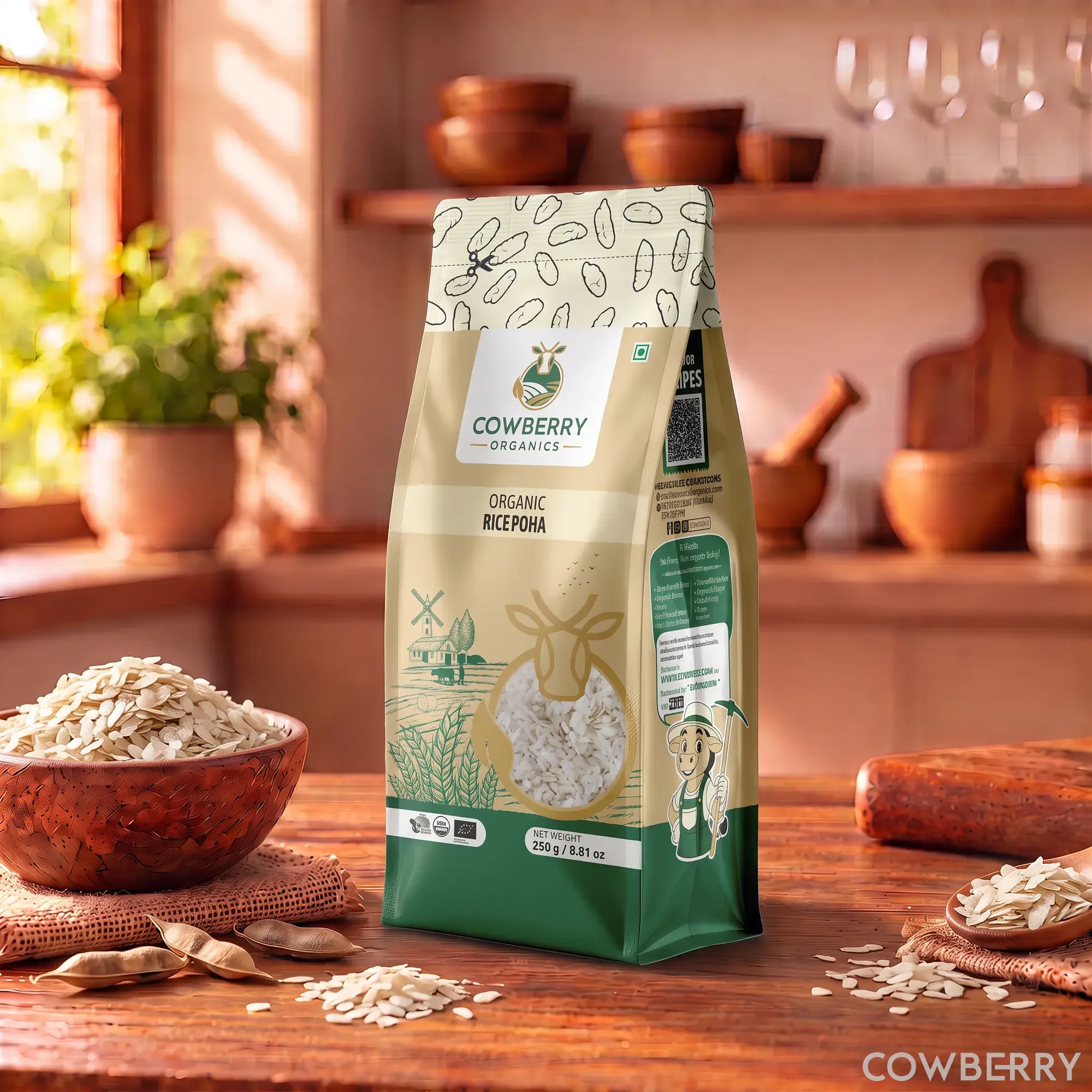
Poha is sold in more than one thickness and in two colours, and the dish decides which one you need. Thick poha takes a rinse and stays in separate flakes, so it is the one for kanda poha, Indori poha, poha upma and dahi poha, and it roasts slowly into chivda; COWBERRY's organic rice poha is a thick poha. Thin poha, often sold as nylon poha, is the one to crush into laddu and cutlets, and it roasts for chivda in about half the time. Medium flakes sit in between. Red poha comes from unpolished red rice and keeps its bran.
IFCT 2017 prints a single entry for rice flakes and none for red poha, so the figures on this page apply to poha in general. Thickness did make a difference in one laboratory study: in 2007, flakes from 0.08 mm to 1.20 mm thick showed less fibre and phytin phosphorus the thinner they were pressed. How to tell the flakes apart in the pack, and which to buy for each dish, is in the guide to types of poha.
How to cook poha
Rinse, do not soak. Tip thick poha into a sieve and hold it under a running tap for about ten seconds, turning the flakes by hand, then drain it and give it about five minutes to soften. The water it holds is enough, and the flakes stay separate. Poha left sitting in a bowl of water takes up too much and turns to paste. Thin poha is handled another way in each of its dishes, from a dry roast for laddu to a quick rinse and squeeze for cutlets.
Kanda poha is the one to learn first. The rinsed flakes are tossed with salt, a little sugar and a pinch of turmeric while they rest. Raw peanuts are fried in the oil and lifted out; mustard seeds, curry leaves and green chilli follow, then chopped onion until soft, then the rest of the turmeric. The poha goes in with the fried peanuts, gets a sprinkle of water and two to three minutes under a lid on the lowest flame, and lemon and coriander go on once the pan is off the heat. Indori poha takes a different route: the seasoned poha is steamed over boiling water instead of in the pan, then dressed with a fennel tempering, jeeravan masala, sev, pomegranate and raw onion. Poha chivda, the roasted snack, is in the recipe list below.
How to store poha
Poha is sold dry and keeps as long as it stays that way. Once a pack is open, tip it into an airtight jar and keep it somewhere cool and dry, away from the heat of the stove and the damp around the sink; COWBERRY's own storage advice for its poha says the same: airtight, cool and dry. Buy a pack size you will get through while the flakes are still crisp and fresh-smelling.
Damp is what spoils stored grain. FAO's manual on mycotoxins in foodgrains covers mould damage to stored food in the tropics and the drying of grain to keep mould toxins out during storage. Flakes that smell musty or show any mould go in the bin. Rinse only what you are about to cook, since damp flakes do not keep, and eat cooked poha the same day or keep it in the fridge overnight and steam it with a spoon of water the next morning.
Poha recipes to start with
Three recipes have full pages, and the poha recipes roundup collects twelve in all, from breakfast plates to snacks and sweets.
- Kanda poha: onion poha with peanuts, 294 kcal a plate and ready in 25 minutes.
- Indori poha: steamed poha topped with sev, jeeravan masala and pomegranate, 248 kcal a plate before the sev.
- Poha chivda: a roasted poha snack mix that keeps for weeks in an airtight jar.
The roundup also gives short methods for nine more, from poha upma and dahi poha to poha idli, cutlets, kheer and laddu.
How to buy poha: what to look for
Thickness first. Decide what you cook most. Thick poha covers the cooked breakfasts, from kanda and Indori poha to upma, and it roasts into chivda; thin poha is for cutlets, laddu and dadpe pohe. If you buy one pack, buy thick.
Check the flakes and the smell. Good poha is even in size and mostly whole, with little powder at the bottom of the pack, because broken bits turn pasty in the pan. The flakes should smell clean and faintly of rice. A musty or sour smell means the pack has taken up damp, so leave it on the shelf.
Certification. For organic poha, look for the certification printed on the pack, not just the word organic in the product name.
What COWBERRY does. COWBERRY organic rice poha is a thick poha made from organically grown rice from Maharashtra and Madhya Pradesh. It is minimally processed, made without artificial whitening agents or synthetic preservatives, packed to preserve its natural texture and clean flavour, and India Organic, USDA & EU certified.
More on poha
Beyond the plate itself, poha has pages on its names, on blood sugar and weight, and on what goes into the pan.
- Poha in English, Hindi and the other Indian languages, from pohe and paunva to avalakki, atukulu and aval.
- Poha benefits and side effects, each tied to a nutrient figure, with the daily portion.
- Poha khane ke fayde aur nuksan: the same benefits and side effects in Hinglish.
- Is poha good for weight loss? Calories by the plate, portion size and what to add.
- Poha glycemic index, carbohydrate per plate and the glycemic load worked out.
- Does poha increase sugar level? Portion and pairing for people with diabetes.
- Poha ingredients: the full list with quantities for one, two or three people.
- Poha vs rice: the flakes against the grain they are made from, per 100 g and per serving.
FAQs
What is poha made of?
Poha is made from rice paddy. The paddy is soaked and heated, the husk is removed, and the grain is pressed flat between rollers and dried; the gap between the rollers sets how thick the flakes are. Red poha comes from unpolished red rice.
How to make poha?
Rinse thick poha for about ten seconds, drain, toss with salt, sugar and a little turmeric and rest it for five minutes. Fry the peanuts and set them aside, pop mustard seeds with curry leaves and green chilli, then soften the onion with the rest of the turmeric. Fold in the poha and peanuts, sprinkle water, cover on very low heat for two to three minutes, and add lemon off the heat. Our kanda poha recipe has the full method.
Can diabetics eat poha?
Yes, as a measured portion. Poha's GI of 59, an average of two tested dishes, is medium, and a 50 g plate carries 38.4 g carbohydrate, so it should replace the rice or roti at that meal rather than sit beside it. Peanuts and vegetables make a better plate than sev and sugar. If poha is to become a regular breakfast, talk to your doctor or dietitian.
Is poha good for weight loss?
Poha can fit a weight-loss plan when the plate stays simple. The flakes in a 50 g plate carry 177 kcal and 0.6 g fat; the kanda poha recipe, with its oil, peanuts and a little sugar, comes to 294 kcal a plate. Sev, fried potato and second helpings are what push a plate higher. Fill the plate out with onion and other vegetables, and if weight loss is the goal, talk to your doctor or dietitian.
Which poha is good thick or thin?
Thick poha for cooked dishes, and for chivda if you roast it slowly; thin poha for laddu, cutlets and dadpe pohe. Thick flakes take a rinse and stay separate, so they suit kanda poha, Indori poha, upma and dahi poha; thin (nylon) flakes are crushed for laddu and cutlets, and they roast for chivda in about half the time. The thick poha vs thin poha guide compares them side by side.
Can poha cause gas?
Nothing in the sources used here links poha itself to gas. It is a low-fat grain with 3.5 g fibre per 100 g. If a plate does not sit well, try a smaller portion and cook the onion through instead of adding it raw, and talk to your doctor or dietitian if bloating keeps coming back.
Is poha healthy?
Poha is a low-fat grain with more iron than rice: 354 kcal, 7.4 g protein, 1.1 g fat and 4.5 mg iron per 100 g, and almost no sodium of its own. Its fibre and protein are modest, so how healthy a plate is depends on what goes into it: peanuts, vegetables and lemon add to it, while sev and extra oil mostly add calories. The full numbers are on the poha calories page.
What is flattened rice?
Flattened rice is another name for poha, the rice flakes made by heating paddy and pressing the grain flat. English recipes also say beaten rice or rice flakes, and IFCT 2017 records names such as pohe, paunva, chide, chira, avalakki, atukulu and aval. Since the grain has been heated before it is flattened, it needs only a rinse before cooking.
References
- Indian Food Composition Tables (IFCT) 2017, ICMR-National Institute of Nutrition
- USDA FoodData Central
- University of Sydney glycemic index database (GI search)
- University of Sydney: about the glycemic index
- Suma RC, Sheetal G, Jyothi LA et al. Influence of phytin phosphorous and dietary fibre on in vitro iron and calcium bioavailability from rice flakes. Int J Food Sci Nutr, 2007
- Dietary Guidelines for Indians, ICMR-National Institute of Nutrition
- FAO: Mycotoxin prevention and control in foodgrains
- NHS: coeliac disease
- FSSAI Food Safety and Standards (Advertising and Claims) Regulations 2018, compendium (PDF)
Shop this article
Keep reading
Red rice vs brown rice: the fibre, GI and honest verdict
Red rice vs black rice: nutrition, glycemic index and which to choose
Red rice nutrition per 100g: calories, protein, fibre and GI