by COWBERRY

9 minute read
12 poha recipes: kanda poha, Indori poha, chivda and more

These 12 poha recipes cover most of what a packet of poha (flattened rice) does in an Indian kitchen: three full recipes for kanda poha, Indori poha and poha chivda, and quick methods for nine more, from dahi poha and poha idli to poha cutlet, gul pohe and poha kheer. Thick poha for the cooked dishes and the chivda, thin poha for cutlets, laddu and dadpe pohe.
How to make poha: two rules before any recipe
Every dish on this page starts from dry flakes, and two habits decide whether it turns out fluffy or gluey. First, for kanda poha, upma, dahi poha and cutlets, rinse and never soak: ten seconds under a running tap in a sieve is enough for thick poha, and five minutes of draining lets it soften on its own; a bowl of water turns it to paste. Idli and dosa batters start from soaked flakes, and chivda, kheer and laddu use the flakes dry. Second, match the flake to the dish: thick poha for anything cooked, steamed or roasted for chivda, thin poha for cutlets, laddu and dadpe pohe. The thick poha vs thin poha guide covers red poha and the medium grade too.
What you are cooking is rice that was heated and flattened before it was dried, which is why it needs no real cooking, only heat and moisture; how it is made and what it is called across India is on the poha hub. Per 100 g of raw flakes, IFCT 2017 reports 354 kcal, 7.44 g protein, 3.46 g fibre and 4.46 mg iron, and India-tested poha dishes average a medium GI of 59 in the University of Sydney database. What that means per plate and per bowl is worked out on the poha calories page; the short version is that 50 g of flakes gives a fixed 177 kcal, and the oil, peanuts and sev decide how far above that a plate goes.
Poha breakfast recipes
Breakfast is where poha lives. Kanda poha and Indori poha have full recipe pages with per-plate nutrition; the five after them are short methods you can cook from memory.
Kanda poha
The Maharashtrian onion poha: thick poha rinsed and folded into a mustard, curry leaf, green chilli and peanut tempering with turmeric, then finished with lemon and coriander. Four plates in 25 minutes; the full kanda poha recipe has the method and per-plate numbers.
Indori poha
Indore's version is steamed, not stir-fried: seasoned poha sits over boiling water until it fluffs, then gets a fennel tempering, jeeravan masala, sev, raw onion and pomegranate. It tastes faintly sweet and sour; the Indori poha recipe includes a home mix for the jeeravan.
Poha upma
Temper mustard seeds, urad dal, curry leaves and green chilli in oil, cook chopped onion, carrot and peas until soft, then fold in rinsed thick poha with salt and turmeric and steam under a lid for three minutes. Finish with lemon and grated coconut; this South Indian aval upma is drier and carries more vegetables than kanda poha.
Dahi poha
Rinse thick poha, drain, and stir it into whisked curd with salt, a pinch of sugar and grated cucumber; rest it ten minutes so the flakes soften in the curd. Pour over a tempering of mustard seeds, curry leaves and green chilli. Eaten cold, it is the poha answer to curd rice.
Dadpe pohe
A no-cook Konkan dish: mix thin poha with grated fresh coconut, chopped onion, green chilli, salt, sugar and lemon, press it down and leave it fifteen minutes so the coconut and onion juices soften the flakes. Pour a hot mustard-seed tempering over it just before serving.
Poha idli
Soak thick poha for ten minutes and grind it with soaked idli rava or rice and a little curd into a thick batter; rest it overnight, or add a pinch of baking soda for an instant version. Steam in idli plates for twelve minutes. The poha makes them softer than plain rice idlis.
Poha dosa
Put thick poha, rice and a spoon of urad dal to soak for four hours, grind with curd to a smooth batter and ferment overnight. Spread it thicker than a regular dosa on a hot tawa and cook on one side only; the result is a soft, spongy dosa like set dosa, good for children and packed lunches.
Poha snacks: chivda and cutlets
Poha chivda
Thick poha is dry-roasted slowly, in two batches, until a flake crushes easily, then tossed with peanuts, curry leaves and green chilli fried in three tablespoons of oil, plus turmeric and a little jaggery powder for colour and sweetness; roasted chana dal is an optional extra. Sealed in a dry jar it stays crisp for about three weeks, so this is the poha dish to make ahead in bulk; the roasted poha chivda recipe gives the weights and the per-katori numbers.
Poha cutlet
Rinse thin poha, squeeze it dry and mash it with boiled potato, grated carrot, chopped onion, green chilli, ginger, coriander, salt and garam masala; the poha binds the mix, so no bread or cornflour is needed. Shape into flat rounds and shallow-fry in groundnut oil on medium until brown on both sides, or bake at 200 °C for twenty minutes. Serve with green chutney; the same mix, rolled into small balls and fried, makes poha vada for a party.
Sweet poha dishes: gul pohe, kheer and laddu
Poha has a sweet side too: flattened rice eaten with curd and jaggery is a familiar no-cook meal in eastern India (chide in Bengali, chudaa in Odia), and gul pohe (jaggery poha) is a Maharashtrian snack that needs no stove at all.
Gul pohe
Sprinkle thick poha with a little water and leave it for five minutes, then mix with grated jaggery, fresh grated coconut, a pinch of cardamom and a spoon of ghee. The jaggery dissolves into the damp flakes in ten minutes; eat it at room temperature, with a glass of milk for children.
Poha kheer
Roast thick poha in a spoon of ghee until it smells nutty, then simmer it in milk for ten minutes until the flakes swell and the milk thickens. Take it off the heat and let it cool for a minute before sweetening with jaggery powder (jaggery stirred into boiling milk can split it) and finish with cardamom and chopped nuts. Red poha gives a pink, nuttier kheer.
Poha laddu
Dry-roast thin poha until crisp, grind it to a coarse powder, and mix with powdered jaggery, roasted peanuts or sesame, cardamom and enough warm ghee to bind. Roll into laddus while the mix is warm. They keep for two weeks in a jar and travel well in a tiffin.
Which poha to buy for these recipes
Three grades of flake do all twelve dishes. Thick poha is the all-rounder for kanda poha, Indori poha, upma, dahi poha, gul pohe, kheer, idli and dosa, because it holds its shape when rinsed, steamed or soaked, and it roasts slowly into chivda. Thin poha (nylon poha) is for cutlets, dadpe pohe and laddu, where the flake is mashed, softened in juices or ground, and it roasts for chivda in about half the time. Red poha, made from unpolished red rice, works anywhere thick poha does and gives kheer and dahi poha a nuttier taste and a pink colour.
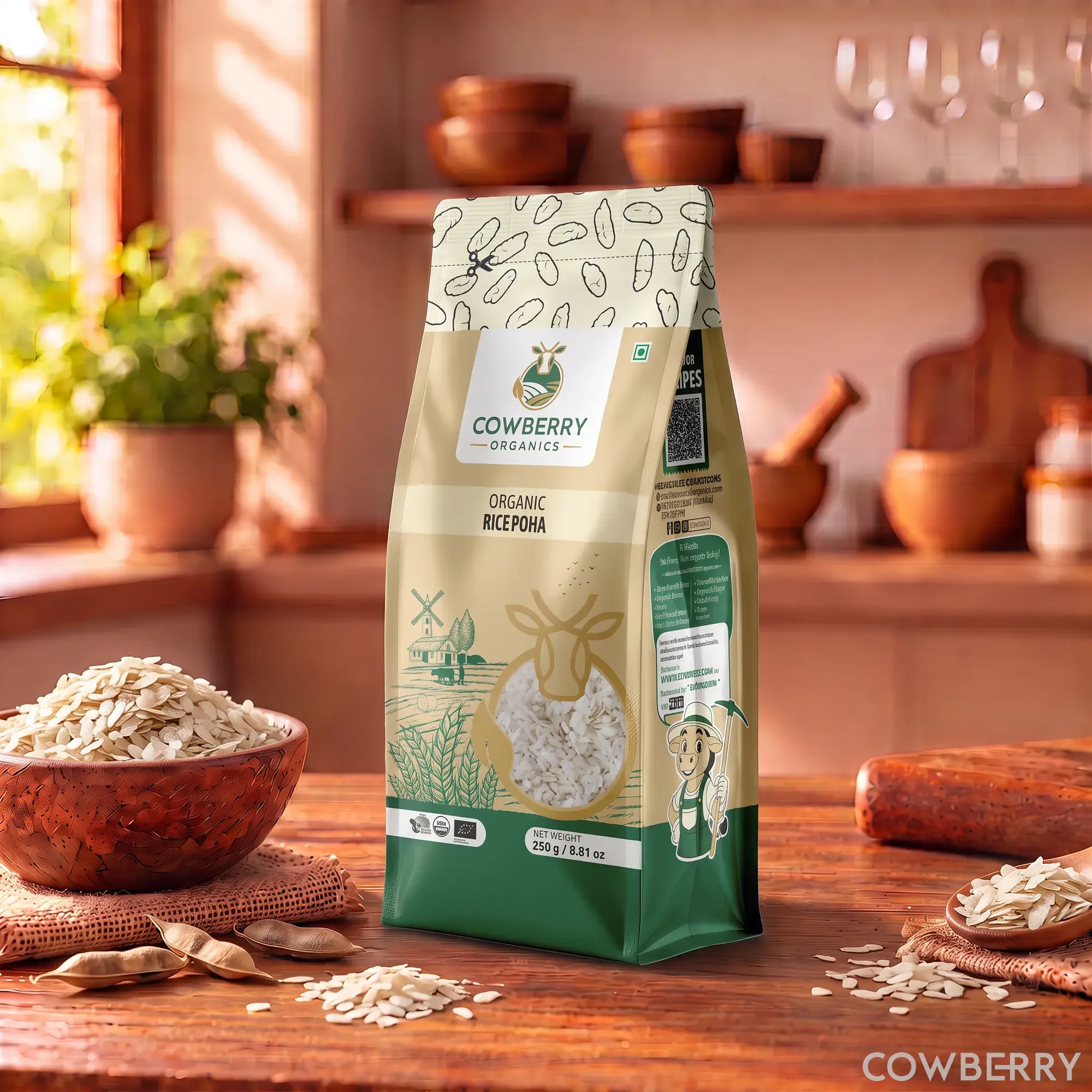
Whatever the grade, look for flat, even, unbroken flakes with a clean rice smell and no powder at the bottom of the pack; grey or musty flakes have been sitting too long. Check the pack for a line saying the flakes were processed without artificial whitening agents, since bright white is not by itself a sign of quality, and an organic pack should name its certification in full, for example India Organic, USDA & EU certified. Store the flakes airtight in a cool cupboard and use a dry spoon; in the monsoon a 250 or 500 g pack used within a month beats a large one that goes soft.
FAQs
How to make poha?
Rinse thick poha in a sieve and let it rest for five minutes with salt and a pinch of turmeric. Fry peanuts in hot oil and lift them out, crackle mustard seeds, then curry leaves, green chilli and onion; once the onion softens, fold in the poha and peanuts, cover for two minutes and finish with lemon and coriander. That is the everyday poha recipe; Indori poha steams the flakes instead.
What is poha made of?
Poha is made of rice and nothing else. The grain is soaked, heated, rolled flat under heavy rollers and dried, and the gap between the rollers decides whether the flakes come out thick or thin. Red poha comes from unpolished red rice put through the same steps.
How many calories in one plate poha?
About 294 kcal for a plate of kanda poha made by our recipe, a quarter of a batch that uses 200 g of poha, peanuts, two tablespoons of oil and a teaspoon of sugar. The 50 g of dry flakes in that plate is 177 kcal on its own; the oil, peanuts and sugar make up the rest. A plate of steamed Indori poha without its sev is about 248 kcal. Full breakdowns are on the poha calories page.
Which poha is good thick or thin?
Thick poha for anything cooked, steamed or soaked (kanda poha, Indori poha, upma, kheer), because it keeps its shape, and for chivda if you roast it slowly; thin poha for anything mashed, ground or softened in juices (cutlets, laddu, dadpe pohe), because it binds and softens fast. Both are made from rice; a 2007 study of commercial flakes found dietary fibre and phytin phosphorus fell as flakes got thinner, and the thick poha vs thin poha guide covers each grade.
Can diabetics eat poha?
Poha can be part of a diabetic diet in a measured portion. The University of Sydney database lists two India-tested poha dishes with a mean GI of 59, in the medium band. Keep to a small plate, add peanuts, vegetables and curd for protein and fibre, and skip the sev and sugar. If you take medicines for blood sugar, talk to your doctor or dietitian so the plate fits your meal plan.
How much protein in poha?
Raw poha has 7.44 g protein per 100 g (IFCT 2017), about the same as the rice it is made from. A plate of kanda poha gives about 5.8 g, roughly a third of it from the peanuts. To lift the number, add a katori of curd, sprouted moong or a boiled egg, or make dahi poha; poha itself is mostly carbohydrate.
References
- Indian Food Composition Tables (IFCT) 2017, ICMR-National Institute of Nutrition
- University of Sydney glycemic index database (GI search)
- Suma RC, Sheetal G, Jyothi LA et al. Influence of phytin phosphorous and dietary fibre on in vitro iron and calcium bioavailability from rice flakes. Int J Food Sci Nutr, 2007
Shop this article
Keep reading
Red rice vs brown rice: the fibre, GI and honest verdict
Red rice vs black rice: nutrition, glycemic index and which to choose
Red rice nutrition per 100g: calories, protein, fibre and GI