by COWBERRY

10 minute read
15 millet recipes for breakfast: dosa, upma, khichdi and porridge

Millet recipes for breakfast are the easiest way into millets, because dosa, upma, khichdi and porridge already exist in every Indian kitchen and only the grain changes. This roundup groups 15 of them by millet: ragi, jowar and bajra, then foxtail, little, kodo and barnyard, with full step-by-step pages for seven of them, two-line methods for the rest, and the numbers that help you pick the right grain.
Which millet for which breakfast
Eight millets are commonly grown in India (ICAR-IIMR), and three of them are everyday grains: ragi (finger millet) in Karnataka and Tamil Nadu, jowar (sorghum) in Maharashtra and Telangana, and bajra (pearl millet) in Rajasthan and Gujarat. For breakfast the choice is mostly about texture and season. Ragi flour makes the softest porridge and the darkest dosa, and it carries 364 mg calcium per 100 g (IFCT 2017), more than any other common Indian grain. Jowar is the mildest in taste and suits anyone who finds ragi too earthy; it has 9.97 g protein and 10.22 g fibre per 100 g, and its whole grain cooks up like barley for upma. Bajra is the winter grain, with 5.43 g fat and 6.42 mg iron per 100 g, and it makes the heavier khichdi and roti that suit cold mornings.
Foxtail, little, kodo and barnyard millet cook fastest of all, in 10 to 15 minutes without a pressure cooker, and taste closest to rice, so they slot into upma, pongal and idli with the least adjustment. The table below puts ragi, jowar and bajra side by side. The full set of names in every language, and how each millet is used, is in the guide to the types of millets in India; how they compare with rice on the plate is on millets vs rice.
| Nutrient | Ragi (finger millet) | Jowar (sorghum) | Bajra (pearl millet) |
|---|---|---|---|
| Energy (kcal) | 321 | 334 | 348 |
| Protein (g) | 7.2 | 10 | 11 |
| Fat (g) | 1.9 | 1.7 | 5.4 |
| Carbohydrates (g) | 67 | 68 | 62 |
| Dietary fibre (g) | 11 | 10 | 11 |
| Iron (mg) | 4.6 | 4 | 6.4 |
| Calcium (mg) | 364 | 28 | 27 |
| Magnesium (mg) | 146 | 133 | 124 |
| Potassium (mg) | 443 | 328 | 365 |
| Sodium (mg) | 4.8 | 5.4 | 4.1 |
| Zinc (mg) | 2.5 | 2 | 2.8 |
| Folate (mcg) | 35 | 39 | 36 |
| Glycemic index (GI) | 68 | 66 | 57 |
Per 100 g raw, edible portion. Composition: IFCT 2017 (ICMR-NIN). GI: University of Sydney GI database. — means not reported. These are average values for the food; the label on a pack gives the values for that product.
Ragi breakfast recipes: millet dosa, porridge and malt
Ragi dosa
An instant batter of ragi flour, rice flour, cumin, onion and green chilli, poured from a height so the dosa comes out lacy and crisp, dark red-brown with browned edges. No fermenting; the ragi dosa recipe makes eight in about 45 minutes.
Ragi porridge
Ragi flour whisked into cold water, poured into boiling water and cooked for 6 to 7 minutes to a smooth, thick porridge, sweet with jaggery and cardamom or savoury with buttermilk and salt. Known as ragi kanji in the south, it takes about 15 minutes from start to bowl; the ragi porridge recipe has the method and proportions.
Ragi malt
Ragi flour, sprouted if you have it, cooked in water into a thin, drinkable porridge and finished sweet with jaggery and cardamom, or savoury with sour buttermilk as ragi ambli. Many southern homes drink it at breakfast in the hot months. The ragi malt recipe has the steps.
Ragi idli
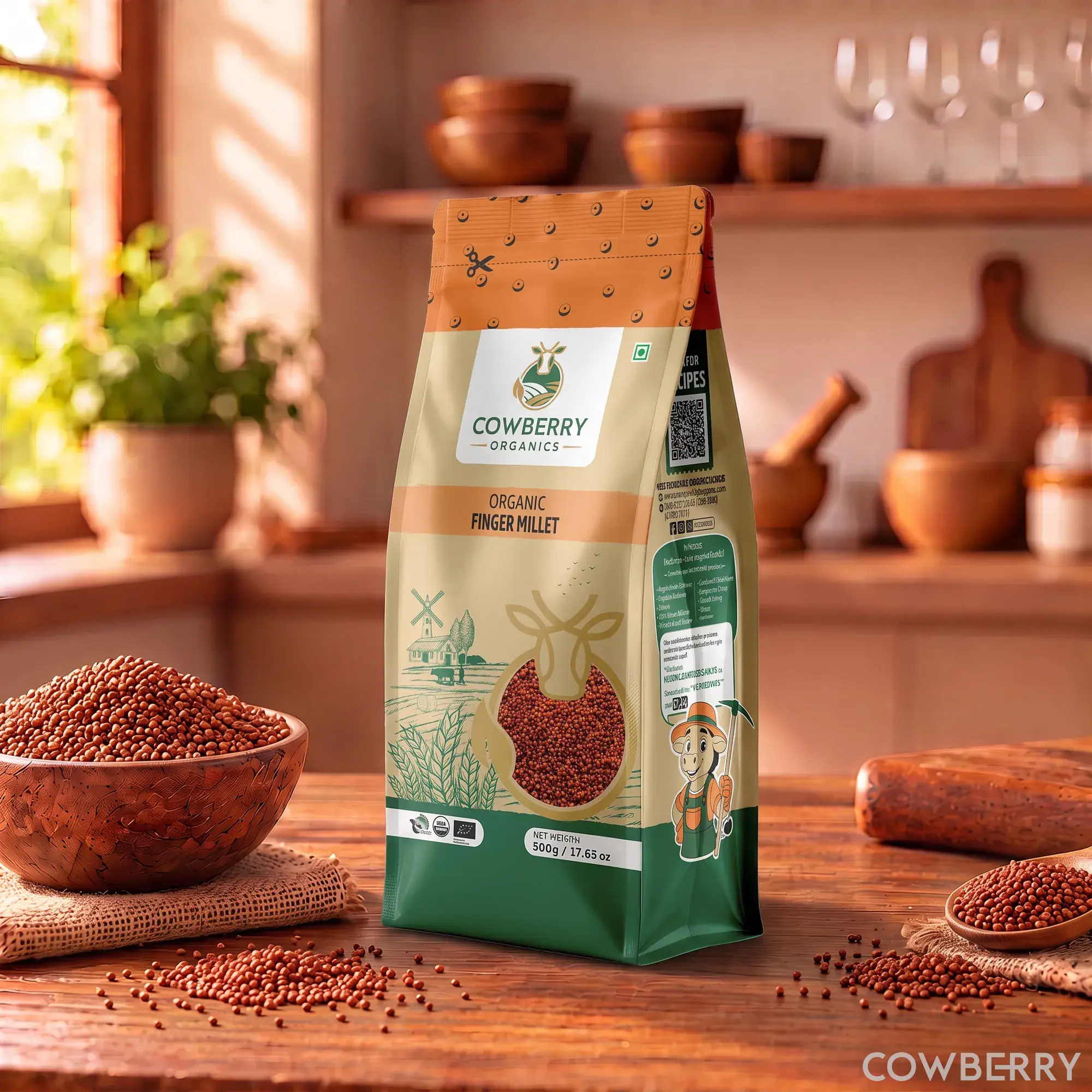
Replace a third of the rice in your usual idli batter with ragi flour, or soak 1 cup ragi grain with 1/2 cup urad dal, grind, ferment overnight and steam for 12 minutes. The idlis are soft, faintly sweet and brown; serve them with sambar and a spoon of ghee. Everything else made from the grain, including mudde, roti and laddu, is in the ragi recipes roundup, and the grain itself is explained in the ragi guide.
Jowar breakfast recipes: millet upma, millet dosa and uttapam
Jowar upma
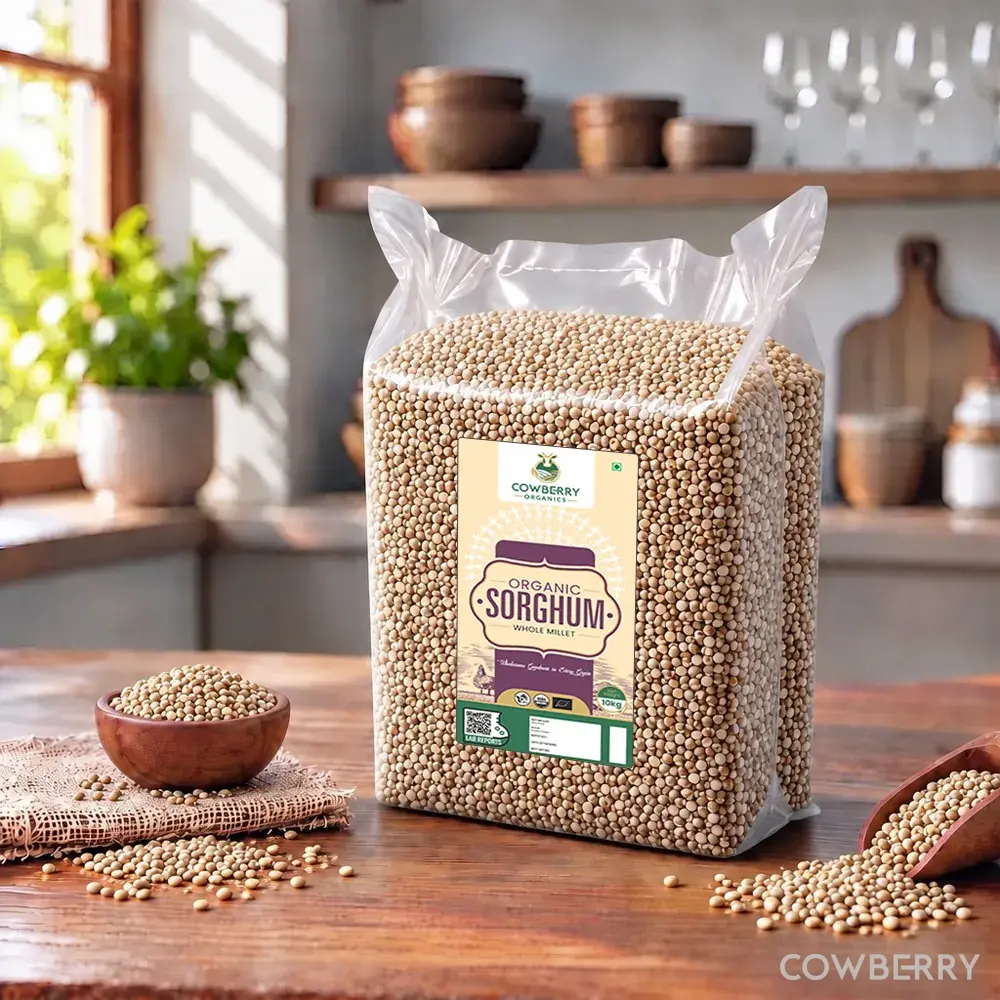
Whole sorghum grain, soaked overnight and pressure-cooked until tender, then tossed in a mustard, curry leaf, onion and carrot tempering with roasted groundnuts: a millet upma that stays separate-grained and packs well for a lunchbox. Full recipe: millet upma with whole jowar.
Jowar dosa
Jowar flour, rice flour and curd whisked into a thin batter, seasoned with crushed pepper and spread thin for a plain, crisp, pale golden millet dosa with no fermenting. Full recipe: millet dosa, eight in about 50 minutes.
Jowar uttapam
Make the jowar dosa batter a little thicker, pour a ladleful without spreading, and press chopped onion, tomato, green chilli and coriander into the top; cook covered on medium for 3 minutes, flip for 1 minute and serve with chutney. Thicker and softer than the dosa, it suits children and a packed breakfast. For bhakri, laddu and the rest, go to the jowar recipes roundup; the jowar page covers the grain itself.
Bajra breakfast recipes: millet khichdi, roti, raab and thepla
Bajra khichdi
Whole bajra soaked overnight and cracked in a mixer, then pressure-cooked with split moong dal and finished with a ghee, cumin and hing tempering. In Rajasthan it is mostly a winter dinner, but a bowl with curd, jaggery and a spoon of ghee makes a filling breakfast on a cold morning. Full recipe: bajra khichdi.
Bajra roti
Bajra flour kneaded with boiling water, patted out by hand, cooked on the tawa and puffed on the flame. Hot from the tawa with white butter, jaggery and a glass of buttermilk, it makes a filling winter breakfast. Full recipe: bajra roti.
Bajra raab
Whisk 2 tablespoons of bajra flour into 2 cups of water and cook it, stirring, for 10 minutes with a piece of jaggery, a pinch of ajwain and dry ginger powder until it thickens to a thin porridge; stir in a spoon of ghee and drink it hot from a glass. This is the Rajasthani winter warmer, and a spoon of ghee on top is traditional.
Bajra methi thepla
Knead 1 cup bajra flour with a handful of chopped methi leaves, a spoon of curd, turmeric, chilli powder, sesame seeds and salt, using warm water; roll thin between plastic sheets and cook on the tawa with a little oil until spotted on both sides. When to eat bajra, and who should limit it, is on the bajra page.
Small millet breakfasts: foxtail upma, little millet pongal, kodo idli and barnyard khichdi
These four millets change name from one language to the next; the names below follow the list published by ICAR-IIMR. Foxtail millet is kangni or kakum in Hindi, navane in Kannada, korra in Telugu and tenai in Tamil. Little millet is kutki in Hindi, same or save in Kannada, samalu in Telugu and samai in Tamil. Kodo millet is kodon in Hindi, harka in Kannada, arikelu in Telugu and varagu in Tamil. Barnyard millet is sanwa in Hindi, oodalu in Kannada, udalu in Telugu and kuthiravaali in Tamil. All four are cooked like rice, with about 2.5 cups of water to a cup of grain, and none needs a pressure cooker.
Foxtail millet upma
Rinse 1 cup foxtail millet, drain and dry-roast it for 3 minutes. Make the usual upma tempering of mustard, urad dal, curry leaves, onion, green chilli and vegetables, add 2.5 cups of hot water and salt, tip in the millet, cover and cook on low for 12 minutes; fluff and finish with lemon.
Little millet pongal
Pressure-cook 1 cup little millet with 1/2 cup moong dal, 4 cups water and turmeric for 3 whistles (or simmer for 20 minutes), mash lightly, and pour over it a tempering of ghee, cumin, crushed pepper, ginger, cashews and curry leaves. Softer and lighter than rice pongal; serve with coconut chutney.
Kodo millet idli
Soak 2 cups kodo millet and 1/2 cup urad dal separately for 5 hours with a pinch of methi seeds, grind the dal fluffy and the millet fine, mix with salt and ferment overnight. Steam for 12 minutes; the idlis are pale cream and a little denser than rice idlis.
Barnyard millet khichdi
Rinse 1 cup barnyard millet (sanwa, the fasting millet) and cook it with 1/2 cup moong dal, 4 cups water, turmeric, ginger and salt for 20 minutes until soft, then temper with ghee, cumin and green chilli. During fasts use rock salt and skip the dal for a plain sanwa khichdi with groundnuts.
Making millet breakfasts work on weekdays
Millets ask for one change of habit: ragi, jowar and bajra grains need 8 hours of soaking (the small millets only a rinse, or 20 to 30 minutes if you have time), and the flour doughs need hot water. Everything else is planning.
- Soak at night, cook in the morning. Put the grain to soak after dinner; a pressure-cooked batch of jowar or bajra keeps in the fridge for up to two days and turns into upma, khichdi or a salad in ten minutes.
- Keep two instant batters in your head. Ragi dosa and jowar dosa both skip soaking and grinding and are on the tawa in about 20 minutes; whichever millet dosa recipe you like more becomes the weekday one.
- Buy flour small, grain large. Once milled, whole millet flour starts to go rancid, because oil from the crushed germ oxidises (ICAR-IIMR); for bajra flour a 2025 review gives a keeping time of no more than a week. Buy small packs, use them quickly and refrigerate them in the monsoon, as explained in how to store atta. Whole grain, with its germ unbroken, keeps far longer in an airtight tin.
- Rotate the millets. Ragi one week, jowar the next, bajra in winter and a small millet in between: rotation keeps breakfasts interesting and keeps any one grain from becoming the whole diet.
- Start children on the mild ones. Jowar dosa, ragi porridge and little millet pongal are the gentlest introductions; the darker, earthier ragi dosa and bajra roti come later.
FAQs
What is millet?
Millet is the common name for a group of small-seeded cereal grasses grown for grain in dry regions. ICAR-IIMR counts eight in common cultivation in India: sorghum (jowar), pearl millet (bajra), finger millet (ragi), and foxtail, little, kodo, barnyard and proso millet. All are naturally gluten-free and are eaten as roti, porridge, dosa, idli and rice-style dishes; ICAR-IIMR in Hyderabad is the national research institute for them.
Is quinoa a millet?
No. Millets are grasses, while quinoa grows on a broad-leaved plant, Chenopodium quinoa, so it sits outside the group. It is cooked much like the small millets and is also gluten-free, which is why the two get grouped together. Foxtail, little and kodo millet are the Indian grains that behave most like quinoa on the plate, and they are grown here.
Does millet flour have protein?
Yes. Ragi, jowar and bajra flours are ground from the whole grain and keep its protein: per 100 g, bajra gives 10.96 g, jowar 9.97 g and ragi 7.16 g (IFCT 2017). A breakfast gets more when the millet is cooked with moong dal, as in bajra khichdi and little millet pongal, or eaten with curd or buttermilk.
Is oats a millet?
No. Oats are a cereal of their own, and ICAR-IIMR's roll of Indian millets, eight crops from sorghum to little millet, does not include them. If you like oats porridge for breakfast, ragi porridge and bajra raab are the closest Indian millet equivalents for a warm morning bowl.
Is rice a millet?
No. Rice is a wetland cereal grass in its own group, while millets are the dryland grasses. Most rice is polished to remove its bran and eaten white, whereas ragi, jowar and bajra are usually ground whole, bran and all, and ICAR-IIMR notes that millet bran is rich in dietary fibre: ragi has 11.18 g fibre per 100 g. The full comparison, including GI and what to eat daily, is on millets vs rice.
Which millet flour is good in summer?
Jowar and ragi, going by custom. Traditional Indian food lore counts both as cooling and bajra as heating, so bajra roti is kept for winter while jowar bhakri, ragi ambli and jonna ambali, cold buttermilk porridges, belong to summer. The labels come from tradition rather than any measured effect, so eat whichever flour you like in any month.
References
- Indian Food Composition Tables (IFCT) 2017, ICMR-National Institute of Nutrition
- ICAR-Indian Institute of Millets Research: millets information and vernacular names
- Nutritional and health benefits of millets, ICAR-Indian Institute of Millets Research (PDF)
- Naraharasetti B, Chakraborty S. Thermal and nonthermal processing of pearl millet flour: impact on microbial safety, enzymatic stability, nutrients, functional properties, and shelf-life extension. Compr Rev Food Sci Food Saf, 2025
Shop this article
Keep reading
Rajma recipe: 5 ways to cook rajma beans at home
Dalia recipes: 10 easy broken wheat dishes from khichdi to laddu
Amaranth recipes: 8 rajgira dishes from roti to ladoo