by COWBERRY

9 minute read
12 jowar recipes: bhakri, upma, dosa and more

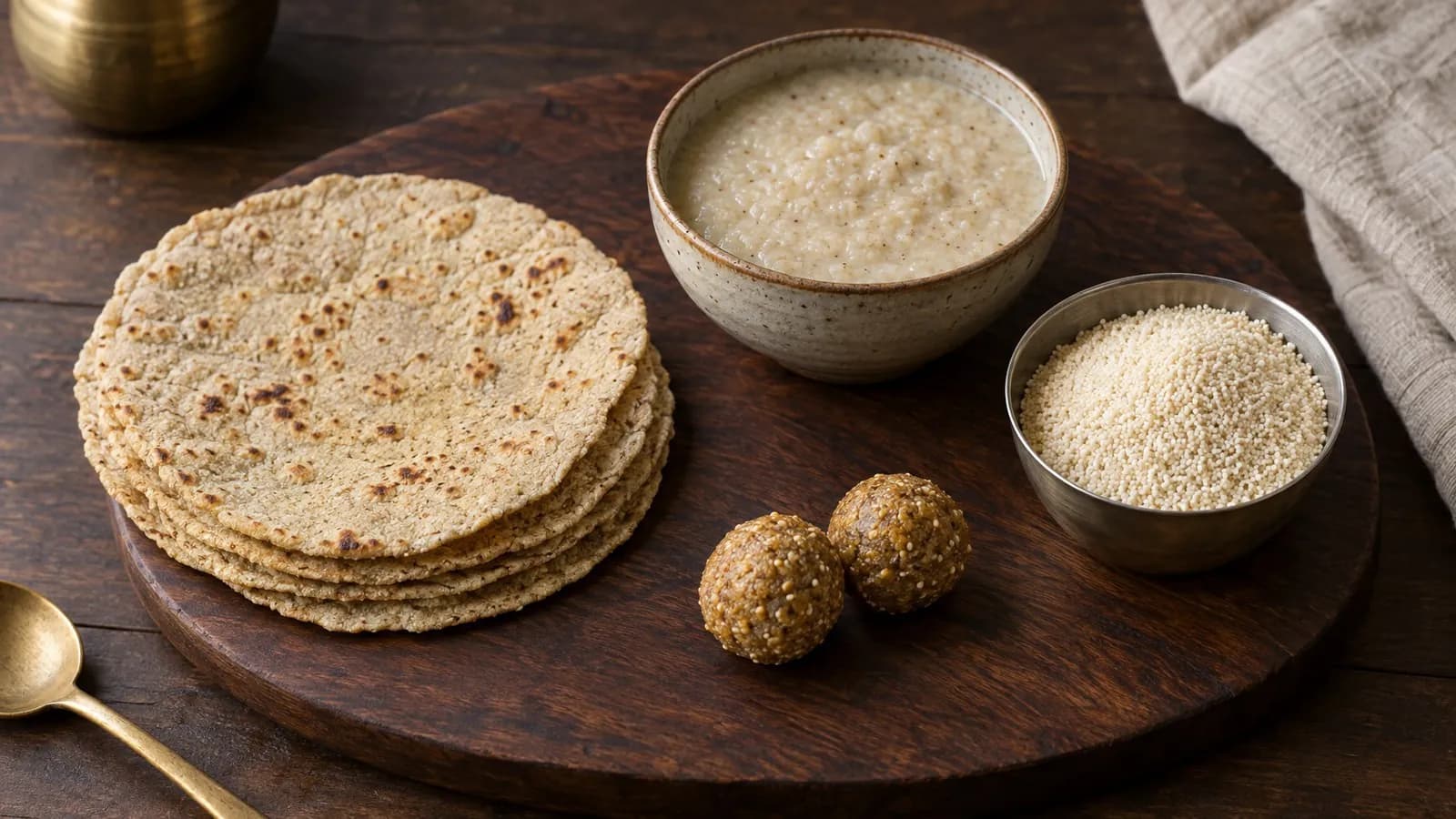
These 12 jowar recipes run from breakfast to dessert and use the two main forms of jowar sold in India: jowar atta (sorghum flour) for bhakri, dosa, thalipeeth and laddu, and the whole sorghum grain for upma, khichdi, pulao, salad and popping. Three link to full step-by-step recipes; the other nine are two-line methods with enough detail to cook from, including any overnight soak.
Jowar atta recipes or whole sorghum recipes: which form to buy
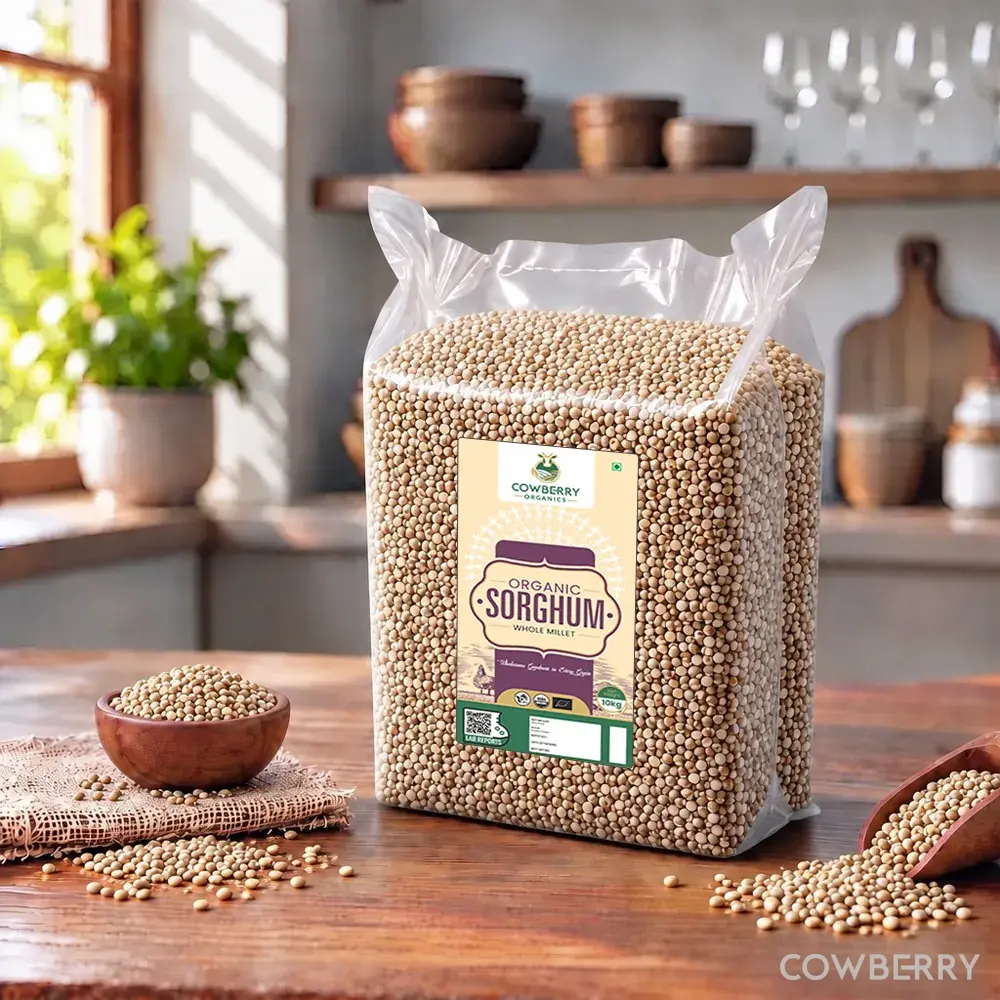
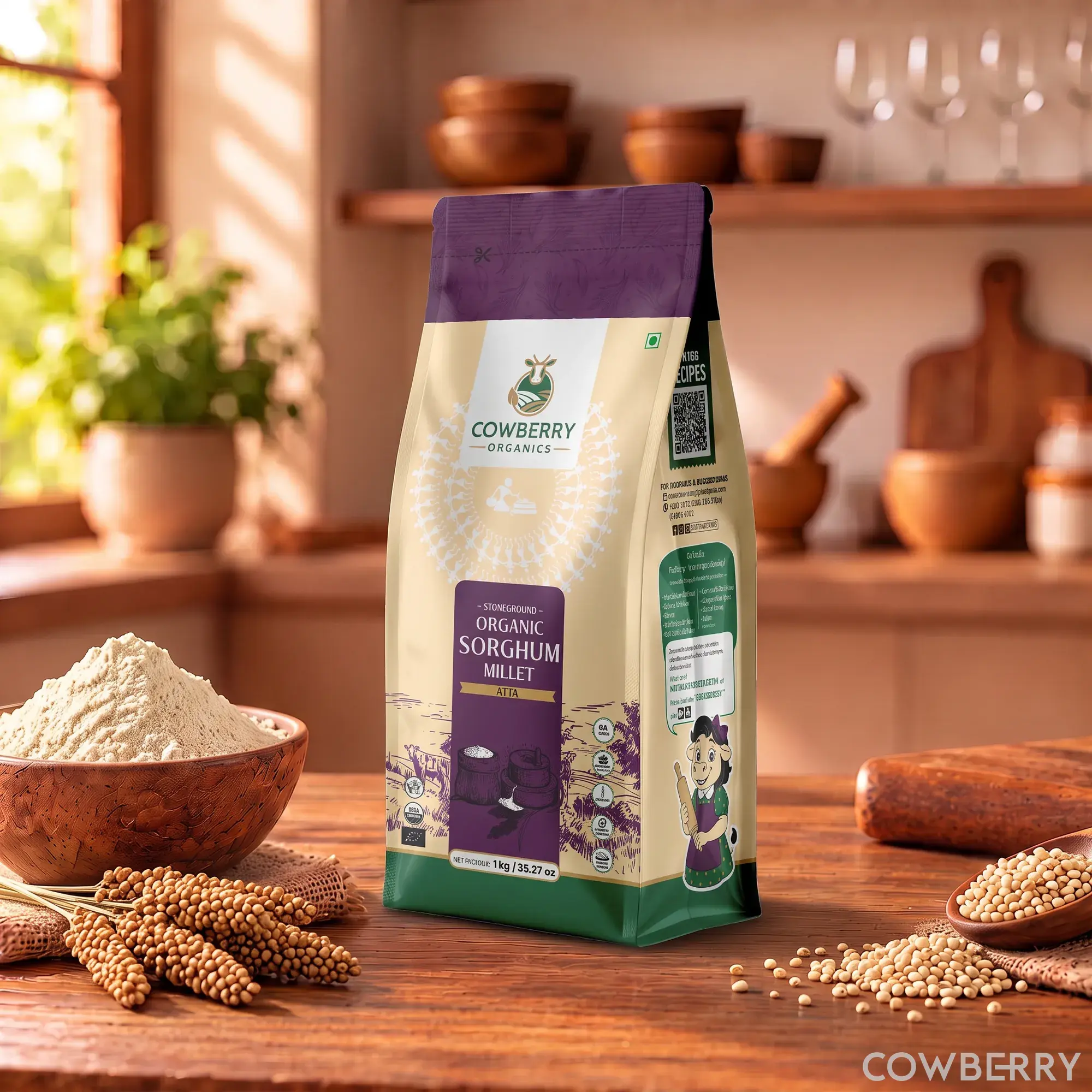
Jowar reaches the kitchen in two forms, and most jowar recipes are written for one or the other. Jowar atta (sorghum flour) is the everyday form in Maharashtra, north Karnataka and Gujarat: it makes bhakri, thalipeeth, dosa, ambali and laddu, and because it has no gluten, bhakri dough needs boiling water and hand-patting. Whole jowar grain is soaked overnight and pressure-cooked, then used like rice or barley in upma, khichdi, pulao and salads, or popped dry in a pan like popcorn. A third form, jowar rava (broken grain), behaves like a coarse sooji and is used in the upma and idli methods below.
Whichever form you cook, the grain is the same: per 100 g raw, IFCT 2017 lists 334 kcal, 9.97 g protein, 10.22 g fibre and 3.95 mg iron, and the University of Sydney database gives the boiled grain a GI of 66, a medium value. The per-roti figures are worked out on the jowar roti calories page, and what those numbers mean for daily eating is on the jowar atta benefits page. The flour keeps far less well than the whole grain, so buy it in 1 kg packs. If you are new to millets, start with the flour recipes, which need no soaking, and read the jowar guide for names, storage and what to check when buying.
Jowar breakfast recipes: upma, dosa, idli and ambali
Jowar upma
The grain goes in whole: an overnight soak, a spell in the pressure cooker until each kernel is tender but still chewy, then a toss in a tempering of mustard seeds, curry leaves, onion and carrot, finished with roasted groundnuts and lemon. It holds up cold in a lunchbox. The full millet upma recipe gives the cooker timings and a quicker jowar rava version.
Jowar dosa
An instant batter of jowar flour, rice flour and curd, seasoned with crushed pepper and spread thin on a hot tawa: plain, crisp and pale golden, with no grinding or fermenting. The step-by-step millet dosa recipe makes eight in about 50 minutes.
Jowar idli
Soak 1/2 cup urad dal and, in a second bowl, 1 cup jowar rava, both for 5 hours. Grind the dal to a smooth, fluffy batter, stir in the drained rava, salt and a spoon of curd, and leave it overnight in a warm place to ferment. Steam in greased idli plates for 12 minutes; the idlis are softer and a shade greyer than rice idlis and take chutney well.
Jowar ambali
Whisk 3 tablespoons of jowar flour into a cup of cold water, cook it stirring for 8 to 10 minutes until it thickens to a thin porridge, then cool and thin with buttermilk, salt, a little chopped onion and green chilli. In Telangana this is jonna ambali, drunk cold in summer; serve it in a steel tumbler.
Jowar bhakri, thalipeeth, khichdi and pulao for lunch and dinner
Jowar bhakri
The Maharashtrian jowar roti. The dough is mixed with boiling water and shaped by patting, not rolling; each bhakri cooks on a hot tawa under a film of water and then puffs over the flame. The full bhakri recipe makes six bhakris from 40 g of flour each and walks through the patting, the puffing and the thickness to aim for. Eat them with pithla and thecha.
Jowar thalipeeth
Mix 1 cup jowar flour with 2 tablespoons besan, a chopped onion, coriander, green chilli, cumin, turmeric and salt, and knead with warm water to a soft dough. Pat out a quarter of the dough at a time on a greased plastic sheet, poke three or four holes, and shallow-fry each on the tawa with oil in the holes until both sides are crisp; serve with curd and thecha.
Jowar khichdi
Pressure-cook 1 cup soaked whole jowar with 1/2 cup moong dal, turmeric and 4 cups water for 6 whistles until soft, then pour a tempering of ghee, cumin, hing, ginger and green chilli over it. It is heavier and chewier than a rice khichdi; add chopped vegetables with the dal for a one-pot dinner and eat it with curd and papad.
Jowar pulao
Cook soaked whole jowar as for upma, drain and cool. Fry whole spices, onion, ginger-garlic paste and mixed vegetables in ghee, add the cooked jowar, salt and a squeeze of lemon, and toss until hot; the grains stay separate like a barley pulao. Serve with raita.
Jowar snacks and sweets: popped jowar chaat, salad, tikki and laddu
Popped jowar chaat
Heat a heavy kadhai until very hot, add a handful of dry whole jowar, cover and shake; the grains pop in about 30 seconds into tiny white puffs (not all of them will, and that is normal). Toss the popped jowar with chopped onion, tomato, cucumber, coriander, chaat masala, lemon and a little sev, and eat at once before it softens.
Jowar salad
Cooked, cooled whole jowar tossed with cucumber, tomato, boiled chana or sprouts, coriander, roasted groundnuts, lemon, salt and a pinch of cumin powder; a spoon of cold-pressed groundnut oil brings it together. It keeps for a day in the fridge and makes a tiffin lunch that does not go soggy.
Jowar tikki
Mash a cup of cooked whole jowar with a boiled potato, grated carrot, ginger, green chilli, coriander, salt and 2 tablespoons of jowar flour to bind. Shape into small flat tikkis and shallow-fry on a tawa until crisp on both sides; serve with green chutney.
Jowar laddu
Stir 1 cup jowar flour in a dry kadhai over a low flame until it turns a shade darker and smells nutty, 8 to 10 minutes. Add 4 tablespoons of melted ghee and roast for 2 minutes more, then cool slightly and mix in 100 g jaggery powder, cardamom and chopped nuts. Press into laddus while warm, working in a spoon more warm ghee if the mix will not hold; they keep for two weeks in a tin.
Five rules for cooking with jowar flour
Most failures with jowar atta recipes come down to gluten, or rather its absence. These five rules fix nearly all of them.
- Use boiling water for bhakri dough. Cold water gives a dough that cracks; boiling water gelatinises some of the starch so the dough holds together. Thalipeeth, which has besan and onion in it, needs only warm water.
- Knead warm, and pat rather than roll. Knead with a wet palm while the dough is warm, and pat the roti out on a dusted board. If you must roll, do it between two sheets of plastic.
- Add rice flour for crispness. A quarter cup of rice flour in a cup of jowar flour makes the dosa crisp; a pure jowar batter gives a soft, fragile result.
- Buy fresh flour. Whole jowar flour carries oil from the crushed germ, which slowly turns rancid and bitter; smell the pack before you use it, and keep it airtight, in the fridge when the weather is humid.
- Soak the whole grain. Eight hours of soaking is the difference between a chewy, pleasant grain and one that can stay hard at the centre after many whistles.
The whole grain and the flour come from the same plant, called sorghum in English and jola, jonna, cholam and jwari across the south and west; every regional name is on the jowar in English page.
FAQs
Does jowar have protein?
Yes. Raw jowar has 9.97 g protein per 100 g (IFCT 2017), a little less than whole wheat and more than milled rice. A bhakri from 40 g of flour carries close to 4 g. Like other cereals its protein is short of lysine, so pair jowar with dal, curd, sprouts or groundnuts, as the khichdi, salad and upma above do.
Is jowar good for health?
As a daily grain, yes: per 100 g it gives 10.22 g fibre, 3.95 mg iron and 133 mg magnesium, contains no gluten, and its GI of 66 is a medium value. It works best in rotation with wheat, ragi, bajra and rice rather than as the only grain, in normal portions of one to two bhakris a day. The full list, with the side effects, is on the jowar atta benefits page.
Does jowar have carbs?
Yes, jowar is a cereal and carbohydrate is its main component: 67.68 g per 100 g raw (IFCT 2017), in the same range as wheat and rice. That carbohydrate comes with 10.22 g of fibre, close to whole wheat and more than three times what milled rice carries. One bhakri made from 40 g of flour holds about 27.1 g of carbs.
Is jowar gluten free?
Yes. Sorghum has no gluten (ICAR-IIMR); that is why the bhakri dough gets boiling water and patting, and the dosa batter some rice flour. None of the twelve recipes here uses wheat, barley or rye, so bind thalipeeth with besan and tikki with jowar flour, never atta. For coeliac disease, check every pack, spice mixes and sev included, for a gluten or shared-mill warning, since jowar milled alongside wheat can pick up traces of it.
Can sorghum be popped like popcorn?
Yes. Whole jowar pops in a dry, very hot, covered kadhai in about 30 seconds into small white puffs, smaller than popcorn and nuttier in taste; expect some grains to stay hard. Popped jowar is eaten as a chaat with onion, tomato and lemon, mixed into chivda, or ground into a flour for instant porridge. Use dry, well-cleaned grain; damp grain scorches instead of popping.
How long to soak sorghum before cooking?
Eight hours, or overnight, in plenty of water at room temperature. Soaked jowar pressure-cooks in 5 to 6 whistles to a chewy, barley-like grain; unsoaked jowar can stay hard after 10 whistles. Rinse it well before soaking and cook it in fresh water. If you forget, soak in hot water for 2 hours and cook for 8 whistles, checking that the grains have split slightly at the seam.
Why does my jowar roti break?
Because jowar has no gluten, so nothing holds the dough together except gelatinised starch and moisture. Rotis break when the water was not boiling, when the dough was kneaded cold or left uncovered to dry, when it is rolled instead of patted, or when the flour is old. Use boiling water, knead warm with a wet palm, pat on a dusted board and cook on a hot tawa.
Can jowar be eaten in summer?
Yes. Jowar is eaten right through the hot months in Maharashtra and Telangana: as bhakri at meals, as jonna ambali (the cold buttermilk porridge above) and as popped jowar. No special rule applies in summer; serve it with plenty of water, curd or buttermilk, the way the ambali is made.
References
- Indian Food Composition Tables (IFCT) 2017, ICMR-National Institute of Nutrition
- University of Sydney glycemic index database (GI search)
- ICAR-Indian Institute of Millets Research: millets information and vernacular names
- Nutritional and health benefits of millets, ICAR-Indian Institute of Millets Research (PDF)
Shop this article
Keep reading
Rajma recipe: 5 ways to cook rajma beans at home
Dalia recipes: 10 easy broken wheat dishes from khichdi to laddu
Amaranth recipes: 8 rajgira dishes from roti to ladoo