by COWBERRY

12 minute read
How to store atta, grains and dals in the monsoon (and keep weevils out)

How to store atta in the monsoon comes down to three words: airtight, dry and small. Damp turns flour musty and lets mould grow, and warmth makes millet flours go rancid sooner, so from June to September the aim is to keep moisture out and buy only what you will finish in a month. The same rules, with small changes, cover whole grains, dals and poha.
Short answer: how to store atta, grains and dals in the rains
Store atta in a dry, airtight steel or glass container, filled close to the top, in the coolest cupboard you have, and buy it a month at a time. Move millet flours (bajra, jowar, ragi) to the fridge or freezer for the whole monsoon. Sun-dry whole grains and dals for a day before they go into their bins, add a few dried bay leaves or neem leaves if that is your family's habit, never top up an old batch with a new one, and check dals once a fortnight for weevils. Throw out anything that smells musty, feels damp, shows mould or has weevils, and do not wash and reuse it. The rest of this page is those rules in detail, with a table of how long each staple keeps.
How to store atta and wheat flour step by step
Keep it airtight, and keep it full
The open pack is the problem, not the flour. Move atta into a steel dabba with a tight lid or a glass jar with a rubber seal, and pick a size that the flour fills close to the top, so that little damp air is shut in with it. If you buy 5 kg, split it into containers rather than opening one large bin every day. A zip pouch inside the dabba adds a second barrier.
Keep it dry
Wash and sun-dry the container before every refill and let it cool completely before the flour goes in. Never scoop with a wet or freshly washed spoon; keep a dry steel spoon in the flour. Wipe the rim and the inside of the lid before closing, because that is where damp settles.
Keep it cool
Pick a shelf that stays cool and dark, well away from the stove, the sink and the window. Whole-grain flours that carry their bran and germ, such as sharbati atta and khapli atta, keep for a shorter time than refined flour, because the oil from the crushed germ turns rancid, and warm, damp air hurries it along. Through the monsoon the fridge is the better place for a sealed container of atta: it stays cool, and the seal keeps out damp and smells.
Buy small
A 1 kg pack that is finished in three or four weeks is a better buy than a 5 kg pack that sits open for three months. Check the milling or packing date and pick the most recent pack, whether the flour is for everyday rotis or a khapli atta roti.
Freezer for millet flours
Bajra flour keeps for only about a week once milled, and jowar and ragi flours turn rancid in time too. Through the monsoon, keep them in a sealed pouch or box in the freezer, take out only what you need, and let it come to room temperature before kneading. The section below explains why millet flour turns, and why bajra needs the most care.
Traditional tricks and the checks that matter
Bay leaves, neem leaves and cloves
Many Indian kitchens keep dried neem leaves in the grain bin, a few bay leaves in the atta or a handful of cloves in the dal jar. Of the three, only neem has support on this page's reference list: India's dietary guidelines from ICMR-NIN describe dried neem leaves in storage bins as a traditional practice known to keep some infestations away. Bay leaves and cloves are family habit rather than tested method. None of the three replaces an airtight, dry container; they go in alongside one.
Sun-dry grains and dals before storing
Spread whole wheat, rice, millets and dals on a clean sheet in strong sun for a day, let them cool, then bin them. The same guidelines ask for food grains to be dried well and kept in airtight containers, to protect them from moisture and from damage by bacteria and toxin-producing moulds, and the FAO's handbook on grain storage gives a chapter to drying methods, natural and solar drying among them. Do not sun-dry flour; it only picks up dust.
Never mix old and new
Finish a batch, wash and dry the container, then refill. Topping up carries dust, insects and eggs from the old stock straight into the new.
Check dals every fortnight
Look for tiny holes in the grains, fine powder at the bottom of the jar, webbing, or the insects themselves. If you find any, let the batch go: the dietary guidelines count insects among the things that make food unsafe and ask for food free from infestation. Wash and sun-dry the jar before it is filled again. Every dal, from toor dal to moong, chana and urad, needs this fortnightly look during the rains.
Common mistakes when storing atta and dals in the monsoon
- Buying the big pack in July. Five kilos of atta opened in the rains will not last the season; buy monthly.
- Leaving flour in its own pack after opening. A folded-over pack is not airtight; decant it.
- Keeping the atta dabba next to the stove. Heat and steam from cooking are exactly what flour and dals need to be kept away from.
- The wet spoon. One damp scoop can start a musty patch in the jar.
- Topping up. Finish the old batch and clean the jar before the new one goes in.
- An open bowl in the fridge. Flour in the fridge must be sealed, or it draws in moisture and smells from everything around it.
- Washing dals before storing. Wash just before cooking, never before storing; washed dal is hard to dry fully at home.
- Relying on bay leaves alone. Leaves in a loose-lidded jar are no substitute for a tight lid.
- Sieving out weevils and using the rest. Once insects are in a batch, it has gone; let it go and clean the jar.
- Keeping millet flour for months. Bajra flour in particular is a week's supply, not a season's.
How long each keeps in the monsoon: time and quantity table
These are working figures for an ordinary Indian kitchen in the rains, not laboratory results, with the flour or grain in an airtight container from a recent pack. The one figure taken from a study is the week for bajra flour, from the 2025 review described below. Dry-season shelf life is longer for everything, and every figure shortens if the container is opened often or kept near the stove.
| Staple | Room temperature in the monsoon | Fridge or freezer | Buy at a time | Signs it has turned |
|---|---|---|---|---|
| Whole grains (wheat, khapli, rice, whole millets) | About 6 months, sun-dried first | Not needed | 5 to 10 kg if the storage is dry, otherwise 2 to 5 kg | Musty smell, webbing, clumped or warm grain |
| Wheat atta (sharbati, khapli, multigrain) | About 1 month | About 2 months in the fridge, sealed | 1 kg | Flat or musty smell, lumps, a bitter roti |
| Millet flours (bajra, jowar, ragi) | Bajra about 1 week; jowar and ragi a few weeks | About 1 month in the fridge, about 3 months in the freezer | 500 g to 1 kg | Bitter taste, sharp or soapy smell |
| Dals (toor, moong, chana, urad) | About 3 months | Not needed | 1 to 2 kg | Holes in the grains, powder at the bottom, webbing, live insects |
| Besan and other dal flours | About 1 month | About 2 months in the fridge | 500 g | Bitter or musty smell, lumps |
| Poha (rice flakes) | About 1 month | Not needed; keep airtight | 500 g | Soft, stale or musty flakes, off smell |
Two notes on the table. Whole grains outlast every flour because their germ is still whole; milling crushes it, and the next section explains what that sets off. And poha is thin and flat, so it needs an airtight jar as much as flour does.
Why millet flour turns bitter in the monsoon
Of the three millet flours, bajra (pearl millet) carries the most fat, and that fat is why it turns so quickly. ICAR-IIMR's handbook on millets describes pearl millet as higher in fat than other cereals and notes that these lipids are generally held responsible for the loss of quality in pearl millet meal during storage. Milling sets the process going. The same handbook explains that dry-milled flour keeps poorly because its germ has been crushed: oil released from the broken germ cells oxidises into a rancid smell and flavour. India's dietary guidelines name humidity, temperature and storage time among the conditions that affect food quality, so a warm, damp kitchen shortens a flour's life further.
Two papers on the reference list look at this closely. Goyal and Chugh (2017) kept flour from 21 pearl millet genotypes in covered aluminium boxes at 37 °C for 30 days; flours with more fat tended to show a bigger increase in fat acidity, which the authors read as a sign that lipolytic, or fat-splitting, enzymes play the larger part. A 2025 review by Naraharasetti and colleagues says plain milled pearl millet flour cannot be kept for more than a week because of rancidity and off-flavour, and that dry heating, blanching, microwaving or added antioxidants lengthen its shelf life by up to 30 days.
For the home kitchen the answer is simpler: buy bajra flour in small packs from a recent milling, keep it in the freezer through the monsoon, or buy whole bajra and have a week's worth ground at a time. Jowar and ragi carry far less fat than bajra, but their flours are milled with the germ as well, so the same rules apply.
Mould and aflatoxin: when to throw a batch out
Grain stored damp grows mould, and some moulds make mycotoxins, aflatoxin among them. The FAO's handbook on mycotoxins in foodgrains gives a whole section to the physical side of keeping them out of stored grain, from drying to moisture meters. Its methods for detecting aflatoxin need testing equipment, so at home the practical rule is to judge a batch by its condition and let a doubtful one go rather than try to rescue it.
Throw out any grain, dal or flour that shows mould or discoloured patches, that has caked into lumps, that smells musty or sour, or that has been wet. Do not wash, sun-dry and reuse it. Several of the handbook's aflatoxin chapters deal with maize and groundnuts, so be strictest with those. Buy from a reliable source, which the dietary guidelines say improves the chance of good-quality, fresh food, and keep your own bins dry.
FAQs
How do I keep insects away from atta in the monsoon?
Keep the atta in a dry, airtight steel or glass container, filled close to the top and kept away from the stove, and buy only a month's supply at a time. Never top up an old batch with a new one, and dry the container in the sun before each refill. Dried neem leaves can go in as a traditional extra, never as a replacement for the sealed container.
How long does atta last in the monsoon?
About a month at room temperature in an airtight container, and about two months sealed in the fridge. These are working figures: a pack opened often, or kept near the stove, turns sooner. A flat, musty smell or a bitter roti means the batch has turned; buy 1 kg packs and finish them.
Can I store atta in the fridge?
Yes. COWBERRY's own advice for its sharbati atta is to keep it sealed somewhere cool and dry, or in the fridge in warm climates, and the monsoon is both warm and damp. Keep the atta sealed in a container or zip pouch so it takes in no moisture or smells, and take out a day's flour at a time. Millet flours (bajra, jowar, ragi) can go in the freezer instead.
How do I store dal for a long time without weevils?
Sun-dry the dal for a day, cool it, and store it in a dry, airtight container away from heat. Buy one to two kilos at a time, finish a batch before opening the next, and check the jar every fortnight for holes, powder or webbing. If insects turn up, throw the batch out and clean the jar before refilling.
Why does bajra flour taste bitter?
Because it has gone rancid. Pearl millet is richer in fat than other cereals, and once the grain is milled, oil from the crushed germ oxidises and the fat breaks down. A 2025 review found that plain milled bajra flour cannot be kept for more than a week. Buy small packs from a recent milling, keep the flour in the freezer, or grind whole bajra a week at a time.
Is it safe to eat atta or dal that had weevils?
The dietary guidelines from ICMR-NIN say not: they count insects among the things that make food unsafe and want food free from infestation and insect remains. Throw out a batch that had weevils rather than sieving it and using the rest, along with anything that shows webbing, a musty smell, damp or mould. Then wash the container, dry it in the sun and refill it with a fresh pack.
What is sharbati atta?
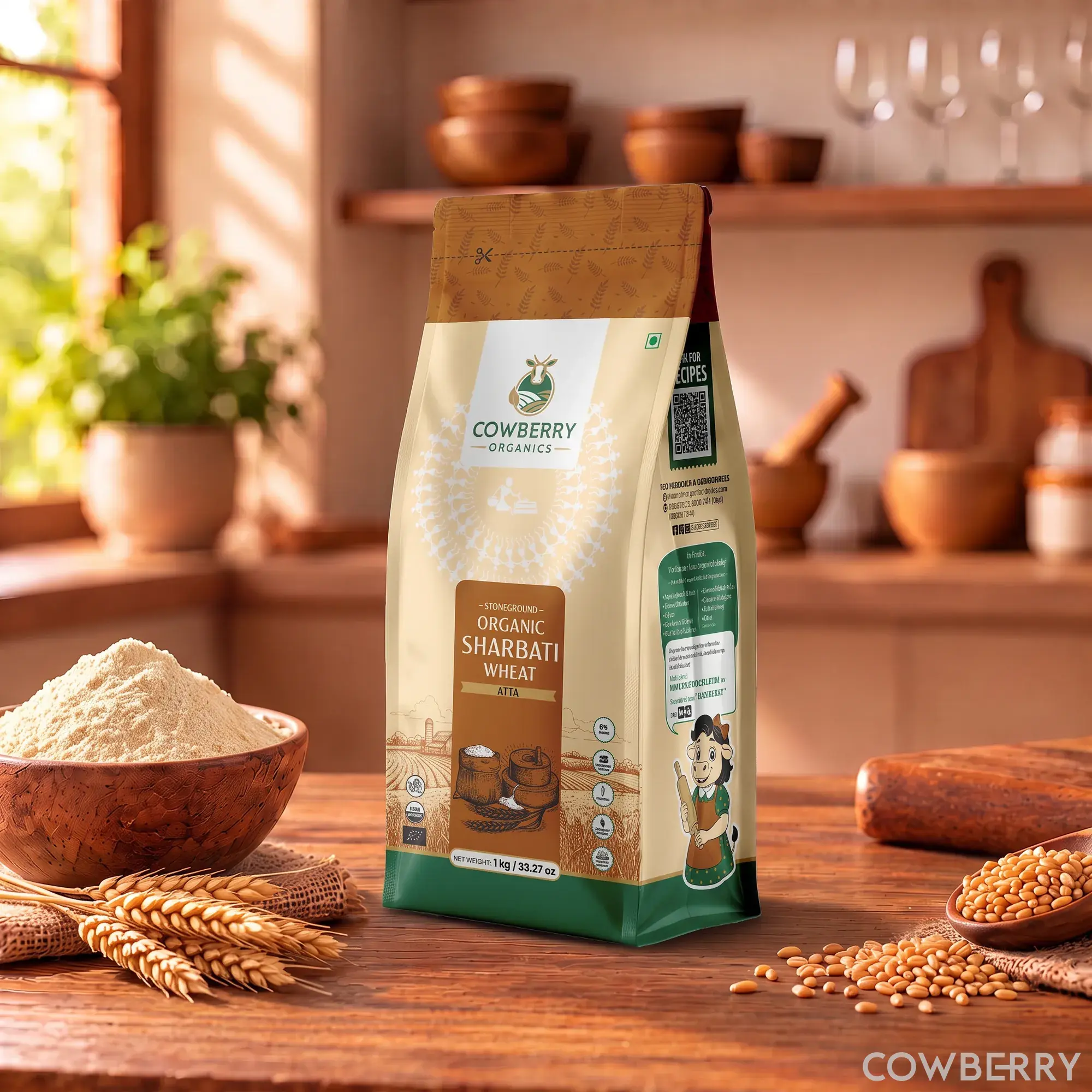
Sharbati atta is whole wheat flour milled from sharbati wheat. COWBERRY's comes from wheat grown on the plains of Madhya Pradesh and is ground on a slow stone chakki with the bran and germ kept in, which gives soft rotis. It contains gluten, and it keeps like any whole-grain atta: about a month at room temperature in the monsoon, longer sealed in the fridge.
What is the difference between sharbati atta and chakki atta?
One word names the wheat and the other names the mill. Sharbati atta is flour from sharbati wheat; chakki atta is flour ground in a chakki, the kind of stone mill COWBERRY uses for its sharbati atta, which keeps the bran and germ in. For storage, what counts is whether the germ is still in the flour: an atta that keeps it goes into an airtight container and, through the monsoon, the fridge.
References
- FAO: Grain storage techniques, evolution and trends in developing countries
- FAO: Mycotoxin prevention and control in foodgrains
- Goyal P, Chugh LK. Shelf life determinants and enzyme activities of pearl millet: a comparison of changes in stored flour of hybrids, CMS lines, inbreds and composites. J Food Sci Technol, 2017
- Naraharasetti B, Chakraborty S. Thermal and nonthermal processing of pearl millet flour: impact on microbial safety, enzymatic stability, nutrients, functional properties, and shelf-life extension. Compr Rev Food Sci Food Saf, 2025
- Dietary Guidelines for Indians, ICMR-National Institute of Nutrition
- Nutritional and health benefits of millets, ICAR-Indian Institute of Millets Research (PDF)
Shop this article
Keep reading
Foxtail millet vs quinoa: nutrition, taste and which to choose
Foxtail millet in Kannada, Hindi, Tamil and other Indian names
10 benefits of kangni (foxtail millet) and its side effects