by COWBERRY

10 minute read
Kabuli chana (white chickpeas): nutrition, benefits and cooking

Kabuli chana is the white type of chickpeas, big creamy seeds of Cicer arietinum that turn into chole, hummus, falafel, salad and khichdi after a soak and a boil. The dry grain holds 378 kcal, 20.5 g of protein and 12.2 g of fibre per 100 g (USDA FoodData Central), and boiled it averages a GI of 23.
What is kabuli chana?
Kabuli chana is a pulse: one of the edible dry seeds of leguminous plants, and the FAO names chickpeas among the best-known pulses of the world. It is the white type of Cicer arietinum, the same species that also gives the smaller, darker kala chana. The USDA FoodData Central record for the raw seed prints the English name in full – chickpeas, garbanzo beans, bengal gram, mature seeds, raw – so the three words name one seed. Despite the Kabul in its name, the type is extensively cultivated in India, and COWBERRY's own crop comes from Himachal Pradesh and Central India. Where chana, chole and chickpea begin and end is untangled on the chickpeas vs chana page, and the dark twin has its own kala chana guide.
Kabuli chana names in Hindi and English
In Hindi the white type is kabuli chana, and chana is the general word for chickpeas; in English they are chickpeas, garbanzo beans or bengal gram, and to botanists Cicer arietinum. One gap is worth knowing: IFCT 2017 prints a full regional name list for Bengal gram, the dark desi type, and no Indian-language names for the white one, so the table below leaves the other language cells empty rather than borrow names that belong to kala chana. The rest of the story – which name IFCT records for Nepal, and the words people mix up with chana – is on our page on chickpeas in Hindi and Indian languages.
| Language | Name (romanised) |
|---|---|
| English | Chickpeas (garbanzo beans, bengal gram), mature seeds, raw |
| Hindi | Kabuli chana, Chana |
| Marathi | — |
| Gujarati | — |
| Punjabi | — |
| Bengali | — |
| Odia | — |
| Assamese | — |
| Kannada | — |
| Telugu | — |
| Tamil | — |
| Malayalam | — |
| Urdu | — |
| Sanskrit | — |
| Botanical name | Cicer arietinum |
Source: USDA FoodData Central record 173756 (English and scientific name only; no Indian-language names in source). — means no name recorded in the source.
Hindi ‘Kabuli chana’: Chickpea - Wikipedia. Hindi ‘Chana’: Chickpea - Wikipedia.
Kabuli chana nutrition per 100 g
Per 100 g of the dry grain, the USDA FoodData Central record for chickpeas reads 378 kcal, 20.5 g of protein, 6.04 g of fat, 63 g of carbohydrate and 12.2 g of total fibre. The mineral column: 4.31 mg of iron, 57 mg of calcium, 79 mg of magnesium, 718 mg of potassium and 2.76 mg of zinc, with 557 mcg of folate. In the University of Sydney GI database, plain boiled whole chickpeas carry a mean GI of 23 across nine entries tested in several countries, none of them in India; the entries spread from 5 to 36, and the database does not separate kabuli from desi grain. One cooked katori, made from about 30 g dry, holds roughly 113 kcal, 6.2 g of protein, 18.9 g of carbohydrate and 3.7 g of fibre. The table below sets kabuli chana beside kala chana and chana dal. On the kabuli chana nutrition per 100g page, the same row becomes katori and plate servings, goes head to head with the other two chanas on protein and fibre, and names the vitamins and minerals one by one, before explaining how the soak and the boil move every number.
| Nutrient | Kabuli chana | Kala chana | Chana dal |
|---|---|---|---|
| Energy (kcal) | 378 | 287 | 329 |
| Protein (g) | 20 | 19 | 22 |
| Fat (g) | 6 | 5.1 | 5.3 |
| Carbohydrates (g) | 63 | 40 | 47 |
| Dietary fibre (g) | 12 | 25 | 15 |
| Iron (mg) | 4.3 | 6.8 | 6.1 |
| Calcium (mg) | 57 | 150 | 46 |
| Magnesium (mg) | 79 | 160 | 118 |
| Potassium (mg) | 718 | 935 | 957 |
| Sodium (mg) | 24 | 27 | 21 |
| Zinc (mg) | 2.8 | 3.4 | 3.6 |
| Folate (mcg) | 557 | 233 | 182 |
| Vitamin C (mg) | 4 | — | — |
| Glycemic index (GI) | 23 | 23 | 11 |
Per 100 g raw, edible portion. Composition: USDA FoodData Central (SR Legacy), FDC ID 173756, NDB 16056; IFCT 2017 (ICMR-NIN). GI: University of Sydney GI database. — means not reported. These are average values for the food; the label on a pack gives the values for that product.
Benefits of kabuli chana
Each point below ties back to a number in the table above, and the kabuli chana benefits and side effects page walks the same numbers from claim to evidence, protein, fibre and GI included. It ends with the honest half of the picture – gas and bloating, who should portion-control, and how much to eat in a day.
Protein
20.5 g per 100 g makes kabuli chana one of the stronger plant-protein pulses. A review of chickpea nutrition in the British Journal of Nutrition (2012) finds chickpea protein short only in the sulphur-containing amino acids, with all the other essential ones present in significant amounts; cereals added to the daily diet cover the gap, so chana with roti or rice is the natural pairing.
Fibre and fullness
With 12.2 g of fibre per 100 g, the grain brings substance to a meal: the ICMR-NIN guidelines record that dietary fibre slows the uptake of carbohydrate and fat and lifts the satiety value of a diet. Whether that translates into weight loss is the question the chickpeas for weight loss page answers with the 2016 pulse meta-analysis.
Blood sugar
Boiled chickpeas average a GI of 23, well inside the low-GI band of 55 or below, and a 2009 meta-analysis of 41 pulse trials reported that pulses eaten within low-GI diets were followed by lower HbA1c or fructosamine. How that works on a real plate, katori included, is on our kabuli chana for diabetes page.
Folate
557 mcg of folate per 100 g is a number the pregnancy page sets beside the ICMR-NIN and WHO guidance on kabuli chana in pregnancy.
Side effects: who should limit kabuli chana
For many people, the side effect kabuli chana is known for is gas. The grain carries galacto-oligosaccharides, sugars the small intestine cannot digest, and the colon ferments them into gas. A 2019 pulse-tolerance review says the usual sugar explanation has lately been questioned, that how much gas shows up differs between people, and that most who notice it adjust within a few weeks once the chana stays on the menu. The same review confirms there is no evidence that properly cooked pulses carry harmful lectins.
For a baby, the rules are different: when to start, how to mash it and how to keep gas mild is on chickpeas for babies. For readers who prefer Hindi, kabuli chana ke fayde aur nuksan walks through the same fayde and nuksan in simple Hinglish, protein and fibre numbers, gas and the soak-and-cook method included. It is the Hindi counterpart of the page above, written for sharing at home.
How to soak and cook kabuli chana
Whole kabuli chana soaks in cold water for eight to twelve hours, or overnight; two hours in hot water stands in when the menu is set late. Discard the soaking water and cook the grain in fresh. In a pressure cooker, the Punjabi chole recipe turns soaked chana soft in 5 to 6 whistles; the salad, khichdi, hummus and tikki recipes stop earlier, at two or three whistles plus a low simmer, and test the grain with a press of the fingers. The soak is not only a time-saver: the ICMR-NIN guidelines count soaking as a household method that makes legumes easier to digest, and name boiling or pressure cooking as the best way to improve the nutritional quality of pulses, since the anti-nutritional factors are destroyed in cooking. The step-by-step method, the water ratio and the usual mistakes are in our guide to kabuli chana soaking time.
How to store kabuli chana
Dry kabuli chana belongs in a closed jar kept somewhere cool and dry, where it keeps for many months. The seal matters, because the pulse beetle is an economically important pest of stored chickpeas: a 2009 study measured losses of up to 30 percent in stored chickpeas within two months, and in its test the desi types resisted the beetle better than the kabuli ones. Cooked chana is a leftover like any other: cool it, refrigerate it within two hours and eat it within two days, the rule the UK Food Standards Agency sets for leftovers. Chole, boiled chana and khichdi all follow it.
Kabuli chana recipes to start with
The kabuli chana recipes roundup gathers every kabuli chana dish on this site in one place, with the soak and cook time of each beside it and a link to the full method. The idea is one bag of chana across a week of different meals; these seven are the ones to begin with.
- Punjabi chole: overnight-soaked chana pressure cooked, then simmered in an onion-tomato masala with a tea bag for colour; about an hour of cooking after the soak.
- Kabuli chana salad: boiled chana tossed with onion, tomato and cucumber in a lemon-cumin dressing; about 45 minutes after the soak.
- Kabuli chana khichdi: whole chana and sona masoori rice in one pressure-cooker pot, about 35 minutes in all.
- Hummus: chana boiled soft and blended with homemade sesame tahini, lemon and garlic; about 55 minutes once soaked.
- Falafel: soaked raw chana ground with herbs and shallow fried into crisp patties; about 45 minutes after the soak.
- Kabuli chana tikki: boiled chana mashed, bound with besan and pan fried, with air-fryer timings; about 55 minutes after the soak.
- Kabuli chana laddu: dry-roasted chana ground with jaggery and ghee and rolled into laddus, no soaking needed; about 50 minutes.
How to buy kabuli chana: what to look for
Look at the grain. Good kabuli chana is clean, whole and even in colour, with no shrivelled grains, stones or dust. The 2009 chickpea study describes the damage the pulse beetle leaves behind as round exit holes with a flap of seed coat, so grains showing such holes should be picked out and thrown away.
Whole, not split. The white type is bought whole; chana dal is a different product, the dark Bengal gram split and hulled.
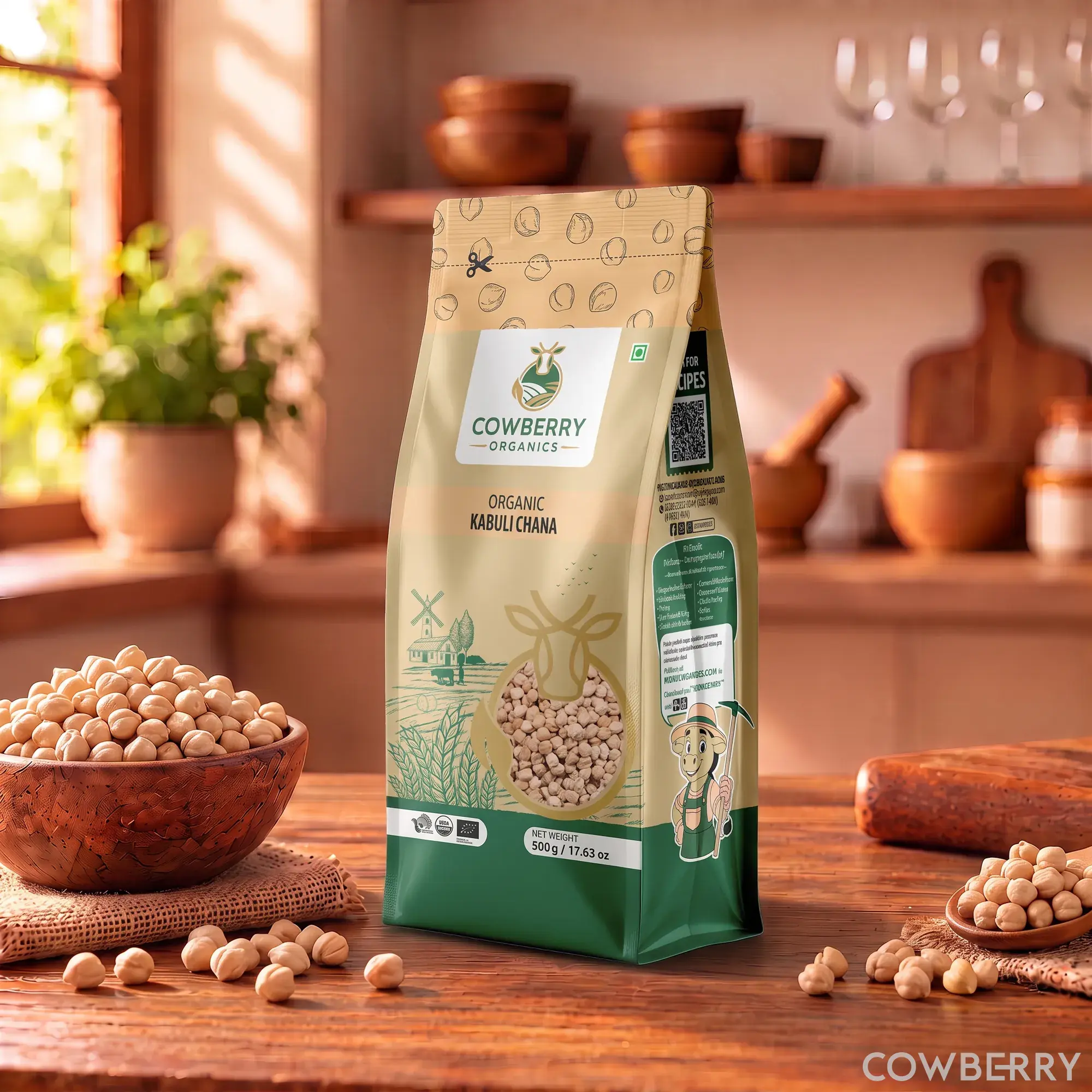
Organic. COWBERRY's kabuli chana is grown with cow-based farming in Himachal Pradesh and Central India, packed unpolished, with no additives or preservatives; India Organic, USDA & EU certified. See the organic kabuli chana product page for the pack itself.
FAQs
What is kabuli chana?
The white chickpea: large cream-coloured seeds of Cicer arietinum, sold whole and dry. Soaked and pressure cooked, they become chole, salad, khichdi, hummus and falafel. COWBERRY's kabuli chana is packed unpolished, from farms in Himachal Pradesh and Central India. Dry, it keeps for many months in a closed jar; the names in Hindi and English are in the table above.
Does kabuli chana have protein?
Yes: 20.5 g of protein in every 100 g of the dry grain, per the USDA FoodData Central record, and a cooked katori made from 30 g dry holds about 6.2 g. A 2012 review records that only the sulphur-containing amino acids are short in chickpea, and that adding cereals to the daily diet covers them, so chana with rice or roti completes the picture.
Does kabuli chana cause gas?
It can. Chickpeas carry galacto-oligosaccharides, sugars that pass the small intestine undigested, and the colon's fermentation of them releases gas. The 2019 pulse-tolerance review flags that this sugar story has lately been questioned; how much gas a person gets differs, and most who get it settle within a few weeks if pulses stay on the menu. On lectins, the review finds no evidence of harm once pulses are properly cooked.
Can kabuli chana be cooked without soaking?
They can, but it is a poor trade: unsoaked chana take much longer in the pot and soften unevenly, with some grains still chalky inside. The soak also earns its place in the ICMR-NIN guidelines, which count it among the ways that make legumes easier to digest. Soak eight to twelve hours in cold water, or two hours in hot water, then drain and cook in fresh.
Difference between kala chana and kabuli chana?
Two types of one species, split by colour, size and numbers. Kala chana is the dark desi chickpea, the Bengal gram, whole of IFCT 2017's tables: 287 kcal and 25.22 g of fibre per 100 g. Kabuli chana is larger and cream-coloured, with 378 kcal, 12.2 g of fibre and 20.5 g of protein per 100 g. Cooked, both share the same mean GI of 23. The chickpeas vs chana page sets them side by side.
Is kabuli chana good for health?
Yes, as an everyday pulse in a varied Indian diet, eaten as chole, salad or a katori of boiled chana. Per 100 g dry there are 20.5 g of protein, 12.2 g of fibre, 4.31 mg of iron and 557 mcg of folate, and boiled chickpeas average a GI of 23. ICMR-NIN's balanced 2000 kcal food pyramid gives pulses and legumes 85 g a day. The evidence, claim by claim, is on the kabuli chana benefits and side effects page.
References
- USDA FoodData Central
- Indian Food Composition Tables (IFCT) 2017, ICMR-National Institute of Nutrition
- University of Sydney glycemic index database (GI search)
- University of Sydney: about the glycemic index
- Dietary Guidelines for Indians, ICMR-National Institute of Nutrition
- Jukanti AK, Gaur PM, Gowda CL et al. Nutritional quality and health benefits of chickpea (Cicer arietinum L.): a review. Br J Nutr, 2012
- Thompson HJ. Improving human dietary choices through understanding of the tolerance and toxicity of pulse crop constituents. Curr Opin Food Sci, 2019
- Erler F, Ceylan F, Erdemir T, Toker C. Preliminary results on evaluation of chickpea, Cicer arietinum, genotypes for resistance to the pulse beetle, Callosobruchus maculatus. J Insect Sci, 2009
- FAO: World Pulses Day (pulses and their role in diets)
- UK Food Standards Agency: How to chill, freeze and defrost food safely
- Sievenpiper JL, Kendall CW, Esfahani A, et al. Effect of non-oil-seed pulses on glycaemic control: a systematic review and meta-analysis of randomised controlled experimental trials in people with and without diabetes. Diabetologia, 2009
Shop this article
Keep reading
Green gram plant: crop, varieties and how it grows in India
Rajma vs lobia: difference, nutrition and which to choose
Rajma plant: how rajma is grown in India (it is not a tree)