by COWBERRY

6 minute read
Kabuli chana nutrition per 100g: protein, carbs, GI and calories

Kabuli chana nutrition per 100 g of the dry grain: 378 kcal, 20.5 g of protein, 63 g of carbohydrate, 12.2 g of fibre, 4.31 mg of iron and 557 mcg of folate, from USDA FoodData Central. The rest of the page turns those numbers into katori and plate servings and walks through the glycemic index of 23; the grain's own page is the kabuli chana hub.
Kabuli chana nutritional value per 100 g
The table lists kabuli chana per 100 g of the raw, dry grain next to the two other chana entries in the food tables: Bengal gram, whole, the kala chana, and Bengal gram, dal, the chana dal. The kabuli row comes from the USDA FoodData Central chickpea record, since IFCT 2017 lists only Bengal gram for chana; USDA does not say whether its record is kabuli or desi. Per 100 g dry, kabuli chana carries 378 kcal, 20.5 g of protein, 63 g of carbohydrate, 6.04 g of fat and 12.2 g of fibre, with 4.31 mg of iron, 57 mg of calcium, 79 mg of magnesium, 718 mg of potassium, 2.76 mg of zinc, 557 mcg of folate, 4 mg of vitamin C and 24 mg of sodium. These are dry-grain numbers; the next section turns them into a cooked katori.
| Nutrient | Kabuli chana | Kala chana | Chana dal |
|---|---|---|---|
| Energy (kcal) | 378 | 287 | 329 |
| Protein (g) | 20 | 19 | 22 |
| Fat (g) | 6 | 5.1 | 5.3 |
| Carbohydrates (g) | 63 | 40 | 47 |
| Dietary fibre (g) | 12 | 25 | 15 |
| Iron (mg) | 4.3 | 6.8 | 6.1 |
| Calcium (mg) | 57 | 150 | 46 |
| Magnesium (mg) | 79 | 160 | 118 |
| Potassium (mg) | 718 | 935 | 957 |
| Sodium (mg) | 24 | 27 | 21 |
| Zinc (mg) | 2.8 | 3.4 | 3.6 |
| Folate (mcg) | 557 | 233 | 182 |
| Vitamin C (mg) | 4 | — | — |
| Glycemic index (GI) | 23 | 23 | 11 |
Per 100 g raw, edible portion. Composition: USDA FoodData Central (SR Legacy), FDC ID 173756, NDB 16056; IFCT 2017 (ICMR-NIN). GI: University of Sydney GI database. — means not reported. These are average values for the food; the label on a pack gives the values for that product.
Per katori and per plate: kabuli chana calories and protein
A katori of cooked pulses holds about 30 g of the dry grain, and a fuller serving plate of kabuli chana comes to about 50 g dry, so both are measured before the soak. One cooked katori, measured as 30 g of the dry grain, carries roughly 113 kcal, 6.2 g of protein, 18.9 g of carbohydrate, 3.7 g of fibre, 1.3 mg of iron and 167 mcg of folate. A serving plate, from 50 g dry, gives roughly 189 kcal, 10.2 g of protein, 31.5 g of carbohydrate, 6.1 g of fibre, 2.2 mg of iron and 278 mcg of folate.
Protein and fibre: kabuli chana against kala chana and chana dal
Beside its peers per 100 g raw, kabuli chana runs highest at 378 kcal and at 63 g of carbohydrate; kala chana wins at 25.22 g of fibre against 12.2 g and at 6.78 mg of iron against 4.31 mg; and chana dal, the split gram, leads with 21.55 g of protein against 20.5 g. On protein quality, the 2012 review of chickpea finds significant amounts of all the essential amino acids except the sulphur-containing ones, which it says can be complemented by adding cereals to the daily diet, as in chana with rice or roti. A 2014 review of pulses notes the same foods are high in fibre. The fuller comparison is on our kabuli chana vs chickpeas page.
Glycemic index of kabuli chana
The glycemic index listed for kabuli chana is 23, the average of nine database entries for boiled whole chickpeas. No entry names which type it tested, kabuli or desi, and none of the nine tests ran in India; the nine values spread from 5 to 36. For boiled chana dal the database holds a single India-tested entry, an 11. The University of Sydney draws the low band at 55 and starts the high band at 70, which leaves boiled chana in the low band; the 2021 international GI tables, for their part, find legume values are usually low-GI, with consistent values the world over. What that means for a diabetic plate is worked out on our kabuli chana for diabetes page.
Micronutrients: iron, folate, magnesium and zinc
Per 100 g dry, kabuli chana brings 4.31 mg of iron, 557 mcg of folate, 79 mg of magnesium, 2.76 mg of zinc, 57 mg of calcium and 718 mg of potassium. A 2014 review of pulses counts these four, iron, zinc, folate and magnesium, among the minerals and vitamins such foods add to the diet, and the ICMR-NIN dietary guidelines list legumes among the good plant sources of folic acid. The same guidelines say vitamin C rich foods such as citrus fruits, eaten as part of a regular meal, improve iron absorption from plant foods. A katori contributes 1.3 mg of iron and 167 mcg of folate of its own.
How soaking and cooking change the numbers
The values above are for the raw, dry grain. Whole kabuli chana sits in water for 8 to 12 hours, or a hot quick soak of 2 hours, and in the soak and the boil every grain takes up water, so 100 g of cooked chana reads lower than 100 g of the raw grain on every line; the katori and plate figures above keep the dry weight, which is why they read higher per gram. Cooking also improves what the body gets. The ICMR-NIN guidelines place soaking on their list of household methods that lift how well legumes digest and how much of their nutrition the body can take up, and they name boiling and pressure cooking as the best way to cook pulses, because the anti-nutritional factors are destroyed and the protein turns more available. The step-by-step method lives in our guide to soaking kabuli chana.
Using the numbers: which kabuli chana to cook with
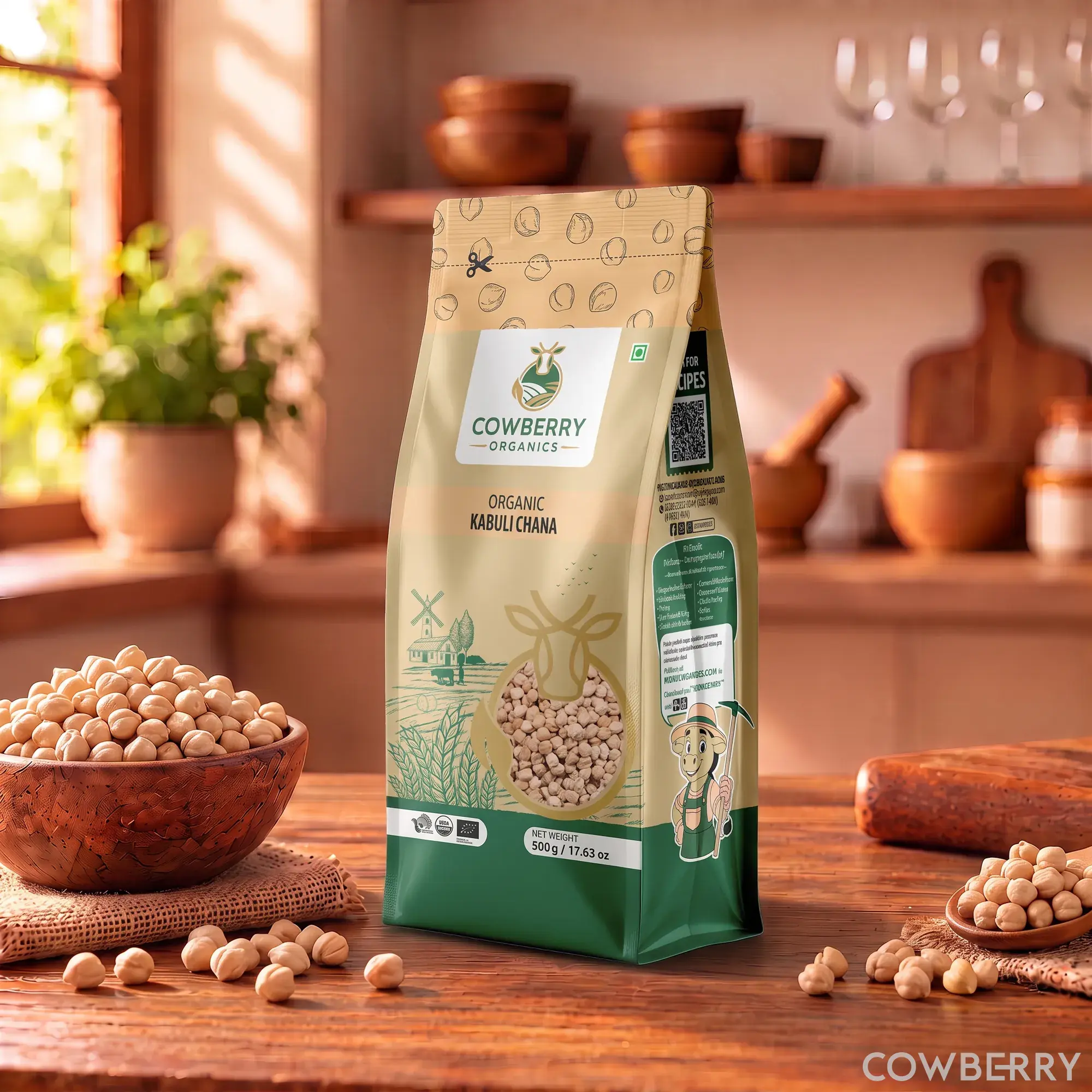
COWBERRY's kabuli chana is whole, unpolished grain: large, creamy white chickpeas from Himachal Pradesh and Central India, grown by cow-based farming. The product card below has the details. For what to cook with it, the kabuli chana recipes page groups the salads, khichdi, laddu and tikki, and the Punjabi chole is the classic lunch. For the health side of the same numbers, see kabuli chana benefits and side effects, and buying and storage sit on the kabuli chana hub.
FAQs
Does chickpeas have protein?
Yes: 20.5 g of protein per 100 g of dry kabuli chana, with roughly 6.2 g in a single cooked katori. The one gap, per a 2012 review of chickpea, is the sulphur-containing amino acids, which the review says can be complemented by adding cereals to the daily diet, as in chana with rice or roti.
Which chickpeas are high in protein?
Per 100 g raw, chana dal leads at 21.55 g of protein, kabuli chana follows at 20.5 g, and kala chana has 18.77 g. The differences are small, so pick by dish.
What is kabuli chana?
Kabuli chana is the large, creamy white type of chickpea, Cicer arietinum, and is cooked in curries such as chole and in salads. The USDA's record for the grain lists it under chickpeas, garbanzo beans and bengal gram, and the full nutrition sits in the table above.
Is chickpeas good for diabetes?
The average glycemic index of boiled whole chickpeas comes to 23, comfortably under the 55 that opens the low-GI band, and the 2021 international GI tables found legume values usually low-GI. The details, portions and cautions are on our kabuli chana for diabetes page.
Can chickpeas be boiled without soaking?
Soaking is the usual method, and the ICMR-NIN guidelines put it among the household methods that improve the digestibility and bioavailability of nutrients from legumes. Soak whole kabuli chana for 8 to 12 hours, or use the hot quick soak of 2 hours described in our guide to soaking kabuli chana.
Difference between kala chana and kabuli chana?
Two types of one species. Kala chana is the dark desi type with 287 kcal, 25.22 g of fibre and 6.78 mg of iron per 100 g raw; kabuli chana is the large creamy white type with 378 kcal, 12.2 g of fibre and 4.31 mg of iron. Both sit on the same GI mean of 23, drawn from the nine boiled-chickpea entries above.
References
- USDA FoodData Central
- Indian Food Composition Tables (IFCT) 2017, ICMR-National Institute of Nutrition
- Dietary Guidelines for Indians, ICMR-National Institute of Nutrition
- University of Sydney glycemic index database (GI search)
- University of Sydney: about the glycemic index
- Mudryj AN, Yu N, Aukema HM. Nutritional and health benefits of pulses. Appl Physiol Nutr Metab, 2014
- Jukanti AK, Gaur PM, Gowda CL et al. Nutritional quality and health benefits of chickpea (Cicer arietinum L.): a review. Br J Nutr, 2012
- Atkinson FS, Brand-Miller JC et al. International tables of glycemic index and glycemic load values 2021: a systematic review. Am J Clin Nutr, 2021
Shop this article
Keep reading
Green gram plant: crop, varieties and how it grows in India
Rajma vs lobia: difference, nutrition and which to choose
Rajma plant: how rajma is grown in India (it is not a tree)