by COWBERRY

6 minute read
Coffee: how to make it at home with beans, powder or a french press

How to make coffee at home? With coffee powder, hot water and a strainer or a french press you can brew a proper cup without any machine, and with whole beans you grind only what you need. Every step, the amounts and the timings are below, along with the mistakes that make coffee bitter or weak. The coffee guide covers the drink from names to nutrition.
Short answer: coffee how to make at home
No machine is needed. The simplest coffee how to make at home is the pot method: stir a tablespoon of coffee powder (about 10 g) into 150 ml of water that has just boiled, let it steep for three to four minutes, and strain, or let the grounds settle and pour the cup off the top. A french press does the same with a built-in filter, and whole beans add only a grinding step before it. The coffee guide covers everything about the drink itself.
Coffee recipe at home with coffee powder
- Heat the water. Bring fresh water to a rolling boil, then take it off the heat for half a minute before pouring; water straight off a hard boil scalds fine grounds.
- Measure the powder. One tablespoon of coffee powder (about 10 g) per 150 ml cup; weigh the first cup, then measure by eye.
- Pour and stir. Put the powder in a pot or deep cup, pour the hot water over it and stir once so every bit of powder is wet.
- Steep for three to four minutes. Cover and leave it; a shorter steep gives a thin cup, a longer one turns it bitter.
- Strain, or settle. Pour through a fine sieve or a clean cloth into the cup, or leave the grounds to settle and pour off the top slowly, stopping before the sediment.
- Add milk and sugar to taste. The powder is fine ground and ready to brew, so nothing else is needed.
The powder does the real work; how coffee is made shows the road from bean to roast to your cup.
How to make coffee in a french press
- Warm the press. Rinse it with hot water and tip the water out; a cold glass press cools the brew before it finishes steeping.
- Add the powder. One tablespoon (about 10 g) per 150 ml cup, straight into the press.
- Pour and stir. Pour in the hot water, stir gently once, and set the lid on with the plunger raised.
- Wait four minutes. A timer helps; the press does nothing by itself while it sits.
- Press down slowly. Push the plunger steadily to the bottom; a slow press keeps fine grounds out of the cup.
- Pour it all out at once. Coffee left in the press keeps drawing from the grounds and turns bitter, so empty the press into cups or a pot straight away.
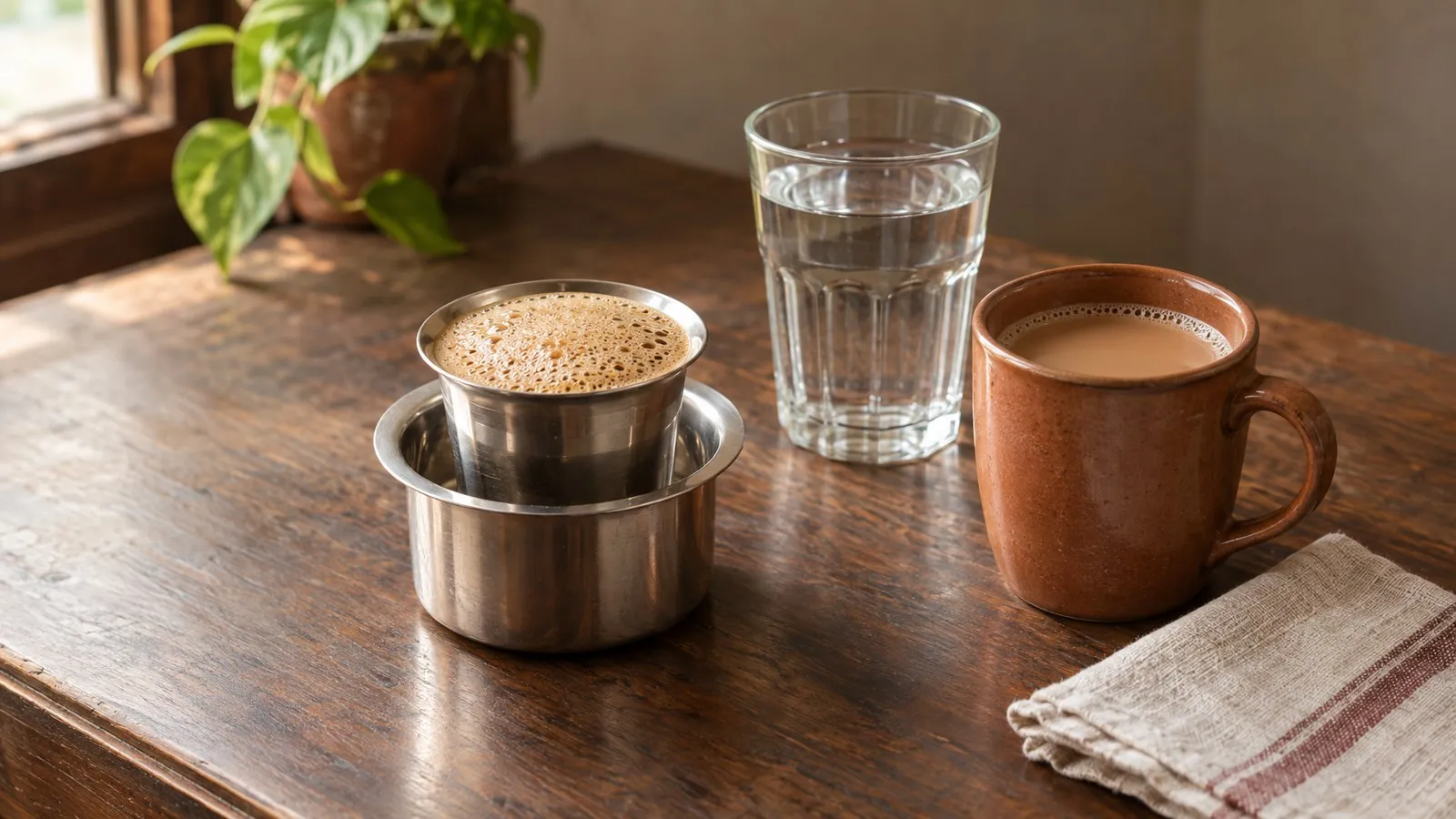
What is filter coffee, the South Indian classic, works on the same steeping idea with its own two-part metal filter.
Coffee beans how to use at home
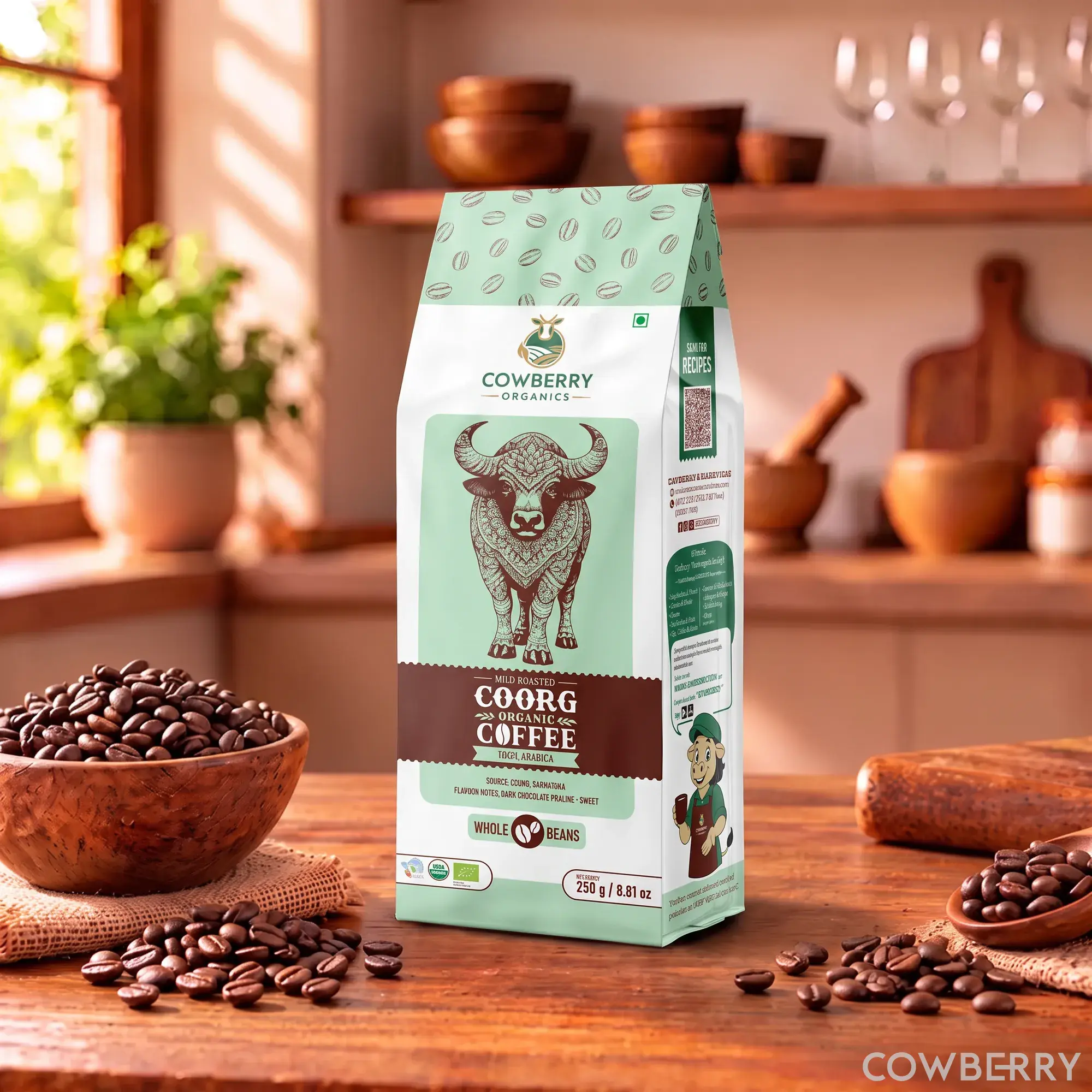
- Grind only what you need. Whole beans stay fresh longest; the bean pack is sealed right after roasting to hold that freshness in, so grind the measure for the cups you will brew now.
- Grind medium fine. A medium-fine grind suits the pot method and the french press both; very fine dust clouds the cup and slips through the press mesh.
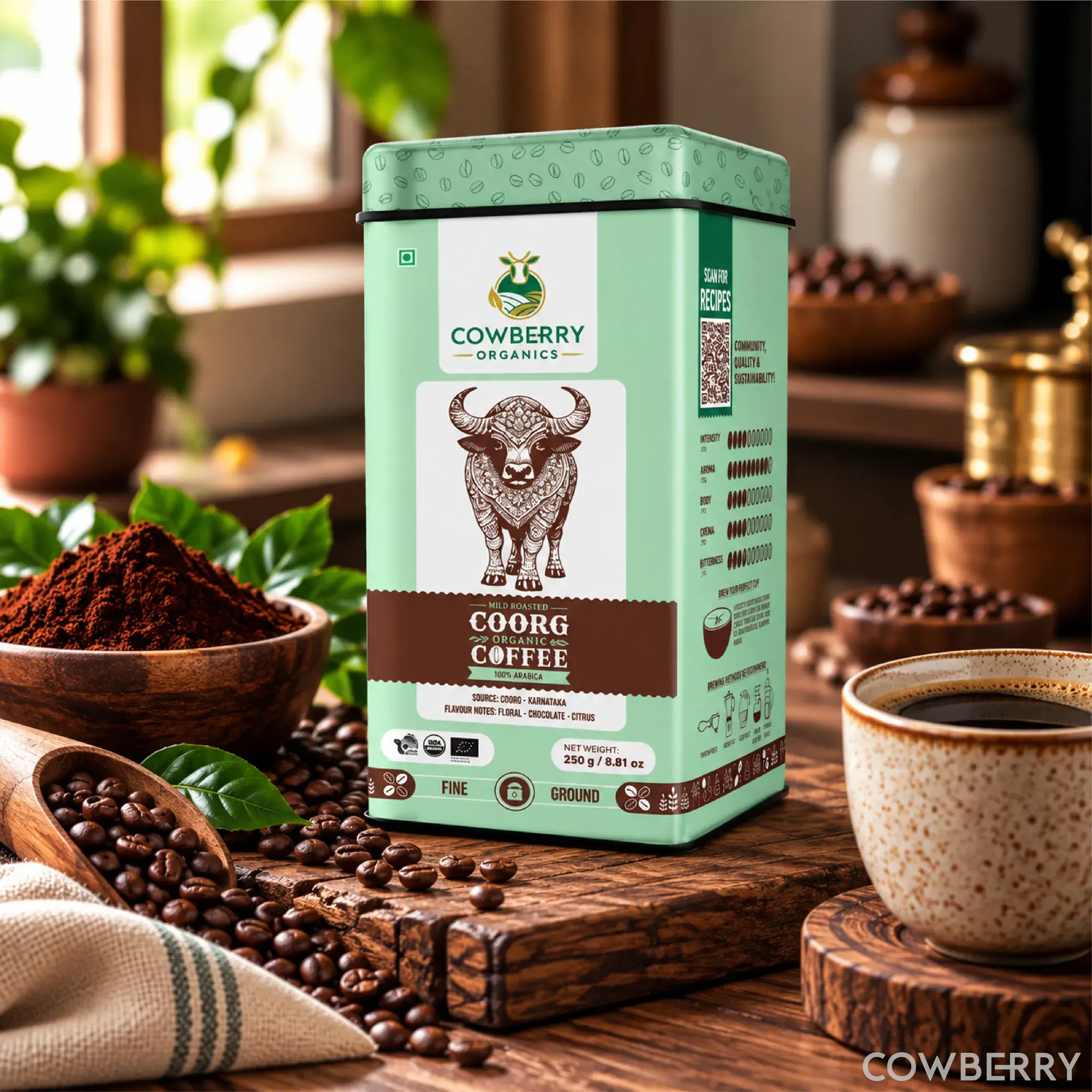
- Brew at once. Follow the powder steps above with the same tablespoon measure; ground coffee loses its aroma quickly, so do not grind ahead.
Whole beans versus ready powder, and which to pick, is the question on coffee powder vs beans.
Common mistakes (and fixes)
- Boiling water straight on the grounds. Rest the water half a minute off the boil; very hot water scalds the powder and makes the cup harsh.
- Guessing the powder. Too little gives a weak, thin cup, too much a bitter one; keep to one tablespoon per 150 ml and adjust only after tasting the first cup.
- Leaving brewed coffee on the grounds. It keeps extracting and turns bitter; pour the whole batch out as soon as the steep ends.
- Reusing grounds. Spent grounds give a flat, pale cup; use fresh powder for every brew.
- Grinding a big batch of beans. Ground beans lose their aroma sooner than whole ones, so grind for the cups you will brew now.
- Bad storage. Air, warmth, light and damp all flatten coffee; coffee powder how to store covers containers, the fridge question and expiry.
Time and quantity table
The amounts below are for a 150 ml cup brewed with coffee powder; the steeping time is the number that matters most.
| Step | Time or quantity |
|---|---|
| Heat water | To a rolling boil, then rest half a minute off the heat |
| Coffee powder | 1 tablespoon (about 10 g) per 150 ml cup |
| Steep, pot method | 3 to 4 minutes, then strain or settle |
| Steep, french press | 4 minutes, then plunge slowly |
| Beans | Grind per brew, right before brewing |
| Serve | Pour out fully once brewed, with milk and sugar to taste |
The same powder makes South Indian filter coffee; filter coffee how to make walks through the traditional two-tier filter.
FAQs
How to drink coffee powder?
Brew it: stir one tablespoon of coffee powder (about 10 g) into 150 ml of hot water, leave it to steep for three to four minutes, then strain through a fine sieve or cloth, or let the grounds settle and pour off the top. Add milk and sugar to taste. The powder is fine ground and ready to brew, so it needs no grinding before use.
Can filter coffee be used in french press?
Yes, filter coffee works in a french press; it is a fine grind, so a little fine sediment may slip past the mesh and settle at the bottom of the cup. Steep it for the same four minutes and press the plunger slowly. If the sediment bothers you, pour the pressed coffee through a fine sieve into the cup.
Does filter coffee have caffeine?
Yes, filter coffee has caffeine, because it is brewed coffee. The Dietary Guidelines for Indians count 80-120 mg of caffeine in a brewed cup of 150 ml, and advise moderation so that caffeine intake stays within the tolerable limit of 300 mg a day. Filter coffee counts within that daily total.
What is coffee?
Coffee is the brewed drink made by steeping the roasted, ground beans of the coffee plant in hot water. The beans are dried, roasted and ground; once ground, they need only hot water and a few minutes of steeping to become a cup. Milk, sugar and the brewing method all change the drink from there.
References
Shop this article
Keep reading
Coffee vs tea: caffeine, benefits and which is better
Coffee calories per 100g: powder, beans and filter coffee
Coffee in pregnancy: how much caffeine is safe