by COWBERRY

8 minute read
What is filter coffee? Indian filter coffee explained

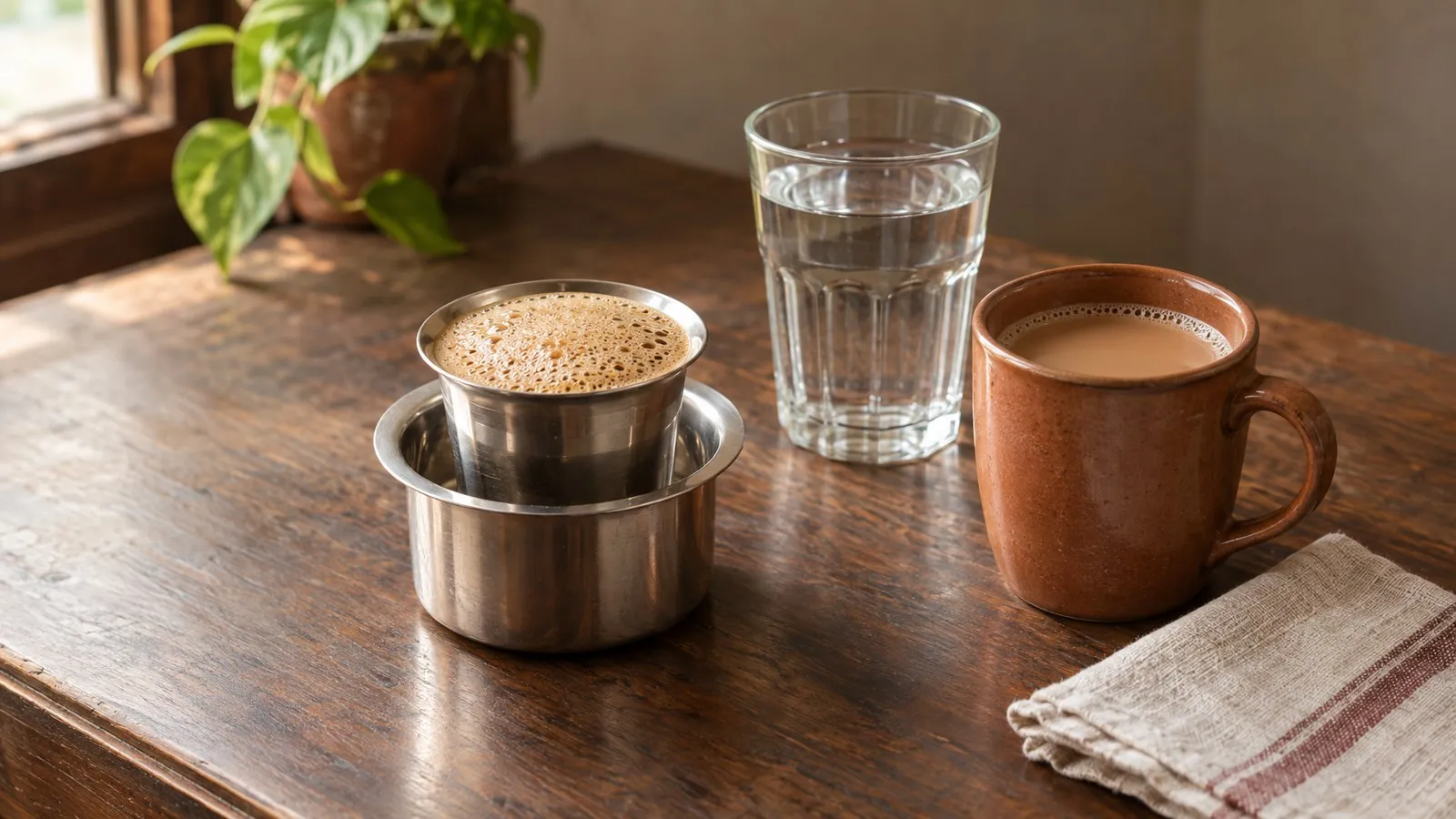
What is filter coffee? In India it is the cup made with a two-tier metal filter: a strong decoction brewed by hot water dripping through packed coffee powder, then mixed with milk and served in the tumbler and davara. The coffee hub covers the drink broadly; this guide explains the filter cup itself, from device to decoction.
The short answer
Indian filter coffee is a strong, milky cup built in three parts: the decoction, the milk, and the ritual. Ground coffee is packed into the upper chamber of a two-tier metal filter, hot water is poured on top, and over several minutes a concentrated decoction drips into the lower chamber. That decoction is then mixed with hot milk, sweetened to taste, and poured repeatedly from tumbler to wide steel bowl, the davara, and back, before it is drunk. Everything else about filter coffee, its taste, its caffeine and its place in the kitchen, follows from those three parts.
The name itself points to the device, not the drink's style: filter coffee is coffee made through the metal filter, as against instant coffee stirred straight into hot water or milk. In India the word means this specific steel two-tier filter, which is why filter coffee vs instant coffee is a comparison of two different brewing worlds.
The two-tier metal filter: how the device works
The device behind the name has two stacked steel cylinders and a pressing disc. The upper cylinder holds the coffee powder and has a perforated floor; the powder is packed in level, and the disc is placed on top to hold it steady. Hot water poured over the disc seeps through the powder, and the brewed liquid drips through the holes into the lower cylinder, which collects it. What gathers below is the decoction. Because the water moves slowly through packed powder rather than swirling loose in a pan, the result is strong, and that strength is the reason a little decoction is stretched with a lot of milk.
Compare it with the other ways coffee is made at home, and the filter's job becomes clear: a french press steeps the grounds loose in water and plunges them down, a moka pot pushes steam through the coffee under pressure, and a drip machine pours water through paper. The Indian filter sits between them, with gravity pulling the water through packed powder slowly, and no paper in the path at all.
Nothing about the filter is electric or complicated; it is a pair of steel cylinders that fit one into the other, and it works by gravity and time alone.
The decoction: filter coffee's concentrated heart
The decoction is the concentrated coffee liquid that drips into the lower cylinder, and it is the strongest part of the whole operation. ICMR-NIN's Dietary Guidelines give 80-120 mg of caffeine for a 150 ml brewed cup, and the NHS adds that filter coffee and shop coffee can contain more than the 100 mg it lists for a mug of instant. Because the decoction is so strong, it is not drunk as it collects; it is mixed with hot milk until the cup is milky and sweet, and the same decoction is what gives filter coffee its sharper edge over plain instant.
Milk, sugar and the davara-tumbler ritual
The ritual half of Indian filter coffee is the serving itself. The coffee is poured from the tumbler into the wide steel bowl called the davara, and back again, which mixes the decoction, milk and sugar evenly, cools the cup to drinking temperature, and builds the froth on top. The bowl does more than catch the pour; its wide rim makes the hot cup easier to sip and the froth easier to see. Milk is the base of the cup, sugar is added to taste, and the tumbler-to-bowl pour is the small ceremony that makes the drink recognisable from across a room.
Measure the ceremony and you have the whole drink: one part of strong decoction stretched with milk, a spoon or two of sugar, and the pour repeated until the froth settles. No two homes make it quite alike, which is half the pleasure of being served one.
Chicory blends and what goes into the powder
Many Indian filter coffee powders are blends: coffee mixed with chicory, a roasted root blended in to add colour, body and a touch of bitterness. COWBERRY's coffee powder is not a blend; it is 100% Arabica with no additives, so the filter cup brewed from it carries coffee alone. For the numbers, dry coffee powder holds 353 kcal and 75.4 g of carbohydrate per 100 g (USDA FoodData Central), about 3.5 kcal and 0.75 g of carbohydrate per gram, and the brewed cup's energy comes mostly from the milk and sugar poured in; the full per-100 g breakdown lives in coffee calories per 100g.
Caffeine in a cup of filter coffee
One 150 ml cup of brewed coffee carries 80-120 mg of caffeine in ICMR-NIN's Dietary Guidelines, and the NHS warns that filter coffee and shop coffee can contain more than the 100 mg it counts for a mug of instant. Three 150 ml cups at 100 mg each use up the whole 300 mg tolerable daily limit those guidelines set, and a 2017 caffeine review found 400 mg a day in healthy adults generally free of adverse effects. In pregnancy the number to follow is lower: the NHS advises no more than 200 mg a day, and coffee in pregnancy explains the count.
How filter coffee is made and how to drink it
Making the cup is a patient sequence: pack the powder into the upper cylinder, press it down, pour in hot water, and let the decoction drip into the lower chamber over several minutes; the filter coffee how to make page walks through the full method step by step. Two habits from the Dietary Guidelines shape how the cup is drunk: keep tea and coffee at least an hour away from meals on either side, because the tannin in them interferes with the iron from food, and keep the day moderate, since ICMR-NIN notes that too much coffee is known to raise blood pressure and disturb the heartbeat. Store the powder in an airtight container in a cool, dry place away from heat and sunlight, as the packet advises; coffee powder how to store covers the details.
The drink itself is served hot and finished quickly; filter coffee is not a drink that waits, because the froth falls and the milk cools, so the tumbler is poured, sipped and emptied while it is still warm.
Choosing the powder or the beans
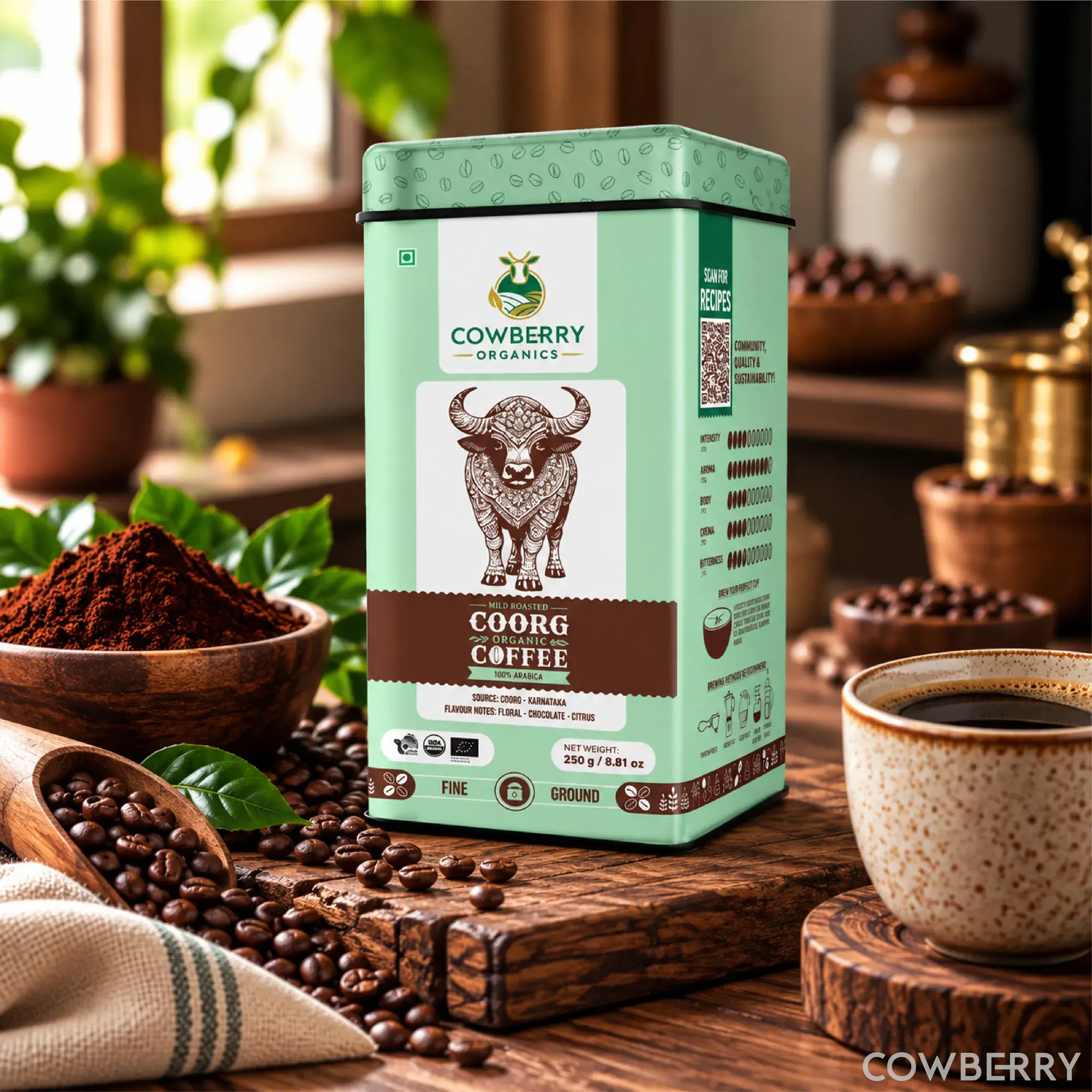
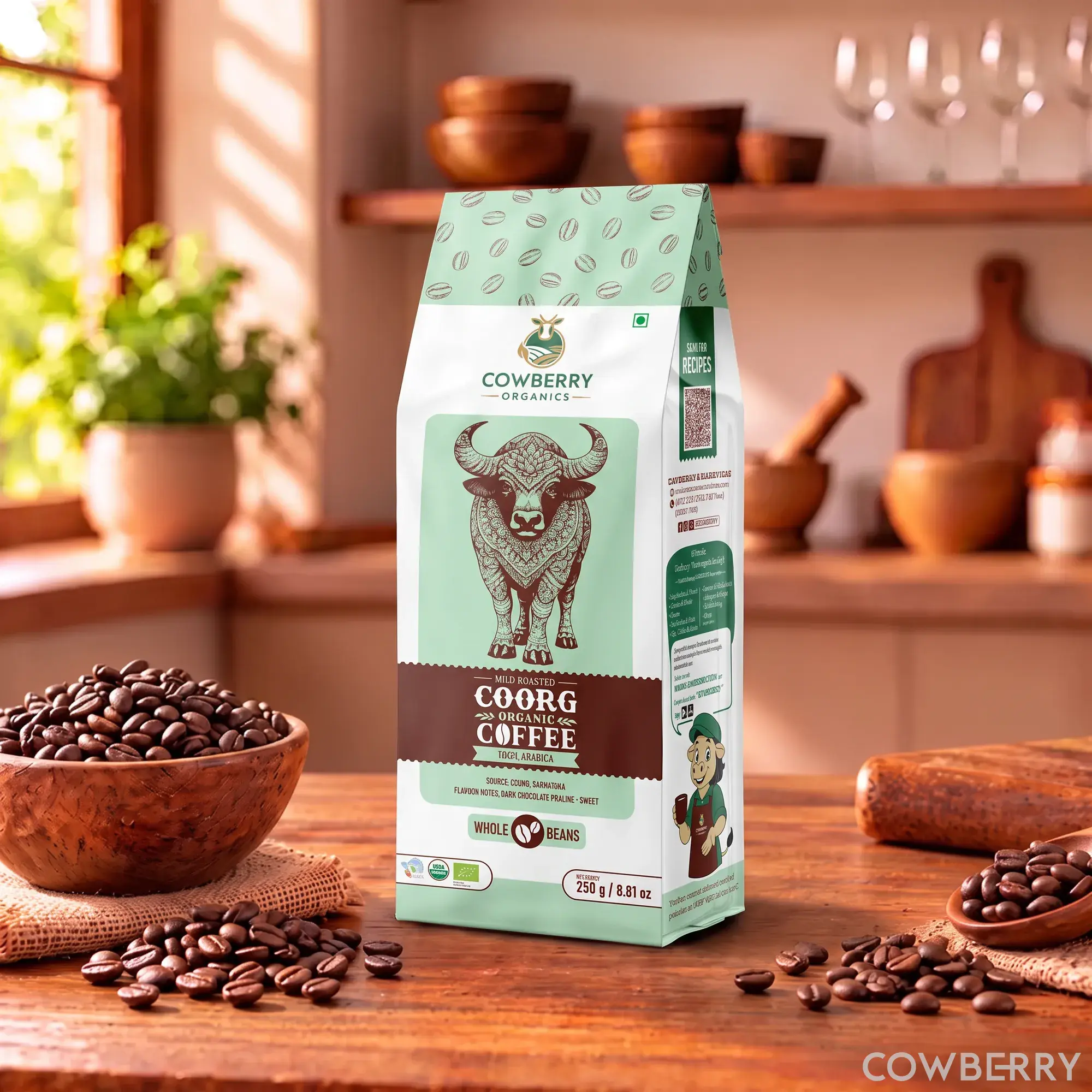
Between coffee powder and beans, the choice for filter coffee is mostly about freshness and effort. Powder is ready for the filter the moment it arrives; whole beans are ground at home, so the coffee in the filter is fresher at the cost of a grinder. COWBERRY's coffee powder is 100% Arabica from Coorg, Karnataka, handpicked, washed, sun-dried and mild roasted in small batches, then finely ground for the filter, and the beans are the same coffee left whole; both carry the line India Organic, USDA & EU certified. Whichever you pick, the filter, the milk and the pour stay the same.
FAQs
What is filter coffee?
It is the Indian coffee brewed through a two-tier steel filter: coffee powder is packed into the upper chamber, hot water seeps through it, and a strong decoction collects in the lower chamber. The decoction is then mixed with hot milk, sweetened to taste, and poured from tumbler to the wide bowl called a davara and back before drinking.
Does filter coffee have milk?
Traditionally, yes: the decoction from the filter is mixed with hot milk, which carries most of the cup's volume, and sugar is added to taste. The milk is what stretches a small amount of strong decoction into a full cup, and black filter coffee means taking the decoction alone.
Does filter coffee have caffeine?
Yes, and often more than instant. ICMR-NIN's guideline gives a 150 ml brewed cup 80-120 mg of caffeine, and the NHS notes that filter coffee and shop coffee can contain more than the 100 mg it lists for a mug of instant, so the decoction-based cup sits at the stronger end of the range.
Why filter coffee is served with bowl?
The bowl is the davara, and it is part of the ritual. The coffee is poured from tumbler to bowl and back to mix the decoction, milk and sugar evenly, to cool the cup to drinking temperature, and to build the froth, while the wide rim makes the hot drink easier to sip.
Is filter coffee good for health?
For most people the research leans positive: across its pooled meta-analyses, a 2017 BMJ umbrella review saw coffee tied to benefit more often than harm, with the strongest risk reductions at three to four cups a day against none. The cup's own additions, milk and sugar, decide the rest of the story, and moderation stays the rule.
How filter coffee is made?
Ground coffee is packed into the upper chamber of the two-tier metal filter, pressed down with the disc, and hot water is poured on top; the decoction drips into the lower chamber over several minutes. That decoction is then mixed with hot milk and sugar and poured between tumbler and bowl; the filter coffee how to make page has the full steps.
Can filter coffee be used in french press?
Yes for COWBERRY's finely ground powder: its listed brewing methods include French Press, Moka Pot, drip coffee makers and pour-over brewing, so the same packet serves both devices. The metal filter and the french press are different tools, but the powder is not tied to one.
References
- Dietary Guidelines for Indians, ICMR-National Institute of Nutrition
- NHS: foods to avoid in pregnancy (caffeine section)
- Poole R, Kennedy OJ, Roderick P et al. Coffee consumption and health: umbrella review of meta-analyses of multiple health outcomes. BMJ, 2017
- Wikoff D, Welsh BT, Henderson R et al. Systematic review of the potential adverse effects of caffeine consumption in healthy adults, pregnant women, adolescents, and children. Food Chem Toxicol, 2017
- USDA FoodData Central
Shop this article
Keep reading
Coffee vs tea: caffeine, benefits and which is better
Coffee calories per 100g: powder, beans and filter coffee
Coffee in pregnancy: how much caffeine is safe