by COWBERRY

5 minute read
How coffee is made: from bean to roast to coffee powder

How coffee is made? The bean travels from a shaded estate to your cup in a short chain: the cherries are picked at peak ripeness, washed, sun-dried, roasted in small batches and ground right after roasting. Whole beans skip only the last step. The full route, and how to grind beans at home in a blender, are below. Start with the coffee guide for the drink itself.
Short answer: how coffee is made
How coffee is made comes down to five steps: pick, wash, dry, roast, grind. On the estate, ripe coffee cherries are handpicked, washed and naturally sun-dried; the beans are then roasted in small batches and either packed whole or ground straight into powder. Because the powder is ground immediately after roasting, its aroma is held in until it is brewed. Grinding at home with a blender is possible too, with the pulses and patience below. The drink, its names and its nutrition are on the coffee guide.
How coffee beans are made: plant to roast
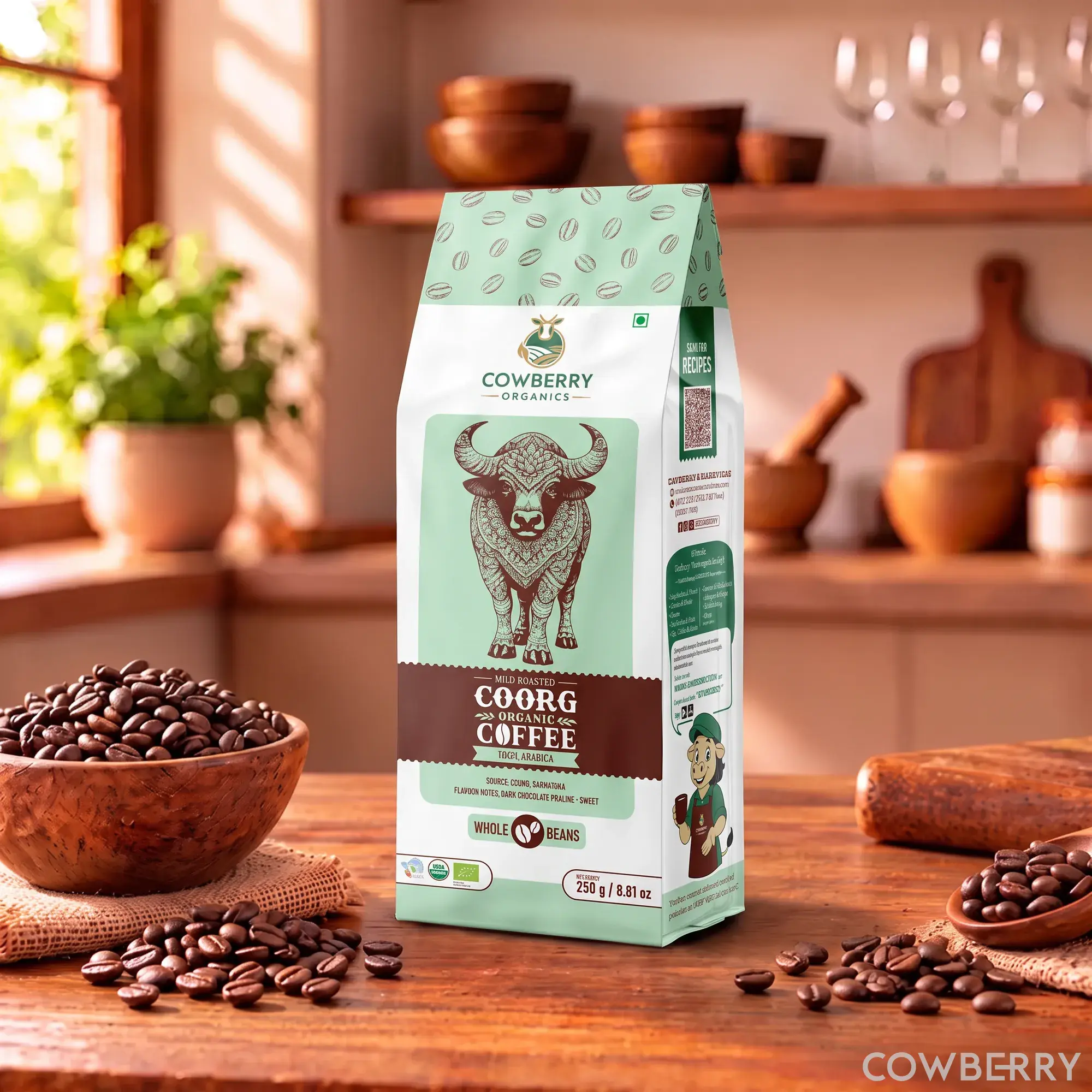
Every batch of whole coffee beans starts on the estate. The coffee plants grow under the shade of native trees, and the cherries are left to ripen slowly, which is how they develop their flavour. At harvest the cherries are handpicked at peak ripeness, then carefully washed and naturally sun-dried. The dried beans are gently roasted in small batches, and the roast is kept mild, so the cup stays smooth with low bitterness. Whole beans are packed straight after this step, and each pack is sealed immediately after roasting to hold the freshness, aroma and flavour in. That is why the beans pack tells you to grind only what you need.
How coffee powder is made: roast to grind
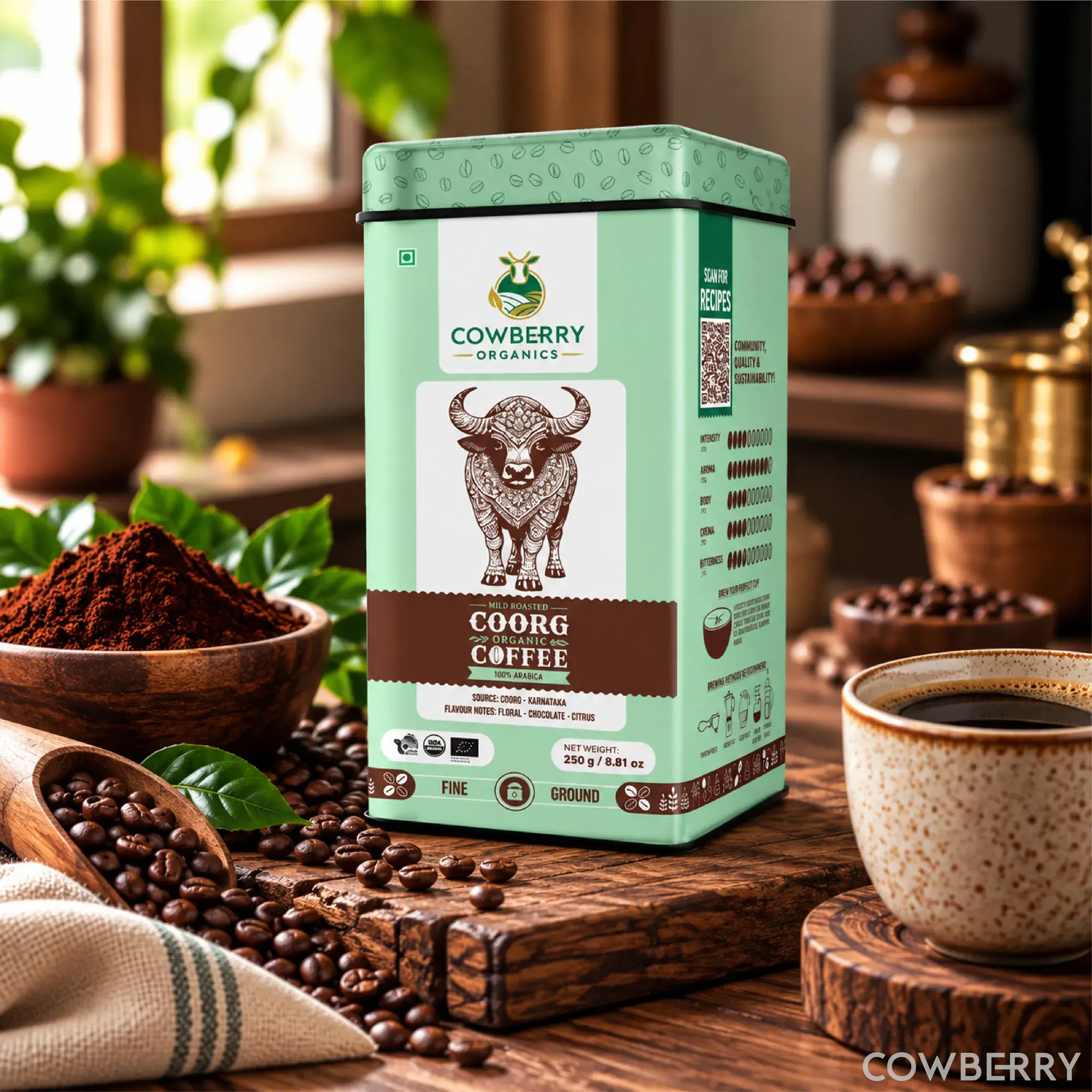
After the roast, the powder takes one more step: grinding. The roasted beans are ground immediately after roasting, to a fine, consistent texture, and the result is a coffee powder that is ready to brew with nothing else added. Fine ground means it suits a French Press, a Moka Pot, a drip coffee maker and pour-over brewing alike, and it needs no further grinding at home. The difference between buying the beans and buying the powder is only where the grinding happens; coffee powder vs beans lays out the trade-off between convenience and freshness.
Can coffee beans be grinded in a blender
Yes, with a few cautions. A blender or mixer grinder gives a workable powder for the pot method, though it cannot match the even, fine grind of the roaster's mill.
- Grind only what you need. Measure the beans for the cups you will brew now; ground coffee loses its aroma faster than whole beans.
- Use a dry jar. Any water in the jar clumps the powder.
- Pulse, do not run. Pulse in short bursts of a few seconds and shake the jar between pulses, so the beans move and the blade does not overheat them.
- Stop when the powder looks even. It will be coarser than shop powder; that is fine for the pot method and the french press.
- Brew straight away. The pot method on coffee how to make takes it from powder to cup.
Common mistakes (and fixes)
- Grinding a big batch. Ground coffee goes flat faster than whole beans; grind per brew and seal the beans again right away.
- Running the blender continuously. Long runs heat the beans and scorch the edges; short pulses with shakes between do better.
- A wet jar. Even a few drops clump the powder; wipe the jar dry first.
- Expecting shop-fine powder. A home blender cannot match a mill; sift the powder and re-pulse the coarser bits if the pot clogs.
- Storing the powder open. Air, warmth and damp flatten it; coffee powder how to store has the airtight container and the fridge question.
Time and quantity table
From plant to cup, the chain runs on its own clock; the table shows the order and the only measures a home cook needs.
| Stage | What happens |
|---|---|
| Grow | Coffee plants under the shade of native trees, cherries ripening slowly |
| Pick | Handpicked at peak ripeness |
| Wash and dry | Carefully washed, naturally sun-dried |
| Roast | Small batches, mild roast |
| Grind | Ground immediately after roasting; whole beans sealed right away instead |
| Home grind | Per brew, in short pulses in a dry blender jar |
| Brew | 1 tablespoon of powder (about 10 g) per 150 ml cup |
FAQs
Can coffee beans be grinded in a blender?
Yes, coffee beans can be ground in a blender, in short pulses. Shake the dry jar between pulses so the beans keep moving, and stop when the powder looks even; it will be coarser than milled shop powder, which suits the pot method and the french press. Grind only what you need, and brew the powder straight away.
How coffee beans are made step by step?
Coffee beans are made in five steps: the cherries ripen under shade on the estate, are handpicked at peak ripeness, washed, naturally sun-dried, and roasted in small batches to a mild roast. Whole beans are then packed and sealed immediately after roasting, so the pack reaches you with its freshness, aroma and flavour intact.
How coffee powder is made?
Coffee powder is made by grinding roasted coffee beans: the roasted beans are ground immediately after roasting to a fine, consistent texture, and packed ready to brew. Nothing is added, and no further grinding is needed at home. The fine grind suits a French Press, Moka Pot, drip coffee maker and pour-over.
What is coffee powder?
Coffee powder is roasted coffee beans ground fine and ready to brew in hot water, with nothing added. One tablespoon (about 10 g) in 150 ml of hot water makes a cup; the Dietary Guidelines for Indians count a brewed cup of 150 ml at 80-120 mg of caffeine, so moderation keeps the day within the guideline's 300 mg limit.
References
Shop this article
Keep reading
Coffee vs tea: caffeine, benefits and which is better
Coffee calories per 100g: powder, beans and filter coffee
Coffee in pregnancy: how much caffeine is safe