by COWBERRY

6 minute read
Coffee powder vs beans: which is fresher and how to choose

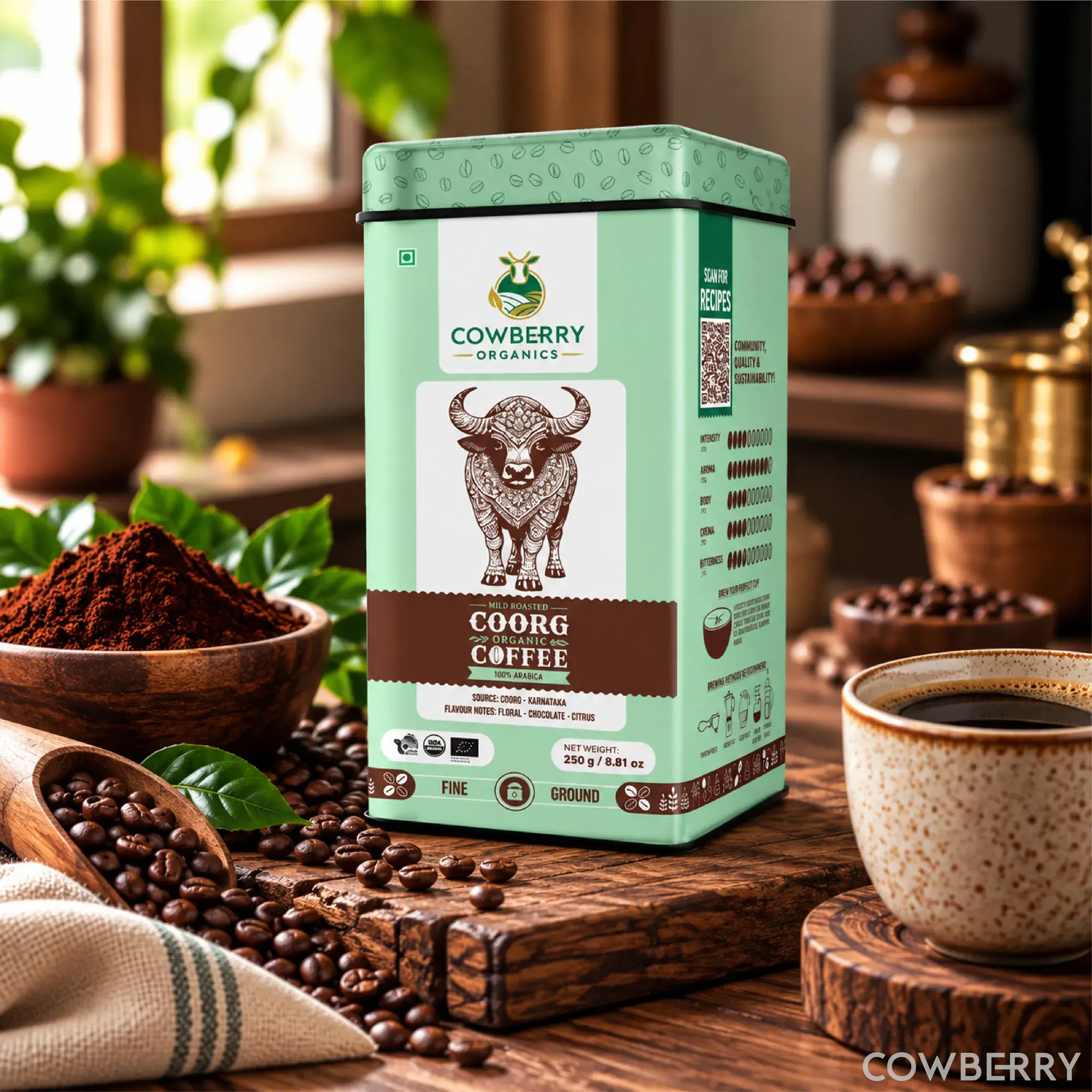
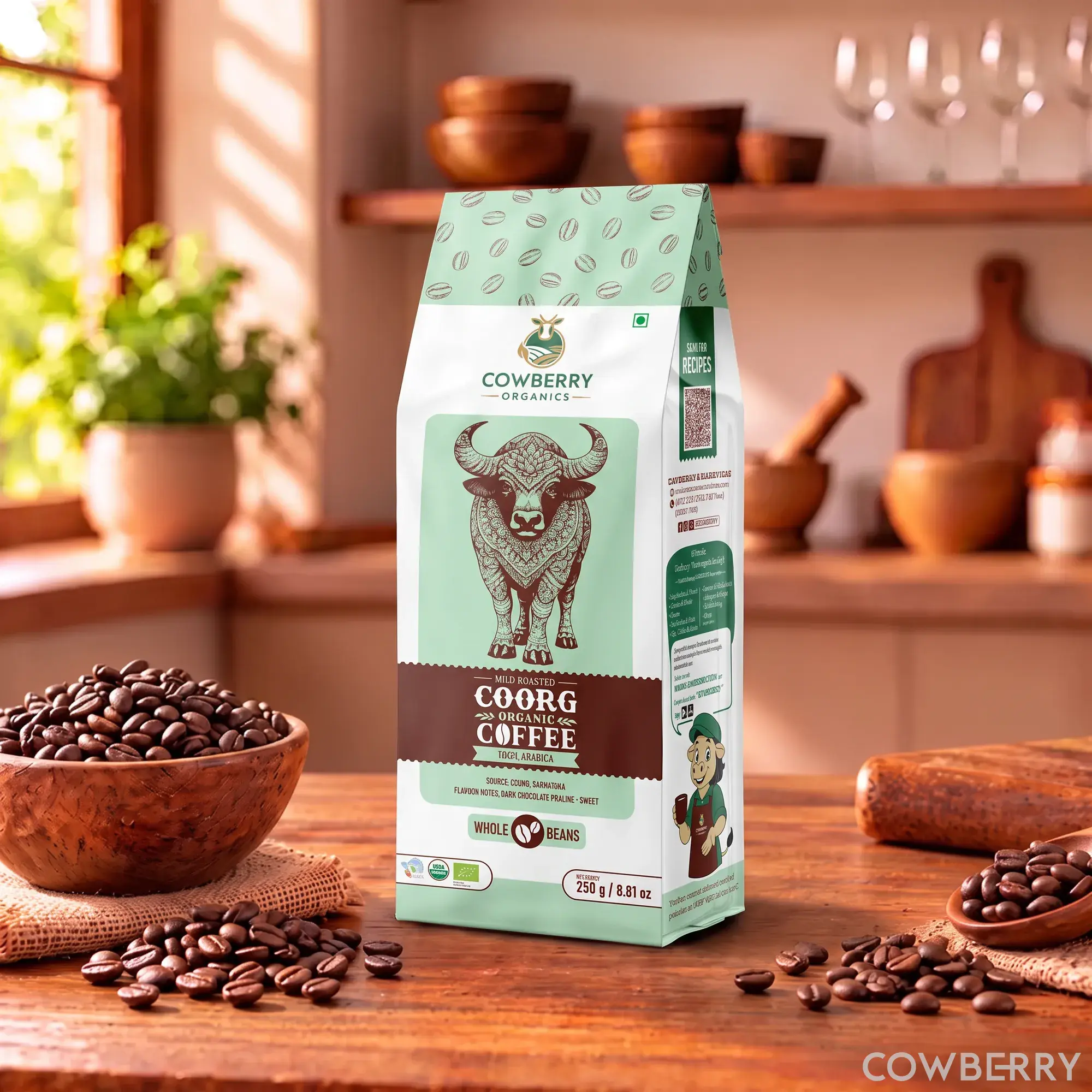
Coffee powder vs beans: the difference is one step, grinding, and it decides freshness. Beans are the whole roasted beans, sold unground so you grind only what you need; powder is the same bean ground fine and packed ready to brew. Both sides, the trade-offs and who each suits are below. The coffee guide is the place to start for the drink itself.
The verdict in three lines
One: coffee powder and coffee beans are the same coffee, the same 100% Arabica bean, the same mild roast; the only difference is when it is ground. Two: beans win on freshness, because the pack is sealed immediately after roasting and the grinding happens only when you are ready to brew, while powder wins on convenience, because the grinding is already done. Three: if you own a grinder and brew daily, buy beans; if you want the cup without the machine, buy powder. The coffee guide carries the drink's full story.
Coffee beans vs ground coffee: side by side
What it is. Beans: whole roasted coffee, nothing ground, nothing added. Powder: the same beans milled to a fine, even texture. Freshness. Beans: the aroma stays locked in the sealed pack until you grind. Powder: ground right after roasting, so it starts fresh and fades from the moment the pack opens. Work at home. Beans: grind per brew, every brew. Powder: open, measure, brew. Brewing. Both suit the French Press, Moka Pot, drip and pour-over; the powder needs no extra step, the beans need a grinder first. Keeping. Beans hold their freshness longest; powder wants a sealed jar, cool and dry. That is the whole difference between coffee beans and coffee powder, side by side.
Nutrition: one set of numbers for both
Beans and powder share their nutrition, because they are the same food one step apart: the source gives a single set of figures for coffee beans and powder together, and the table below is that shared set, per 100 g of the dry coffee. The caffeine in the brewed cup is likewise one figure for both, since the same bean makes the cup either way.
| Nutrient | Coffee beans / powder (dry) |
|---|---|
| Energy (kcal) | 353 |
| Protein (g) | 12 |
| Fat (g) | 0.5 |
| Carbohydrates (g) | 75 |
| Dietary fibre (g) | 0 |
| Iron (mg) | 4.4 |
| Calcium (mg) | 141 |
| Magnesium (mg) | 327 |
| Potassium (mg) | 3540 |
| Sodium (mg) | 37 |
| Zinc (mg) | 0.3 |
| Folate (mcg) | 0 |
| Vitamin C (mg) | 0 |
Per 100 g raw, edible portion. Composition: USDA FoodData Central (SR Legacy), FDC ID 171893, NDB 14214. — means not reported. These are average values for the food; the label on a pack gives the values for that product.
Taste and cooking
Ground at the roastery and packed straight after the roast, the powder brews a smooth, even cup, and its fine grind extracts the same way every time. Beans ground minutes before brewing hold more of the roast's aroma in the cup, at the cost of the grinder and the minute. In the kitchen the two swap freely: the same fine powder works in a French Press, Moka Pot, drip maker or pour-over, and home-ground beans work in all of them too. On caffeine the guidelines give one figure for brewed coffee whatever the grind: a 150 ml cup carries 80-120 mg of caffeine, so beans and powder pour the same number into the same cup.
Cost and where each fits
The two sides cost in kit and minutes, not in money: the beans ask for a grinder and a minute of grinding per brew, while the powder asks for nothing but hot water. Beans fit the home kitchen where the grinder lives on the counter and the daily cup matters enough to grind for it; powder fits everywhere else, the office desk, the travelling bag and the busy morning, because the work is already done at the roastery. Most households end up with both: beans for the slow weekend cup, powder for the week.
Which for whom
- Choose beans if you own a grinder or blender, brew daily and want the freshest cup; the pack stays sealed until each brew, and how coffee is made shows what the grinder does.
- Choose powder if you brew without a machine, make filter coffee or want the cup in minutes; filter coffee how to make and coffee how to make both start from powder.
- Keep either side right. Beans resealed after every measure, powder in a sealed jar; coffee powder how to store has both.
Names: one word covers both
In English there is one name for both sides: the USDA record names the dry powder 'Beverages, coffee, instant, regular, powder', and the beans are simply the same coffee before grinding. The table below is the same one the coffee in hindi page prints, with the one regional name a source carries. So the naming question has one answer for both sides of this page: the same name, the same source, and the same honest dashes where no regional name is recorded. Nothing in the comparison turns on the name; everything turns on the grind.
| Language | Name (romanised) |
|---|---|
| English | Beverages, coffee, instant, regular, powder |
| Hindi | — |
| Marathi | — |
| Gujarati | — |
| Punjabi | — |
| Bengali | — |
| Odia | — |
| Assamese | — |
| Kannada | — |
| Telugu | — |
| Tamil | Kaapi |
| Malayalam | — |
| Urdu | — |
| Sanskrit | — |
| Botanical name | — |
Source: USDA FoodData Central record 171893 (English and scientific name only; no Indian-language names in source). — means no name recorded in the source.
Tamil ‘Kaapi’: Indian filter coffee - Wikipedia.
FAQs
Can coffee beans be grinded in a blender?
Yes, a blender or mixer grinder can grind coffee beans: pulse in short bursts, shake the dry jar between pulses, and stop when the powder looks even. The result is coarser than milled powder, which suits the pot method and the french press; grind only what you will brew.
What is coffee powder?
Coffee powder is the ready-ground form of the same roasted beans: milled fine, packed right after roasting, and needing only hot water. Against whole beans its one trade-off is freshness; against every other coffee it is the same bean, the same roast and the same cup.
Does coffee powder expire?
Coffee powder does not expire the way fresh food does; it stales, which means the aroma fades and the cup turns flat. A sealed jar kept cool, dry and dark slows the fading; whole beans hold their freshness longest of all, which is exactly why the beans pack stays sealed until the grind.
Can filter coffee be used in french press?
Yes, filter coffee can be brewed in a french press, since the fine grind steeps the same way in the press's mesh as in the metal filter. A little fine sediment may settle at the bottom of the cup; pouring through a fine sieve removes it. Steep for four minutes and press the plunger slowly.
References
Shop this article
Keep reading
Coffee vs tea: caffeine, benefits and which is better
Coffee calories per 100g: powder, beans and filter coffee
Coffee in pregnancy: how much caffeine is safe