by COWBERRY

5 minute read
Coffee powder how to store: keep beans and grounds fresh

Coffee powder how to store? In an airtight container, in a cool, dry place, away from heat and sunlight, and the beans by the same three rules plus grinding only what you need. The fridge, the expiry question and the signs of stale coffee are answered below, starting with the airtight rule and why it matters; the coffee guide has the drink's story.
Short answer: coffee powder how to store
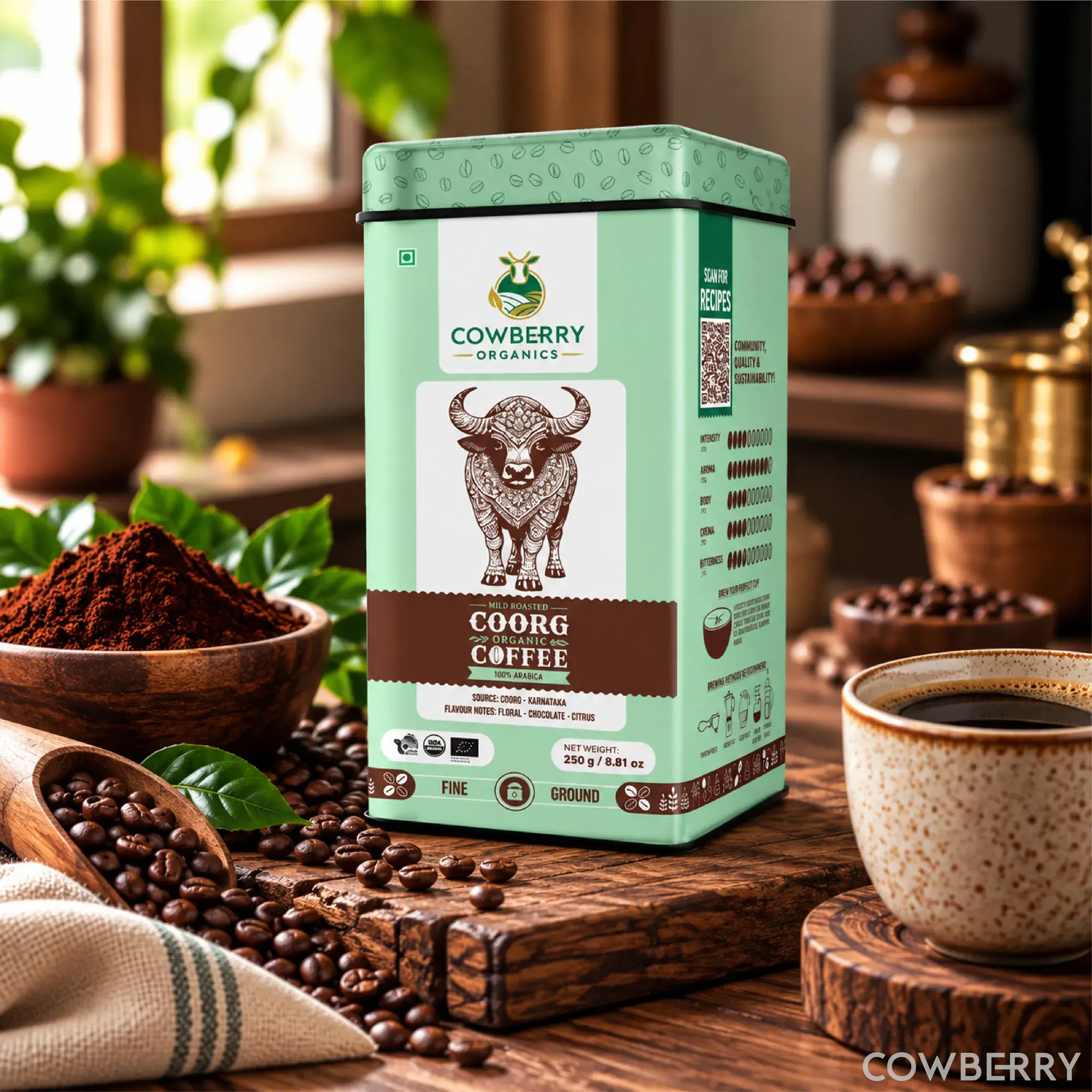
Store coffee powder in an airtight container in a cool, dry place away from heat and sunlight; that is the rule the powder pack itself prints. Air, warmth, light and damp are the four things that flatten coffee, and the airtight container stops the first and the last. The same rule covers beans, with one extra: grind only what you need, and reseal the pack the moment the beans are measured out. Everything about the drink itself is on the coffee guide.
Coffee beans how to store
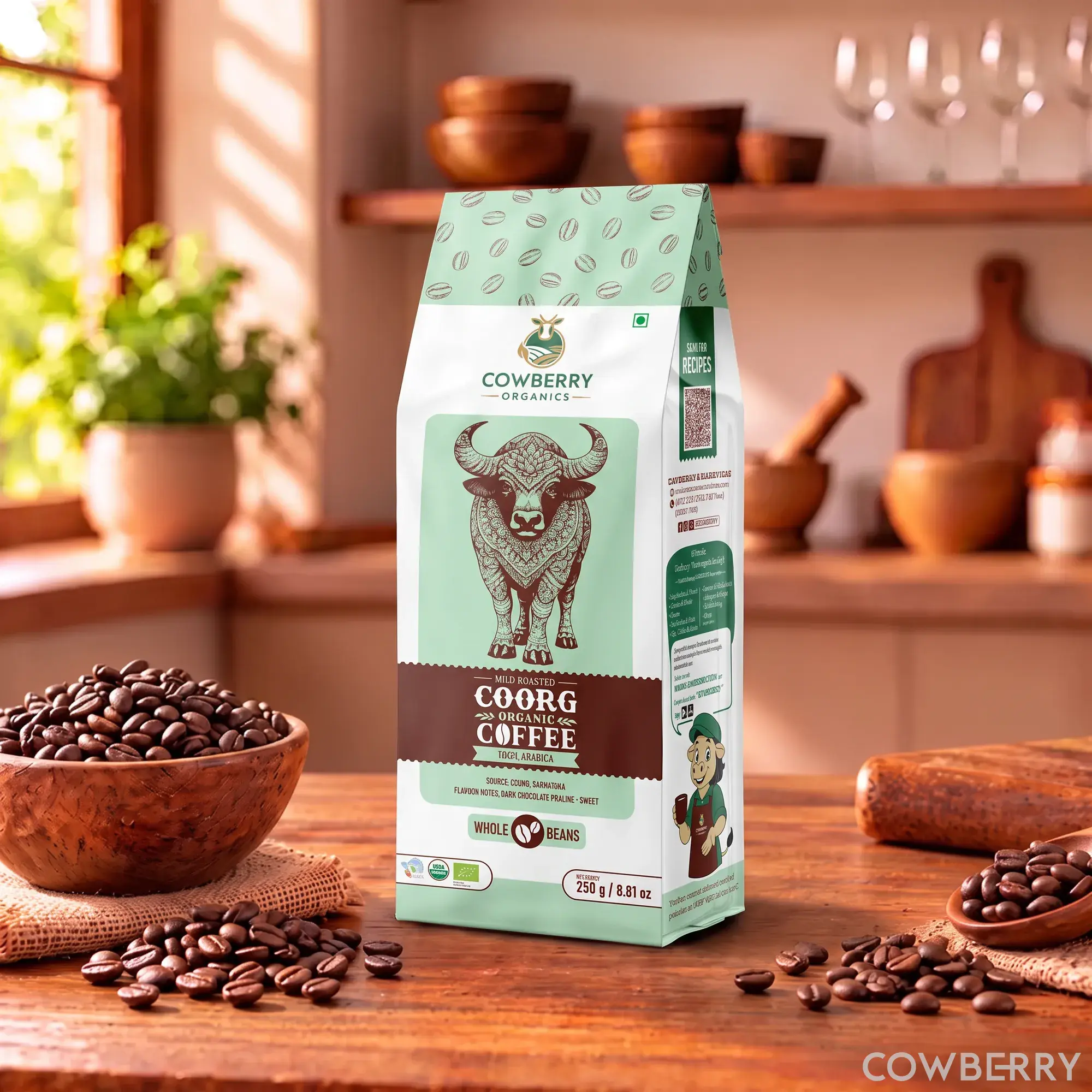
Whole coffee beans store better than ground coffee, and the bean pack is sealed immediately after roasting to preserve its freshness, aroma and flavour; grinding only what you need keeps that freshness in the cup. At home, coffee beans how to store comes down to resealing that pack tightly after every use and keeping it in the same cool, dry, dark place as the powder. Measure out the beans, grind only the amount you will brew, and put the pack away before the water even boils. Whole beans versus ready powder, and how much freshness each gives up, is on coffee powder vs beans.
Ground coffee how to store
Ground coffee how to store is the same airtight rule, followed more strictly, because the powder takes up air, damp and smells faster than the whole bean. A jar with a tight-fitting lid, kept in a cool, dry place away from heat and sunlight, is all the powder needs; a smaller jar is better than a big one, because less air sits on top of the powder between brews. Scoop with a dry spoon, and close the jar before the steam from the kettle reaches it. Spent coffee grounds are a different matter: if you keep them for the garden, spread them out and let them dry, or they turn mouldy in the container.
The fridge question
Dry coffee powder does not need the fridge, and the printed advice for it is a cool, dry place, not a cold, damp one: fridge air carries moisture and food smells, and both cling to ground coffee. The fridge earns its place only after brewing. Brewed coffee kept for later belongs in the fridge, covered, and the UK Food Standards Agency's leftover rule is the safe bracket: cool it and chill it within two hours, and drink it within two days, or freeze it. Keep the jug covered, because coffee picks up the smells around it overnight.
Signs of stale coffee and the mistakes to avoid
- No smell. Fresh coffee smells the moment the jar opens; a powder with no scent has already gone stale.
- A wet spoon. Even a few drops of water in the jar make the powder clump and cake; always scoop with a dry spoon.
- Leaving the jar open. Air is what takes the aroma; close the jar between every brew, and keep it away from the stove's heat and steam.
- Fridge or freezer for dry powder. Cold storage brings damp and smells; keep dry coffee in a cool cupboard instead.
- Grinding the whole pack. Ground coffee goes flat faster than beans; grind per brew, the way how coffee is made finishes at the mill.
- Keeping brewed coffee on the counter. Brewed coffee kept for later goes into the fridge within two hours, not onto the shelf.
Time and quantity table
The table is the whole storage page in one look: where each form of coffee lives, and for how long.
| What | Storage |
|---|---|
| Whole beans | Airtight pack or jar, cool and dry, resealed after every measure |
| Coffee powder | Airtight container, cool, dry place, away from heat and sunlight |
| Ground coffee at home | Small airtight jar, dry spoon, closed between brews |
| Spent grounds | Spread to dry if kept, or thrown away |
| Brewed coffee | Fridge within two hours, drunk within two days or frozen |
How that stored powder becomes a cup is on coffee how to make, pot method and french press included.
FAQs
Does coffee powder expire?
Coffee powder does not go off the way milk does, but it does go stale: the aroma fades and the brewed cup turns flat. There is no single printed shelf life for dry coffee, so judge by the senses; a powder that smells of nothing when the jar opens has passed its best. The airtight container in a cool, dry place away from heat and sunlight keeps that day furthest away.
Can coffee powder be kept in fridge?
It can, but it should not need to be: the pack's own printed advice is an airtight container in a cool, dry place away from heat and sunlight, and a fridge is cold and damp rather than cool and dry. Fridge air carries moisture and food smells, both of which cling to ground coffee. A cool cupboard with the lid on tight does the job better.
Why coffee powder becomes hard?
Moisture: water has reached the powder and the fine grains have caked into a hard lump. A wet spoon, steam from the kettle, or a damp cupboard all do it, which is why the rule is a dry spoon and a closed jar kept away from the stove. A hard, caked lump is stale as well as hard to scoop; start a fresh pack and keep this one dry.
Can coffee be kept overnight?
Yes, brewed coffee keeps overnight in the fridge: cool it, cover it and chill it within two hours of brewing, and drink it within two days, the UK Food Standards Agency's rule for leftovers applied to a brewed cup. Do not leave it out on the counter overnight. Keep the jug covered, because coffee picks up fridge smells.
References
Shop this article
Keep reading
Coffee vs tea: caffeine, benefits and which is better
Coffee calories per 100g: powder, beans and filter coffee
Coffee in pregnancy: how much caffeine is safe