by COWBERRY

7 minute read
Green tea calories per 100g: nutrition, protein and GI

Green tea calories per 100g is a question with a twist: the Indian food composition tables (IFCT 2017) list no dry-leaf entry, so no official per-100 g figure is printed, and a brewed cup gets its countable energy from what you add. The numbers that do exist come from the pack panel and the guidelines; the leaf itself is covered on the green tea hub.
Green tea calories per 100g: what the tables print
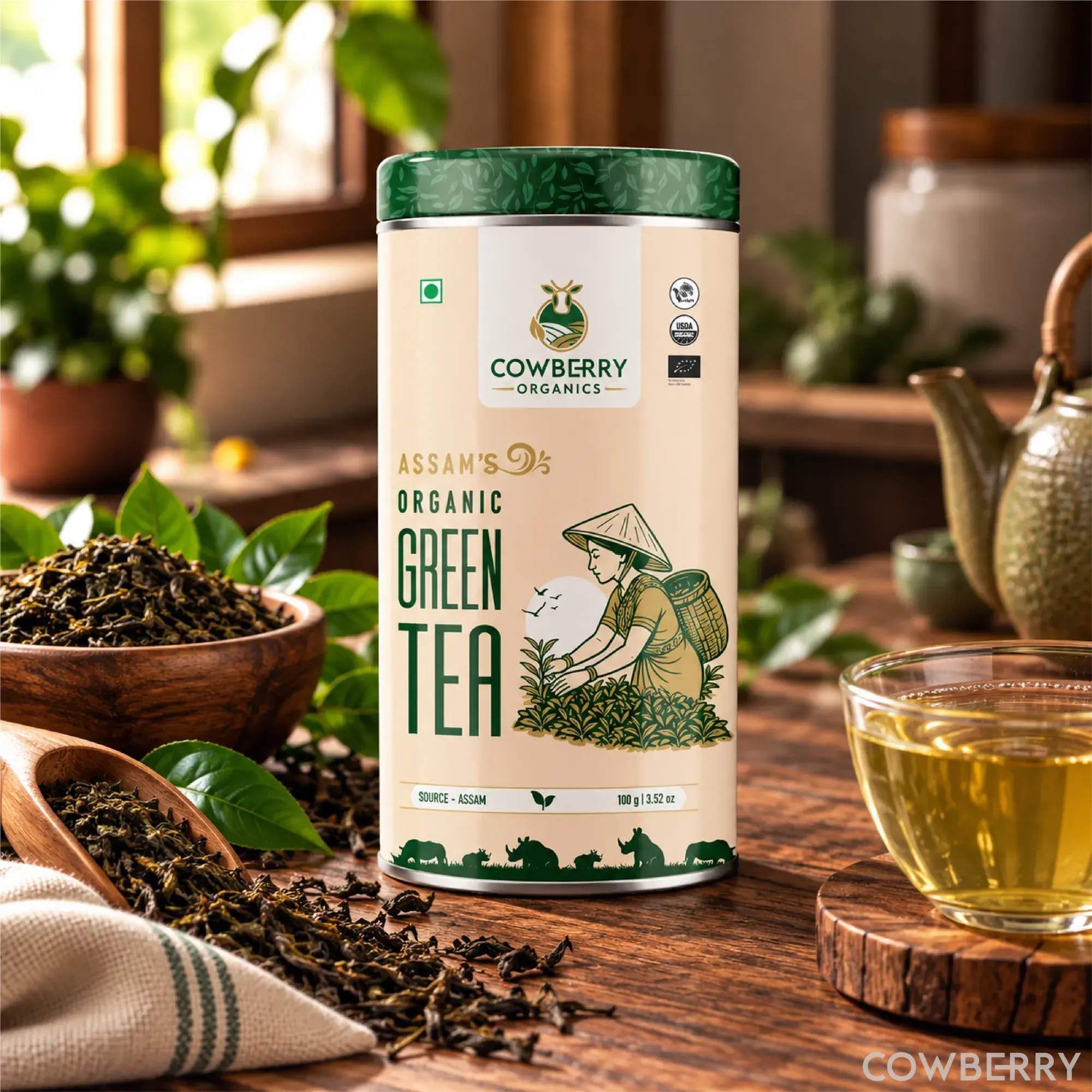
The official tables print no per-100 g values for green tea at all. The Indian Food Composition Tables 2017 of ICMR-National Institute of Nutrition carry no entry for the dry leaf, and USDA FoodData Central records only brewed and ready-to-drink green tea, not the dry leaf. The per-100 g numbers that do exist are the ones a pack must carry: COWBERRY's pack panel, per 100 g of dry leaf, prints 362.8 kcal of energy, 69.46 g of carbohydrates, 21.24 g of protein, 17.89 g of fibre, 63.445 mg of sodium, 1744.223 mg of potassium, 468.627 mg of calcium, 18.811 mg of iron and 7.08 mg of vitamin C. The panel prints no fat figure.
Those are dry-leaf numbers, and a 100 g portion of dry leaf is an entire small pack. A brewed cup carries only what a teaspoon of leaf gives up to the water. That is why this page keeps the two apart: the dry leaf per 100 g, and the cup you actually drink.
Green tea calories in one cup
Neither the official tables nor the guidelines print a calorie figure for a plain brewed cup of green tea, so none is given here. The energy you can actually count is what goes into the cup on top: a teaspoon of sugar (5 g) adds roughly 19 kcal, a teaspoon of honey (7 g) adds about 21 kcal, and two teaspoons of sugar in a cup mean about 39 kcal before you have drunk anything. Three cups a day, each with two teaspoons of sugar, come to 30 g of sugar, or about 116 kcal.
The plain cup is water steeped with a teaspoon of leaves for 2 to 3 minutes and then strained, as the page on how to make green tea sets out. What the leaf gives the water is the flavour, the caffeine and the polyphenols; the dry leaf, with its 362.8 kcal per 100 g, stays in the strainer. So the calories in one cup of green tea come down to the additions: the leaf's energy stays behind, and the sugar or honey you choose decides the number. The same arithmetic, cup by cup, is on the green tea for weight loss page.
Green tea protein, carbs and fibre per 100g
Green tea protein per 100 g of dry leaf is 21.24 g on the COWBERRY pack panel, with 69.46 g of carbohydrates and 17.89 g of fibre. Read against the cup, those are dry-leaf values: a teaspoon of leaf steeped in water and then lifted out gives the cup only a small part of each figure, and neither the official tables nor the guidelines print how much. Green tea is a drink, not a plate of food, so no one counts on it for protein or fibre; for a tea drinker, the meal beside the cup carries those.
The dry leaf is dense because it is dried, and the figures above describe the whole leaf as food, which is what matters if you eat the leaf rather than brew it. Powdered leaves kneaded into roti dough or stirred through porridge take those per-100 g values along, a teaspoon at a time, as the page on whether green tea leaves are safe to eat explains. The fibre sits in the leaf; the cup gets only what dissolves, and no per-cup figure is printed.
Green tea glycemic index: why there is no number
The University of Sydney GI database lists no entry for green tea, so no glycemic index is printed for the dry leaf or for a brewed cup. A GI value describes the blood-glucose response to a carbohydrate food, and the foods in that database are the ones tested that way. The 69.46 g of carbohydrates per 100 g of dry leaf belongs to the leaf; a plain cup is water steeped with a teaspoon of leaves and then strained, and the sugar or honey you stir in is the carbohydrate that reaches the cup.
That answers the question in practice. There is no green tea GI to be high or low; the sweetening you choose decides the cup's carbohydrate, so anyone counting carbohydrate counts the spoon of sugar or honey, not the tea. For foods that do carry a GI, the database prints the value with the form tested, but green tea has no such entry.
Green tea nutrition facts: caffeine, minerals and polyphenols
For the cup itself, the guidelines print exactly one figure, caffeine: 30 to 65 mg in a 150 ml cup of brewed tea, and the tolerable limit they give for a day is 300 mg, with moderation asked for. The same guidelines list what else tea carries, theobromine, theophylline, and flavonoids and other polyphenols, with no per-cup amounts printed, and they add that tea without milk, in moderation, brings these through best.
The minerals belong to the dry leaf. Per 100 g of dry leaf, the COWBERRY pack panel prints 1744.2 mg of potassium, 468.6 mg of calcium, 18.8 mg of iron, 63.4 mg of sodium and 7.08 mg of vitamin C. A teaspoon of leaf in the pot carries only a small share of each into the water, and neither the official tables nor the guidelines print a per-cup mineral figure, so none is quoted here. The sourced list of what tea gives you is on the green tea benefits page.
Keeping the cup light: brewing, timing and what to skip
Three habits keep the cup's energy at its minimum. Drink it plain, because tea's benefits, per the guidelines, come through best when the cup has no milk, and a plain cup has no added energy to count. Brew as the pack directs, one teaspoon of leaves into water at 80 to 85 °C for 2 to 3 minutes, then strain; the everyday quantities and timings are on how to use green tea. And time the cup around meals: tannin interferes with iron absorption, which is why the guidelines keep tea at least one hour clear of a meal. A 2017 trial in twelve healthy women put numbers on it: tea with the meal cut absorption from 5.7% to 3.6%, and tea held an hour after it brought the figure back to 5.7%, cutting the tea's inhibitory effect by about half.
For a drink beyond the plain cup, roti, porridge, oatmeal and iced tea versions are all on the green tea recipes page. Names, storage and the full set of green tea pages sit on the green tea hub.
FAQs
Does green tea have calories?
Plain brewed green tea has no printed calorie figure, and the leaf's 362.8 kcal per 100 g (COWBERRY pack panel) stays in the strainer. The calories that can be counted are what you add: a teaspoon of sugar (5 g) adds about 19 kcal and a teaspoon of honey (7 g) about 21 kcal.
How many calories in a green tea?
Count what goes into the cup: a teaspoon of sugar (5 g) adds about 19 kcal, a teaspoon of honey (7 g) about 21 kcal, and two teaspoons of sugar about 39 kcal; three cups like that a day come to about 116 kcal from 30 g of sugar. A plain cup has no printed calorie figure.
Does green tea have nutrients?
Yes, per the guidelines: a 150 ml cup holds 30 to 65 mg of caffeine, and tea carries theobromine, theophylline, flavonoids and other polyphenols, with no per-cup amounts printed. The dry leaf's pack panel lists protein, fibre and minerals per 100 g, but a brewed cup receives only a small share of them.
Is green tea high glycemic index?
No figure exists to be high or low: the University of Sydney GI database lists no entry for green tea, and no GI is printed for the dry leaf or the cup. A GI value describes the blood-glucose response to carbohydrate foods; the sugar or honey you add to the cup is what carries the carbohydrate.
Does green tea have caffeine?
Yes. The ICMR-NIN dietary guidelines give the brewed cup 30 to 65 mg of caffeine per 150 ml, below the 80 to 120 mg they list for brewed coffee. The same guidelines name 300 mg of caffeine daily as the tolerable limit, moderation included.
References
- Indian Food Composition Tables (IFCT) 2017, ICMR-National Institute of Nutrition
- USDA FoodData Central
- Dietary Guidelines for Indians, ICMR-National Institute of Nutrition
- University of Sydney glycemic index database (GI search)
- Ahmad Fuzi SF, Koller D, Bruggraber S et al. A 1-h time interval between a meal containing iron and consumption of tea attenuates the inhibitory effects on iron absorption. Am J Clin Nutr, 2017
Shop this article
Keep reading

Coffee vs tea: caffeine, benefits and which is better
Coffee calories per 100g: powder, beans and filter coffee

Coffee in pregnancy: how much caffeine is safe