by COWBERRY

7 minute read
Filter coffee vs instant coffee: taste, strength and how they differ

Filter coffee vs instant coffee is a choice between a brewed decoction and a dissolved powder. Filter kaapi is ground roasted beans brewed in the two-tier Indian filter, then mixed with hot milk; instant coffee is stirred straight into hot water or milk. Filter coffee can carry more caffeine than the 100 mg the NHS estimates for a mug of instant. See the coffee hub for the wider coffee story.
Filter coffee vs instant coffee: the verdict in three lines
Filter coffee is the stronger, fuller cup. Ground roasted beans are brewed into a dark decoction, and the NHS notes that filter coffee can carry more caffeine than the 100 mg it estimates for a mug of instant.
Instant coffee is the quicker cup. No filter, no brewing, no grounds to wash: a spoonful dissolves straight into hot water or hot milk. That is its whole advantage, and on a rushed morning it is a real one.
Pick by ritual, not by health. Both cups are mostly water with some caffeine and whatever milk and sugar you add, and the big coffee reviews do not split their findings by brewing method.
The coffee hub covers the wider coffee story, from names to nutrition.
Side by side: brew method, strength, caffeine and gear
The two coffees differ in how the cup is made and in caffeine per mug. The caffeine figure below is the NHS estimate for a mug of instant coffee, together with its note that filter coffee can carry more.
| Filter coffee | Instant coffee | |
|---|---|---|
| What you start with | Roasted coffee beans, ground, or whole beans ground at home | Instant coffee granules |
| How the cup is made | Hot water over the powder in the upper cup of the two-tier filter; the decoction drips into the lower cup, then hot milk | Granules dissolved in hot water or hot milk |
| Caffeine per mug (NHS) | Can be more than the instant figure | About 100 mg |
| Strength and body | Strong decoction, usually a deeper, heavier cup | Lighter cup, unless the spoon is heaped |
| Gear and time | The steel filter set and a few minutes of brewing | A mug, a spoon, a moment |
Read the table down and the practical split appears: filter coffee is the made-at-home brew with the bigger caffeine range, instant coffee the dissolve-and-drink one with a printed figure.
Difference between filter coffee and instant coffee: how each is made
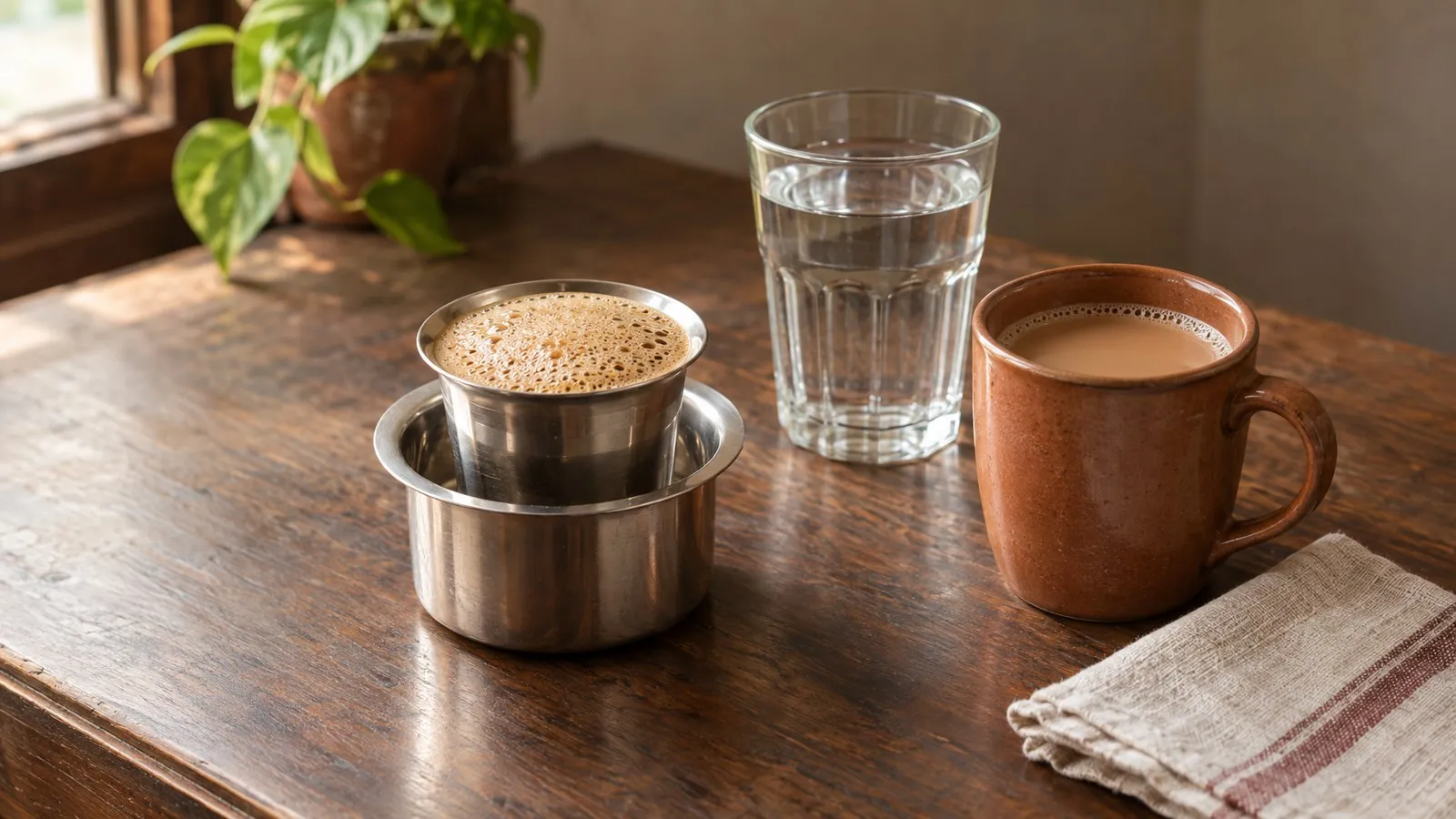
Filter coffee is brewed, not dissolved. Ground coffee goes into the upper cup of the two-tier steel filter, hot water is poured over it, and the decoction drips through the pierced base into the lower cup. That decoction is then mixed with hot milk, traditionally poured between the tumbler and davarah to cool and froth it. The what is filter coffee guide explains the ritual, and the how to make filter coffee page gives the full method with the milk ratio.
Instant coffee skips every step. It comes as dry granules that dissolve into hot water or milk, so there is nothing to brew, press or wash up. The cup is ready in moments, which is why desks, hostels and travel bags usually carry instant. The coffee how to make page puts instant, filter and french press methods side by side.
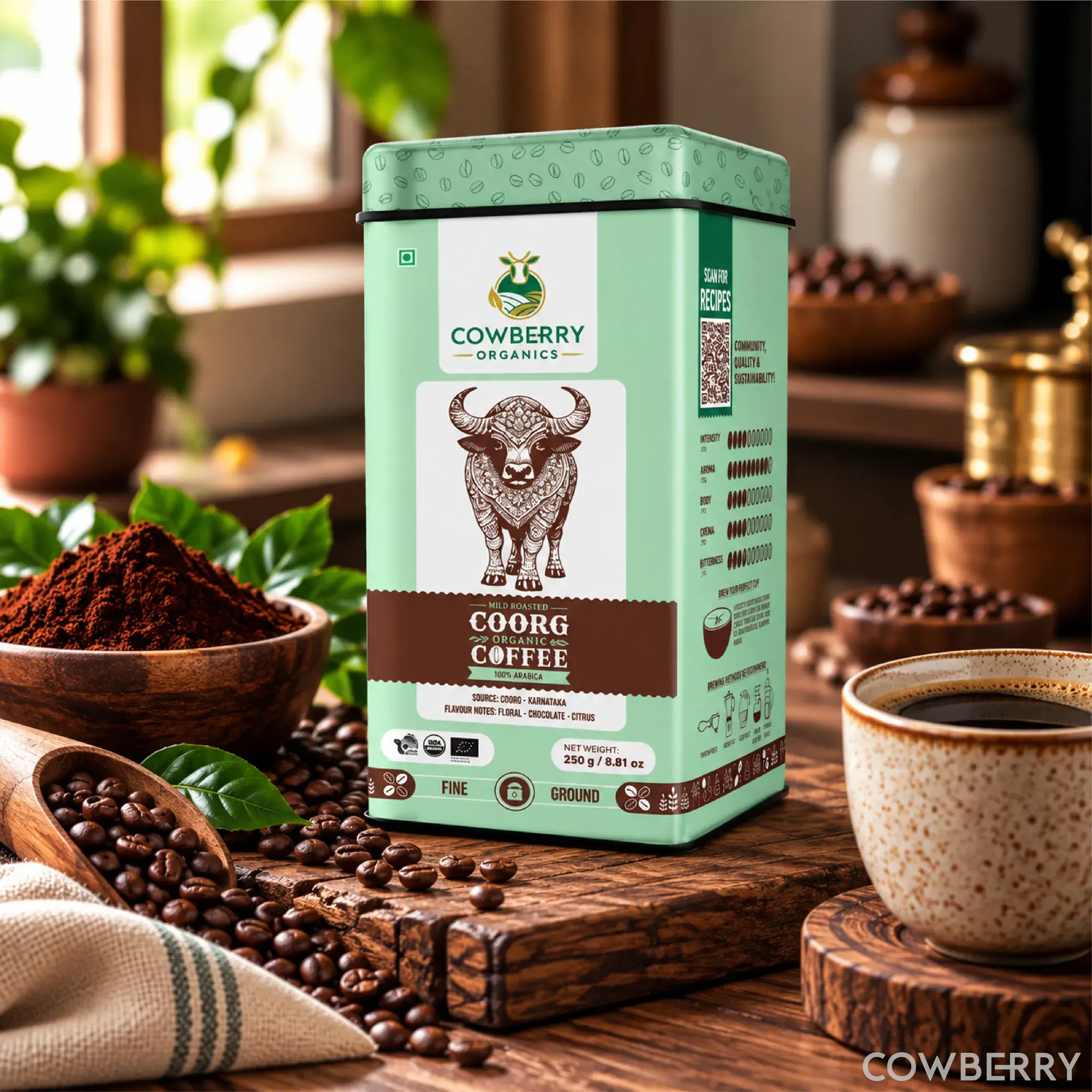
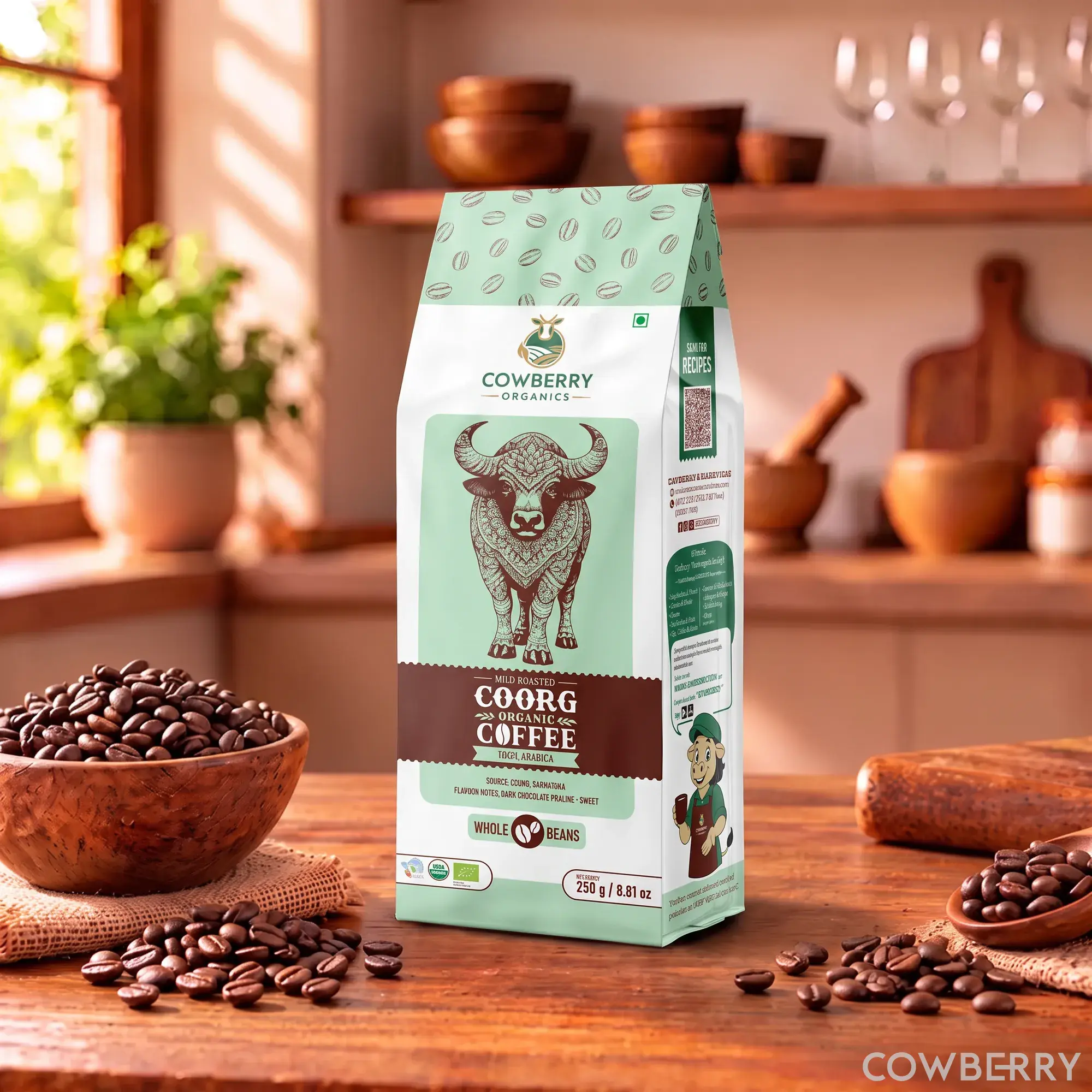
Read the pack for what else is in the powder. COWBERRY's Arabica coffee powder prints that it contains no chicory, preservatives or additives, and the same mild roast also comes as whole beans to grind at home.
Nutrition and caffeine: what the cup carries
The composition tables give one relevant set of numbers, for dry coffee powder per 100 g: 353 kcal, 12.2 g protein, 0.5 g fat and 75.4 g carbohydrate, with 4.41 mg iron, 141 mg calcium, 327 mg magnesium and 3540 mg potassium, from USDA FoodData Central; IFCT 2017 has no coffee entry. A level teaspoon (5 g) of dry coffee powder works out to roughly 18 kcal, and a brewed mug of either coffee is mostly water, so the calories people count sit in the milk and sugar, which these tables do not cover.
Caffeine is where the two cups part: the NHS estimates about 100 mg for a mug of instant coffee and says filter coffee can carry more. No printed value exists for a mug of filter kaapi itself, since the strength depends on the powder, the brew and the milk. The coffee calories per 100g page does the fuller arithmetic for powder, beans and filter coffee.
| Nutrient | Coffee beans / powder (dry) |
|---|---|
| Energy (kcal) | 353 |
| Protein (g) | 12 |
| Fat (g) | 0.5 |
| Carbohydrates (g) | 75 |
| Dietary fibre (g) | 0 |
| Iron (mg) | 4.4 |
| Calcium (mg) | 141 |
| Magnesium (mg) | 327 |
| Potassium (mg) | 3540 |
| Sodium (mg) | 37 |
| Zinc (mg) | 0.3 |
| Folate (mcg) | 0 |
| Vitamin C (mg) | 0 |
Per 100 g raw, edible portion. Composition: USDA FoodData Central (SR Legacy), FDC ID 171893, NDB 14214. — means not reported. These are average values for the food; the label on a pack gives the values for that product.
Cost and where each fits
Instant coffee is usually the cheaper cup of the two: one jar makes many mugs for a small outlay. Filter coffee starts from beans or ground powder that cost more, plus the one-time buy of the steel filter set, which then lasts for years. Prices are left out on purpose: the real question is where each fits, not what either costs.
Filter coffee fits the South Indian morning: the decoction on the stove, the milk frothed in the davarah, a strong cup with breakfast, and often the same ritual again in the evening. Instant coffee fits everything rushed: the office desk, the early train, the hostel room, anywhere hot water beats patience. Many households keep both, the filter for the ritual and the jar for the rush.
Which for whom
- The filter kaapi household: if the morning begins with decoction and frothed milk, nothing else will do. Filter coffee is the drink of that ritual, and the stronger cup that comes with it.
- Busy mornings and travel: instant wins outright. One spoon, hot water, no washing up, and a known caffeine count of about 100 mg a mug.
- Anyone watching caffeine: instant carries the printed figure of about 100 mg a mug, while filter coffee can carry more, so keep the mug count modest with filter. For how coffee compares with tea, see coffee vs tea.
- Pregnancy: the NHS limit is 200 mg of caffeine a day. A mug of instant coffee uses about half of that, and a filter coffee mug can run higher, so count every cup carefully. See coffee in pregnancy.
- Children: coffee is not a children's drink in either form. For children and adolescents, a 2017 review works with 2.5 mg of caffeine per kilogram of body weight a day, drawn from limited data; it is a research level, not a serving suggestion. See coffee for babies.
- Freshness: whole beans stay fresher until the moment of grinding, which is why COWBERRY sells the same mild roast as beans; see coffee powder vs beans for that choice.
FAQs
Does filter coffee have caffeine?
Yes. Filter coffee is brewed from ground roasted beans, and the caffeine comes through into the decoction. The NHS notes that filter coffee can contain more caffeine than the 100 mg it estimates for a mug of instant, which is why its pregnancy page sets the daily limit at 200 mg and says to count every cup.
Why filter coffee is better?
Better for whom is the honest answer. Filter coffee gives a stronger, fuller, fresher-brewed cup, and for people who grew up on filter kaapi that is the point; the ritual of decoction and frothing is part of the drink. Instant coffee wins on speed and needs no equipment. Taste decides, and the research does not separate the two.
Can filter coffee be used in french press?
Yes, with one caveat. Filter coffee powder is ground fine for the steel filter, and a french press usually suits a coarser grind, so the pressed cup can come out strong and slightly muddy. COWBERRY's own coffee powder lists french press among its brewing methods, so it works as written on the pack. Press gently and expect a strong cup.
Is filter coffee and espresso the same?
No. Espresso is a short, strong cup pulled by a machine from finely ground coffee, while filter coffee drips by gravity through the two-tier steel filter into a decoction that is then mixed with hot milk. The strength, the serving size and the milk are all different, though both start from roasted, ground beans.
Is filter coffee good for health?
The research does not separate filter coffee from coffee in general, and that evidence leans positive. An umbrella review of 201 meta-analyses, published in the BMJ in 2017, found coffee drinking more often tied to benefit than harm, with the clearest risk reductions at three to four cups a day, though the studies were observational. The cup itself is mostly water and caffeine; what you add decides the rest.
References
- NHS: foods to avoid in pregnancy (caffeine section)
- Poole R, Kennedy OJ, Roderick P et al. Coffee consumption and health: umbrella review of meta-analyses of multiple health outcomes. BMJ, 2017
- Wikoff D, Welsh BT, Henderson R et al. Systematic review of the potential adverse effects of caffeine consumption in healthy adults, pregnant women, adolescents, and children. Food Chem Toxicol, 2017
- USDA FoodData Central
Shop this article
Keep reading
Coffee vs tea: caffeine, benefits and which is better
Coffee calories per 100g: powder, beans and filter coffee
Coffee in pregnancy: how much caffeine is safe