by COWBERRY

6 minute read
Coffee for babies and kids: caffeine limits by age

Coffee for babies is simple at both ends of childhood: WHO guidance tells families to keep tea, coffee and sugary soft drinks away from infants and young children, and a 2017 caffeine review found only a thin research base, describing 2.5 mg per kg of body weight a day as a level, not an allowance. The coffee hub covers the drink for adults; here is what parents need to know.
Short answer: no coffee for babies, and none as a habit for children
Babies and toddlers should not have coffee at all. WHO's complementary feeding guidance tells families to avoid giving drinks with low nutrient value, such as tea, coffee and sugary soft drinks, to infants and young children, grouping them as drinks with low nutrient value. For older children there is no official serving recommendation either. A 2017 caffeine review found limited data suggesting a level of 2.5 mg per kg of body weight a day, and that is a research figure, not a daily allowance or a licence to serve coffee.
What the evidence says about children and caffeine
The 2017 systematic review by Wikoff and colleagues examined potential adverse effects of caffeine across healthy adults, pregnant women, adolescents and children. For children and adolescents, the review reported that the available data are limited, and it concluded that the available evidence suggests 2.5 mg per kg of body weight per day remains an appropriate level. It is a finding about a level, not a recommendation to give coffee: the same review judged 400 mg a day in healthy adults a level at which adverse effects generally did not turn up, which is not advice to drink four mugs a day.
Worked out by weight, 2.5 mg per kg comes to 50 mg for a 20 kg child and 75 mg for a 30 kg child, both below one mug of instant coffee (100 mg of caffeine, per the NHS). Since a single mug overshoots the level the review described for a 20 or 30 kg child, the practical answer is that coffee has no place in a child's routine.
Caffeine by cup: how a child's level compares
The numbers make the point by themselves. NHS figures put a mug of instant coffee at 100 mg of caffeine and note that filter coffee and shop coffee can contain more, while ICMR-NIN's Dietary Guidelines put 80-120 mg of caffeine into a 150 ml cup of brewed coffee. A 20 kg child's worked example from the review's level is 50 mg, so one 150 ml brewed cup, at 80-120 mg, lands well past it. Tea is weaker, at 30-65 mg a cup in the same guideline, but WHO groups tea with coffee as drinks to avoid for young children, so tea is not the loophole either. The NHS list also puts a can of cola at 40 mg and a 250 ml energy drink at 80 mg, which is why the family answer to caffeine is a default no, whatever the drink.
Why caffeine matters more for children
The review sets the children's level per kg of body weight, so the lighter the child, the less caffeine it takes to pass it, and its data for children are thin, which is itself the point: there is no research base for calling a child's coffee habit safe.
There is a second, quieter reason. ICMR-NIN's Dietary Guidelines note that the tannin in both drinks gets in the way of iron absorption, and ask that both be kept at least an hour clear of meals on both sides. Children are still growing, so a coffee habit cuts twice: caffeine on a small body, and tannin beside a growing child's meals.
What Indian families can serve instead
The coffee habit in Indian homes is a social one, and children want what adults are holding. The simple move is to keep the children's cup separate: plain milk or a warm milk drink, and water through the day. For the rare ceremonial sip an older child asks for at a festival, no guideline gives a safe amount for a child; the daily habit is the bigger question, and the daily answer should stay no. If you want to see what the drink itself is before deciding, what is filter coffee explains the Indian version, and the coffee hub covers every way adults brew it.
Talk to your doctor or dietitian
This page gives the review's research level and WHO's avoidance advice, not a serving plan for your child. If your child is small for age, anaemic, or sleeps badly, caffeine questions belong at the clinic rather than the kitchen counter, and an iron or growth question belongs there too. Before changing what your child drinks, talk to your doctor or dietitian.
FAQs
Is coffee safe for babies?
No. WHO's complementary feeding guidance tells families to avoid giving drinks with low nutrient value, such as tea, coffee and sugary soft drinks, to infants and young children, so coffee has no place in a baby's cup or bottle. WHO advises breast milk, with complementary foods added from 6 months, and caffeine has no part in that.
Does filter coffee have caffeine?
Yes, and often more than instant. The NHS figure for a mug of instant coffee is 100 mg of caffeine, filter coffee and shop coffee can hold more, and the Indian guideline counts 80-120 mg in a brewed cup of 150 ml. For a 20 kg child, whose level under a 2017 review's 2.5 mg per kg works out to 50 mg, either cup is well past it, so filter coffee stays an adults-only drink.
What is coffee powder?
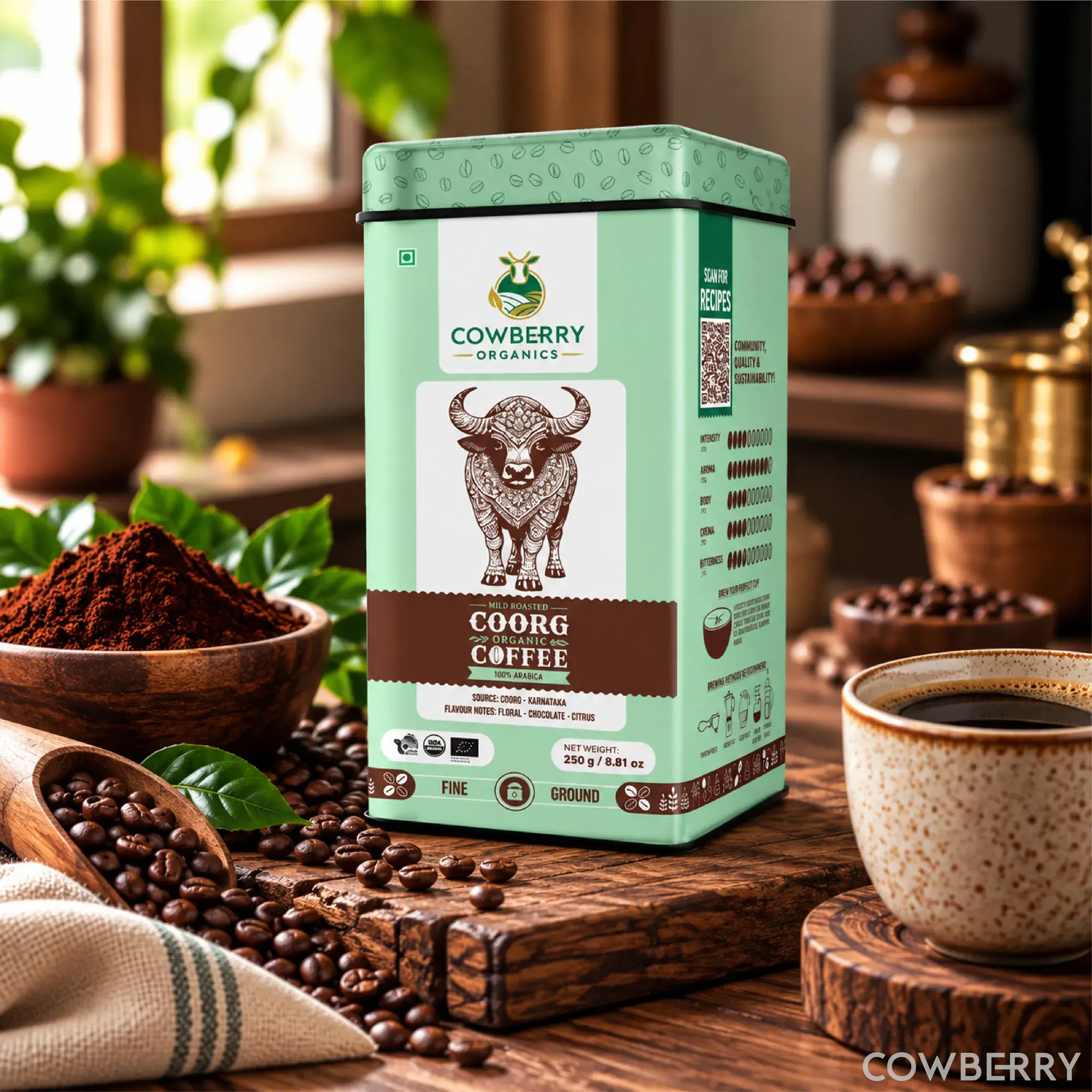
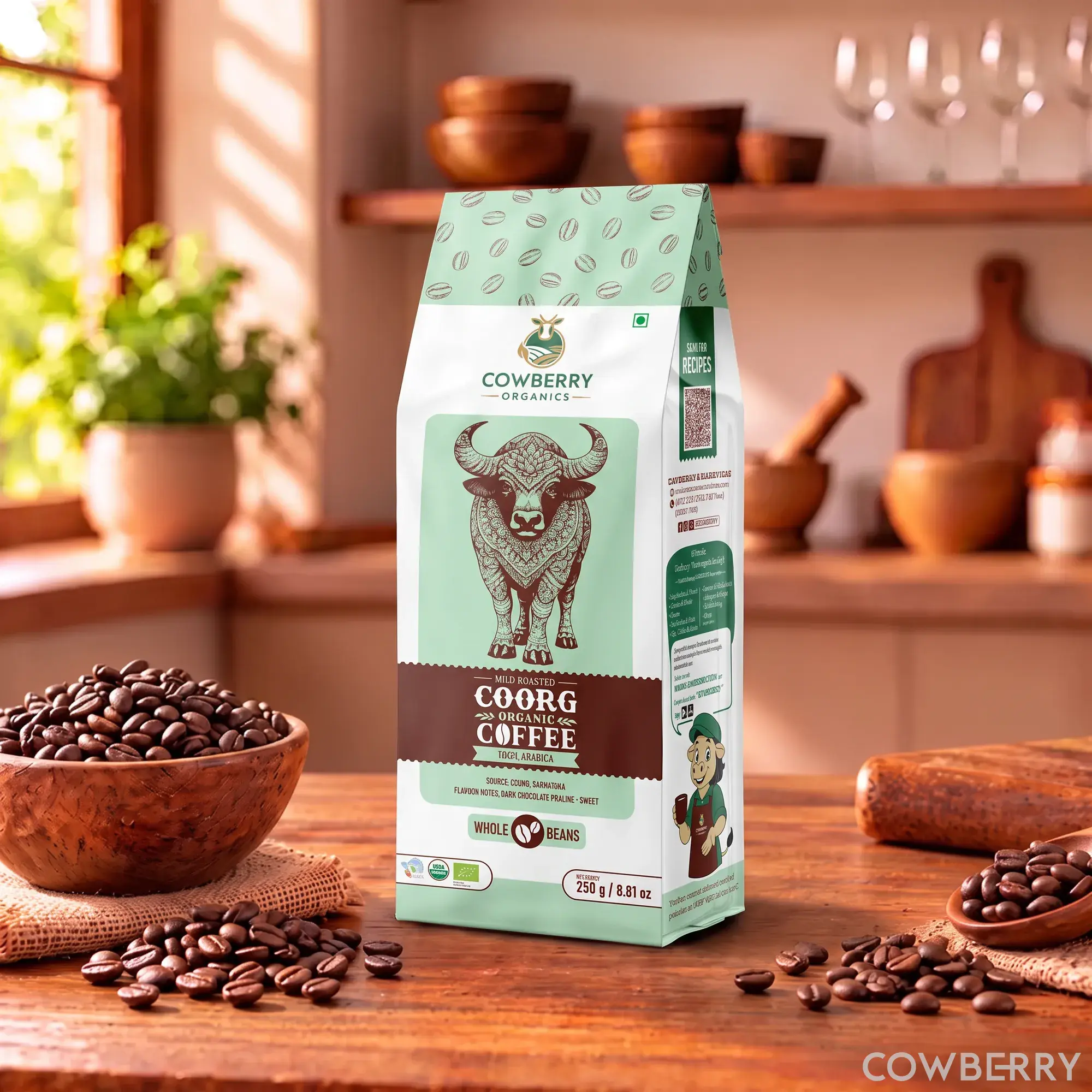
Coffee powder is roasted coffee beans ground fine enough to brew, ready to be mixed with hot water or milk. COWBERRY's coffee powder is made from 100% Arabica beans from Coorg, Karnataka, handpicked, washed, sun-dried, mild roasted in small batches and freshly ground. For adults it brews a cup in minutes; for children the answer remains milk or water instead.
How much coffee can a child have?
The honest answer is none as a routine. WHO guidance tells families to keep tea, coffee and sugary soft drinks away from infants and young children, and for older children a 2017 caffeine review found only limited data, describing 2.5 mg per kg of body weight a day as a research level, not an allowance. That works out to 50 mg for a 20 kg child, well under one adult mug.
Is filter coffee good for health?
For adults, the 2017 BMJ umbrella review's pooled meta-analyses found benefit turning up more often than harm, and for children none of that applies, since the research behind those associations studied adults, and the caffeine review's data for children are limited. Keep filter coffee on the adults' side of the table and give children milk, water and their regular food.
References
- WHO: complementary feeding (health topic)
- Poole R, Kennedy OJ, Roderick P et al. Coffee consumption and health: umbrella review of meta-analyses of multiple health outcomes. BMJ, 2017
- Wikoff D, Welsh BT, Henderson R et al. Systematic review of the potential adverse effects of caffeine consumption in healthy adults, pregnant women, adolescents, and children. Food Chem Toxicol, 2017
- NHS: foods to avoid in pregnancy (caffeine section)
- Dietary Guidelines for Indians, ICMR-National Institute of Nutrition
Shop this article
Keep reading
Coffee vs tea: caffeine, benefits and which is better
Coffee calories per 100g: powder, beans and filter coffee
Coffee in pregnancy: how much caffeine is safe