by COWBERRY

6 minute read
Difference between maida and besan: nutrition, taste and use

The difference between maida and besan starts with the plant: besan is milled Bengal gram, a pulse, and maida is refined wheat flour. Besan is naturally gluten-free and carries 22.4 g of protein per 100 g; the food tables we use give no figures for maida, so the comparison below uses whole wheat instead. The besan hub covers the flour's wider story.
Verdict in three lines
Line one: besan is dehusked Bengal gram, ground — a pulse flour, naturally gluten-free, with 22.4 g of protein per 100 g. Line two: maida is refined wheat flour; the Indian dietary guidelines list it in a processing group where nutrient losses are minimal but some fibre is lost, and the food tables we use give no figures for it. Line three: they swap only in some dishes — besan carries a nutty taste and golden colour into batters and sweets, while maida is the plain, white flour of bhaturas and cakes. Which one belongs in your dish settles the argument.
Besan vs maida: side by side per 100 g
One table answers most of the difference between besan and maida question, with a caveat: the food tables we use give no figures for maida, so the wheat column shows whole wheat flour instead.
Besan has more protein, 22.4 g against whole wheat flour's 10.6 g, and slightly less fibre, 10.8 g against 11.2 g. It has fewer carbs, 57.8 g against 64.7 g, but more energy, 387 kcal against 322 kcal, and more fat, 6.69 g against 1.5 g. None of these are maida's own numbers.
| Nutrient | Besan (gram flour) | Whole wheat flour |
|---|---|---|
| Energy (kcal) | 387 | 322 |
| Protein (g) | 22 | 11 |
| Fat (g) | 6.7 | 1.5 |
| Carbohydrates (g) | 58 | 65 |
| Dietary fibre (g) | 11 | 11 |
| Iron (mg) | 4.9 | 4 |
| Calcium (mg) | 45 | 39 |
| Magnesium (mg) | 166 | 125 |
| Potassium (mg) | 846 | 366 |
| Sodium (mg) | 64 | 2.5 |
| Zinc (mg) | 2.8 | 2.9 |
| Folate (mcg) | 437 | 30 |
| Vitamin C (mg) | 0 | — |
| Glycemic index (GI) | — | 47 |
Per 100 g raw, edible portion. Composition: USDA FoodData Central (SR Legacy), FDC ID 174288, NDB 16157; IFCT 2017 (ICMR-NIN). GI: University of Sydney GI database. — means not reported. These are average values for the food; the label on a pack gives the values for that product.
Nutrition: protein, fibre, carbs and gluten
Besan is a protein flour in plain numbers: its 22.4 g is a little over twice the whole wheat figure above. Fibre runs close between besan and whole wheat. For maida the dietary guidelines give no figure, but they list maida or refined wheat flour, with polished rice and dal, in a group where some fibre is lost in processing. Gluten is the cleanest divide in practice. Besan is a pulse flour, and COWBERRY describes its besan as naturally gluten-free. Maida is a wheat flour, so gluten-free batters reach for besan where a recipe asks for maida, and the is besan gluten free page explains what to check on the pack.
For the glycaemic index, the University of Sydney database gives whole wheat a GI of 47, the mean of two Indian tests, one of them on steamed whole grain. It has no entry for plain besan, and this page gives no GI for maida. Two Australian entries for chickpea-flour breads sit at 55 and 68, but those are breads, not the plain flour, so this page will not borrow their numbers for besan.
Taste and cooking: where each fits
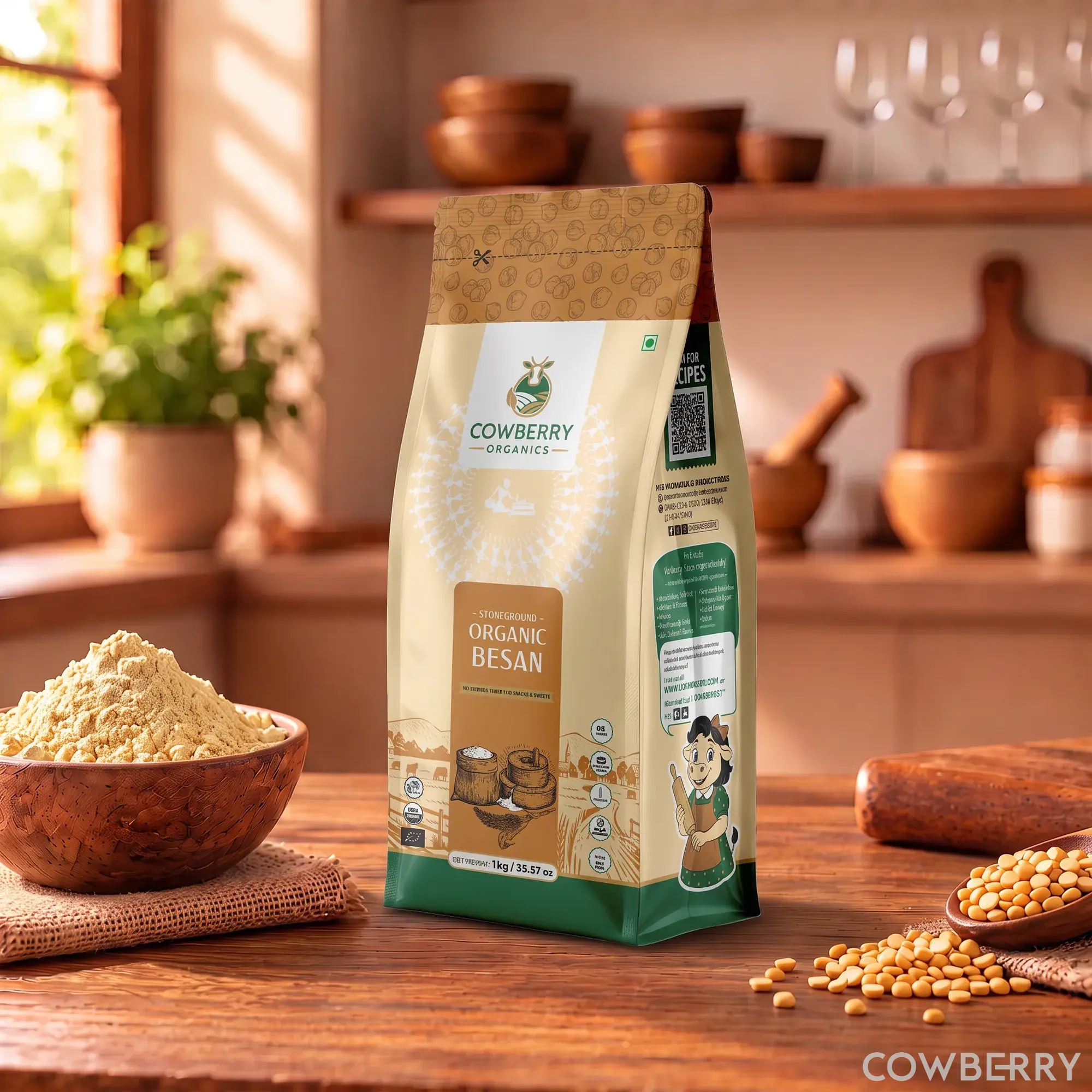
Taste is the quickest difference between gram flour and maida. Besan is nutty and golden: COWBERRY describes its own besan's natural nutty aroma, fine texture and golden colour, and its uses read like an Indian menu — pakoras, kadhi and festive laddus. Maida is usually the neutral one — white and plain — which is what cakes, bhaturas and pastry want from a flour. Besan also brings structure of its own to a batter: it thickens and binds as it cooks, the property behind besan chilla, besan dhokla and kadhi pakora.
Swapping the two is where cooks go wrong. In a batter — pakoras, chillas, fritters — besan stands in for maida well, and many cooks prefer the nutty result. In a yeast bread or a cake that depends on wheat flour's stretch for its rise and crumb, it will not behave the same way; besan has no gluten to work with. As a thickener besan is the classic: whisked into kadhi, it thickens as it simmers. The besan recipes roundup shows the range.
Cost and where each fits
Prices vary by brand and pack, so this page does not compare them; the dish is the better guide. Maida is a white wheat flour, used for breads, pastries and fried breads such as bhaturas. Besan is a pulse flour, used for batters, sweets and kadhi. Where each fits is a rule of thumb: if the recipe asks for a plain white flour that behaves neutrally, it means maida; if it asks for a golden flour with a nutty taste and more protein, it means besan.
Which for whom
Choose besan when the point is protein, gluten-freedom or that nutty golden batter: chillas, pakoras, dhokla, kadhi, laddus and gluten-free baking. Its per-100 g row — 22.4 g of protein, 10.8 g of fibre, 387 kcal — is on the gram flour nutrition page, and the evidence-based look at its claims sits under besan benefits. Choose maida when the recipe depends on a neutral white wheat flour: cakes, pastries, bhaturas, white breads. And store whichever you buy the right way — the rules for keeping besan fresh are on how to store besan flour, and the besan hub ties every besan page together.
FAQs
Is gram flour maida?
No. Gram flour is besan — dehusked Bengal gram, ground — while maida is refined wheat flour. One is a pulse flour, naturally gluten-free; the other is a wheat flour. They look different too: besan is golden, maida is white.
Can gram flour be used instead of plain flour?
In batters, usually yes: chillas, pakoras and kadhi all run on gram flour instead of plain flour, and many cooks prefer the nutty result. In cakes and yeast breads that depend on wheat flour's stretch for rise and crumb, it will not swap one-for-one. Judge each recipe on its own.
Difference between besan and maida?
Besan is a pulse flour — milled Bengal gram, gluten-free, 22.4 g of protein per 100 g, golden and nutty. Maida is refined wheat flour, plain and white, with some fibre lost in processing per the dietary guidelines; the food tables we use give no figures for it. Different plants, different jobs.
Does gram flour have gluten?
No. Gram flour is naturally gluten-free; it is milled from chickpea, a pulse, and COWBERRY describes its besan as naturally gluten-free. Maida is wheat flour, so between the two, besan is the gluten-free pick. Check the pack's own note if you cook for coeliac disease.
What is besan made of?
Dehusked Bengal gram, ground to a fine powder, with no added colour — that is the FSSAI standard for besan in one line. The gram is the chickpea, so besan, gram flour and chickpea flour are one flour; maida, milled from wheat, is another product entirely.
References
- Indian Food Composition Tables (IFCT) 2017, ICMR-National Institute of Nutrition
- Dietary Guidelines for Indians, ICMR-National Institute of Nutrition
- University of Sydney glycemic index database (GI search)
- FSSAI: Food Products Standards and Food Additives Regulations compendium (Version XXII, 02.03.2022): 2.4.4 Besan and 2.4.33 Roasted Bengal Gram Flour (Chana Sattu)
- USDA FoodData Central (SR Legacy): Chickpea flour (besan), FDC ID 174288
Shop this article
Keep reading
Green gram plant: crop, varieties and how it grows in India
Rajma vs lobia: difference, nutrition and which to choose
Rajma plant: how rajma is grown in India (it is not a tree)