by COWBERRY

7 minute read
Besan benefits and side effects: protein, fibre and how much to eat

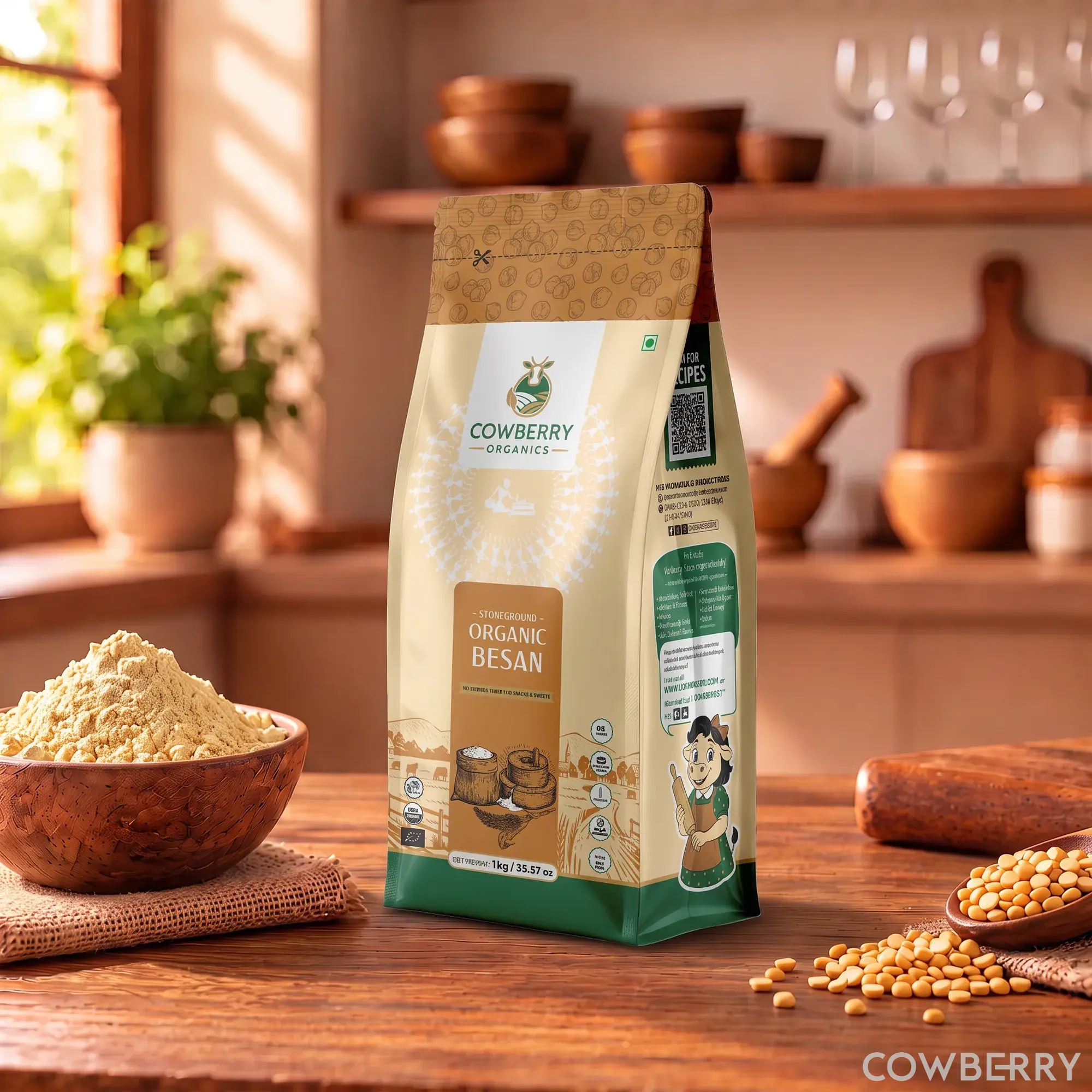
Besan benefits, stated plainly: 22.4 g of protein, 10.8 g of fibre, 4.86 mg of iron and 437 mcg of folate per 100 g, no gluten, and the gas and allergy caveats that come with any pulse. What the flour can offer, how much fits a day, and the side effects to watch follow; the family's hub is besan.
Short answer: besan benefits, in one paragraph
Besan's benefits are the benefits of what it carries, stated per 100 g: 22.4 g of protein, 10.8 g of fibre, 4.86 mg of iron, 437 mcg of folate, 846 mg of potassium and 166 mg of magnesium, with 6.69 g of fat and no gluten, the flour being ground chickpea. A 2014 review of pulses describes them as providing protein and fibre together with iron, zinc, folate and magnesium, and says eating half a cup of beans or peas a day can enhance diet quality by increasing intakes of these nutrients. Besan is one pulse food, not a medicine, and the side effects worth knowing are gas, allergy and portions that overdo the frying oil and sugar. The full set of per-100 g figures sits on the besan hub.
Besan eating benefits: protein that works with cereals
The clearest gram flour benefit is protein: 22.4 g per 100 g. On quality, a 2012 chickpea review considers its protein quality better than that of other pulses, and notes it carries every essential amino acid in good amount except the sulphur pair, which adding cereals to the daily diet can complement. India's dietary guidelines give the kitchen version: pulses have higher levels of lysine and lower levels of methionine and cysteine, and mixing cereals with pulses at three parts to one (raw food weight) can meet the full amino acid requirement. That is the practical reading: a besan roti beside a wheat roti, or a chilla next to a bowl of curd and rice, is the kind of cereal-pulse pairing the guidelines describe.
Gram flour eating benefits: fibre, iron and folate
Besan carries 10.8 g of fibre per 100 g. On fibre's job, India's dietary guidelines note that plenty of fibre-rich foods, pulses among them, improves satiety and helps maintain levels of blood glucose, insulin, cholesterol and triglycerides. On iron, the same guidelines carry a caution: phytic acid in cereals and legumes can get between minerals and the body, and boiling or pressure cooking lowers its level to a great extent, so iron, calcium, magnesium and zinc come through better. Besan brings 4.86 mg of iron and 437 mcg of folate per 100 g, folate being a vitamin a 2012 chickpea review lists among those chickpea is a good source of. Cooked as a roti, 30 g of flour carries 1.5 mg of iron, 131 mcg of folate and 3.2 g of fibre; the besan in pregnancy page puts the folate figure in context, and the besan roti recipe shows the cooking.
Besan benefits for weight and blood sugar, honestly
A 2014 review of pulses describes them as high in fibre with a low glycemic index, and reads pulses as especially useful for people with diabetes, helping healthy blood glucose and insulin levels hold; that claim is about pulses as a family, and plain besan itself has no GI figure, a gap the gram flour nutrition page states in full. The same review says including pulses in the diet is associated with a reduced risk of several chronic diseases, with long-term trials still needed to show direct effects. On weight, India's dietary guidelines list pulses among foods that help keep weight steady and point the calorie cuts at refined carbohydrates and cooking oils, which is where a chilla cooked in a little oil differs from a deep-fried pakora. The besan for weight loss and besan for diabetes pages take each further.
How much besan to eat in a day
There is no separate gram figure for besan; the anchor is the pulse slot. India's dietary guidelines give pulses and legumes 85 g a day on the 2000-calorie plate, beside 250 g of cereals, and besan dishes count toward that slot. In recipe terms, a besan roti is 30 g of flour, which is 116 kcal and 6.7 g of protein, and the ghee in the recipe brings it to 175 kcal; the two-chilla serving draws 45 g of flour, around 174 kcal from the flour alone, or 242 kcal with the recipe's cooking oil. A roti with vegetables and curd, or a two-chilla plate, shows the size; deep-fried and sugar-heavy versions belong to the occasional end of the week. More day-to-day ideas sit in the besan recipes roundup.
Besan side effects: gas, allergy and what to watch
The main side effect of besan is the one pulses are known for: gas. A 2019 review of pulse tolerance records that many individuals have an adverse response to pulses with symptoms of intestinal discomfort and increased flatulence, frequently attributed to the galacto-oligosaccharides raffinose, stachyose and verbascose, which the small intestine cannot digest and which are fermented in the colon with the release of gas; whether this is the primary source has recently been questioned. The same review notes that most individuals who experience flatulence adapt to pulse consumption within a few weeks if intake levels are maintained, that the extent of symptoms is influenced in part by heritable factors, and that there is no evidence that properly cooked pulses contain harmful lectins or trypsin inhibitors. Chickpea is also a legume, and any food can trigger an allergy in a person sensitive to it: stop besan at any sign of a reaction and see a doctor. Besan is gluten free, so gluten is not the issue behind these symptoms.
Talk to your doctor or dietitian
If gas or discomfort persists, if you suspect a chickpea allergy, or if you manage diabetes, weight or any other condition, let your doctor or dietitian set how much besan fits your plate. This page describes what besan carries and what the sources say; it does not set amounts for any medical situation. The flour's numbers come from the USDA record, and the advice here is general eating guidance, not a prescription.
FAQs
Is besan good for health?
It is a food, not a medicine, and its value sits in what it carries: 22.4 g of protein and 10.8 g of fibre per 100 g, iron, folate, magnesium and potassium, and no gluten. A 2014 review of pulses ties eating them to better diet quality and a reduced risk of several chronic diseases, with long-term trials still needed to show direct effects.
Why besan is not good for health?
For most people besan is fine; the problems come from how it is cooked and how much is eaten. Deep-fried pakoras and sugar-heavy sweets add frying oil, ghee and sugar on top of 387 kcal per 100 g, and some people feel gas or stomach discomfort until their body adapts. Anyone with a chickpea allergy should keep besan off the plate.
Can besan cause gas?
It can, as pulses can. A 2019 review on pulse tolerance attributes the flatulence to galacto-oligosaccharides, raffinose, stachyose and verbascose, which the small intestine cannot digest and which ferment in the colon with the release of gas, while noting that whether this is the primary cause has recently been questioned. Most people who get gas adapt within a few weeks.
Why besan is hard to digest?
Besan carries the same galacto-oligosaccharides as other pulses, and they are the usual explanation for the discomfort some people feel. The 2019 review adds that the extent of symptoms is influenced in part by heritable factors, that intolerance symptoms are likely to subside after a period of adaptation, and that it finds no evidence of harmful lectins or trypsin inhibitors in properly cooked pulses.
Can I use gram flour everyday?
Yes, inside a varied plate. India's dietary guidelines give pulses and legumes a slot of 85 g a day on a 2000-calorie plate, and besan dishes count toward it. Rotate besan with whole dal, vegetables and whole grains, and keep the fried and sweet versions occasional.
Is gram flour bad for health?
No, not as a food: besan is ground chickpea with 22.4 g of protein and 10.8 g of fibre per 100 g. What can make it a poor choice is what it is cooked with, the frying oil, ghee and sugar of pakoras, halwa and barfi. Eaten mostly as roti, chilla or porridge, it counts toward the day's pulse allowance.
References
- USDA FoodData Central (SR Legacy): Chickpea flour (besan), FDC ID 174288
- Dietary Guidelines for Indians, ICMR-National Institute of Nutrition
- Mudryj AN, Yu N, Aukema HM. Nutritional and health benefits of pulses. Appl Physiol Nutr Metab, 2014
- Jukanti AK, Gaur PM, Gowda CL et al. Nutritional quality and health benefits of chickpea (Cicer arietinum L.): a review. Br J Nutr, 2012
- Thompson HJ. Improving human dietary choices through understanding of the tolerance and toxicity of pulse crop constituents. Curr Opin Food Sci, 2019
Shop this article
Keep reading
Green gram plant: crop, varieties and how it grows in India
Rajma vs lobia: difference, nutrition and which to choose
Rajma plant: how rajma is grown in India (it is not a tree)