by COWBERRY

7 minute read
Difference between basmati rice and normal rice: nutrition and taste

The difference between basmati rice and normal rice is variety, not chemistry: both are milled white rice, and IFCT prints one composition for the two. What separates them is the grain, long and fragrant against short and plain, and the glycemic index: 50 for basmati against 72 for sona masoori and 77 for Surti Kolam. The basmati rice hub and the rice hub cover each side; here they meet directly.
Verdict in three lines
Basmati wins on the plate. Longer grains, a delicate aroma, a fluffy and non-sticky cooked pot, and a low-band glycemic index of 50 are what the premium buys.
Normal rice wins on price and everyday duty. The same energy and carbohydrate per 100 g, at a lower cost, is why it stays the daily dal-chawal grain, even though the tested Indian varieties read high on the glycemic index.
Pick by the meal. Biryani, pulao, festive kheer and guests call for basmati; the everyday plate does not need it. The numbers first — the table below sets the three side by side.
Nutrition per 100 g: the side-by-side table
The table reads like a trick, and the trick is the honest one: IFCT 2017 records no variety-specific composition, so basmati, sona masoori and Surti Kolam all sit on the same pooled 'Rice, raw, milled' row — 357 kcal, 78.24 g of carbohydrate, 7.94 g of protein, 2.81 g of fibre and 0.52 g of fat per 100 g raw, identical down the column. The one row that separates them is the glycemic index: 50 for the India-tested basmati, 72 for sona masoori and 77 for Surti Kolam, the last two from a 2012 Indian study that classed all three of its tested varieties as high GI.
So the difference between basmati rice and normal rice is not in the nutrition label but in the grain and the glycemic reading. Per katori the plates are equal too: 40 g of raw rice cooks into one katori at 143 kcal and 31.3 g of carbohydrate, whichever of the three you pour.
| Nutrient | Basmati rice | Sona masoori rice | Surti Kolam rice |
|---|---|---|---|
| Energy (kcal) | 357 | 357 | 357 |
| Protein (g) | 7.9 | 7.9 | 7.9 |
| Fat (g) | 0.5 | 0.5 | 0.5 |
| Carbohydrates (g) | 78 | 78 | 78 |
| Dietary fibre (g) | 2.8 | 2.8 | 2.8 |
| Iron (mg) | 0.7 | 0.7 | 0.7 |
| Calcium (mg) | 7.5 | 7.5 | 7.5 |
| Magnesium (mg) | 19 | 19 | 19 |
| Potassium (mg) | 108 | 108 | 108 |
| Sodium (mg) | 2.3 | 2.3 | 2.3 |
| Zinc (mg) | 1.2 | 1.2 | 1.2 |
| Folate (mcg) | 9.3 | 9.3 | 9.3 |
| Glycemic index (GI) | 50 | 72 | 77 |
Per 100 g raw, edible portion. Composition: IFCT 2017 (ICMR-NIN). GI: University of Sydney GI database. — means not reported. These are average values for the food; the label on a pack gives the values for that product.
Glycemic index: basmati 50 against sona masoori 72 and kolam 77
The glycemic index is where the family actually divides. Plain white basmati has a GI of 50 in the University of Sydney database — a single India-tested entry, cooked in an electric rice cooker for 26 minutes with a 1:2 rice-to-water ratio and measured in 12 people — and the database classes 55 and below as low. A 2012 study from the Madras Diabetes Research Foundation cooked three commonly consumed Indian varieties and measured 72 for sona masoori, 70.2 for ponni and 77 for Surti Kolam, all in the high band, which starts at 70.
A 2023 review in Foods adds the honest caveat: a rice's glycemic index shifts with variety, composition, processing and accompanying factors, so these are tested readings, not fixed labels. For a diabetic plate the reading still matters, and it favours basmati; the portion guidance is on is basmati rice good for diabetes.
Taste and cooking: fragrant long grain against everyday grain
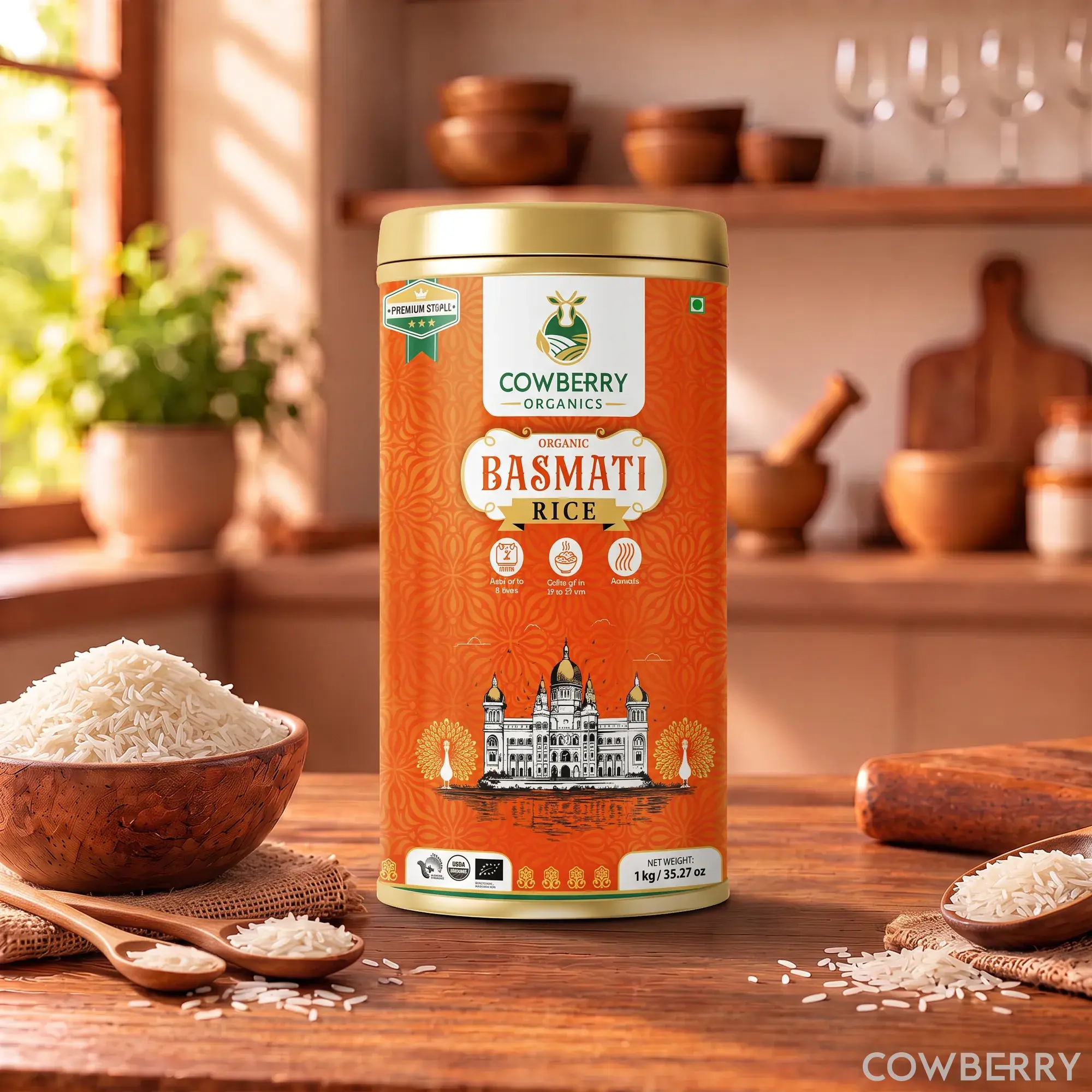
Basmati announces itself: slender grains that stretch further as they cook, a delicate aroma that fills the kitchen, and a cooked pot that stays light, fluffy and non-sticky. The pack lists 'light & non sticky' among its features, and the grain is naturally aged to develop that fragrance and length. The everyday varieties — the 2012 study calls sona masoori, ponni and Surti Kolam the commonly consumed ones — cook up plainer, and that plainness is their point: a working grain for a working lunch.
Cooking differs a little too. Basmati takes the gentler water habit, around 1:1.5 and 12 to 15 minutes, with a rinse and a rest; the full method is on how to cook basmati rice. Everyday rice cooks the same absorption way with less ceremony. Both sit under dal; basmati is the one you build a basmati rice khichdi around when the dish deserves the aroma.
Cost and where each fits
Basmati usually costs more than everyday rice; the natural ageing and the careful processing that protects the long grains are part of the premium, and the pack lists 'aged for flavor' and 'long-grain' among the features behind it. Everyday rice is the cheaper daily fill.
Where each fits: basmati for biryani, pulao, festive kheer and any meal where the aroma and the long separate grains are the point; normal rice for the daily dal-chawal, curd rice and anything saucy that would bury the fragrance anyway. The wider shelf is on low GI rice in India, and each everyday variety has its own hub, from sona masoori rice to kolam rice.
Which for whom
- Daily dal-chawal home: normal rice does the job at a lower cost, and the katori's nutrition is identical on the printed tables. Keep basmati for the days that call for it.
- Someone with diabetes: basmati's low-band GI of 50 is the gentler choice against the 72 and 77 of the everyday varieties, but the portion still decides; the full guidance is on is basmati rice good for diabetes.
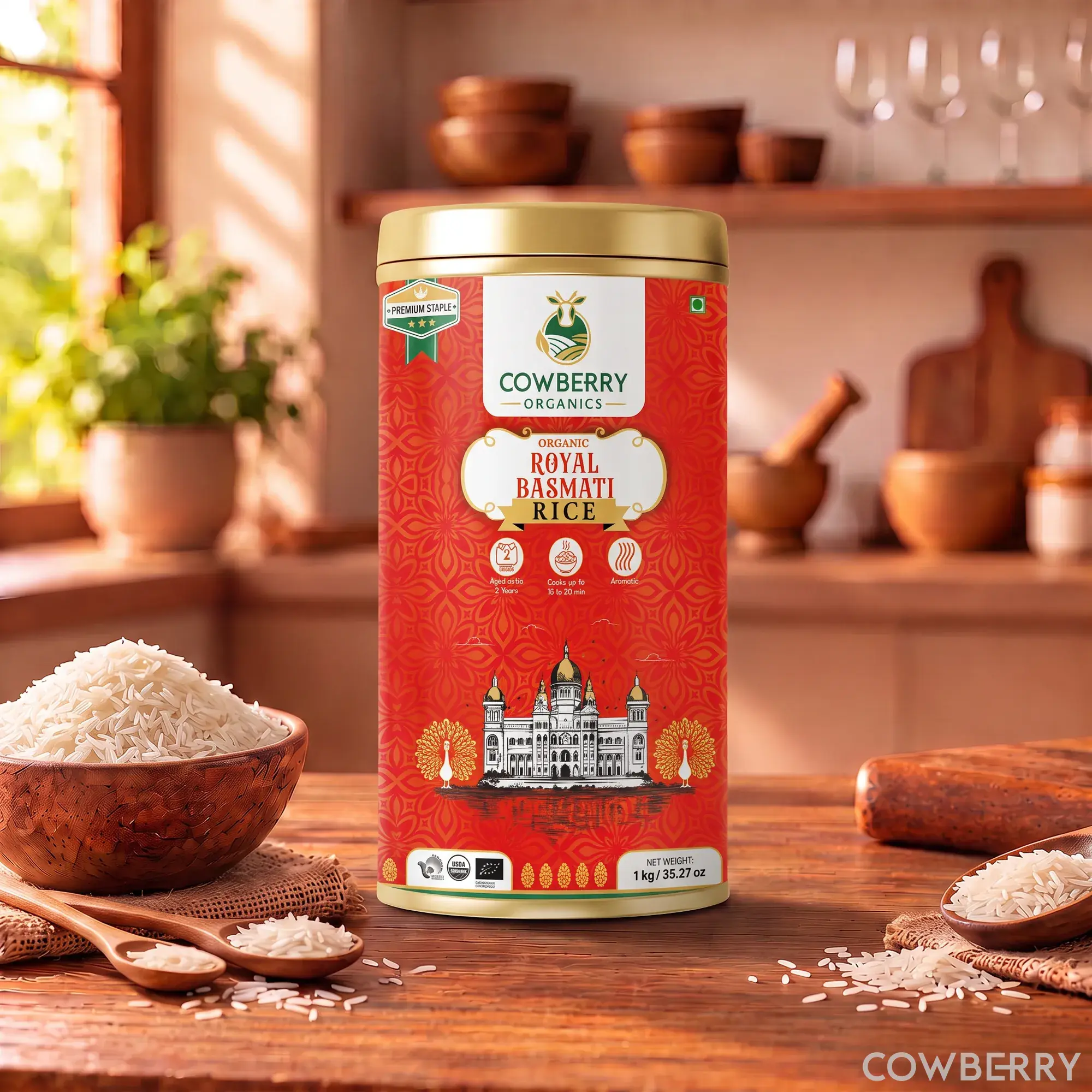
- Biryani and pulao cooks: basmati, no contest — the long grains, the aroma and the non-sticky pot are what those dishes are built on, and the extra-long-grain royal grade is the festive version.
- Weight-watchers: the calories match, so the swap saves nothing by itself; the portion is the whole game, as rice for weight loss sets out.
- Budget-first kitchens: buy the everyday grain in bulk and keep a smaller bag of basmati for guests and festivals.
- Anyone picking basmati: the flavour notes come from natural ageing, so buy from a brand that says so on the pack. The grain's full story is on the basmati rice hub.
FAQs
What is the difference between basmati rice and normal rice?
Both are milled white rice, printed with one shared composition in IFCT 2017; the difference is the grain and the glycemic index. Basmati is the long, fragrant, non-sticky grain with a GI of 50, while the everyday varieties tested in India read 72 and 77. So the split is aroma, grain length, texture and glycemic reading, not the nutrition label.
Is basmati rice long grain?
Yes, and extra-long in the royal grade. The pack lists long-grain among its features, and the grains stretch further as they cook; that length, with the fragrance, is the whole point of the variety. It is why basmati looks different in the pot from the shorter everyday grains.
Is basmati rice healthy?
As a staple, yes, and its tested GI of 50 is low where the everyday Indian varieties read 72 and 77. The nutrition label matches normal rice, so the health edge is the glycemic reading and nothing more; the portion still decides. Eat it with dal and sabzi like any other rice.
Why is basmati rice expensive?
Natural ageing, which develops the fragrance and length, and the careful processing that protects the long grains are the steps behind the premium; the pack lists 'aged for flavor' and 'long-grain' among its features.
Can basmati rice be eaten daily?
Yes, in any dish that wants the aroma, and daily if the budget allows; it cooks at around 1:1.5 for 12 to 15 minutes. It is still milled white rice, so swap it one katori for one katori — the composition is the same. Keep the rotation with millets and whole grains going through the week.
What is the difference between basmati rice and long grain rice?
Long-grain describes the shape, and many rices are long-grained; basmati is the specific aromatic variety, the one that is naturally aged for fragrance. Not every long-grain pack is basmati — the label on the pack is the test.
References
- Indian Food Composition Tables (IFCT) 2017, ICMR-National Institute of Nutrition
- University of Sydney glycemic index database (GI search)
- University of Sydney: about the glycemic index
- Ngo TV, Kunyanee K et al. Insights into recent updates on factors and technologies that modulate the glycemic index of rice and its products. Foods, 2023
- Shobana S, Kokila A, Lakshmipriya N, et al. Glycaemic index of three Indian rice varieties. Int J Food Sci Nutr, 2012
Shop this article
Keep reading
Red rice vs brown rice: the fibre, GI and honest verdict
Red rice vs black rice: nutrition, glycemic index and which to choose
Red rice nutrition per 100g: calories, protein, fibre and GI