by COWBERRY

7 minute read
Is chawal good for weight loss? Calories, portion and how to eat it

Is chawal good for weight loss? Yes: a measured katori of cooked rice can stay on a weight-loss plate, because one katori comes to about 143 kcal and weight loss runs on the whole day's energy, not on cutting out one grain. This page does the arithmetic with rice (chawal) as the base; keep reading for portions, the right rice and the wrong sides.
Short answer: is chawal good for weight loss?
Chawal is a carbohydrate food, not a ban-list item. Raw milled rice gives 357 kcal per 100 g, with 78.24 g of carbohydrate and just 2.81 g of fibre per 100 g (IFCT 2017). What matters is the whole day: the Dietary Guidelines for Indians put it plainly, that for reducing weight you cut down on calories from refined carbohydrates and cooking oils and stay active. So rice can stay, as a measured portion, inside your day's calorie target. The next sections put numbers to that portion.
How many calories and carbs in rice: per 100 g
The table below lists what 100 g of dry grain carries, per IFCT 2017. White rice is the everyday plate grain; brown rice keeps its bran layer, which shows up as the higher fibre row. Note that these are raw values: cooked rice takes up a lot of water, so 100 g of cooked rice holds far fewer calories. The count that matters in the kitchen is the katori, which the next section sizes.
| Nutrient | White rice (IFCT raw milled rice) | Brown rice (raw) |
|---|---|---|
| Energy (kcal) | 357 | 354 |
| Protein (g) | 7.9 | 9.2 |
| Fat (g) | 0.5 | 1.2 |
| Carbohydrates (g) | 78 | 75 |
| Dietary fibre (g) | 2.8 | 4.4 |
| Iron (mg) | 0.7 | 1 |
| Calcium (mg) | 7.5 | 11 |
| Magnesium (mg) | 19 | 94 |
| Potassium (mg) | 108 | 199 |
| Sodium (mg) | 2.3 | 3.6 |
| Zinc (mg) | 1.2 | 1.7 |
| Folate (mcg) | 9.3 | 12 |
| Glycemic index (GI) | 50 | 58 |
Per 100 g raw, edible portion. Composition: IFCT 2017 (ICMR-NIN). GI: University of Sydney GI database. — means not reported. These are average values for the food; the label on a pack gives the values for that product.
How much rice to consume for weight loss
One katori of cooked rice, made from 40 g of raw milled rice, comes to 143 kcal, 31 g of carbohydrate, 3.2 g of protein and 1.1 g of fibre. Two katoris double the load to 286 kcal and 63 g of carbohydrate, so the second helping matters as much as the first. For the day, the ICMR-NIN balanced diet for 2000 kcal puts cereals and nutricereals at 250 g, and that 250 g covers rice, roti and millets together; take sugar too and the guidelines say cereals must be reduced. Their named habit is portion control: be mindful of portion sizes and prevent overeating. Weighing the rice raw keeps each katori you count at its 40 g.
Which rice is good for losing weight: basmati, brown or sona masoori
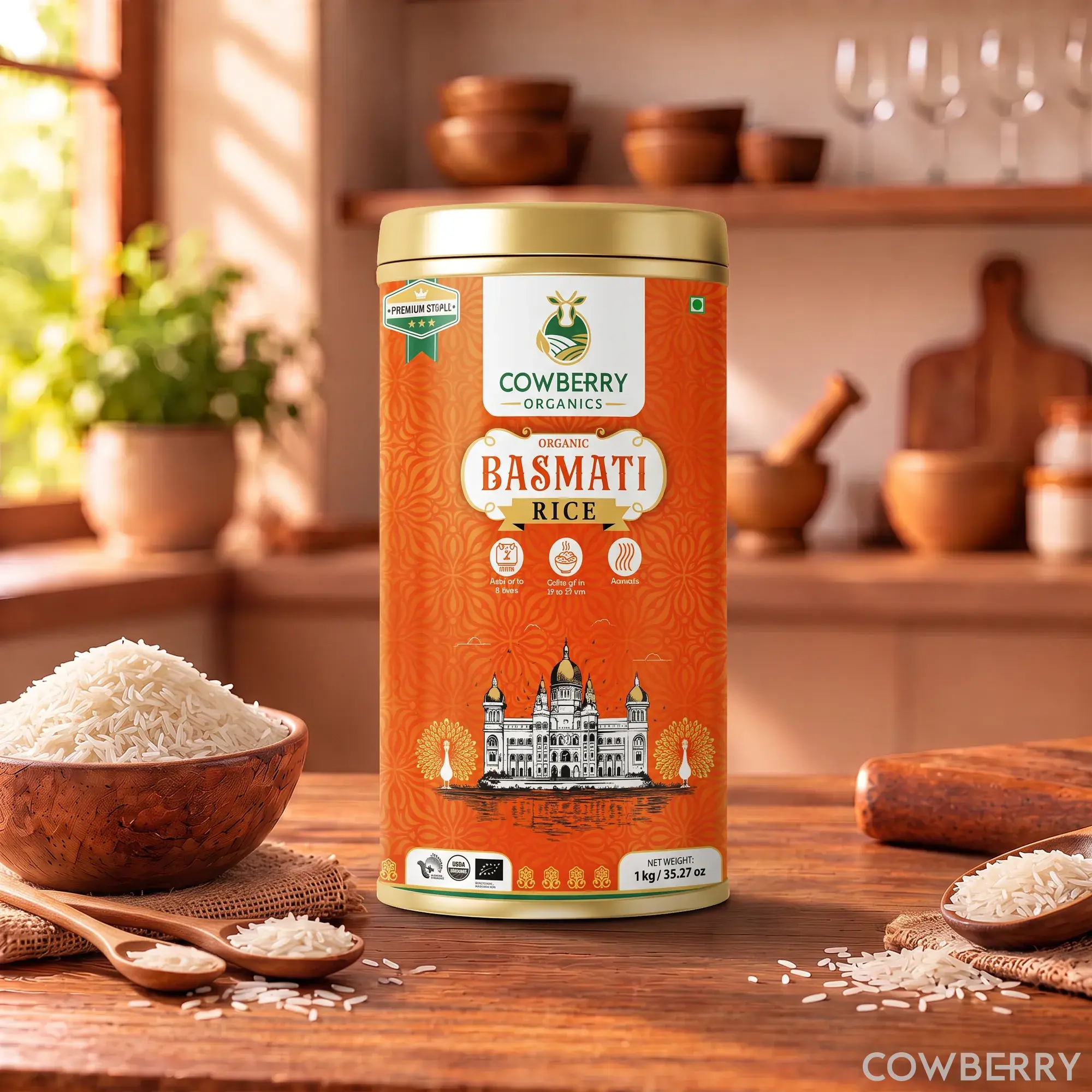
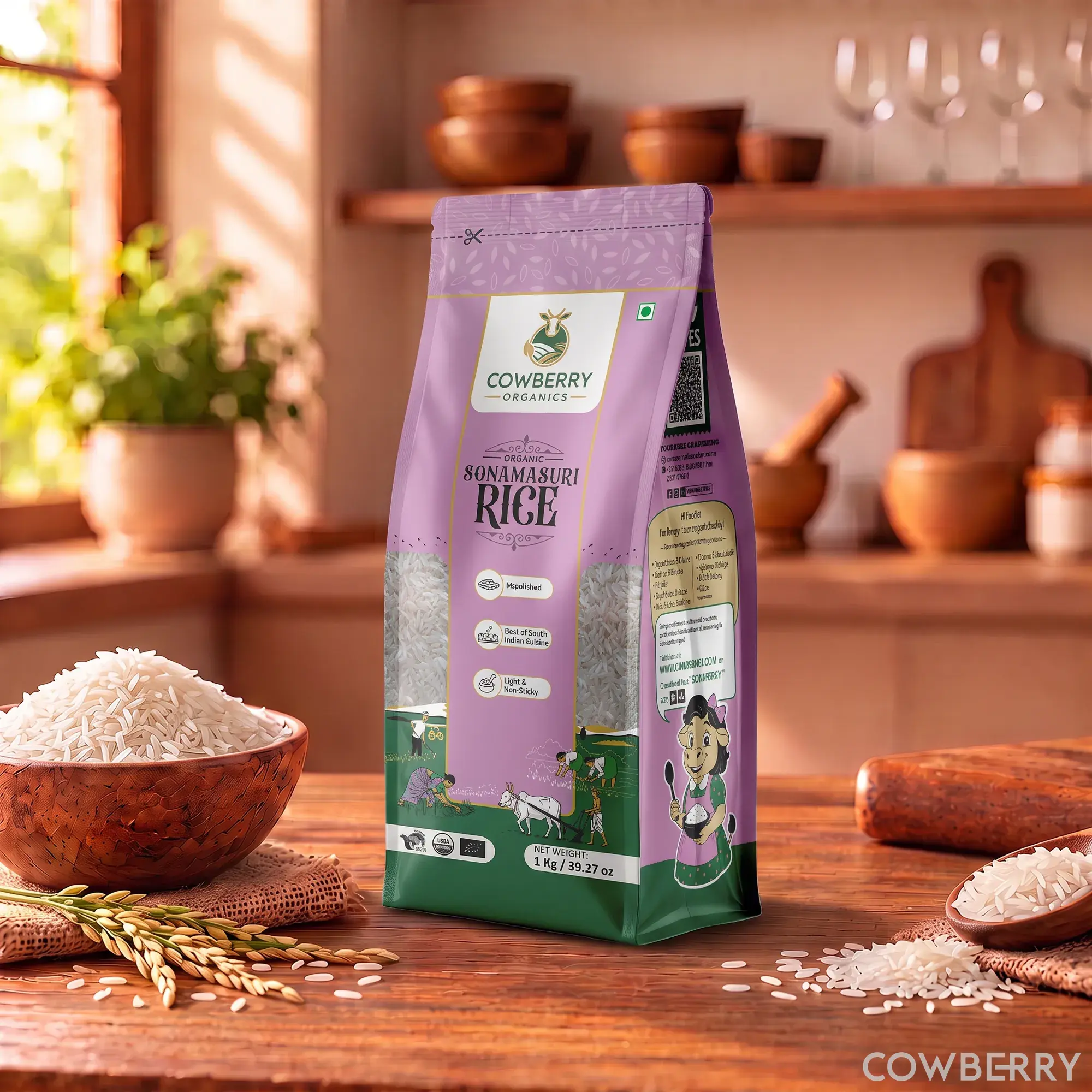
The glycemic index sorts them. In the University of Sydney database, India-tested plain basmati has a GI of 50, which sits in the low band (55 or below), while the India-tested unpolished brown rice has a GI of 58, in the medium band. Sona masoori, one of three commonly eaten Indian varieties tested in one Indian study, measured a GI of 72, in the high band (70 or above). Brown rice adds more than the GI story: 4.43 g of fibre per 100 g against 2.81 g in milled rice, at almost the same calories (354 kcal versus 357 kcal). The guidelines steer the same way, asking that at least 50 percent of cereals be whole grain and naming minimally processed rice among the whole grains that provide sustained energy and help you feel full. One more finding: a 2015 study from Indonesia found that cooked white rice cooled for 24 hours at 4 degrees Celsius and then reheated carried 1.65 g of resistant starch per 100 g against 0.64 g fresh, with a lower glycemic response in 15 healthy adults; it measured blood glucose, not weight. For the wider grain family, see our guide to the types of rice in India.
Is rice khichdi good for weight loss? How to plate rice with dal
Khichdi can fit a weight-loss plate as a measured katori: it is rice and dal cooked together. The guidelines say combining cereals with pulses in the ratio of 3:1 improves the protein quality of the meal, and pulses in their words also help maintain weight and health. Dal, sabzi and curd around a modest katori is the same idea on a thali: the plate keeps rice in proportion while vegetables add bulk with few calories. In the guidelines' own indicative GI annexure, plain rice lists at 78 and curd rice at 65, a reminder that the meal, not just the grain, sets the glycemic picture. Try masala khichdi, or the curd rice and sambar rice recipes, and see our low GI rice guide for the fuller GI list. Our guide to rice (chawal) covers the grain itself, from names to storage.
What to avoid with rice on a weight-loss plan
Avoid the second katori by reflex; it is 286 kcal and 63 g of carbohydrate before any dal. Avoid piling rice and roti into the same meal, since the day's 250 g cereal allowance has to fit both. Avoid fried rice, ghee-heavy biryani and payasam: the oil and the sugar land on top of the grain's own carbohydrate, and the guidelines ask you to cut calories from refined carbohydrates and cooking oils, not to add them. A sweet such as sakkarai pongal counts as cereal plus sugar, so the same rule applies: cereals must be reduced if sugar is taken. Keep the katori modest, the dal and sabzi generous and the oil measured, and rice stops being the problem.
Talk to your doctor or dietitian
Rice fits a weight-loss plan when the portion fits the deficit, and the deficit is personal. The Dietary Guidelines for Indians describe a typical weight-loss diet as a 500 to 750 kcal deficit a day and say higher protein (15 percent of energy) may be important during such a diet to preserve muscle; the size of your katori, your activity and any condition such as diabetes or thyroid trouble move the numbers. Set your calorie target with a professional rather than guessing. If you have a health condition, or if weight loss has stalled despite a fair plate, talk to your doctor or dietitian.
FAQs
Is chawal good for weight loss?
Yes, as a measured portion inside a calorie deficit. One katori of cooked rice, made from 40 g of raw rice, gives about 143 kcal. For weight loss, the Dietary Guidelines for Indians advise cutting calories from refined carbohydrates and cooking oils and staying active; how much rice you serve is the part you control.
How much rice to consume for weight loss?
Fit it inside the day's cereal: the Dietary Guidelines for Indians put cereals and nutricereals at 250 g on a 2000 kcal day, and that covers roti and millets too. One katori of cooked rice, weighed as 40 g of raw rice, is about 143 kcal. If you add sugar to the day, reduce the cereal, and ask a dietitian how many katoris fit your target.
Is rice khichdi good for weight loss?
Yes, as a measured katori. Khichdi is rice cooked with dal, and the guidelines say combining cereals with pulses at 3:1 improves the protein quality of a meal. They also list pulses among the fibre-rich foods that improve satiety. Keep the ghee or oil in the tadka measured, since it adds calories.
Which rice is good for losing weight?
Any rice works as a measured portion; if you also want a lower GI, here are the tested numbers. India-tested basmati has a GI of 50 (low band) and unpolished brown rice a GI of 58 (medium band), while sona masoori measured 72 in one Indian study. Brown rice adds fibre, at 4.43 g per 100 g.
Which rice has the lowest glycemic index?
Among India-tested plain rice in the University of Sydney database, white basmati is the lowest, at a GI of 50, in the low band; unpolished brown rice follows at 58. Outside India, red basmati tested as low GI in a Sri Lankan study. See the low GI rice in India guide for the full list.
How much calories in 100 g rice?
The dry grain gives 357 kcal per 100 g when milled and 354 kcal when brown (IFCT 2017). A katori made from 40 g of raw rice comes to about 143 kcal; water is why cooked rice weighs more yet carries far less energy per 100 g.
References
- Indian Food Composition Tables (IFCT) 2017, ICMR-National Institute of Nutrition
- Dietary Guidelines for Indians, ICMR-National Institute of Nutrition
- University of Sydney glycemic index database (GI search)
- University of Sydney: about the glycemic index
- Somaratne GM, Prasantha BDR, Dunuwila GR, et al. Effect of polishing on glycemic index and antioxidant properties of red and white basmati rice. Food Chem, 2017
- Sonia S, Witjaksono F, Ridwan R. Effect of cooling of cooked white rice on resistant starch content and glycemic response. Asia Pac J Clin Nutr, 2015
- Shobana S, Kokila A, Lakshmipriya N, et al. Glycaemic index of three Indian rice varieties. Int J Food Sci Nutr, 2012
Shop this article
Keep reading
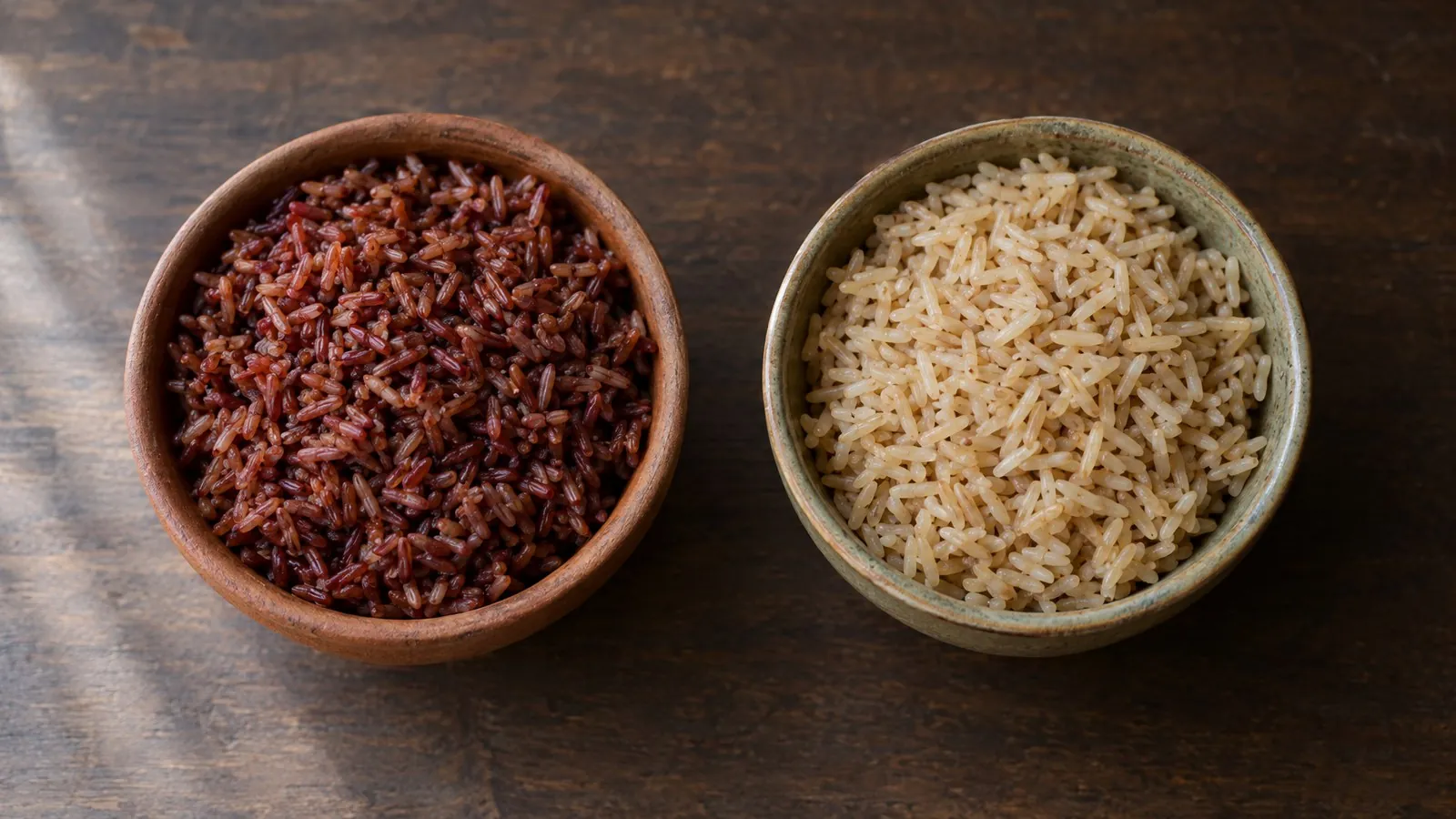
Red rice vs brown rice: the fibre, GI and honest verdict
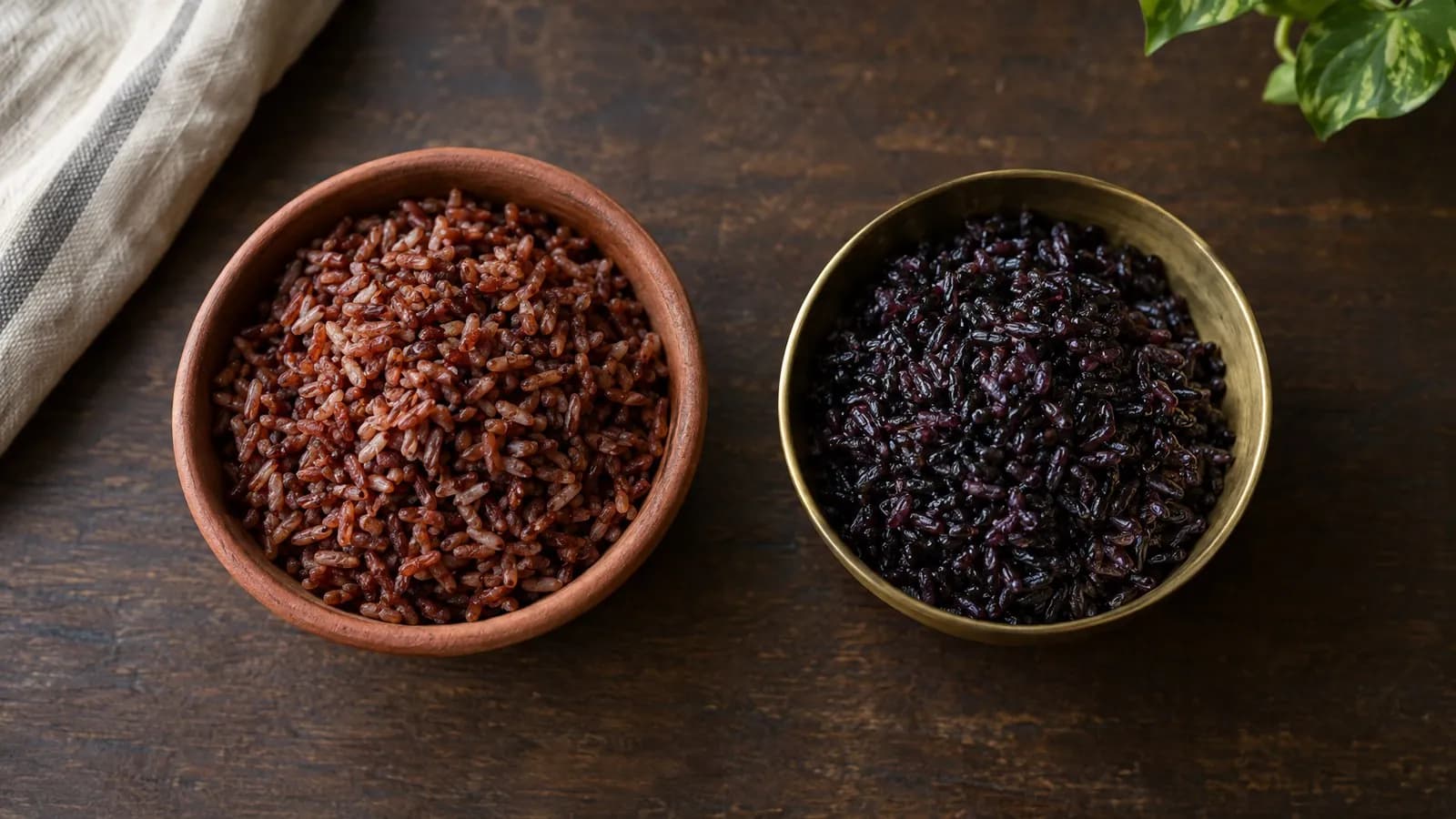
Red rice vs black rice: nutrition, glycemic index and which to choose
Red rice nutrition per 100g: calories, protein, fibre and GI