by COWBERRY

7 minute read
Urad gota vs urad dal: what it is, how it differs and how to use it

Urad gota vs urad dal: gota is the whole black gram bean with its black skin removed, ivory white and unsplit, while urad dal is the same bean split into flat halves. Same bean, different kitchen. The urad dal hub covers the bean and its names; here the two forms go head to head.
Verdict in three lines
Urad gota is whole, husked urad. The black gram bean with its outer skin removed and the bean left whole, ivory white; it usually holds its shape through the soak and the pot.
Urad dal is the same bean, split. Hulled and split into flat halves, it usually takes up water faster, cooks quicker and melts into the dish.
Choose by dish. No separate figures for gota are given here, so the dal's figures serve as the nearest guide, and the difference lives in the kitchen: gota where the bean should stay whole, split dal for everyday dal and idli-dosa batter.
The table comes first, then the numbers, then taste and cooking, and which form suits whom is at the end.
What is urad gota (urad washed gota)?
Gota urad dal, also called urad washed gota, is whole urad with the skin off. Start from the whole black gram bean; the black outer skin is removed and the bean is left whole, not split, its creamy white interior showing. Split white urad dal is made the same way with one step more: once the skin is gone, the bean is split. Black urad split goes the other way, keeping the black skin on the split halves.
So urad comes in four forms: whole with skin, whole without skin (gota), split with skin and split without skin. The whole urad dal guide lays them all out. On soaking, everything takes the same overnight stretch, about 12 hours, as the urad dal soaking guide sets out; the difference is how fast each form gets there.
Side by side: urad gota vs urad dal
The table reads down the points that decide a purchase: what is in the packet, how it soaks, how it cooks, and what it is for.
| Point | Urad gota | Urad dal (split) |
|---|---|---|
| What it is | Whole black gram, outer skin removed, unsplit | Same bean, hulled and split into halves |
| Look | Round, ivory-white beans | Flat ivory-white halves; black urad split keeps the skin |
| Soak | Overnight, about 12 hours; the whole bean usually takes up water more slowly | Same overnight soak; the split surface takes up water readily |
| Cooking | Usually keeps its shape and a little bite | Softens through and thickens the pot |
| Batter | Can be ground for batter | White urad split is the form COWBERRY names for idli, dosa and vada, and the site's batter recipes use it |
| Typical uses | Dishes where the whole grain should show | Everyday dal, idli and dosa batter, dal makhani (black urad split) |
Nutrition: the dal figures as a guide
IFCT 2017 gives figures for black gram dal, and no separate figures for gota are given here; since both forms are the same bean with the skin off, the dal's figures below are the nearest guide for gota too: 324 kcal, 23.06 g protein, 11.93 g fibre, 4.67 mg iron and 55.67 mg calcium per 100 g raw. The glycemic index is 43, from a single India-tested entry in the University of Sydney GI database that does not say which form was tested. This page gives no figures for skin-on urad; black urad split keeps the skin, and the white forms do not.
A 2014 review in Applied Physiology, Nutrition, and Metabolism describes pulses as sources of protein and fibre, with iron, zinc, folate and magnesium, and notes that half a cup of beans or peas a day can enhance diet quality. Per-serving arithmetic for the same figures is on the urad dal protein page.
| Nutrient | Urad (gota or split) |
|---|---|
| Energy (kcal) | 324 |
| Protein (g) | 23 |
| Fat (g) | 1.7 |
| Carbohydrates (g) | 51 |
| Dietary fibre (g) | 12 |
| Iron (mg) | 4.7 |
| Calcium (mg) | 56 |
| Magnesium (mg) | 173 |
| Potassium (mg) | 1157 |
| Sodium (mg) | 19 |
| Zinc (mg) | 3 |
| Folate (mcg) | 89 |
| Glycemic index (GI) | 43 |
Per 100 g raw, edible portion. Composition: IFCT 2017 (ICMR-NIN). GI: University of Sydney GI database. — means not reported. These are average values for the food; the label on a pack gives the values for that product.
Taste and cooking
Gota usually cooks like the whole bean it is: the grains stay separate and hold a little bite. The site's urad dal vada grinds white urad split, not gota. Split urad dal softens through and thickens whatever it cooks in: everyday dal, khichdi and smooth batter.
COWBERRY's product page calls white urad split a key ingredient in South Indian idli, dosa and vada, with a smooth texture and balanced flavour. Black urad split keeps the skin and its earthy aroma, and is the dal in dal makhani. Both splits and the gota soak the same way, and the urad dal recipes roundup has the dishes to try.
Cost and where each fits
Price varies by brand and shop, so the choice is the dish. Gota fits where the bean should stay whole: a slow-cooked dal, anything that shows the round ivory grain. Split urad dal fits where the dal should disappear: everyday dal, khichdi, and idli, dosa and vada batter. Black urad split fits dal makhani. Both forms store the same way, in an airtight container in a cool, dry place, and neither needs anything more than the overnight soak. The bean itself, its names and the full page list are on the urad dal hub.
Which for whom
- Idli, dosa and vada batter: white urad split, the form COWBERRY names for these dishes; gota, the same bean whole, can be ground too.
- Dal makhani: black urad split, with the skin and its earthy aroma, as in the dal makhani recipe.
- Everyday dal: white urad split, the smooth-textured form that melts into the dish.
- Anyone choosing by nutrition: this page has no separate figures for gota, so the dal's figures and its GI of 43 are the nearest guide; the difference you will notice is texture.
FAQs
What is urad dal gota?
Urad dal gota is whole, husked, white urad: the black gram bean with the skin taken off and the bean left whole, not split, so the result is a round ivory-white grain. Split urad dal is the same skin-removed bean, split into halves, and it is the form in many everyday dal dishes.
Difference between urad dal and urad gota?
The difference is the shape. Urad gota is the whole bean with the skin off; urad dal is the same bean split into halves. They take the same overnight soak and part ways in the pot: the whole gota usually holds its shape, the split dal softens and thickens. Choose gota where the whole grain should show, split dal for everyday dal and for idli, dosa and vada batter.
Which urad dal is used for dosa?
White urad split is the usual pick here: the idli, dosa and vada recipes on this site all start from it. Gota is the same bean left whole and can be ground too, and black urad split also goes into dosa batter, skin and all.
Can you use black urad dal for dosa?
Yes. COWBERRY lists black urad split among the dals for dosa and idli batter. Its skin stays in the batter, so expect a darker dosa than one made with white urad split. Both take the same overnight soak.
Is urad dal good for diabetes?
It can fit a diabetic meal plan in a measured portion, and this page has no figures that separate gota from split dal: the University of Sydney GI database has a single India-tested entry for black gram, GI 43, that does not say which form was tested. Portions and meal planning are worked out on the urad dal and diabetes page; talk to your doctor or dietitian before fitting urad into your meal plan.
References
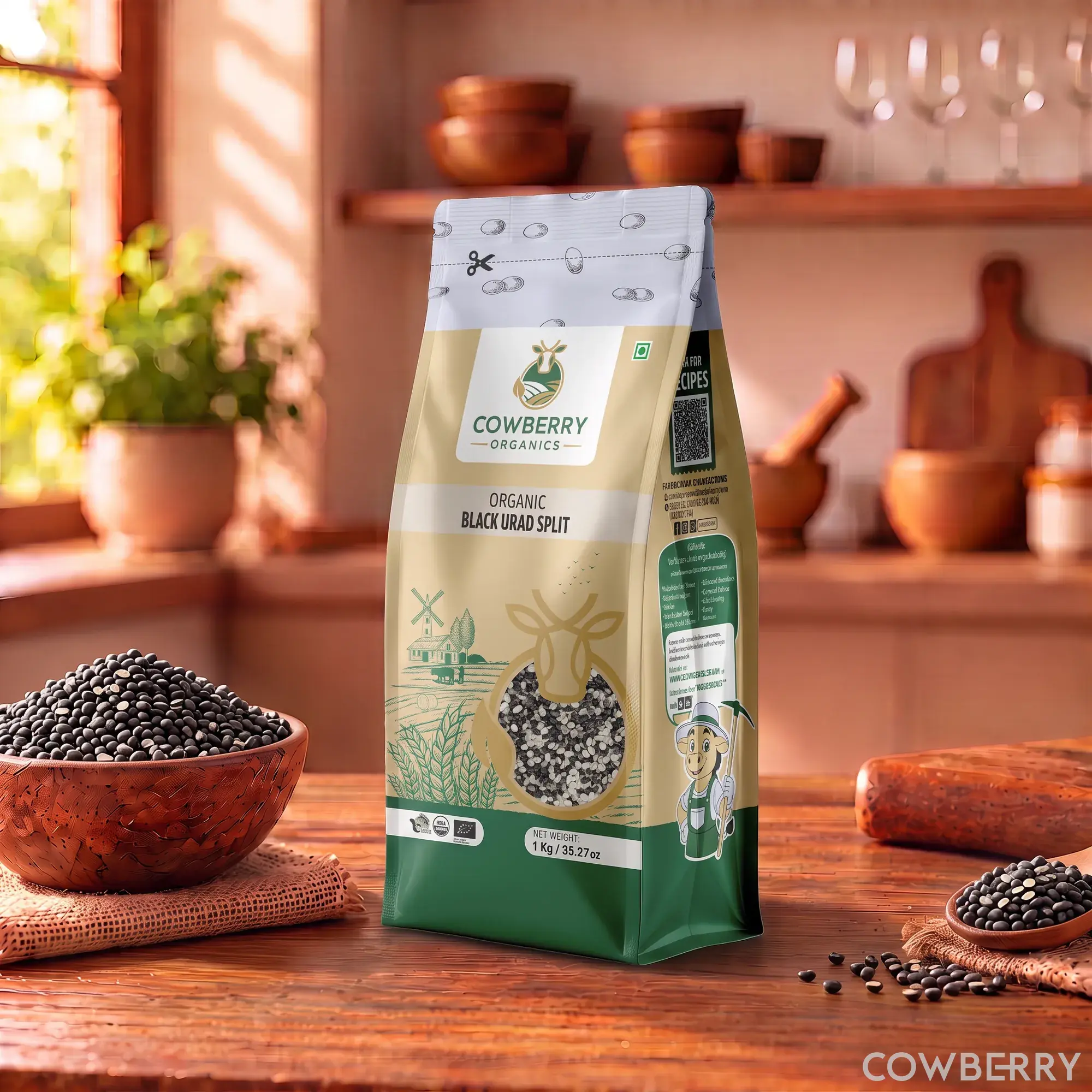
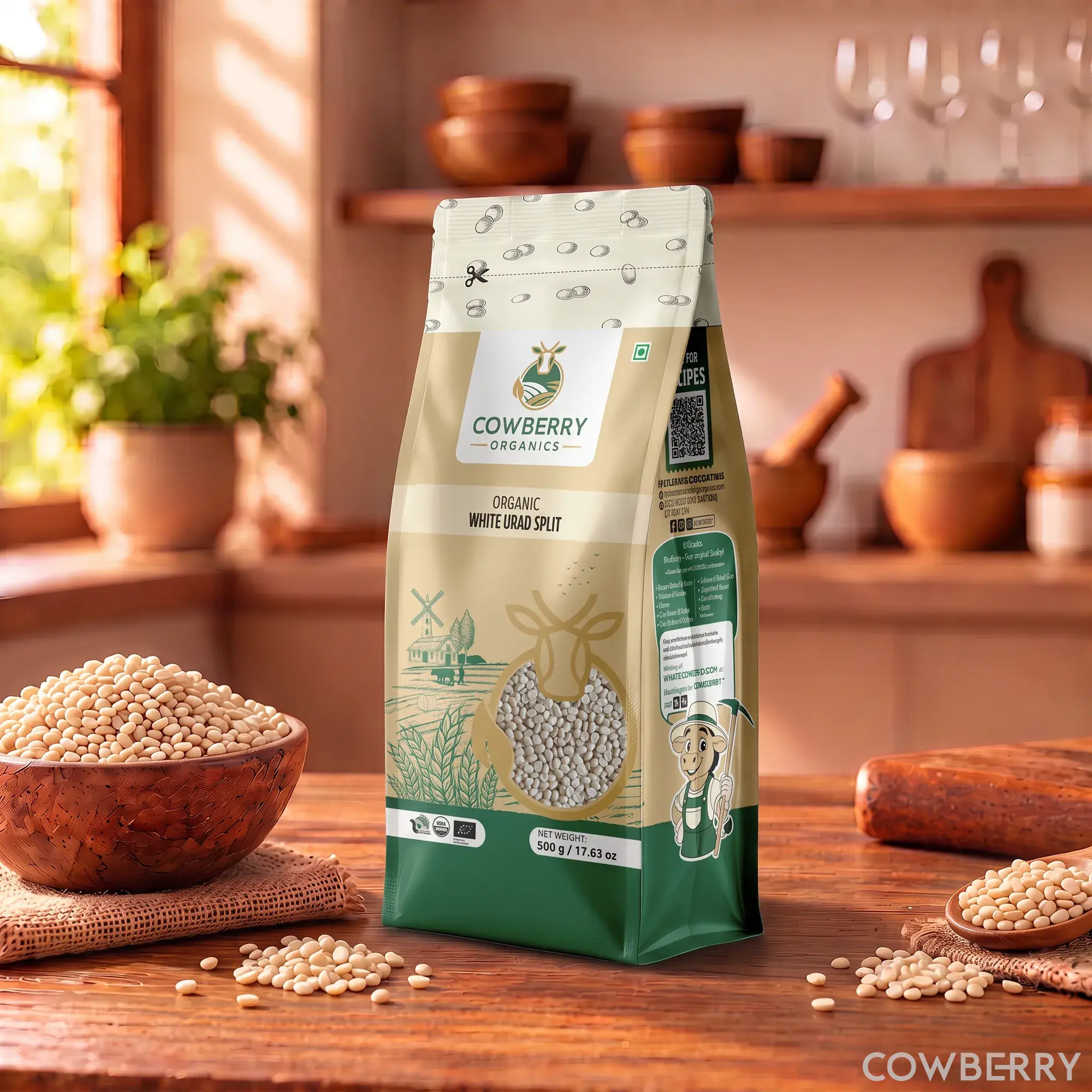
Shop this article
Keep reading
Green gram plant: crop, varieties and how it grows in India
Rajma vs lobia: difference, nutrition and which to choose
Rajma plant: how rajma is grown in India (it is not a tree)