by COWBERRY

7 minute read
How to soak urad dal: how long, overnight or quick, and storage

How to soak urad dal: cover it with plenty of clean water and leave it overnight, about 12 hours, at room temperature, then drain and cook or grind. The same soak works for plain dal and for idli, dosa and vada batter. The urad dal hub covers the bean itself; this page is the soaking, start to finish.
Short answer
Soak urad dal overnight, about 12 hours, at room temperature, fully covered with water, then drain and use it. Twelve hours comes from two places: the ICMR-NIN dietary guidelines describe an overnight soak, or at least 12 hours, with the grain completely submerged, in their sprouting method for whole grains and legumes, and the single Indian entry for black gram in the University of Sydney glycemic index database was prepared from the gram soaked 12 hours. Split urad usually softens sooner and whole urad takes the full stretch, but one figure covers both: overnight.
The soak is about water in the grain, not the clock: soaked urad swells and the grain turns soft throughout. After soaking, drain the water away and do not keep it. Soaked dal left sitting in water for a full day can turn sour, sooner in hot weather. From here the dal goes to the pot, the grinder or the fridge; each route is below.
Step by step: how to soak urad dal
- Measure and pick. Measure the dal first; a cup of dry dal is about 200 g. Pick over the dal and take out any stones or broken grains.
- Rinse. Wash the dal well, but not repeatedly; the dietary guidelines say repeated washing of rice and pulses loses some minerals and vitamins. Two changes of water are enough.
- Cover with plenty of water. Use a bowl with room to spare and water to spare, so the dal stays fully submerged as it swells.
- Soak overnight, about 12 hours. Leave the bowl at room temperature. If the kitchen is very warm and the water starts to smell sour, throw the dal away and start again.
- Drain and use. Tip the dal into a colander, let the water run away completely, then cook, grind or refrigerate it.
Soaking urad dal for idli, dosa and vada batter
Batter starts from urad dal soaked overnight, then the grind decides the dish. Idli and dosa are fermented foods: the dietary guidelines name idli, dosa and dhokla as the fermentation practices common in Indian cuisine, and say these methods improve the digestibility and bioavailability of micronutrients. Soak the urad, and the rice that goes with it, overnight; grind; then let the batter rise until it has climbed and smells lightly sour. How long the rise takes follows the warmth of the kitchen, not a clock.
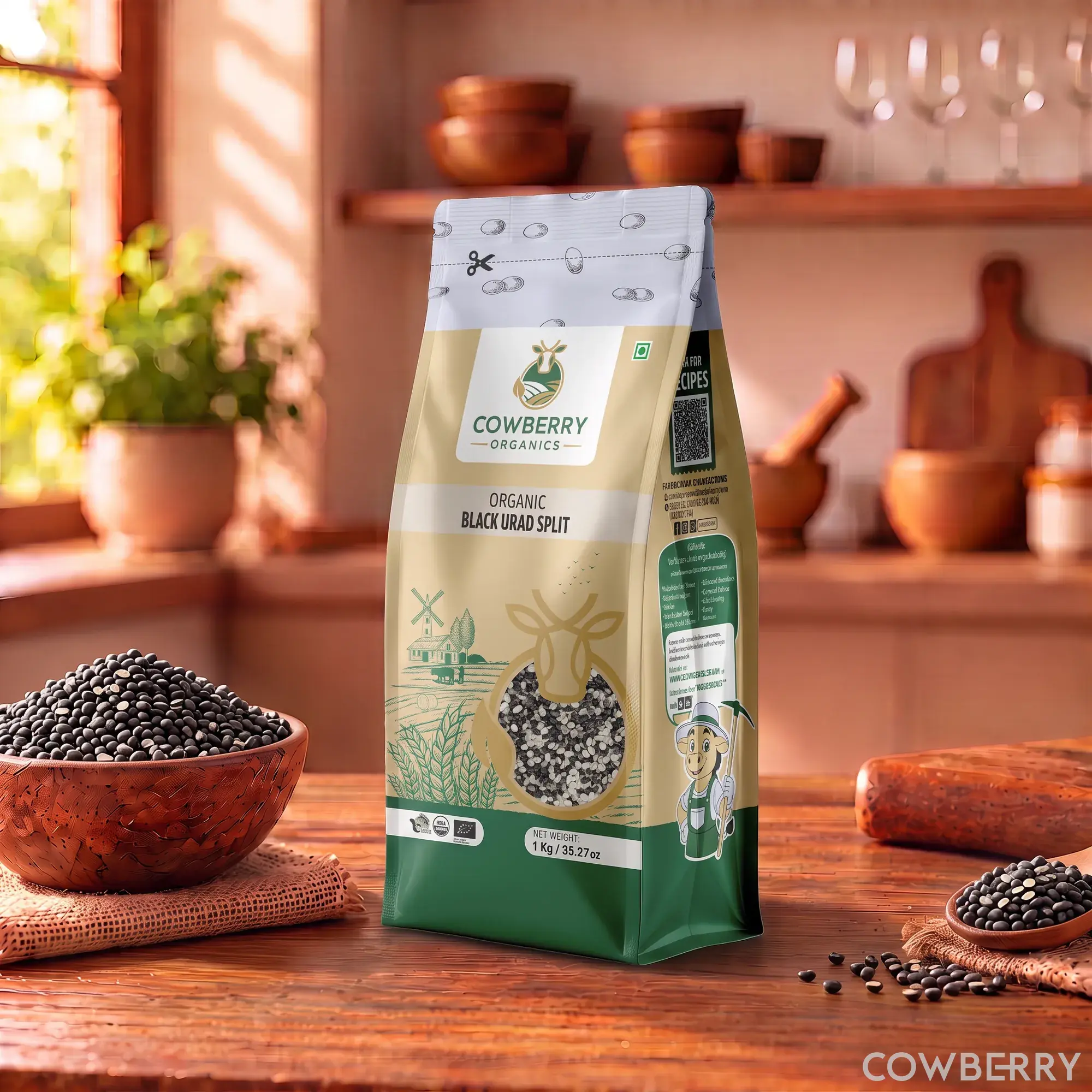
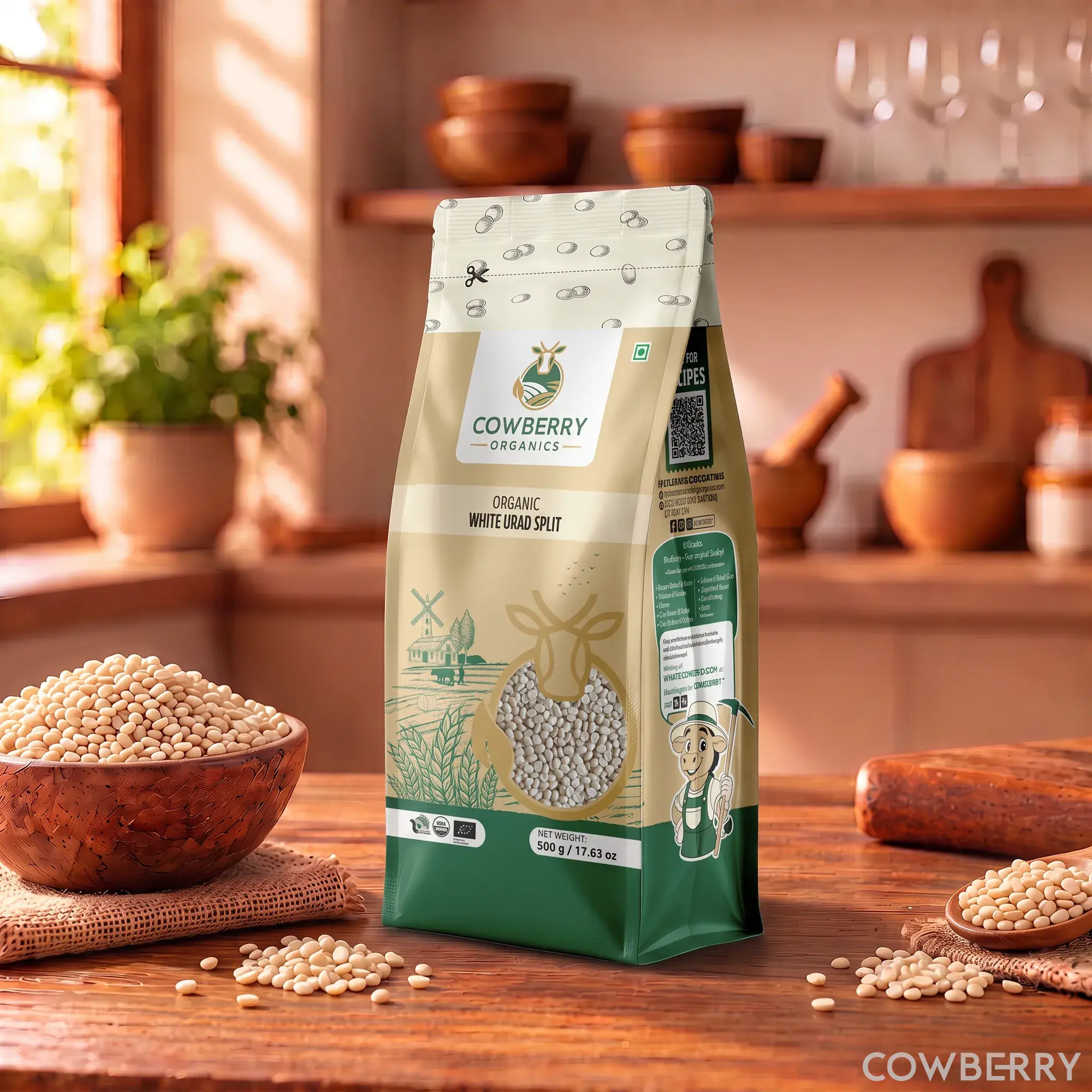
Medu vada skips the fermentation. The soaked urad is ground thick, seasoned and fried the same day, as in the urad dal vada recipe. For the batter, COWBERRY describes white urad split as a key ingredient in South Indian idli, dosa and vada, and lists black urad split, which keeps its black skin, for dosa and idli batter too. The full set of dishes is on the urad dal recipes page.
Quick soak and skipping the soak
For a quick soak, use hot water: cover the dal with water just off the boil and let it stand. There is no set time for this, so test instead of timing: the dal is ready when a grain crushes easily between two fingers, with no hard centre. Split urad usually gets there sooner than whole urad.
Skipping the soak is possible, not ideal. Soaked urad cooks relatively quickly, as COWBERRY's black urad split is described, and the dietary guidelines list soaking among the household methods that improve the digestibility and bioavailability of nutrients from whole grains and legumes. A 2019 review adds the other half: when the usual recommendations for soaking and cooking pulses are followed, the biological activities of lectins can be completely eliminated. An unsoaked dal therefore needs thorough cooking; give it more time under pressure and check that the grains mash easily before it leaves the stove.
Common mistakes (and the fix)
- Soaking a day or more. Overnight is enough; a longer soak, above all in warm weather, can turn sour, and a sour soak goes in the bin.
- Letting it sit in water after the soak. Drain fully before cooking, grinding or storing.
- Rinsing it over and over. The dietary guidelines say wash well, but not repeatedly; the extra rinses take minerals and vitamins with them.
- Soaking the wrong form. The forms soften at different speeds: whole urad with its skin usually takes the full stretch, split urad less. Gota, the whole bean with the skin removed, and the split forms are compared on the urad gota page, and the whole, black split and white split forms are laid out in the whole urad dal guide.
- Forgetting the smell check. A sour or musty soak should be thrown away, not rescued; it is the one failure a rinse cannot fix.
Soaked dal and batter: how to keep them
Soaked dal keeps in the fridge. Drain it well, cover it and use it soon; there is no set keeping time for soaked dal, so judge by smell. A sour or musty smell means the soak has turned, and the batch should be thrown away.
Batter keeps working: it ferments slowly even in the cold. Store it covered in the fridge, stir it well before cooking, and use it soon. Cooked urad dal follows the UK Food Standards Agency's leftover rule: cool it, refrigerate it and eat it within two days. Dry urad dal, unsoaked, sits in an airtight jar in a cool, dry place; more on keeping the dry dal is on the urad dal hub.
Urad dal soaking time and quantity table
One figure covers urad dal soaked in water overnight: the 12-hour soak, at room temperature, with the grain fully submerged. Everything else is a quantity or a check.
| Step | Time or quantity |
|---|---|
| Soak | Overnight, about 12 hours, room temperature, fully submerged |
| Water | Plenty, so the dal stays covered as it swells |
| Rinse | Wash well, but not repeatedly (ICMR-NIN) |
| Drain | Completely, before cooking, grinding or storing |
| Quick soak | Hot water, less time; test by pressing a grain |
| Cooked dal in the fridge | Up to two days, cooled first |
| Soaked dal in the fridge | Use soon; discard if it smells sour |
| Batter | Ferment at room temperature, then refrigerate; stir before use |
FAQs
Can I soak urad dal for 24 hours?
You can, but overnight, about 12 hours, is the usual soak for both dal and batter, and a bowl of dal left soaking for a full day, especially in summer, can turn sour. If a 24-hour soak happens anyway, drain well, rinse once and smell before you cook; throw the batch out if it smells sour.
Can urad dal be cooked without soaking?
Yes, but it takes longer. Soaked urad cooks relatively quickly, while an unsoaked dal needs more time under pressure and a check that the grains mash easily. The dietary guidelines count soaking among the household methods that improve digestibility, and a 2019 review notes that following the usual soaking and cooking advice can completely eliminate lectin activity, so cook unsoaked urad thoroughly.
How to store soaked urad dal?
Drain the soaked dal completely, put it in a covered bowl or box and keep it in the fridge. There is no set keeping time for soaked dal, so use it soon and judge by smell; a sour or musty smell means the batch has turned and should be thrown away. Give it one rinse before cooking.
How to store urad dal batter?
Covered, in the fridge, used soon. Idli and dosa batter keeps fermenting slowly even in the cold, so it turns more sour the longer it waits; stir it well before you cook. There is no set keeping time for batter either, so go by smell and look, and start a fresh batch when in doubt.
Can black gram be sprouted?
Yes, the whole bean can. The dietary guidelines describe the household method: soak the whole grains fully submerged overnight, at least 12 hours, drain, and keep them in a moist cloth out of direct light; the sprouts come in one to three days. Split urad dal will not sprout, because the bean is no longer whole.
Which urad dal is used for dosa?
Either split can go into dosa batter. COWBERRY lists its black urad split for dosa and idli batter and calls the white split a key ingredient in South Indian idli, dosa and vada; the urad dal dosa recipe soaks the white split overnight before grinding.
References
- Dietary Guidelines for Indians, ICMR-National Institute of Nutrition
- University of Sydney glycemic index database (GI search)
- UK Food Standards Agency: How to chill, freeze and defrost food safely
- Thompson HJ. Improving human dietary choices through understanding of the tolerance and toxicity of pulse crop constituents. Curr Opin Food Sci, 2019
Shop this article
Keep reading
Green gram plant: crop, varieties and how it grows in India
Rajma vs lobia: difference, nutrition and which to choose
Rajma plant: how rajma is grown in India (it is not a tree)