by COWBERRY

7 minute read
Is urad dal good for diabetes? GI, protein and how to fit it in

Urad dal for diabetes comes down to a few numbers: a GI of 43, which is in the low band, and about 15.3 g of carbohydrate with fibre and protein in a katori of cooked dal. The urad dal hub covers the whole dal story; here is what the numbers, the tables and the trials mean for someone managing blood sugar.
Is urad dal good for diabetes? The short answer
It can fit, in a measured portion. Urad dal's GI is 43, which is low on the Sydney scale, and a katori of dal, cooked from 30 g of the dry pulse, carries only about 15.3 g of carbohydrate with 3.6 g of fibre and 6.9 g of protein.
What comes with the dal counts too. Rice on the plate, rice in idli and dosa batter, and oil in a fried vada are covered below, dish by dish.
Is black gram good for diabetes? The GI and the grams
Black gram is urad dal's other name, and its GI of 43 comes from a single test in India, on black gram soaked 12 hours, held moist for a day and steamed for an hour. On the Sydney scale, 55 and below counts as low and 70 and above counts as high, so urad sits comfortably in the low band; the same database lists cooked sona masoori rice, also tested in India, at 72, in the high band. With rice on the plate, the dal's low number is only part of the meal.
Per 100 g of dry dal, IFCT 2017 records 51.00 g of carbohydrate, 11.93 g of fibre, 23.06 g of protein and 1.69 g of fat. These are the figures behind the katori numbers above, and the table below sets them beside raw milled rice.
| Nutrient | Urad dal (black gram), raw | Raw milled rice |
|---|---|---|
| Energy (kcal) | 324 | 357 |
| Protein (g) | 23 | 7.9 |
| Fat (g) | 1.7 | 0.5 |
| Carbohydrates (g) | 51 | 78 |
| Dietary fibre (g) | 12 | 2.8 |
| Iron (mg) | 4.7 | 0.7 |
| Calcium (mg) | 56 | 7.5 |
| Magnesium (mg) | 173 | 19 |
| Potassium (mg) | 1157 | 108 |
| Sodium (mg) | 19 | 2.3 |
| Zinc (mg) | 3 | 1.2 |
| Folate (mcg) | 89 | 9.3 |
| Glycemic index (GI) | 43 | 72 |
Per 100 g raw, edible portion. Composition: IFCT 2017 (ICMR-NIN). GI: University of Sydney GI database. — means not reported. These are average values for the food; the label on a pack gives the values for that product.
What the trials found
The pooled evidence is about pulses, and urad dal belongs to that family. A 2009 meta-analysis of 41 randomised trials in people with and without diabetes found that pulses eaten alone (11 trials) lowered fasting blood glucose and insulin, and that pulses within low-GI diets lowered HbA1c and fructosamine; the authors note high, unexplained variation between studies and call for larger trials. A 2014 review describes pulses as high in fibre with a low GI and calls them particularly beneficial to people with diabetes, while asking for long-term trials.
ICMR-NIN adds the fibre side: dietary fibre delays and retards the absorption of carbohydrates, and its guidelines link fibre-rich diets with better insulin sensitivity. These findings are about pulses and fibre in general, not urad dal on its own, and no dal replaces diabetes medicine.
How much urad dal: the katori portion
ICMR-NIN's My Plate for a vegetarian day allots 85 g of pulses, which is a little under three katoris of cooked dal. Each katori is cooked from 30 g of the dry dal. One katori holds about 97 kcal, with 15.3 g of carbohydrate, 3.6 g of fibre and 6.9 g of protein. How many katoris fit your plan, beside the cereal on the same plate, is for your doctor or dietitian to set.
The same My Plate asks that at least half the day's cereals be whole grains, so the roti or rice beside the dal matters as much as the dal. Recipes are collected in the urad dal recipes roundup, per-serving figures sit on the urad dal nutrition page, and the urad dal hub has the full picture.
Idli, dosa and vada: the meal numbers
Urad dal enters the diabetes conversation through batters, and ICMR-NIN's guidelines print GI values, each the mean of ten participants, for South Indian breakfasts: vada with sambar near 37, idli with sambar near 69 and plain dosa near 79. The guidelines call these values only indicative, since ingredient ratios and preparation change them. They are dish numbers, not dal numbers: vada and idli were tested with sambar, plain dosa without a side.
In that table vada with sambar sits lowest and plain dosa highest, but a GI does not count the oil a fried vada carries, so the portion still matters. The idli with urad dal and rice, urad dal dosa and urad dal vada recipes show each one, and the urad dal for weight loss page covers the lighter plate.
What to watch with urad dal and diabetes
- Gas at first. In a 2019 review of pulses, those who get gas mostly adjust within a few weeks if they keep pulses in the diet, and the amount varies from one person to the next.
- The sweet versions. Urad dal laddu is a sweet, and the dal's numbers do not cover the jaggery and ghee in it. Nor do they cover the ghee in dal makhani, whose recipe lists what goes in.
- The rice volume. The dal's low number does not license a mountain of sona masoori, which sits at 72 on the same tables.
- Medicine and testing. No food change replaces medication or home glucose checks; tell the doctor when the plate changes.
Talk to your doctor or dietitian
Diabetes is managed per person: type, medicines, kidney function, weight and activity all change the arithmetic. The portions and the GI numbers on this page describe the food, not your prescription. If urad dal is new to your rotation, add it while your glucose testing is steady and let the readings, and the doctor, judge. When in doubt about how much urad dal fits your day, talk to your doctor or dietitian before changing the plate.
FAQs
Is urad dal good for diabetes?
It can, in a measured portion. Urad dal's GI is 43, in the low band of 55 or less, and a katori of cooked dal from 30 g of dry urad brings about 15.3 g of carbohydrate with 3.6 g of fibre and 6.9 g of protein. Keep the rest of the plate whole-grain, and let the doctor set the portions.
Is black gram good for diabetes?
It can fit a diabetes diet in the same way, because black gram is urad dal's other name and its GI of 43 is the same figure. In a 2009 meta-analysis, the 11 trials that tested pulses alone found lower fasting blood glucose and insulin, though results varied widely between studies. The portion, and the rice or sugar served with it, still matter.
Does urad dal increase blood sugar?
Less than high-GI foods do, going by its GI of 43, which is in the low band; the Sydney GI group says low-GI carbohydrates produce smaller swings in blood glucose. Its 11.93 g of fibre per 100 g counts too, since ICMR-NIN says fibre delays the absorption of carbohydrates. Rice, batter or sugar served with the dal add their own effect, so follow your glucose readings.
Can urad dal cause gas?
It can, like other pulses. Pulses carry galacto-oligosaccharides that the small intestine cannot digest; a 2019 review explains that these are fermented in the colon with the release of gas, and notes that this explanation has recently been questioned. Gas that persists is worth raising with your doctor.
Which urad dal is used for dosa?
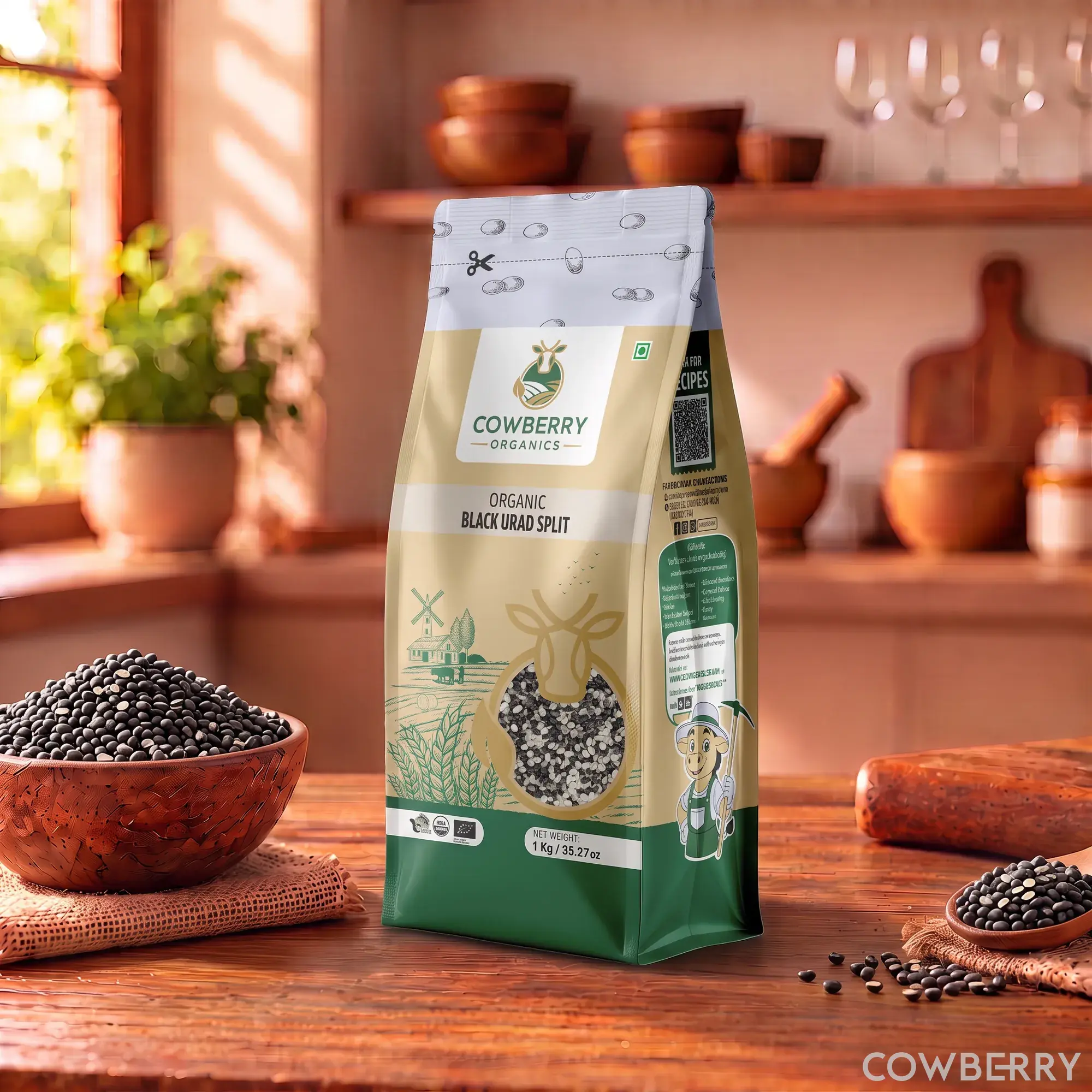
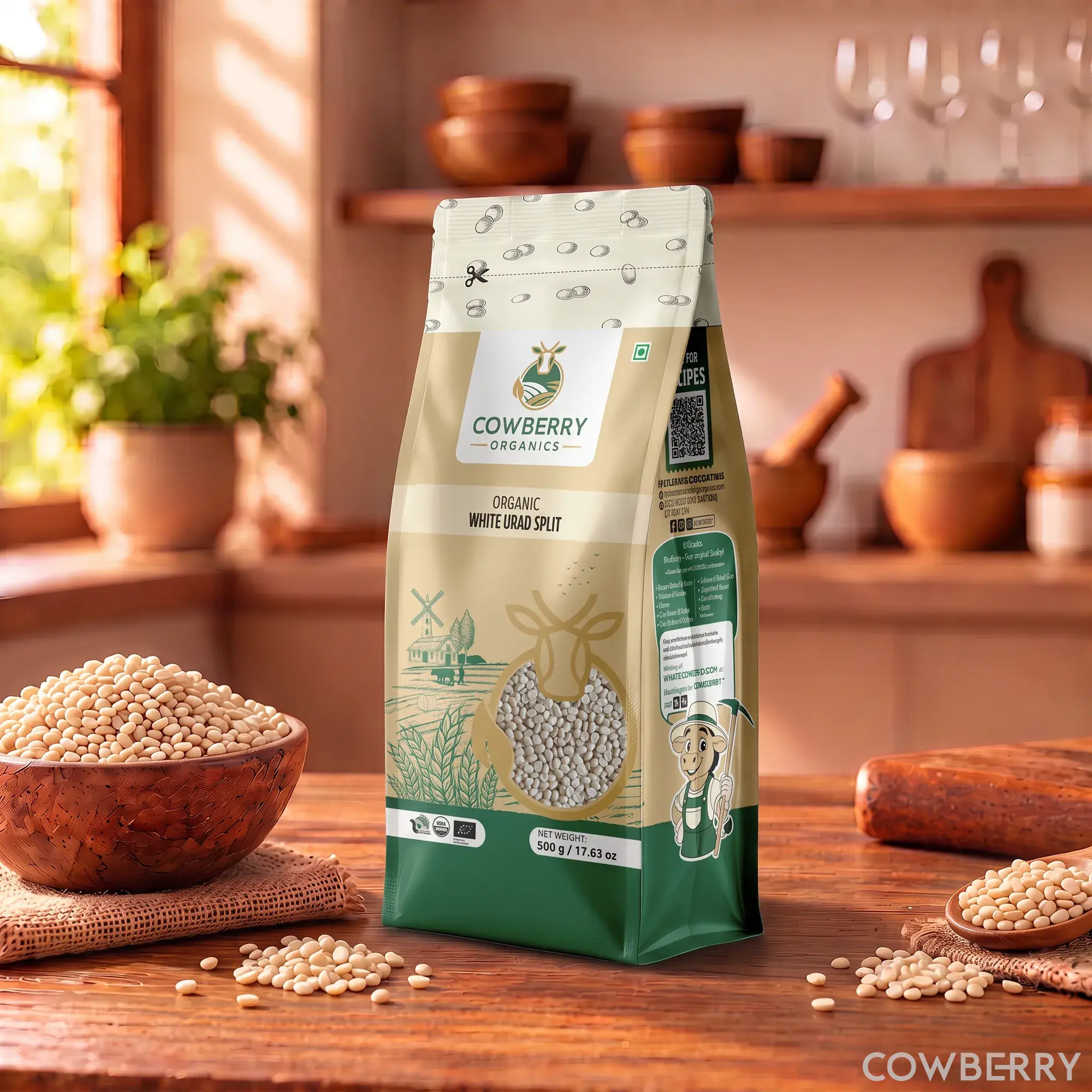
Both splits work. COWBERRY lists its black urad split for dal, dosa batter and idli batter, and its white urad split as a key ingredient for idlis, dosas and vadas; the site's dosa recipe uses the white split. The difference between whole, split and washed urad, and where each form fits, is on the urad dal types page.
References
- Indian Food Composition Tables (IFCT) 2017, ICMR-National Institute of Nutrition
- Dietary Guidelines for Indians, ICMR-National Institute of Nutrition
- University of Sydney glycemic index database (GI search)
- University of Sydney: about the glycemic index
- Mudryj AN, Yu N, Aukema HM. Nutritional and health benefits of pulses. Appl Physiol Nutr Metab, 2014
- Thompson HJ. Improving human dietary choices through understanding of the tolerance and toxicity of pulse crop constituents. Curr Opin Food Sci, 2019
- Sievenpiper JL, Kendall CW, Esfahani A, et al. Effect of non-oil-seed pulses on glycaemic control: a systematic review and meta-analysis of randomised controlled experimental trials in people with and without diabetes. Diabetologia, 2009
Shop this article
Keep reading
Green gram plant: crop, varieties and how it grows in India
Rajma vs lobia: difference, nutrition and which to choose
Rajma plant: how rajma is grown in India (it is not a tree)