by COWBERRY

7 minute read
Kandi pappu in English: toor dal in Hindi, Kannada, Tamil and more

Kandi pappu in English is toor dal, the split pigeon pea (Cajanus cajan): kandi is Telugu for pigeon pea and pappu means split dal. The same dal is arhar in Hindi, tur or tuvar in Marathi and Gujarati, togari bele in Kannada and thuvaram paruppu in Tamil. Our toor dal guide covers its nutrition and cooking; this page is about its names.
Quick answer: toor dal in every Indian language
Kandi pappu is toor dal, the yellow split pigeon pea that Hindi calls arhar dal. Every everyday name for it is in the table below, taken from the IFCT 2017 local-names list, with two spellings people actually type, togari bele and thuvaram paruppu, added as spelling variants of the IFCT names. If you only need one line: kandi pappu (Telugu), togari bele or thugare bele (Kannada), thuvaram or tuvaram paruppu (Tamil), tuvaru parippu (Malayalam), arhar dal (Hindi, Punjabi, Bengali), turdal or tur dal (Marathi), tuver ni daad (Gujarati), harada dal (Odia), rohor dail (Assamese) and tuvar ki dal (Urdu) are all one dal, and in English it is split pigeon pea or, as IFCT 2017 prints it, red gram dal.
| Language | Name (romanised) |
|---|---|
| English | Red gram, dal |
| Hindi | Arhar dal |
| Marathi | Turdal |
| Gujarati | Tuver ni daad |
| Punjabi | Arhar dal |
| Bengali | Arhar dal |
| Odia | Harada dal |
| Assamese | Rohor dail |
| Kannada | Thugare bele, Togari bele |
| Telugu | Kandi pappu |
| Tamil | Tuvaram paruppu, Thuvaram paruppu |
| Malayalam | Tuvaru parippu |
| Urdu | Tuvar ki dal |
| Sanskrit | Aaddhakii |
| Botanical name | Cajanus cajan |
Source: IFCT 2017 (ICMR-NIN) local-names list. — means no name recorded in the source.
Kannada ‘Togari bele’: spelling variant of the IFCT 2017 name ‘Thugare bele’. Tamil ‘Thuvaram paruppu’: spelling variant of the IFCT 2017 name ‘Tuvaram paruppu’.
Toor dal, arhar dal and tur dal in English
The English name is pigeon pea, and the split, dehusked form is split pigeon pea or, in IFCT 2017, red gram dal. The botanical name is Cajanus cajan, a shrub of the legume family that carries small pods, each with a few round seeds. The name pigeon pea is said to come from Barbados, where the seeds were used as feed for pigeons. "Toor", "tur" and "tuvar" are the Marathi and Gujarati names and "arhar" is the Hindi one; all four refer to the same pigeon pea, whole or split, so arhar dal in English and tur dal in English have the same answer as toor dal in English.
Two words in Indian English trip people up. "Dal" means both the split pulse in the jar and the cooked dish, so toor dal is an ingredient and a curry. "Lentil" is used loosely for every dal on menus abroad, but botanically a lentil is masoor; the pigeon pea is a different plant altogether. IFCT 2017 gives it 21.7 g protein per 100 g; the full breakdown, benefits and cooking method are in the toor dal guide.
Toor dal in Kannada, Telugu, Tamil and the rest of India
Toor dal in Telugu: kandi pappu
Kandi is the Telugu name for pigeon pea and pappu is the word for split dal, so kandi pappu is literally "pigeon pea dal". It is the dal of pappu charu, tomato pappu and gongura pappu in Andhra and Telangana kitchens, and usually the one a Telugu recipe means when it says only "pappu".
Toor dal in Kannada: togari bele
Kannada speakers say togari bele, which IFCT 2017 prints as thugare bele; bele is the Kannada word for split dal. It is the base of Karnataka sambar and of bele saaru, the thin dal-and-tamarind soup eaten with rice. Searches for togari bele in English and toor dal in Kannada are two halves of the same question, and the answer is the same dal.
Toor dal in Tamil: thuvaram paruppu
Tamil uses thuvaram paruppu (IFCT: tuvaram paruppu); paruppu is the Tamil word for dal. It is the dal of Tamil sambar and of paruppu sadam, the plain mashed dal with rice and ghee that begins a meal. In Kerala it is tuvaru parippu, and it goes into Kerala sambar.
Hindi, Urdu and the north: arhar dal
IFCT 2017 prints arhar dal for Hindi, Punjabi and Bengali alike, so one name covers the Hindi belt, Punjab and Bengal. Urdu says tuvar ki dal.
Marathi, Gujarati and the west
Marathi turdal (tur dal) and Gujarati tuver ni daad are the names closest to the pack spelling "toor dal". Maharashtra's plain varan and spiced amti and Gujarat's sweet-and-sour tuver dal are its everyday forms there.
Odia, Assamese and Sanskrit
Odia harada dal, Assamese rohor dail and the Sanskrit aaddhakii, as IFCT 2017 prints it, complete the list.
Often confused with: chana dal, masoor dal, moong dal and urad dal
Four dals sit next to toor on the shelf and get mixed up in recipes and translations, especially when a southern name is being matched to a northern one.
- Chana dal (split Bengal gram; sanaga papu in Telugu, kadale bele in Kannada, kadalaiparuppu in Tamil) is larger, wedge-shaped and rougher on the surface, a deeper yellow, and takes longer to cook. Its names are on the chana dal in English page.
- Masoor dal (split red lentil) is thinner, salmon-orange rather than yellow, and cooks in minutes without soaking. It is the only one of the five that is a true lentil.
- Moong dal (split green gram; Kannada hesara bele, Telugu pesara pappu) is smaller, paler and oval; its names are listed under hesaru bele in English.
- Urad dal (split black gram; Telugu minapapappu, Kannada uddhina bele) is cream-white rather than yellow and turns sticky when ground, which is why it goes into idli and dosa batter; see minapappu in English.
Toor dal itself is a flat, matte, mid-yellow split disc, slightly hollowed at the centre, bigger than moong dal and smoother than chana dal. Side-by-side descriptions and a name table for every everyday dal are on the types of dal page.
Where toor dal grows in India
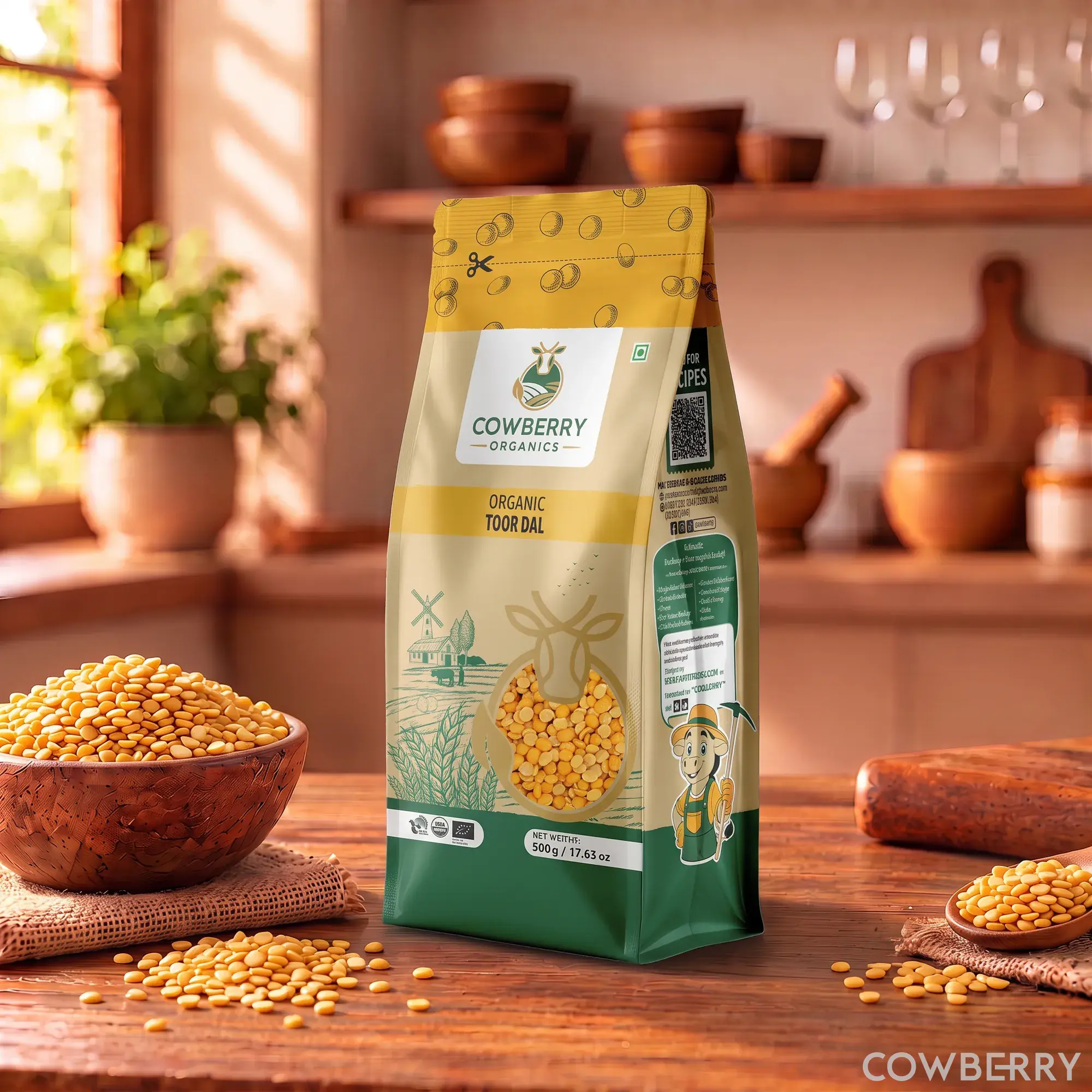
Pigeon pea is a pulse, and like other pulses it takes nitrogen from the air and fixes it in the soil, a point the FAO makes for the whole family. Andhra Pradesh, Karnataka and Maharashtra are among the states that grow it: COWBERRY's toor dal comes from farms in those three states that follow cow-based farming.
At the dal mill the dry seed is dehusked and split, and that split seed is the dal on the shelf. Whatever the language, the dal cooks the same way, three whistles in a pressure cooker after a short soak, as in our dal tadka recipe.
FAQs
What is toor dal called in English?
Toor dal is called pigeon pea in English, or split pigeon pea for the dal itself; IFCT 2017 prints it as red gram. The botanical name is Cajanus cajan. Arhar dal, tur dal, tuvar dal, kandi pappu, togari bele and thuvaram paruppu all translate to the same thing, because they are the same dal in different languages.
What is arhar dal?
Arhar dal is the Hindi name for toor dal, the split and dehusked pigeon pea. It is the yellow dal of the everyday north Indian dal-chawal, of sambar in the south and of the sweet-and-sour Gujarati dal. The whole seed is also called arhar; the split form sold in shops is arhar dal, and it is the same product as toor dal.
Difference between arhar dal and toor dal?
There is none. Arhar is the Hindi word and toor (tur, tuvar) the Marathi and Gujarati word for the same pigeon pea, so a pack labelled arhar dal and one labelled toor dal hold the same dal. Differences you notice between packs come from the variety, the growing region and whether the dal is polished, not from the name on the front.
What is togari bele in English?
Togari bele is the Kannada name for toor dal, the split pigeon pea; bele means split dal. IFCT 2017 prints it as thugare bele. It is the base of Karnataka sambar and bele saaru, and it is the same dal as Telugu kandi pappu, Tamil thuvaram paruppu and Hindi arhar dal, so any toor dal recipe applies to it.
What is thuvaram paruppu in English?
Thuvaram paruppu (IFCT 2017: tuvaram paruppu) is Tamil for toor dal, the split pigeon pea; paruppu means dal. It is the dal in Tamil sambar and in paruppu sadam, the mashed dal eaten with rice and ghee. In Malayalam it is tuvaru parippu, in Kannada togari bele and in Hindi arhar dal.
Is toor dal a lentil?
No. In English, lentil is the name of masoor, a separate plant, while toor dal is split pigeon pea, Cajanus cajan, listed in IFCT 2017 as red gram dal. When you translate a recipe, pigeon pea or toor dal is the exact name; "yellow lentils" on a menu or a pack is a loose label that can mean toor or moong dal.
References
Shop this article
Keep reading
Green gram plant: crop, varieties and how it grows in India
Rajma vs lobia: difference, nutrition and which to choose
Rajma plant: how rajma is grown in India (it is not a tree)