by COWBERRY

7 minute read
Chana dal in English, Hindi, Kannada, Telugu, Tamil and Malayalam

Chana dal in English is split Bengal gram, the skinned, split seed of the desi chickpea (Cicer arietinum); labels may also say "split chickpea" or "Bengal gram dal". Kadle bele, sanaga pappu, kadalai paruppu, kadala parippu and cholar dal are the same dal. Here are its names in 13 languages, the dals it gets mistaken for and its origins; the chana dal guide covers nutrition and cooking.
Chana dal English name and scientific name
The chana dal English name is Bengal gram dal, the term IFCT 2017 and older Indian English use, or simply split chickpea, which is what a British or American cook will understand. The scientific name of Bengal gram is Cicer arietinum L., the chickpea, in the legume family Fabaceae. Two types of the plant are eaten: desi, the small, dark, thick-skinned seed that chana dal is made from, and kabuli, the large cream chickpea cooked whole.
The word "gram" on its own is not specific: IFCT 2017 names urad black gram, moong green gram and toor red gram, so "gram" alone does not tell you which pulse is meant, while "Bengal gram" means chana. Split and skinned, Bengal gram is chana dal; ground, it is gram flour, which is besan; roasted and ground, it is sattu. Do not translate chana dal as "yellow lentil": lentil is masoor, and "yellow lentils" in an English recipe usually means toor or moong dal.
Kadle bele in English, and the other South Indian names
Kadle bele (IFCT spells it kadale bele) is Kannada for chana dal, so kadle bele in English is split Bengal gram or split chickpea, the same dal that Karnataka kitchens put in the tempering of chitranna and upma and soak for kosambari. The whole seed is kadale, and roasted, skinned chana goes into chutney pudi.
In Telugu the dal is sanaga pappu (the whole seed sanagalu); in Tamil kadalai paruppu (whole: kondaikadalai); and Bengal gram in Malayalam is kadala parippu, with the whole black seed called kadala, the one in Kerala's kadala curry eaten with puttu. Kadalai paruppu in Hindi is chana dal or chane ki dal. Kannada, Tamil and Malayalam share one root word for the chickpea (kadale, kadalai, kadala), while Telugu uses sanaga; in all four the second word (bele, pappu, paruppu, parippu) simply means dal, a useful key for reading any South Indian dal name.
Chana dal names in all Indian languages
Every name in the table is the romanised IFCT 2017 entry for food code B001, the split dal, with common spellings added and footnoted. IFCT prints the Hindi as chan-ki-dal; the everyday spelling chana dal is added below it. Where a cell is blank, no name is recorded in the source: Sanskrit has none listed for the dal, though IFCT gives chanak as the Sanskrit for the whole seed. Marathi harbara dal, Gujarati chana ni dal, Punjabi sholedi dal, Bengali cholar dal, Odia buta dali and Assamese boot dail all point to the same split dal, and Urdu chane ki dal is the same phrase as the Hindi.
Say "chana dal" almost anywhere in North and West India and you will be understood. In the South, use the local word, because "chana" on its own may get you the whole seed, and in Bengal ask for cholar dal, which is also the name of the sweet coconut-tempered dish made from it.
| Language | Name (romanised) |
|---|---|
| English | Bengal gram, dal |
| Hindi | Chan-ki-dal, Chana dal |
| Marathi | Harabara dal, Harbara dal |
| Gujarati | Chana-ni-daad, Chana ni dal |
| Punjabi | Sholedi dal |
| Bengali | Cholar dal |
| Odia | Channa dali (Buta dali) |
| Assamese | Boot dail |
| Kannada | Kadale bele, Kadle bele |
| Telugu | Sanaga papu, Sanaga pappu |
| Tamil | Kadalaiparuppu, Kadalai paruppu |
| Malayalam | Kadala parippu |
| Urdu | Chane ki dal |
| Sanskrit | — |
| Botanical name | Cicer arietinum |
Source: IFCT 2017 (ICMR-NIN) local-names list. — means no name recorded in the source.
Hindi ‘Chana dal’: Wikipedia: Chickpea. Marathi ‘Harbara dal’: spelling variant of the IFCT 2017 name ‘Harabara dal’. Gujarati ‘Chana ni dal’: spelling variant of the IFCT 2017 name ‘Chana-ni-daad’. Kannada ‘Kadle bele’: spelling variant of the IFCT 2017 name ‘Kadale bele’. Telugu ‘Sanaga pappu’: spelling variant of the IFCT 2017 name ‘Sanaga papu’. Tamil ‘Kadalai paruppu’: spelling variant of the IFCT 2017 name ‘Kadalaiparuppu’.
Often confused with: toor dal, yellow moong dal and kabuli chana
Toor dal (arhar, red gram) is easy to mistake for chana dal on a shelf, because both are yellow and split. Toor dal is smaller, flatter and a duller yellow with a slightly chalky surface; chana dal is plumper and more golden, with a rounded back, and it stays firm when cooked while toor turns to a smooth mash. The toor dal guide has its names and nutrition.
Yellow moong dal is split, skinned green gram: smaller than both, paler, and quick to cook even without a soak, while chana dal is best soaked and pressure-cooked. See the moong dal guide.
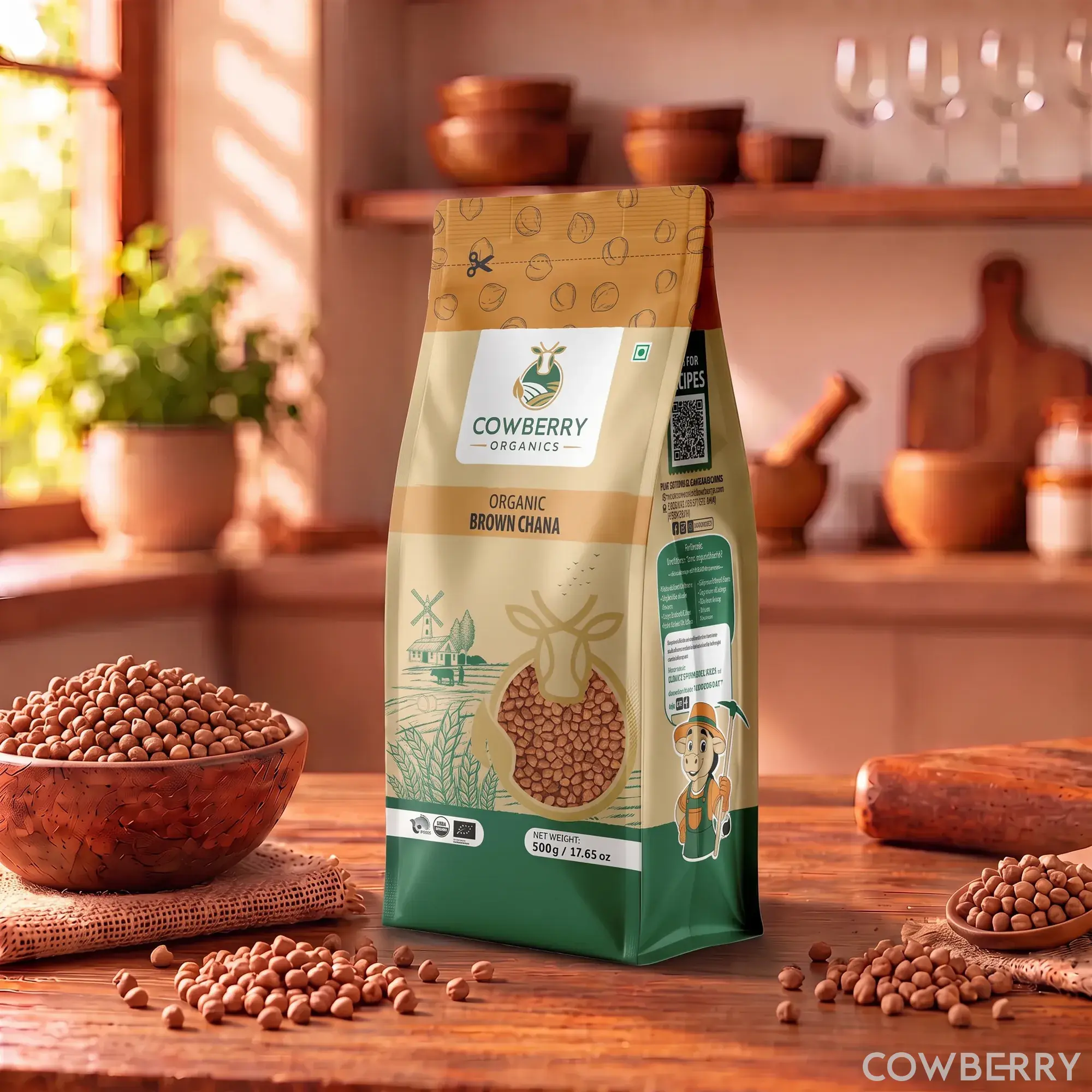
Kabuli chana is the other chickpea, large and cream-coloured, usually cooked whole, as in chole. Kala chana (brown chana) is the whole desi seed that chana dal is milled from. Coconut chutney is thickened with roasted chana; raw chana dal goes only into its tempering. For the common dals side by side, see types of dal names in English, Hindi and Indian languages; the chana dal guide compares the numbers.
Where chana dal comes from
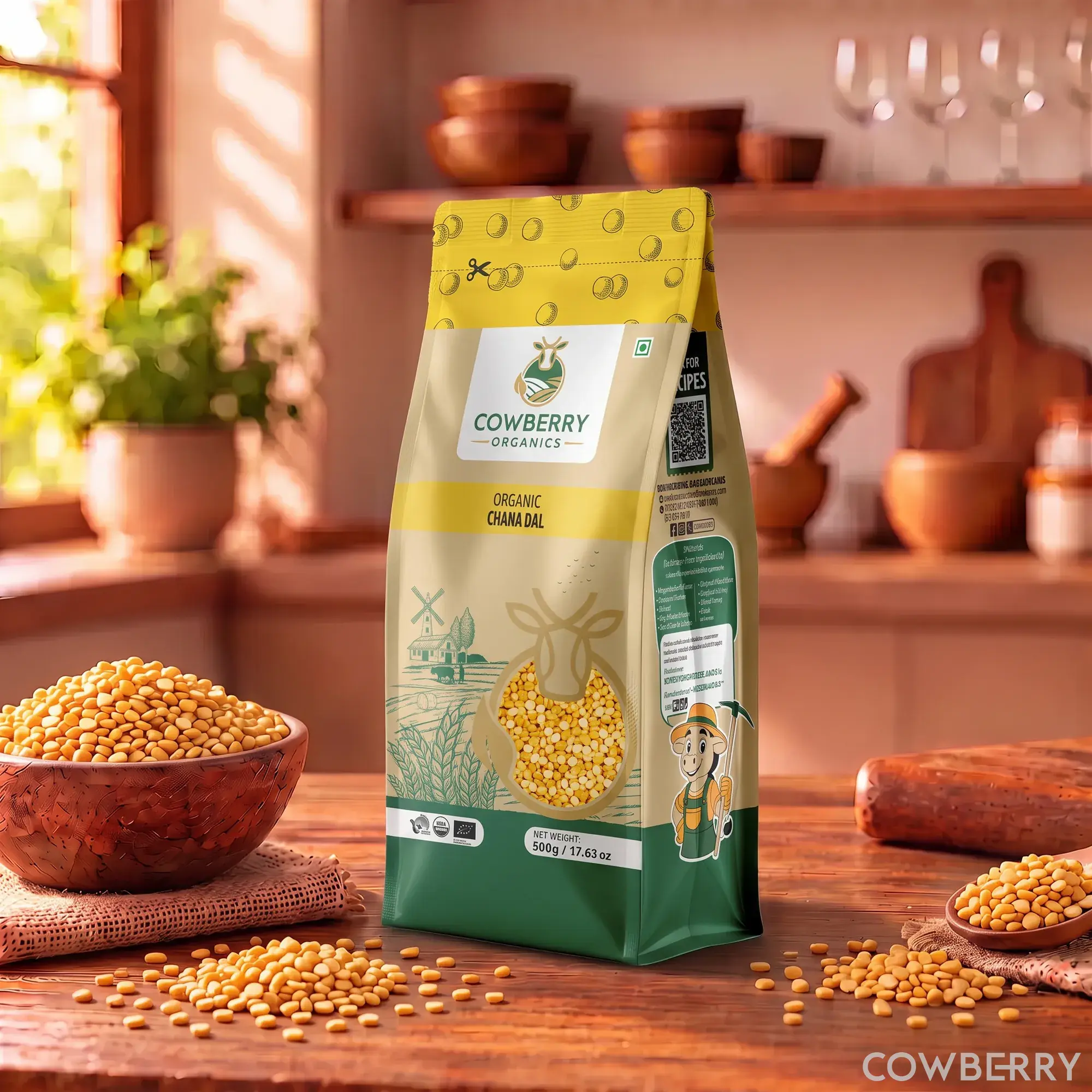
Chana dal is not grown; chickpea is, and the dal is milled from it. A 2012 review of chickpea nutrition in the British Journal of Nutrition describes a crop eaten worldwide and grown above all in Africa and Asia. COWBERRY's chana dal comes from desi chickpeas grown in Central India through cow-based organic farming, and its whole brown chana from Central and Northern India.
After harvest the dry seed is cleaned and graded, then dehusked and split in a dal mill; COWBERRY leaves its dal unpolished. For the numbers per 100 g, see chana dal protein per 100 g. Once soaked, the dal needs about 35 minutes at the stove to become chana dal fry.
FAQs
What is bengal gram in hindi?
Chana. Bengal gram is the English name for the desi chickpea, which Hindi calls chana (whole, also kala chana) and chana dal or chane ki dal when it is split. IFCT 2017 prints the Hindi name of the dal as chan-ki-dal. Besan is its flour and sattu the roasted flour.
Why chana dal is called bengal gram?
Because that is its English name in India's food tables: IFCT 2017 lists the whole seed as Bengal gram and the split seed as Bengal gram dal. The same tables use "gram" for other pulses too, with urad as black gram, moong as green gram and toor as red gram, so "Bengal" marks out chana among them. How that word first became attached is not recorded in the tables.
Is bengal gram and chana dal same?
Yes, the same seed at two stages. Bengal gram is the whole desi chickpea, kala chana; chana dal is that seed with the skin removed and split in two. "Split Bengal gram" and "Bengal gram dal" on a pack both mean chana dal. Kabuli chana, the large white chickpea, is a different type; IFCT 2017 uses Bengal gram only for the desi seed.
What is chana dal called in english?
Split Bengal gram, or split chickpea. IFCT 2017 lists it as Bengal gram dal; shops abroad sell it as chana dal or split desi chickpea. Its flour is gram flour or chickpea flour, which is besan. Do not translate it as "yellow lentil", which usually means toor or moong dal.
What is the difference between bengal gram and chickpea?
Chickpea is the species, Cicer arietinum; Bengal gram is one of its two types, the small brown desi chickpea. The other type is kabuli, the large cream chickpea of chole and hummus. So every Bengal gram is a chickpea, but "chickpea" in an English recipe usually means kabuli, while Indian food tables keep "Bengal gram" for desi.
Is kadle bele the same as chana dal?
Yes. Kadle bele is the Kannada name (IFCT spells it kadale bele) for chana dal, the split desi chickpea; and kadale is the whole seed. Telugu sanaga pappu, Tamil kadalai paruppu and Malayalam kadala parippu are the same dal under other names.
References
- Indian Food Composition Tables (IFCT) 2017, ICMR-National Institute of Nutrition
- Jukanti AK, Gaur PM, Gowda CL et al. Nutritional quality and health benefits of chickpea (Cicer arietinum L.): a review. Br J Nutr, 2012
- FSSAI: Food Products Standards and Food Additives Regulations compendium (Version XXII, 02.03.2022): 2.4.4 Besan and 2.4.33 Roasted Bengal Gram Flour (Chana Sattu)
- Erler F, Ceylan F, Erdemir T, Toker C. Preliminary results on evaluation of chickpea, Cicer arietinum, genotypes for resistance to the pulse beetle, Callosobruchus maculatus. J Insect Sci, 2009
Shop this article
Keep reading
Green gram plant: crop, varieties and how it grows in India
Rajma vs lobia: difference, nutrition and which to choose
Rajma plant: how rajma is grown in India (it is not a tree)