by COWBERRY

10 minute read
Lobia (black eyed peas): nutrition, benefits and how to cook

Lobia is the Hindi name for the white cowpea, the cream-coloured bean with a dark eye that much of the world calls black eyed peas. Per 100 g it carries 21.25 g of protein and 11.7 g of fibre (IFCT 2017), and it cooks into curries, khichdi and salads. This page covers its names, nutrition, benefits, cooking and buying.
What is lobia? Black eyed peas explained
Lobia is a pulse: the white cowpea that IFCT 2017 files under the English name Cowpea, white (food code B006) with the botanical name Vigna catjang. On the shop shelf the same bean is black eyed peas — cream-coloured seeds with a dark spot like an eye — and it is sold whole and dried, then soaked and cooked like other dals. The pea is a naming quirk: it is a bean seed, and it cooks like other beans. Its taste is mild and nutty, and it suits curry, khichdi, and cold salads of boiled beans with onion, tomato and lemon. On the plate it sits where dals sit: beside rice or roti, in a khichdi, in salads, or boiled with lemon as an evening snack. It is often confused with soybean, which is a different crop; the lobia vs soybean page sets them apart. Every name the bean carries is on lobia in English, Hindi and Indian languages.
Lobia beans: names in English, Hindi and Indian languages
Hindi calls the bean lobia, and IFCT 2017 lists the same word for Punjabi as well. English files it as Cowpea, white, the everyday shop name is black eyed peas, and the botanical entry in the same table is Vigna catjang. Around the country the bean answers to Chavli in Marathi, Chorap in Gujarati, Alasande in Kannada, Bobbarlu in Telugu, Karamani in Tamil and Vella payaru in Malayalam, while the table also carries Baunir in Urdu, Raajamaassa in Sanskrit and Lesera mahor guti in Assamese. All these names point at one bean. The pack spellings Chawli and Lobiya are noted below the table. In all, IFCT 2017 lists the bean's name in 13 Indian languages, and the full set follows.
| Language | Name (romanised) |
|---|---|
| English | Cowpea, white |
| Hindi | Lobia, Lobiya |
| Marathi | Chavli, Chawli |
| Gujarati | Chorap |
| Punjabi | Lobia |
| Bengali | Barbati |
| Odia | Jhudunga |
| Assamese | Lesera mahor guti |
| Kannada | Alasande |
| Telugu | Bobbarlu |
| Tamil | Karamani |
| Malayalam | Vella payaru |
| Urdu | Baunir |
| Sanskrit | Raajamaassa |
| Botanical name | Vigna catjang |
Source: IFCT 2017 (ICMR-NIN) local-names list. — means no name recorded in the source.
Hindi ‘Lobiya’: spelling variant of the IFCT 2017 name ‘Lobia’. Marathi ‘Chawli’: spelling variant of the IFCT 2017 name ‘Chavli’.
Lobia nutrition per 100 g: protein, fibre and minerals
Per 100 g of the raw bean, IFCT 2017 reports 321 kcal, 21.25 g of protein, 1.14 g of fat, 53.77 g of carbohydrate and 11.7 g of fibre, so lobia reads as a protein bean first and a fat-light one second. The mineral column holds 5.04 mg of iron, 84.1 mg of calcium, 213 mg of magnesium, 1243 mg of potassium and 3.57 mg of zinc, with 249 mcg of folate; vitamin C is not reported in the IFCT 2017 figures for the bean. The table below sets the bean beside rajma and kabuli chana, two pulses Indian kitchens often weigh it against. In the University of Sydney GI database, ten tests of the boiled bean — plain black eyed peas and cowpeas, run in Canada, Nigeria, the Philippines and Brazil, none in India — average 37, which sits inside the low band that runs to 55. One katori of lobia, cooked from 30 g of dry beans, gives about 96 kcal, 16 g of carbohydrate, 6.4 g of protein and 3.5 g of fibre before any tadka. The per-serving detail lives on the lobia nutrition per 100g page, and how that GI figure is measured is on the black eyed peas glycemic index page.
| Nutrient | Lobia (cowpea), raw | Rajma (kidney beans), raw | Kabuli chana (white chickpeas), raw |
|---|---|---|---|
| Energy (kcal) | 321 | 300 | 378 |
| Protein (g) | 21 | 20 | 20 |
| Fat (g) | 1.1 | 1.8 | 6 |
| Carbohydrates (g) | 54 | 49 | 63 |
| Dietary fibre (g) | 12 | 17 | 12 |
| Iron (mg) | 5 | 6.1 | 4.3 |
| Calcium (mg) | 84 | 126 | 57 |
| Magnesium (mg) | 213 | 173 | 79 |
| Potassium (mg) | 1243 | 1324 | 718 |
| Sodium (mg) | 13 | 10 | 24 |
| Zinc (mg) | 3.6 | 2.7 | 2.8 |
| Folate (mcg) | 249 | 316 | 557 |
| Vitamin C (mg) | — | — | 4 |
| Glycemic index (GI) | 37 | 45 | 23 |
Per 100 g raw, edible portion. Composition: IFCT 2017 (ICMR-NIN); USDA FoodData Central (SR Legacy), FDC ID 173756, NDB 16056. GI: University of Sydney GI database. — means not reported. These are average values for the food; the label on a pack gives the values for that product.
Benefits of lobia food
Protein
At 21.25 g per 100 g, lobia is a protein bean. A 2018 cowpea review describes it as a high-quality plant protein whose amino acid pattern fills what cereal grains lack, and the dietary guidelines make the same point in kitchen terms: a cereal-and-pulse plate at 3:1 can satisfy the full set of essential amino acids.
Fibre
The 11.7 g of fibre per 100 g is the story's other half. The guidelines say fibre slows how the body takes in carbohydrate and fat and adds to the satiety value of a meal.
Iron and other minerals
The mineral set from the table above is part of the benefit story: the bean's iron, calcium, magnesium and potassium arrive with the fibre, and vitamin C foods in the same meal help the plant iron absorb — the guidelines put citrus fruits on that list — while tea is best kept away from mealtimes.
Fat-light
With 1.14 g of fat per 100 g, the bean is a light protein source; the 2018 cowpea review notes its high protein and carbohydrate with a relatively low fat content.
Blood sugar and weight
The bean's GI of 37 falls inside the low band, and the lobia for diabetes page turns that into a measured katori; the lobia for weight loss page works the calorie maths and the modest trial evidence behind it. Neither page promises an effect; both give the measured numbers and their honest limits.
The full list of cowpea benefits carries the evidence for each point, and the Hindi telling of the same points is on lobia ke fayde aur nuksan.
Side effects of lobia: gas and who should limit it
For most people lobia is an everyday dal with nothing to manage. The one complaint that comes up is gas, and it follows the pattern of pulses generally. The beans carry galacto-oligosaccharides — raffinose, stachyose and verbascose — which the small intestine cannot digest, so the colon ferments them and releases gas; researchers have recently questioned whether that is the whole explanation, though. Among people who do notice it, most adjust within a few weeks if the beans stay in the diet, and how much gas appears varies from person to person. Soaking and a full cook are part of eating it properly, and any new pulse is easier to judge in a small first portion. Like other pulses, lobia is always eaten cooked: a 2019 review of pulse tolerance notes that soaking and cooking pulses the way recipes direct can remove lectin activity completely. And lobia is a food, not a medicine — no single food replaces a varied plate, so if your meals follow a medical plan, talk to your doctor or dietitian about where a new pulse fits into it.
How to cook lobia seeds: soaking, boiling and everyday uses
Whole lobia starts with a soak: six to eight hours in cold water, or the quick route — two minutes at a boil, then one to two hours resting covered off the heat. Use about three times the beans' volume of water, then drain and rinse before cooking. The soak earns its time twice over: it shortens the cooking and lets the beans soften evenly, and the guidelines count soaking among the home steps that improve how legumes digest. Soaked beans pressure cook or boil until one crushes easily between two fingers. After that the bean goes wherever dal goes: a curry, a khichdi, or a cold salad. Batch cooks can soak once, cook once, and keep the second portion in the fridge for the next day. The full method and the mistakes to avoid are on the how to soak lobia page, and the recipes below carry the exact times. Once cooked, the beans should be soft but whole, not mushy.
How to store lobia
Dry lobia keeps like other whole dals: a closed jar in a cool, dry cupboard, away from damp. If the soaking water smells sour on a hot night, drain and start again with fresh water. Through the humid monsoon months, keep the jar somewhere dry rather than in a warm kitchen cupboard. Cooked lobia is a different story — cool it, get it into the fridge within one to two hours, and eat it within two days — the two-day rule is the UK Food Standards Agency's chilling guidance for cooked food. Drained soaked beans that you are not cooking yet belong in a covered bowl in the fridge, not on the counter.
Lobia recipes: curry and khichdi
Both lobia recipes on the site start from the same soaked beans, and both are one-pot pressure cooker dishes that serve four. Lobia curry: the Punjabi dal of roti nights — soaked beans pressure cooked in an onion-tomato masala with mustard oil, about 50 minutes after the soak. Serve it hot with phulkas and onion, or over rice, dal-style. Lobia khichdi: beans and sona masoori rice in one pot, tempered with ghee, cumin and hing, about 35 minutes after the soak. Finish each bowl with a spoon of ghee and set curd and papad alongside. Both recipes spell out the soak, the whistle counts and the water measures, so the steps above stay short.
How to buy lobia: what to look for
Whole and clean
Lobia is sold as whole dried beans; pick a pack of clean, whole seeds without broken beans or debris. The bean comes whole rather than split or milled, so the choice is about the crop and the pack, not the processing.
Organic
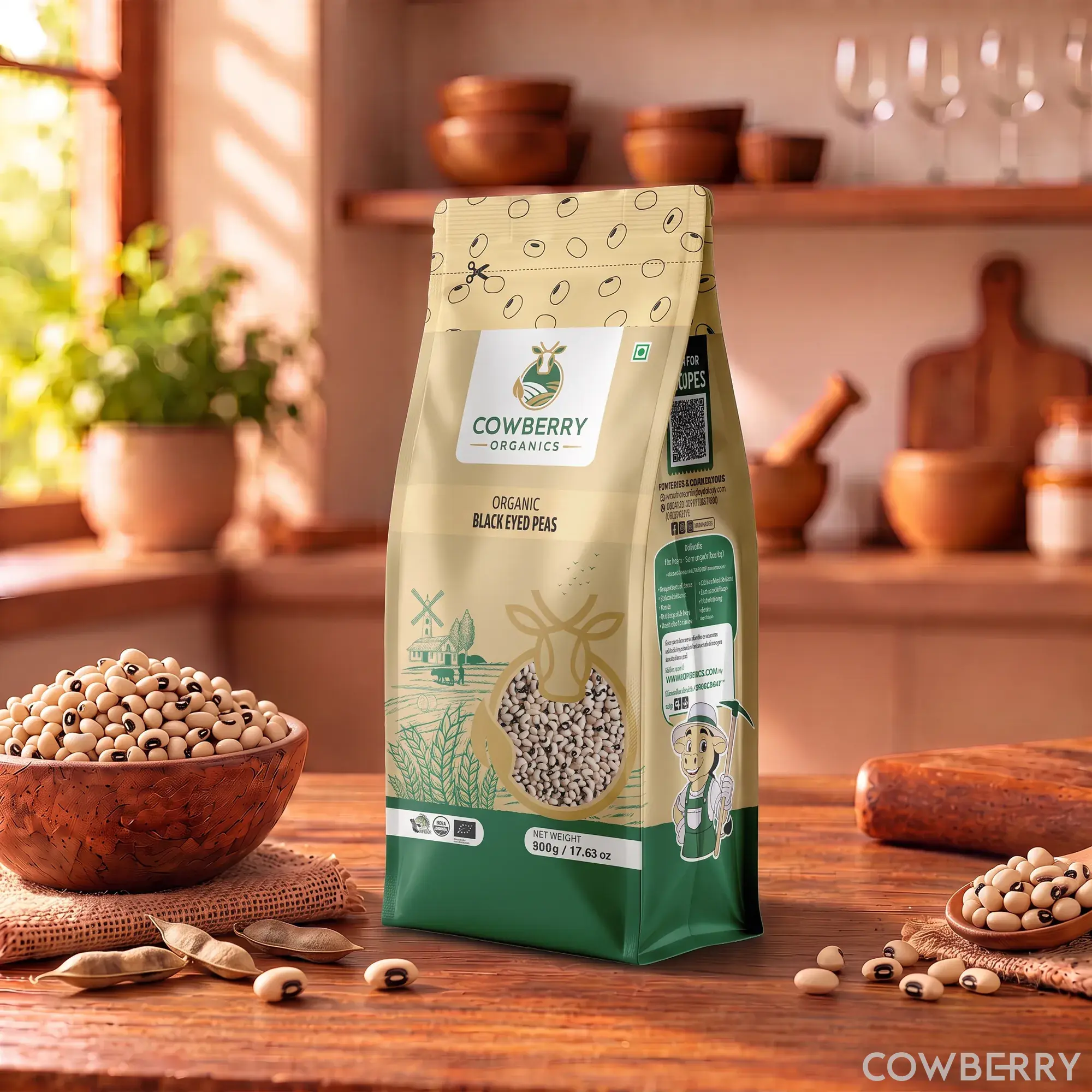
An organic pack shows its certification mark on the label, so look for that mark. The organic black eyed peas COWBERRY sells are grown on Rajasthan farms that practise natural cow-based farming, and the packs are India Organic, USDA & EU certified.
Pack size
Dry beans keep well, so a larger pack is workable if the household cooks lobia often; once open, keep it in the airtight jar described above.
FAQs
Which vegetable is lobia?
Lobia is not a vegetable; it is a pulse, the white cowpea that shops sell as black eyed peas. Indian kitchens cook it the way they cook other dals — soaked, then boiled or pressure cooked, then carried into curry, khichdi or salad. Its names in English, Hindi and 13 Indian languages are in the table above.
Is lobia good for health?
It is a useful pulse in a varied diet: 21.25 g of protein and 11.7 g of fibre per 100 g (IFCT 2017), with iron, magnesium and potassium in the same list, and a GI of 37, a number the GI tables rate low. The guidelines' balanced plate gives pulses and legumes 85 g a day. What each number means for everyday eating is on the cowpea benefits page.
Does lobia have protein?
Yes: IFCT 2017 reports 21.25 g of protein per 100 g of the raw bean, and a katori from 30 g of dry beans carries about 6.4 g. The guidelines say pairing cereals and pulses at 3:1 can deliver the full set of essential amino acids, which is the plate lobia is usually part of.
Can black eyed peas cause gas?
It can, the way other pulses can: the beans carry galacto-oligosaccharides the small intestine cannot break down, so the colon ferments them and gas follows, though researchers have recently questioned whether that is the whole cause. Most people who notice gas adjust within a few weeks if the habit stays, and the amount varies from person to person.
What is lobia called in English?
Cowpea — IFCT 2017 lists the bean as Cowpea, white — and the name on shop shelves is black eyed peas. The two names meet on the same packet: cowpea is the food-table name, black eyed peas is what the shelf says. In Hindi it is lobia, and either name buys the same beans.
Should lobia be soaked overnight?
It should be soaked, and overnight is the easy way: cover the beans with cold water and leave them six to eight hours, then drain and rinse. In a hurry, the quick soak — two minutes at a boil, then one to two hours covered off the heat — does the same job. Unsoaked beans cook too, just slower.
References
- Indian Food Composition Tables (IFCT) 2017, ICMR-National Institute of Nutrition
- Dietary Guidelines for Indians, ICMR-National Institute of Nutrition
- University of Sydney glycemic index database (GI search)
- University of Sydney: about the glycemic index
- Jayathilake C, Visvanathan R, Deen A, et al. Cowpea: an overview on its nutritional facts and health benefits. J Sci Food Agric, 2018
- Thompson HJ. Improving human dietary choices through understanding of the tolerance and toxicity of pulse crop constituents. Curr Opin Food Sci, 2019
- UK Food Standards Agency: How to chill, freeze and defrost food safely
Shop this article
Keep reading
Green gram plant: crop, varieties and how it grows in India
Rajma vs lobia: difference, nutrition and which to choose
Rajma plant: how rajma is grown in India (it is not a tree)