by COWBERRY

4 minute read
Lobia in English and Indian languages: black eyed peas names

Lobia in English is cowpea, the white cowpea sold across the world as black eyed peas. IFCT 2017 gives the full name set for this bean — English, the botanical name and 13 Indian languages, from Hindi Lobia to Tamil Karamani — and this page lays it out with the regional spellings Indian kitchens actually use. The lobia hub covers everything beyond the names.
Lobia in English and 13 Indian languages: quick answer
The quick answer: lobia is Hindi, cowpea is English, and black eyed peas is the shop name. The table below is the complete set — 13 Indian languages plus English and the botanical name — straight from the IFCT 2017 local-names list for this bean. Every name is spelled as the list has it, with the two everyday variants Chawli and Lobiya noted under the table.
| Language | Name (romanised) |
|---|---|
| English | Cowpea, white |
| Hindi | Lobia, Lobiya |
| Marathi | Chavli, Chawli |
| Gujarati | Chorap |
| Punjabi | Lobia |
| Bengali | Barbati |
| Odia | Jhudunga |
| Assamese | Lesera mahor guti |
| Kannada | Alasande |
| Telugu | Bobbarlu |
| Tamil | Karamani |
| Malayalam | Vella payaru |
| Urdu | Baunir |
| Sanskrit | Raajamaassa |
| Botanical name | Vigna catjang |
Source: IFCT 2017 (ICMR-NIN) local-names list. — means no name recorded in the source.
Hindi ‘Lobiya’: spelling variant of the IFCT 2017 name ‘Lobia’. Marathi ‘Chawli’: spelling variant of the IFCT 2017 name ‘Chavli’.
Lobia in English: black eyed peas and the botanical name
In English, IFCT 2017 lists this food as "Cowpea, white" under food code B006 — the white-seeded cowpea is the one Indian kitchens call lobia. The everyday English name is black eyed peas. The botanical name in the same list is Vigna catjang. One more quirk worth knowing: even though black eyed beans are called peas, they are beans — the "pea" in the name is a naming quirk, not the botany.
Lobia names by region
North
Hindi and Punjabi both give Lobia; Urdu gives Baunir and Sanskrit gives Raajamaassa.
West
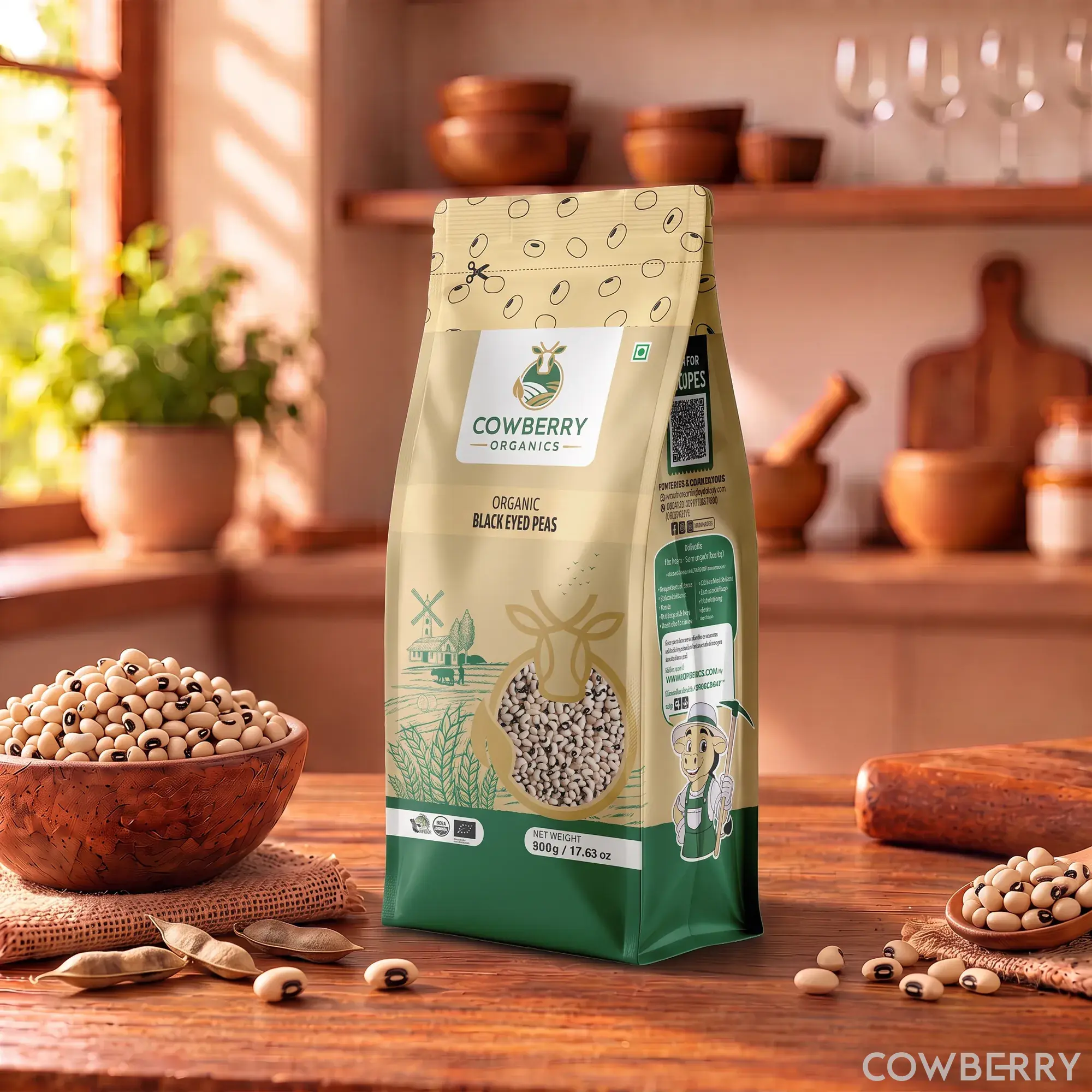
Marathi gives Chavli — and the COWBERRY pack spells it Chawli — while Gujarati gives Chorap.
East
Bengali gives Barbati, Odia gives Jhudunga, and Assamese gives Lesera mahor guti.
South
Kannada gives Alasande, Telugu gives Bobbarlu, Tamil gives Karamani, and Malayalam gives Vella payaru.
Use the table above to match a regional name to the one on your packet or in a recipe.
Often confused with: lobia vs soybean and rajma names
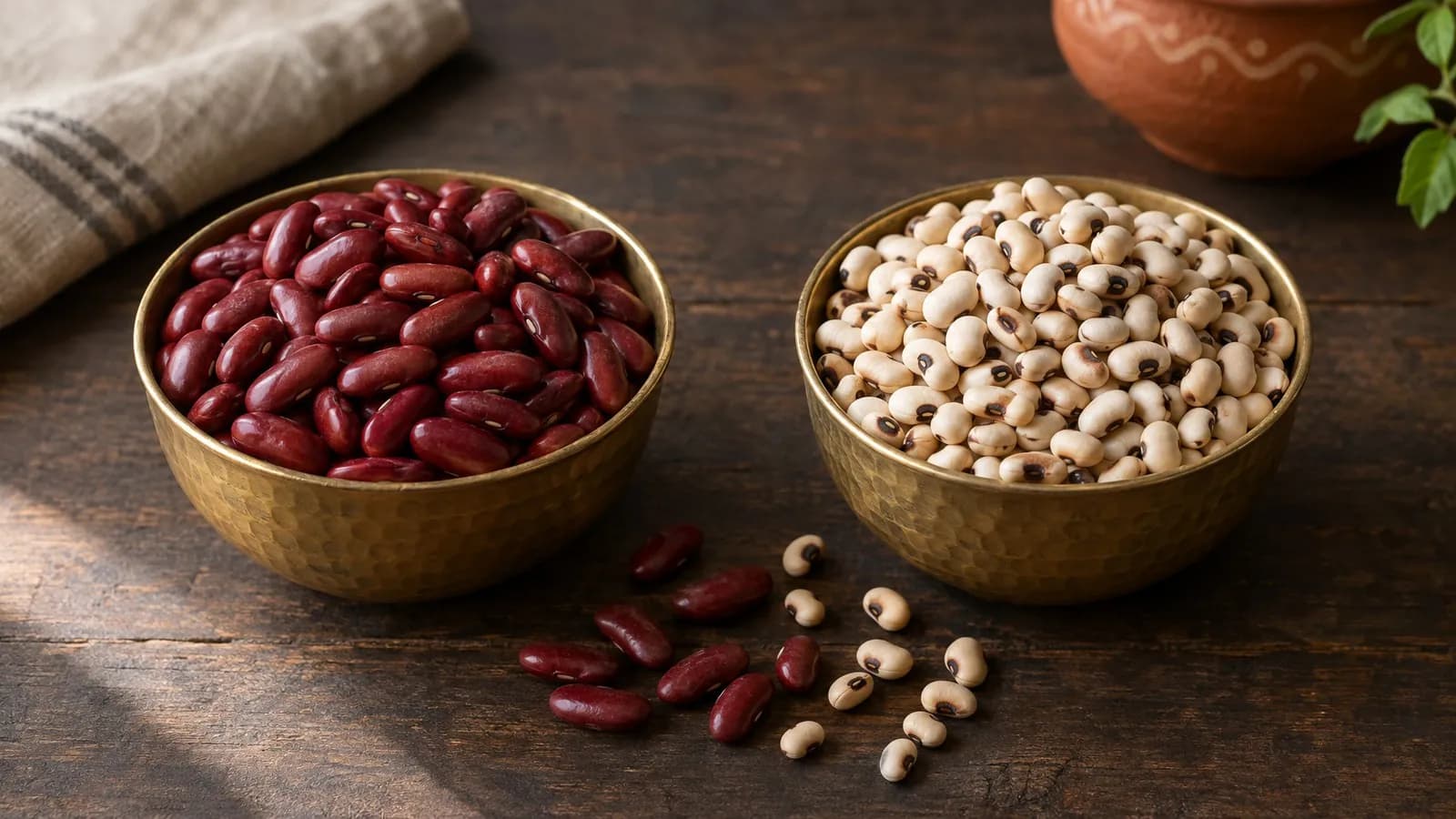
Two confusions come up constantly. First, soybean: lobia is cowpea and soybean is a different legume — the full comparison is on the lobia vs soybean page. Second, rajma: the Tamil name for lobia is Karamani, while rajma (red kidney beans) is Karamani Payir, and Bengali runs the same pattern — Barbati for lobia against Barbati beej for rajma. Same language family, two different dals; check the packet when a recipe asks for one of these names.
Where lobia grows in India
The FAO lists beans of the Vigna and Phaseolus families among the most well-known and commonly eaten pulses. The lobia COWBERRY packs is grown in Rajasthan through natural cow-based farming. The crop gives back to the soil too: cowpea plants capture nitrogen from the air and enrich the earth naturally. From packet to plate, the names lead straight into a lobia curry, and the lobia hub ties them to the bean's nutrition and benefits.
One bean, many spellings: why the names matter
This bean goes by different names in different shops and kitchens, so the spellings matter when you are buying. IFCT 2017 files the bean under food code B006 with the English food name "Cowpea, white", and the Indian names are in the table above; the two spelling variants worth knowing are Chawli (IFCT: Chavli) and Lobiya (IFCT: Lobia), both of which appear on COWBERRY's own pack. Whichever name a recipe uses — Karamani in a Tamil kitchen, Bobbarlu in a Telugu one — it is the same bean. COWBERRY sells it as Organic Black Eyed Peas (Lobia), so the English, Hindi and pack names all lead to one product.
FAQs
What is lobia called in English?
Cowpea. IFCT 2017 lists this bean as "Cowpea, white" (food code B006), and the everyday English name is black eyed peas, from the dark spot, or eye, on the seed. In a shop, asking for cowpea or black eyed peas buys the same lobia.
What is black eyed peas in Hindi?
Lobia. IFCT 2017 gives the Hindi name as Lobia, the same name used in Punjabi, and the pack spelling Lobiya is a variant of it. The black eyed peas bag in an Indian store is simply the lobia bag.
What is lobia?
A pulse: the white cowpea (Vigna catjang) that India cooks as lobia and the world knows as black eyed peas. Everything about its nutrition, benefits and recipes sits on the lobia hub.
Why lobia is called cowpea?
Cowpea is the English name for this bean: IFCT 2017 lists the botanical name Vigna catjang and the English food name "Cowpea, white", so lobia is simply the Hindi name of this cowpea. Black eyed peas is the other English name.
Difference between black eyed peas and soybeans?
Black eyed peas is lobia (cowpea), and soybean is a different legume altogether — a different seed with a different kitchen job. The lobia vs soybean page sets the whole comparison out.
References
Shop this article
Keep reading
Green gram plant: crop, varieties and how it grows in India
Rajma vs lobia: difference, nutrition and which to choose
Rajma plant: how rajma is grown in India (it is not a tree)