by COWBERRY

5 minute read
Lobia vs soybean: are they the same? Nutrition and uses

Lobia vs soybean: they are not the same. Lobia is cowpea, the Vigna bean India cooks as a dal, and soybean is a different legume, studied apart from pulses in the research this page cites. This page works from lobia's IFCT figures and does not give soybean's, so every number here is lobia's; the comparison comes to identity, protein, GI and cooking, and the lobia hub covers the bean.
Verdict in three lines
Not the same legume. Lobia is cowpea — IFCT 2017 lists it as "Cowpea, white" with the botanical name Vigna catjang — and soybean is a separate crop, tested as its own entry in the pulse research rather than among the pulses.
Numbers exist for lobia only. 21.25 g of protein, 1.14 g of fat, 53.77 g of carbohydrate and 11.7 g of fibre per 100 g, with a GI of 37 in the low band. This page gives no soybean figures, so soybean gets no numbers here.
Kitchen roles differ. Lobia is the soak-and-simmer dal of curry, khichdi and salad; soybean's differences are described only where a cited study reports them.
Lobia vs soybean: side by side per 100 g
This page sets out lobia's composition only. The table shows lobia (cowpea) per 100 g from IFCT 2017, and soybean's column is left out rather than guessed:
The same IFCT 2017 row gives 321 kcal, 5.04 mg of iron and 84.1 mg of calcium per 100 g of raw lobia. So this page compares what it can: identity, lobia's numbers, and the one study that tested soybean.
| Nutrient | Lobia (cowpea), raw |
|---|---|
| Energy (kcal) | 321 |
| Protein (g) | 21 |
| Fat (g) | 1.1 |
| Carbohydrates (g) | 54 |
| Dietary fibre (g) | 12 |
| Iron (mg) | 5 |
| Calcium (mg) | 84 |
| Magnesium (mg) | 213 |
| Potassium (mg) | 1243 |
| Sodium (mg) | 13 |
| Zinc (mg) | 3.6 |
| Folate (mcg) | 249 |
| Glycemic index (GI) | 37 |
Per 100 g raw, edible portion. Composition: IFCT 2017 (ICMR-NIN). GI: University of Sydney GI database. — means not reported. These are average values for the food; the label on a pack gives the values for that product.
Protein, fat, fibre and GI: what each brings
Lobia's numbers: 21.25 g of protein per 100 g — a 2018 cowpea review calls it a high-quality plant protein source with a complementary amino acid pattern to cereal grains — with only 1.14 g of fat and 11.7 g of fibre. Its GI is 37, an average over ten test entries for the plain boiled bean — black eyed peas and cowpea — measured in several countries, none in India, with the individual results spanning 7 to 58; by the University of Sydney bands, 55 and under counts as low, and 37 sits inside that band. This page gives no GI for soybean.
Anti-nutrients: the one direct comparison
The one place the research this page cites reports a direct side-by-side is a 2018 Canadian study of anti-nutrients: raw soybean seed carried the highest lectins (692.8 HU/mg), phytic acid (22.91 mg/g), total oxalate (370.5 mg/100 g) and soluble oxalate (200.7 mg/100 g) among all the seeds tested — peas, lentils, chickpeas, fava beans, common beans and soybean. Soaking cut lectins and oxalates but had no impact on phytic acid; cooking was more effective at reducing all of the investigated anti-nutrients, except phytic acid in common beans and soybean. So soybean's stubborn point is phytic acid, and the study is explicit about it. Scope note: lobia's exact seed was not among the pulses tested, so these numbers stay with soybean and the pulses in the study, and are not stamped onto lobia.
Taste, cooking and where each fits
Lobia's flavour is mild and nutty, and it suits everyday cooking: soak it (six to eight hours, or two by the quick method on the how to soak lobia page), pressure cook, and take it into a lobia curry, a lobia khichdi or a cold salad. For soybean, the research this page cites reports no recipes and no flavour notes, only the cooking fact above: cooking cut the anti-nutrients in the study, with phytic acid as soybean's stubborn exception. So the cooking guidance this page can honestly give belongs to lobia, and the lobia hub carries it.
Which for whom
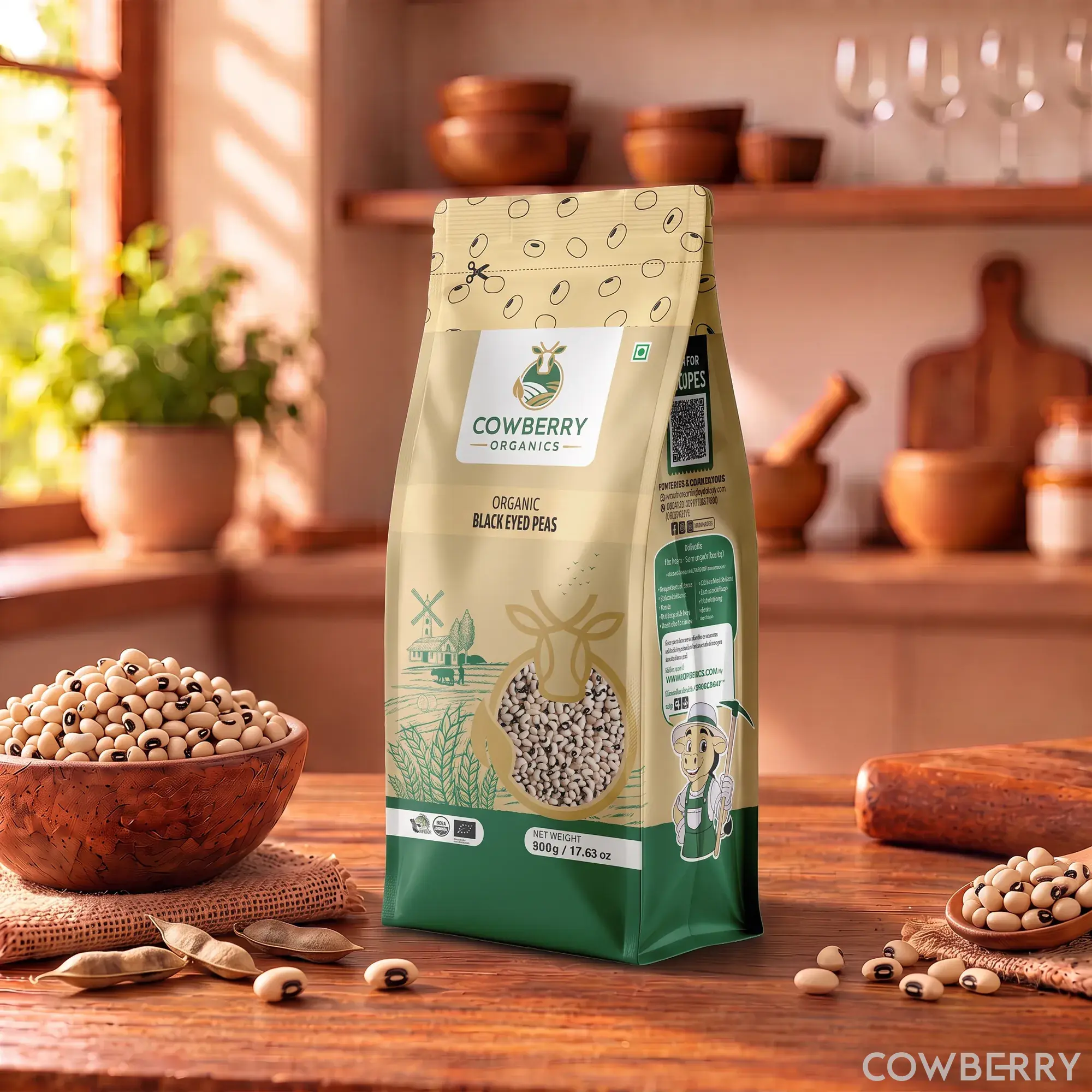
- Everyday dal, curry, khichdi and salad: lobia. This site's recipes and the Organic Black Eyed Peas (Lobia) pack are built around it.
- Diabetes: lobia has a low-band GI of 37; the lobia for diabetes page has the measured katori. Talk to your doctor or dietitian about how it fits your plan.
- Weight loss: the lobia for weight loss page runs the calorie and fibre maths for lobia.
- Protein hunting: lobia carries 21.25 g of protein per 100 g and 6.4 g per katori; this page gives no protein figure for soybean, so it stops at lobia.
- Anyone asking if they are the same: they are not — cowpea and soybean are two different crops.
The shortest version: if the recipe says lobia, it means black eyed peas — and if it says soybean, it means a different crop entirely.
FAQs
Is lobia and soybean same?
No. Lobia is cowpea (Vigna catjang in IFCT 2017) and soybean is a different legume; the research this page cites tests them apart, and this page gives figures for lobia only.
Is black eyed peas high in protein?
IFCT 2017 gives 21.25 g of protein per 100 g of lobia (black eyed peas), and a 2018 cowpea review calls cowpea a high-quality plant protein source with a complementary amino acid pattern to cereal grains.
Can black eyed peas cause gas?
It can, exactly as other pulses can: the bean's galacto-oligosaccharides get fermented in the colon, though that explanation has recently been questioned, and the gas that follows settles for most people within a few weeks when the habit stays. Soaking and cooking the beans properly first is the standard recommendation.
What is lobia?
Lobia is the Hindi name of the white cowpea sold as black eyed peas: IFCT 2017 lists it as "Cowpea, white", a pulse with 11.7 g of fibre per 100 g and a low-band GI of 37. It is not soybean.
Is lobia good for diabetes?
Lobia can fit into a diabetes meal in measured portions: the plain boiled bean averages a GI of 37, a low-band score, with 53.77 g of carbohydrate per 100 g raw, and one katori, from 30 g dry, brings about 16 g of carbohydrate. Talk to your doctor or dietitian about your own plan; the portion ideas are on the lobia for diabetes page.
References
- Indian Food Composition Tables (IFCT) 2017, ICMR-National Institute of Nutrition
- University of Sydney glycemic index database (GI search)
- University of Sydney: about the glycemic index
- Jayathilake C, Visvanathan R, Deen A, et al. Cowpea: an overview on its nutritional facts and health benefits. J Sci Food Agric, 2018
- Shi L, Arntfield SD, Nickerson M. Changes in levels of phytic acid, lectins and oxalates during soaking and cooking of Canadian pulses. Food Res Int, 2018
- Thompson HJ. Improving human dietary choices through understanding of the tolerance and toxicity of pulse crop constituents. Curr Opin Food Sci, 2019
Shop this article
Keep reading
Green gram plant: crop, varieties and how it grows in India
Rajma vs lobia: difference, nutrition and which to choose
Rajma plant: how rajma is grown in India (it is not a tree)