by COWBERRY

9 minute read
Cowpea benefits (lobia): protein, fibre and side effects

Cowpea benefits start with the numbers: IFCT 2017 gives 21.25 g of protein and 11.7 g of fibre per 100 g of raw lobia, the black eyed pea, with a low GI of 37. What each number does on the plate, and who should be careful with lobia, is below; the lobia hub covers the bean itself.
Cowpea benefits in one line: the numbers behind them
Every cowpea benefit below rests on a number from the food tables. IFCT 2017 gives 21.25 g of protein, 11.7 g of fibre, 5.04 mg of iron, 84.1 mg of calcium, 213 mg of magnesium, 1243 mg of potassium, 3.57 mg of zinc and 249 mcg of folate per 100 g of raw lobia, with only 1.14 g of fat. A 2018 review of cowpea calls its protein high quality and its amino acid pattern complementary to cereal grains, and the pulse research adds the frame: pulses are a significant source of iron, zinc, folate and magnesium, and half a cup of beans or peas a day can improve diet quality. The katori view: one katori cooked from 30 g dry brings 96 kcal, 6.4 g of protein and 3.5 g of fibre.
Protein: what one katori gives, and the cereal rule
The first cowpea benefit is protein: 21.25 g per 100 g of raw lobia. On the plate, one katori cooked from 30 g dry carries 6.4 g of protein, and a 50 g serving carries 160 kcal, 10.6 g of protein and 26.9 g of carbohydrate. The dietary guidelines turn that into a kitchen rule: pulses carry more lysine and less methionine than cereals, and cereals and pulses combined at a 3 to 1 ratio, weighed raw, can meet the need for every essential amino acid. So the classic pairing, lobia with rice or roti, raises the protein quality of the whole plate. The full per-100 g breakdown sits on lobia nutrition per 100g.
Fibre: 11.7 g per 100 g, and why it matters
The second cowpea benefit is fibre: 11.7 g per 100 g raw, with 3.5 g in a katori and 5.9 g in a 50 g serving. The dietary guidelines explain what fibre does on the plate: it delays and retards the absorption of carbohydrate and fat, and it increases the satiety value of the meal. The same guidelines note that cereals and pulses at a 3 to 1 or 5 to 1 ratio provide sustained energy and help you feel full, reducing the need for extra calories. On weight, a meta-analysis of 21 trials covering 940 people, on pulses in general rather than lobia, pooled a 0.34 kg weight loss for diets with pulses against diets without, over a median six weeks; the median intake was 132 g of pulses a day. The calorie and fibre maths is on lobia for weight loss.
Folate, iron and the minerals around them
Beyond protein and fibre, the same 100 g carries 249 mcg of folate, 5.04 mg of iron, 84.1 mg of calcium, 213 mg of magnesium, 1243 mg of potassium and 3.57 mg of zinc; the pulse research names iron, zinc, folate and magnesium as the minerals pulses contribute in significant amounts. Iron from plants, though, needs a hand: the dietary guidelines recommend vitamin C rich fruits such as guava, pineapple and citrus fruits alongside the meal, since these improve iron absorption from plant foods, and they advise avoiding tea before, during or soon after a meal. Cooking matters too: boiling or pressure cooking destroys the anti-nutritional factors in pulses, and the phytic acid that can lock up iron, calcium, magnesium and zinc decreases to a great extent after boiling or pressure cooking.
Blood sugar and heart: what the studies support
Lobia's measured GI is 37, the average of ten test entries for the plainly boiled bean. The entries come from several countries, none of them India, and they spread wide, from 7 all the way to 58. By the University of Sydney bands, 55 and under is low and 70 and above is high, which puts the average of 37 in the low band, though the highest entry, 58, sits above that line. There is research behind the number: a 2014 review of pulses reports that pulses are particularly beneficial to people with diabetes by assisting in maintaining healthy blood glucose and insulin levels, and that pulses improve serum lipid profiles and positively affect several other cardiovascular risk factors, such as blood pressure, platelet activity, and inflammation. A 2018 cowpea review lists further reported anti-diabetic and anti-hypertensive properties, with the mechanisms put down to soluble and insoluble fibre, phytochemicals and proteins, while noting the evidence is thin and further research is needed. For measured portions, see black eyed peas glycemic index and lobia for diabetes.
Cowpea side effects: gas, phytate and uric acid
The honest half of the story is side effects, and lobia has three worth knowing.
Gas. Like other pulses, lobia contains galacto-oligosaccharides, raffinose, stachyose and verbascose among them, which pass the small intestine undigested and get fermented lower down in the colon, releasing gas; whether that is the whole story has recently been questioned. Most people who react settle within a few weeks when the habit stays, and how much gas one person gets differs from another.
Phytic acid. Cowpea carries anti-nutritional compounds, and a 2016 cowpea review covers the crop's nutritional and anti-nutritional composition. The dietary guidelines name phytic acid as one that can bind iron, calcium, magnesium and zinc, and note that it decreases to a great extent after boiling or pressure cooking, which they call the best way to improve the nutritional quality of pulses. On lectins, a 2019 review finds no evidence that properly cooked pulses contain harmful lectins, and reports that lectin activity can be completely eliminated when the soaking and cooking recommendations are followed.
Uric acid and gout. Pulses sometimes get blamed for gout, but the studies below do not link them to it. A 12-year study of 47,150 men recorded 730 new cases of gout: the top fifth of meat eaters ran a risk of 1.41 times the bottom fifth's (41 percent higher), seafood eaters 51 percent higher, and dairy eaters 44 percent lower, while purine-rich vegetables and total protein intake showed no association with gout risk. The study covered men and tested vegetables, not lobia itself. A 2019 review adds the mechanism: most of the body's uric acid comes from its own synthesis, with food playing only a minor part, and it reports no gout association in that research for plant foods richer in purines, peas, beans and lentils among them. Still, the same review advises caution with high-purine plant foods for anyone with advanced kidney disease or established gout; if that is you, raise the change with your doctor or dietitian first. The soak steps are on how to soak lobia.
Who should be careful with lobia, and why
Two groups should take care. Anyone with gout or advanced kidney disease: the 2019 review above advises caution with high-purine plant foods, so set the amount with your doctor. Anyone new to pulses: gas and discomfort are common at first, and the 2019 pulse-tolerance review reports that most people adapt within a few weeks if intake is maintained. If you follow a medically restricted diet, ask your doctor or dietitian whether lobia fits. For everyone else, the guidelines' daily diet lists 85 g of pulses and legumes a day as part of the balanced plate; one katori from 30 g dry, or a 50 g serving, fits inside that number.
How to eat lobia to get the benefits
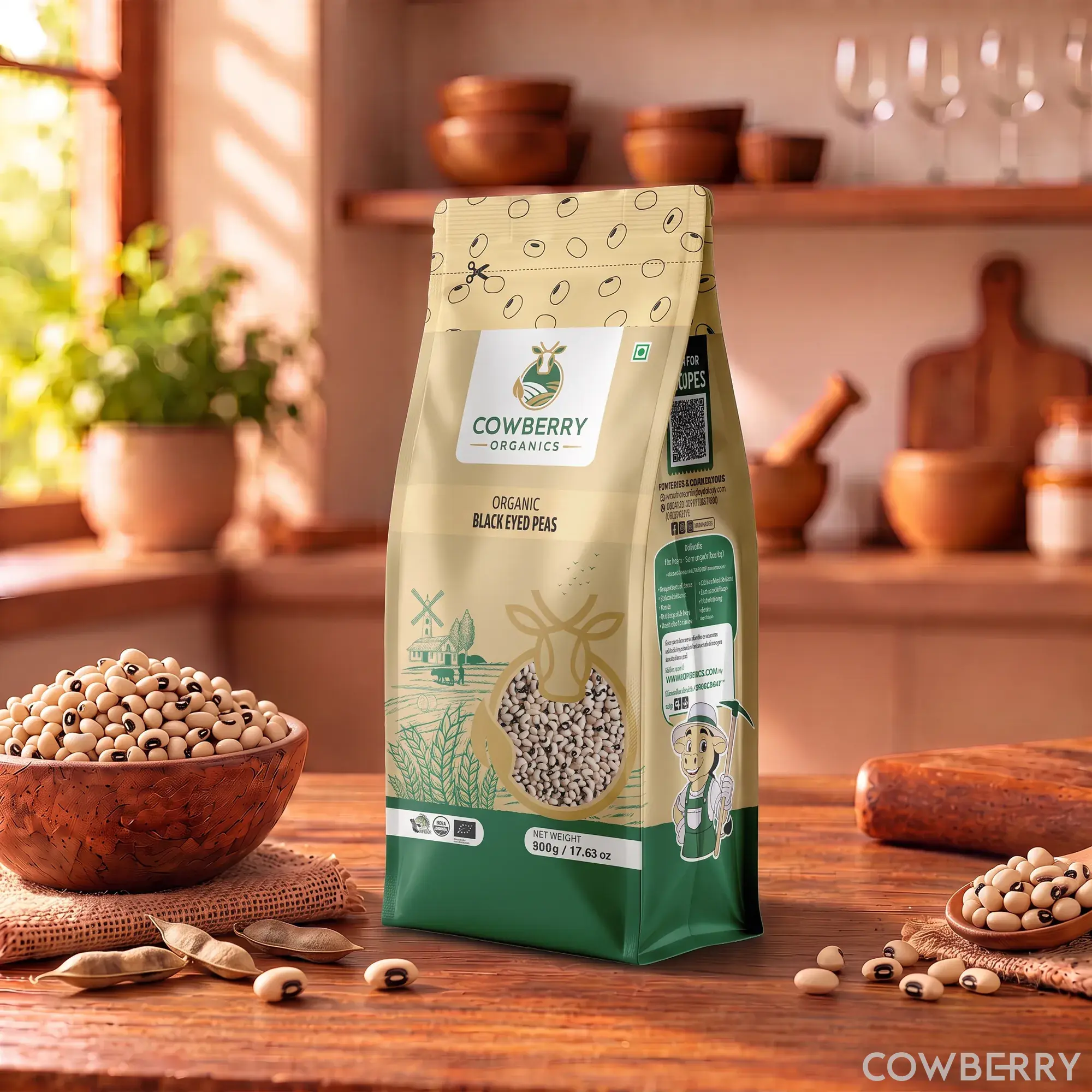
Soak lobia six to eight hours overnight, or use the quick soak, then pressure cook until completely soft; the dietary guidelines call boiling or pressure cooking the best way to improve the nutritional quality of pulses. Two site recipes do the measuring for you: lobia curry, which serves four at 227 kcal and 10.6 g of protein per serving from 50 g of dry lobia, and lobia khichdi at 282 kcal, 8.3 g of protein and 4.0 g of fibre per bowl. Cooked lobia is safe for up to two days in the fridge when it goes in within one to two hours of cooking. For the bean itself, COWBERRY's Organic Black Eyed Peas (Lobia) are grown in Rajasthan through natural cow-based farming, raw and natural with no additives. The lobia hub ties this set's other pages together, and before changing your own portions, or adding lobia while managing gout, kidney disease or a potassium limit, talk to your doctor or dietitian.
FAQs
Is lobia good for health?
Lobia is a useful pulse: per 100 g of the raw bean, IFCT 2017 records 21.25 g of protein, 249 mcg of folate and 11.7 g of fibre, and the pulse research counts pulses as a significant source of iron, zinc, folate and magnesium. The dietary guidelines build pulses into the daily plate at 85 g of pulses and legumes a day.
Does lobia have protein?
Yes: 21.25 g per 100 g of raw lobia, and 6.4 g in a katori cooked from 30 g dry. Because pulse protein carries more lysine and less methionine than cereal protein, lobia eaten with rice or roti raises the protein quality of the whole plate.
Can lobia cause gas?
It can, in some people. Lobia contains galacto-oligosaccharides that ferment in the colon and release gas, though this explanation has recently been questioned. Most people who react settle within a few weeks of keeping the habit, and the amount of gas differs from person to person.
Is lobia good for diabetes?
Plain boiled lobia averages a GI of 37, in the low band, and a katori cooked from 30 g dry carries about 16 g of carbohydrate. Whether and how much lobia fits a diabetes plan is for your doctor or dietitian to set; the measured guide is on lobia for diabetes.
Which lobia is good for health?
No source ranks one lobia variety above another. The bean IFCT 2017 lists is the white cowpea (Vigna catjang), the black eyed pea, and the dietary guidelines call boiling or pressure cooking the best way to improve the nutritional quality of pulses. COWBERRY's Organic Black Eyed Peas (Lobia) are grown in Rajasthan through natural cow-based farming, India Organic, USDA & EU certified.
Is lobia soaked overnight?
Yes, soaking lobia overnight is the standard method: six to eight hours in water, and the bean cooks faster for it. A quick soak works when time is short: two minutes of boiling, then one to two hours of rest. The full method with the steps is on how to soak lobia.
References
- Indian Food Composition Tables (IFCT) 2017, ICMR-National Institute of Nutrition
- Dietary Guidelines for Indians, ICMR-National Institute of Nutrition
- University of Sydney glycemic index database (GI search)
- University of Sydney: about the glycemic index
- Mudryj AN, Yu N, Aukema HM. Nutritional and health benefits of pulses. Appl Physiol Nutr Metab, 2014
- UK Food Standards Agency: How to chill, freeze and defrost food safely
- Thompson HJ. Improving human dietary choices through understanding of the tolerance and toxicity of pulse crop constituents. Curr Opin Food Sci, 2019
- Jakse B, Jakse B, Pajek M, Pajek J. Uric acid and plant-based nutrition. Nutrients, 2019
- Choi HK, Atkinson K, Karlson EW, Willett W, Curhan G. Purine-rich foods, dairy and protein intake, and the risk of gout in men. N Engl J Med, 2004
- Kim SJ, de Souza RJ, Choo VL, et al. Effects of dietary pulse consumption on body weight: a systematic review and meta-analysis of randomized controlled trials. Am J Clin Nutr, 2016
- Jayathilake C, Visvanathan R, Deen A, et al. Cowpea: an overview on its nutritional facts and health benefits. J Sci Food Agric, 2018
- Goncalves A, Goufo P, Barros A, et al. Cowpea (Vigna unguiculata L. Walp), a renewed multipurpose crop for a more sustainable agri-food system: nutritional advantages and constraints. J Sci Food Agric, 2016
Shop this article
Keep reading
Green gram plant: crop, varieties and how it grows in India
Rajma vs lobia: difference, nutrition and which to choose
Rajma plant: how rajma is grown in India (it is not a tree)