by COWBERRY

10 minute read
Is ragi gluten free? Yes, and how to use it in a gluten-free diet

Is ragi gluten free? Yes. Ragi (finger millet, Eleusine coracana) is a millet, not a type of wheat, and its seed proteins do not form gluten, so plain ragi grain and flour are naturally gluten-free. The one risk is flour milled or packed on a line that also handles wheat. This page explains the botany, the cross-contamination checks, who it matters for and how to cook with it.
Short answer: does ragi contain gluten?
No. Ragi contains no gluten. Gluten is a protein found in three cereals, wheat, barley and rye (NHS), and in wheat flour it links up into a stretchy network when the flour meets water. Ragi's proteins do not form that network, which is exactly why ragi dough will not stretch and roll like wheat dough and has to be patted out by hand.
That makes ragi a staple that can carry a whole meal for someone who cannot eat wheat: roti, dosa, mudde, porridge, laddu and baking all work without a single wheat-based ingredient. What it does not make ragi is a wheat substitute in behaviour, so the cooking section below matters as much as the yes.
Two things stay true for every gluten-free grain, ragi included: the pack must not have picked up wheat flour in the mill or on the packing line, and "gluten-free" is not the same as "suitable for everyone", because ragi has its own side effects, listed on the ragi guide.
Why ragi has no gluten: the botanical reason
Ragi is Eleusine coracana, a cereal grass grown for its grain; ICAR-IIMR describes it as a staple across many countries of Africa and South Asia. The gluten cereals are wheat, barley and rye, and ragi is none of them. ICAR-IIMR lists rice, corn, sorghum and millet among the gluten-free grains that can replace wheat-, barley- and rye-based foods, and its millets page states plainly that millets are gluten free. That covers jowar (sorghum), bajra (pearl millet), the small millets, rice and maize.
The confusion comes from language. "Millet" and "wheat" are both grains and both are called atta once milled, so shoppers assume ragi flour is a kind of wheat flour. It is not; the types of millets in India guide sorts the family out. The other trap is khapli (emmer) wheat, which is sometimes taken for a gluten-free grain; it is a wheat and contains gluten, as explained on khapli wheat vs regular wheat. Anyone with coeliac disease must avoid every wheat, ancient or modern.
Nothing about processing changes the answer. Whole ragi grain, sprouted ragi, ragi flour, ragi malt and roasted ragi are all gluten-free as long as nothing containing wheat, barley or rye was added on the way.
Gluten free ragi flour: cross-contamination in mills
The grain is gluten-free; the question is whether the flour still is by the time it reaches you. Many mills also grind wheat, and flour dust travels. The main risks:
- The neighbourhood chakki. The same stones grind wheat all day. Ragi ground there after wheat carries wheat dust unless the mill is cleaned, or a batch of ragi is run through and thrown away first. For someone with coeliac disease this is a risk to take seriously.
- Shared lines in a packing unit. Ragi flour packed on a line that also packs wheat atta, sooji or maida can pick up traces. Look for a statement on the pack about a dedicated line, or an allergen note that mentions wheat.
- Multigrain and "ragi" mixes. Ragi dosa mixes, ragi biscuits, ragi bread and "ragi atta" blends can list wheat, maida or barley malt further down the ingredient list. Read the list, not the front of the pack.
- Your own kitchen. A shared atta dabba, a rolling board dusted with wheat flour, a tawa wiped with the same cloth: all of them move gluten around.
FSSAI's Advertising and Claims Regulations require every claim on a label to be truthful, unambiguous and not misleading, and a nutrition or health claim to be scientifically substantiated; a food that is free of something by its nature may say so only as "naturally ... free". A plain "ragi flour" pack with no gluten-free claim is naturally gluten-free as a grain, but the pack makes no promise about the mill. The safest home route for strict avoidance is to buy whole ragi grain, wash and dry it, and grind it in a clean mixer or in a mill that has not seen wheat.
Who it matters for: coeliac disease, wheat allergy and sensitivity
Coeliac disease
Coeliac (celiac) disease is a condition in which the immune system reacts to gluten and damages the lining of the small intestine, so nutrients are not absorbed properly. The NHS lists diarrhoea, stomach aches, bloating and tiredness among the symptoms, notes that children with coeliac disease may not grow at the expected rate, and says a gluten-free diet should help control the symptoms, with a change of diet recommended even when symptoms are mild. For someone with coeliac disease even traces from a shared mill matter, so every pack and every kitchen surface counts.
Wheat allergy
A wheat allergy is a different condition from coeliac disease. Ragi contains no wheat, and ICAR-IIMR describes millets, being non-glutinous, as safe for people with gluten allergy, so it is a useful grain here too, with the same cross-contamination cautions.
Non-coeliac gluten sensitivity
Some people test negative for coeliac disease but feel bloated or heavy after wheat. Ragi, jowar, bajra and rice give them a rotation of grains that keeps roti and dosa on the table without wheat.
Everyone else
Going without gluten does not make a grain better for you by itself; ragi's case rests on what it contains: 364 mg of calcium, 4.6 mg of iron and 11.2 g of fibre per 100 g (IFCT 2017), which is why it is worth eating whether or not gluten is your problem. The NHS stresses that a gluten-free diet still needs to be healthy and balanced, and a grain with this much fibre and calcium helps. The full list is on ragi benefits.
COWBERRY millets and flours that are naturally gluten-free
Every millet COWBERRY sells is naturally gluten-free as a grain; the whole grains are the safest starting point because you control the milling.
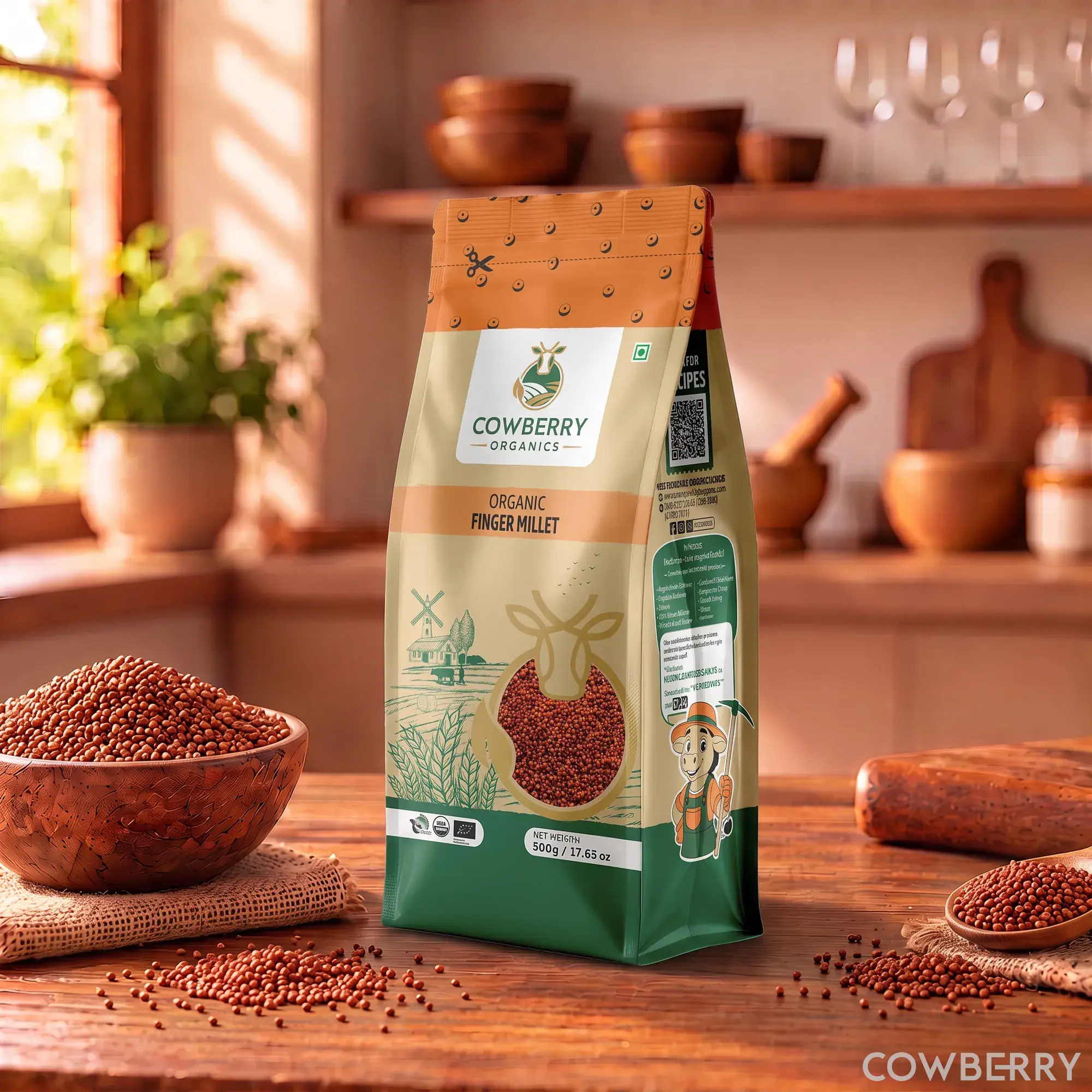
- Organic finger millet (whole ragi): for sprouting, cooking like rice, or grinding at home into fresh flour.
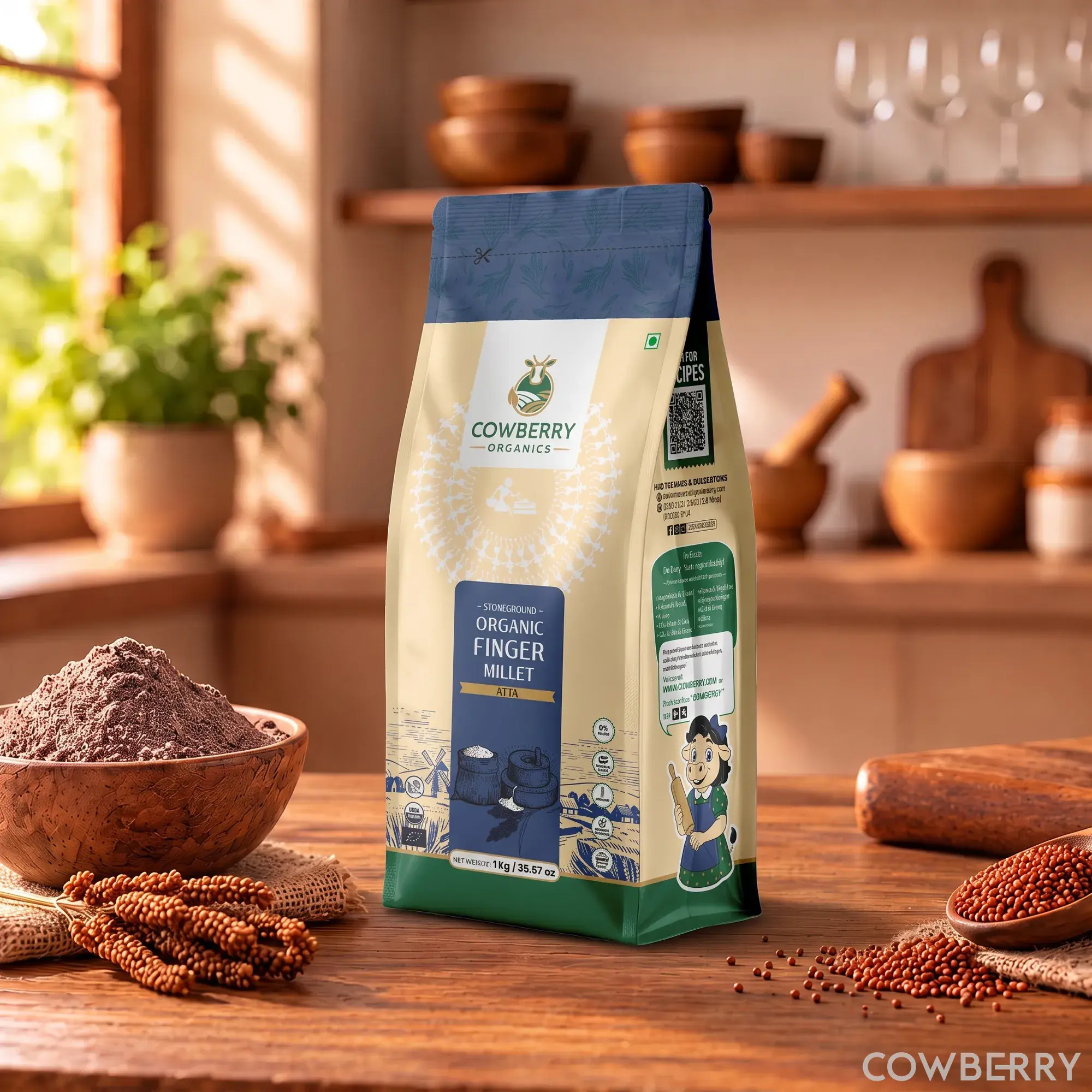
- Organic finger millet (ragi) flour: slow stone-ground, for rotis, dosa, mudde and porridge.
- Organic pearl millet (bajra) and bajra flour: the grain for bajra roti; see the bajra guide.
- Organic sorghum (jowar) and jowar flour: the grain for jowar bhakri and roti; see the jowar guide.
Rice, poha, dals, besan and maize flour are also gluten-free by nature. The wheat products (sharbati wheat, khapli wheat and their flours) and anything made with sooji, dalia or maida are not. COWBERRY's ragi grain and ragi flour are India Organic, USDA & EU certified. If you have coeliac disease and need a tested gluten-free claim rather than a naturally gluten-free grain, look for that claim on the label before you buy.
How to cook ragi in a gluten-free diet
Gluten is what makes wheat dough stretch, trap air and hold a shape. Without it, ragi needs different handling, and once you know three tricks it is easy.
Roti and mudde: hot water, not cold
Knead ragi flour with boiling water; the heat gelatinises the starch and gives the dough the stickiness that gluten would have given. Pat the ragi roti out with wet fingers on a floured sheet of plastic, a banana leaf or a damp cloth, and cook it on a hot tawa. For ragi mudde, two tablespoons of the flour go into the boiling salted water as a slurry, the rest goes in as a heap to steam, and then it is all beaten into a stiff dough.
Dosa and idli: rice flour for crispness
A pure ragi batter gives a soft, fragile dosa. The instant ragi dosa adds a little rice flour for crispness and binding; both flours are gluten-free. For idli, use ragi with a fermented rice-and-urad batter rather than with rava, which is wheat.
Porridge, malt and drinks
Ragi porridge and ragi malt need nothing but flour, water and time. Check that any milk, buttermilk or flavouring you add is plain; malted "health drink" powders can contain barley malt, which contains gluten.
Baking
Ragi flour bakes well in cookies, cakes and pancakes when paired with another gluten-free flour (rice, jowar or besan) and a binder such as egg, curd, mashed banana or a spoon of flaxseed paste, because there is no gluten to hold the crumb together. The ragi recipes roundup has the full set.
Talk to your doctor or dietitian
If you suspect coeliac disease, ask your doctor about testing; the NHS recommends it for people with symptoms or a raised risk, and says first-degree relatives (parents, brothers, sisters and children) of anyone with the condition should be tested. Once diagnosed, a dietitian can check that a gluten-free diet built on millets, rice and dals still gives you enough fibre, iron, calcium and B vitamins, and can advise on shared-kitchen risks at home. Children with a suspected wheat allergy need a paediatrician's plan before any grain is removed from their meals. Before you change your diet for a gluten-related condition, talk to your doctor or dietitian.
FAQs
Does ragi have gluten?
No. Ragi is a millet, and millets do not carry the gluten-forming proteins of wheat, barley and rye. Plain ragi grain, sprouted ragi and ragi flour are all naturally gluten-free. The only way gluten gets in is from outside: a mill that also grinds wheat, a shared packing line, or a ragi mix that lists wheat further down the label.
Is ragi a grain?
Yes. The seed of the grass Eleusine coracana, ragi counts as a cereal grain and is classed with the millets, not with wheat. It is eaten whole, sprouted or as flour, and IFCT 2017 lists it with the other cereals: 321 kcal, 7.2 g of protein and 66.8 g of carbohydrate per 100 g. Being a grain and being gluten-free are not in conflict; rice, maize and every millet are both.
Is ragi flour safe for coeliac disease?
Ragi itself is: ICAR-IIMR's review of millet research concludes that millet can be considered safe for people with coeliac disease. The risk is cross-contamination, so buy flour from a dedicated line or with a tested gluten-free claim, or grind whole ragi at home in a clean mixer. Avoid the neighbourhood chakki that also grinds wheat, and read the ingredient list on any ragi mix.
Is ragi malt gluten-free?
Home-made ragi malt, which is sprouted ragi dried and ground, contains no gluten. Packaged "malt" drink powders are another matter: some list barley malt extract among their ingredients, and barley contains gluten. Read the label, and if you have coeliac disease choose a pack with a gluten-free claim or make the malt at home from whole ragi.
Can I replace wheat flour with ragi flour in rotis?
Yes, but change the method, not just the flour. Ragi has no gluten, so the dough will not stretch; knead it with hot water, pat the roti out by hand and cook it on a hot tawa. If you are not avoiding gluten, a mix of one part ragi to two parts wheat rolls like a normal roti while you get used to the taste.
Which Indian flours are gluten-free besides ragi?
Jowar (sorghum), bajra (pearl millet), rice flour, besan (gram flour), maize flour, chana sattu (roasted gram flour) and the small millets are all naturally gluten-free. Wheat atta, maida, sooji, rava, dalia and khapli or emmer wheat are not, and barley (jau) is not either. As with ragi, the grain is safe by nature, and the pack is only as safe as the mill it came from.
References
- NHS: coeliac disease
- Indian Food Composition Tables (IFCT) 2017, ICMR-National Institute of Nutrition
- ICAR-Indian Institute of Millets Research: millets information and vernacular names
- Nutritional and health benefits of millets, ICAR-Indian Institute of Millets Research (PDF)
- FSSAI Food Safety and Standards (Advertising and Claims) Regulations 2018, compendium (PDF)
Shop this article
Keep reading
Foxtail millet vs quinoa: nutrition, taste and which to choose
Foxtail millet in Kannada, Hindi, Tamil and other Indian names
10 benefits of kangni (foxtail millet) and its side effects